Angra dos Reis from Rio: Islands & Boat Trips
Written and reviewed by Lotte — Rio local, founder & editor of PlanRio · How we research · First published · Last reviewed
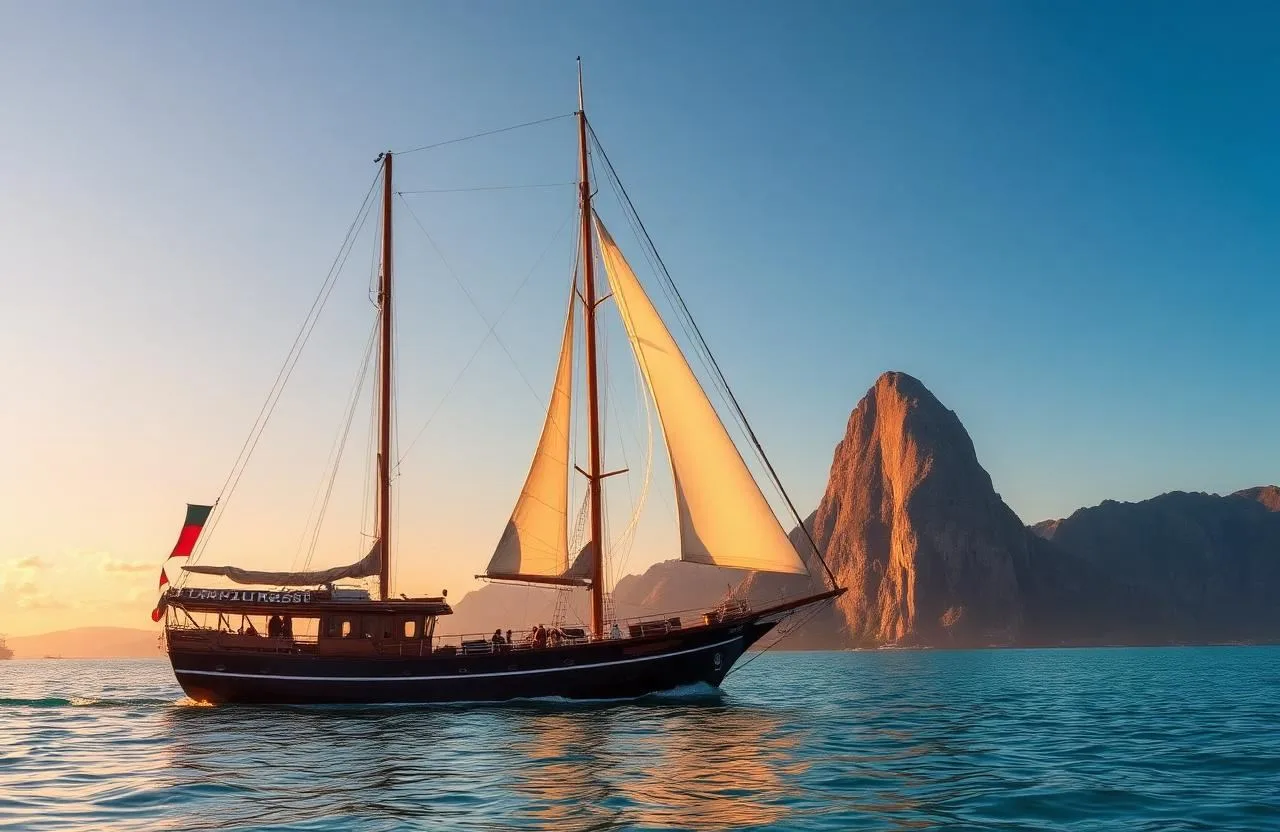
Illustrative boat image from the Rio library; check the actual Angra operator and departure pier for your date.
Quick answer
Angra dos Reis from Rio is best planned by choosing one of three experiences first: the mainland city, a local island boat trip, or a crossing to Ilha Grande. Check current Viva Angra voucher rules for your route and stay, then confirm the road transfer, departure pier and return crossing before you travel.
Links may earn us a commission at no extra cost to you. This supports PlanRio.
At a glance
What Angra is
A mainland city and a large bay of islands, beaches and coastal communities, not simply another name for Ilha Grande.
Best length
Two or three nights to combine the town, one boat day and a slower island or coastal stay.
Main access choice
Decide whether you are visiting Angra’s mainland, taking a local island tour or crossing to Ilha Grande; each uses different logistics.
Visitor voucher
Check current Viva Angra requirements for your route, stay and eligibility before travelling.
Best for
Boat days, sheltered bays, island scenery, a Costa Verde stop and travellers who want more than a rushed excursion.
Car-free plan
Reach the town by intercity transport or transfer, then pre-book the boat or mainland ride for your chosen area.
Our honest verdict
Angra deserves an overnight when you want to explore the mainland and bay. A tour-only day trip makes sense if you mainly want a boat outing.
The honest verdict: decide which Angra you are visiting
Think of Angra as three linked travel areas: its working mainland city, an extended coastal road and an island-filled bay in the Costa Verde. Many visitors use “Angra” as shorthand for any island boat trip, but that makes planning confusing. A mainland day in the historic centre, a day boat to nearby islands and a crossing to Ilha Grande are three different experiences.
For a first visit from Rio, stay at least two nights if you want to understand the mainland and take a boat outing. A day trip is reasonable when an organised tour handles the long road and the island route is the main purpose. If you want Ilha Grande’s trails and village life, treat it as its own destination and give it several nights rather than squeezing it into an Angra checklist.
Angra mainland, Angra’s islands and Ilha Grande are not interchangeable
Angra’s mainland has a historic centre, waterfront, beaches, neighbourhoods and services. The municipality’s official tourism site groups attractions by corridors such as Centro, Contorno, Ponta Leste and Ponta Sul, reflecting how spread out the area is. A hotel or beach described as “in Angra” may be a long way from the bus station or the pier you need.
The bay islands are usually visited by boat from an appropriate mainland pier. Ilha Grande is the largest island in the bay and a separate nature-and-village stay; its main visitor hub is Vila do Abraão. INEA identifies Angra dos Reis, Mangaratiba and Conceição de Jacareí as mainland access points to the island. Choose your destination first, then book the pier and service that actually reach it.
What to see on the mainland
The Centro is a useful first stop for churches, civic buildings, small cultural spaces and the Cais de Santa Luzia. A self-guided walk can include the Church of Nossa Senhora da Lapa e Boa Morte, the Church of Santa Luzia, Praça General Osório, Casa de Cultura Poeta Brasil dos Reis and the waterfront. Check current access before planning around any specific interior or exhibition.
Praia do Anil is an urban waterfront space, while the Contorno road opens up a different set of beaches and viewpoints. Beyond the centre, Ponta Leste and Ponta Sul are separate corridors with their own coves and access. Do not plan to walk between them as if Angra were a compact beach town. Use a local map, ask your accommodation about transport, and plan one area at a time.
The main boat choices: local island tour or Ilha Grande crossing
A local island tour usually starts and finishes on the mainland and visits a selection of bays, beaches or islands. The exact route depends on the operator, vessel, weather and current local rules. Ask for the named departure pier, itinerary, time ashore, inclusions, lifejacket arrangements and cancellation policy. The phrase “island tour” is too broad to tell you whether the boat reaches the beach you have in mind.
A crossing to Ilha Grande is transport between the mainland and the island, not automatically a sightseeing cruise. You may arrive at Abraão and then walk, hike or arrange a separate local boat. Confirm a return crossing as well as the outbound one. If your accommodation is outside Abraão, ask how you will reach it; the island has no public road for cars.
Check Angra’s Viva Angra visitor voucher before you travel
Angra’s municipal digital tourism system began operating on 1 June 2026. The city says visitors need to issue a Viva Angra voucher for access, while the applicable rules depend on whether you are travelling to the islands, staying on the mainland, visiting for the day or eligible for an exemption. Do not rely on an old rate quoted in a blog post: confirm the current requirement and amount for your exact route in the official portal before leaving Rio.
If your plan begins in another municipality and then enters Angra by boat, check the rules for that arrival route as well as your accommodation. Keep the official voucher or exemption confirmation with your transport bookings. A boat ticket, coach ticket or room reservation should not be assumed to complete this separate municipal step; ask the relevant provider if you are unsure.
Getting from Rio to Angra dos Reis
Your main options are intercity bus, shared or private transfer, and rental car. A bus is often straightforward when you are staying near central Angra and do not have a tight pier connection. A transfer suits groups with luggage or an onward boat plan, while a car offers flexibility for mainland corridors but adds parking and road responsibilities.
Check the departure and arrival points for the exact date. A Rio bus station, Angra bus terminal, downtown pier, resort marina and Ilha Grande crossing point are not the same location. If you book two services, give yourself room for traffic and boarding, and ask what happens if the first leg is delayed. Keep the operator’s contact details and accommodation address available offline.
Day trip from Rio: when it works and when it does not
An organised day trip can work if the operator has a clear pickup and return plan and you mainly want a boat outing with transport arranged. Read the full product details: where it starts, how much time is spent on the road, what the boat visits, whether lunch is included and how weather changes are handled. A specific listing is not a guarantee of a particular sea or beach condition.
Independent travel as a same-day return is much less forgiving. You must coordinate Rio transport, local transfers, boat boarding and the return journey, leaving little margin if one leg slips. We would not choose a day trip if you want the historic centre, a remote beach and Ilha Grande in one visit. Stay overnight or select a single activity and leave the rest for another trip.
A practical one-day plan for the mainland
If you are already in Angra, begin in the Centro and walk the historic area before the day gets hot. Stop at a cultural venue only after checking that it is open, then have lunch nearby. In the afternoon, choose a mainland beach with practical access or take a short local boat outing from a verified pier. Keep the plan close to your base rather than crossing the municipality repeatedly.
If you are arriving from Rio in the morning, do not add a long boat trip unless the departure and return timing are confirmed. A slower centre-and-waterfront day is better than racing to an uncertain pier and spending the afternoon watching the clock. For a pre-booked boat departure, work backwards from the operator’s meeting point and include a conservative transfer buffer.
A two-night Angra plan
On day one, travel to Angra, check in and take an easy walk around the Centro or your chosen waterfront area. Use the evening to ask your accommodation about the correct pier, local transport and current marine conditions. If you arrive late, rest. The bay will still be there in the morning, and a clear start is more useful than squeezing in a poorly planned night outing.
On day two, take one licensed boat outing or focus on the mainland coast. On day three, choose a short cultural walk or a nearby beach before returning to Rio. If Ilha Grande is the reason for the trip, reframe this itinerary: cross to the island and stay there rather than spending every night on the mainland. The choice of where you sleep is part of the itinerary, not a minor booking detail.
A three-night Angra and Ilha Grande combination
A three-night split can work as one night on the mainland and two on Ilha Grande, but only if your transfers line up. Travel from Rio to Angra or another selected port, sleep near the correct departure point, then cross to Abraão the next day. Spend two nights on the island and use a full day for a trail or boat outing. This gives you an Angra orientation without pretending to explore every corridor.
For the return, book the boat back to the mainland and decide whether you will continue directly to Rio or stay another night. Avoid making a same-day connection to a flight or a non-refundable activity. If you want to visit Paraty too, use the Costa Verde itinerary and plan the mainland road leg deliberately; do not assume there is a continuous ferry along the coast.
Choosing a boat operator responsibly
Angra’s municipal tourism guidance tells visitors to verify that a boat is registered for tourism activity and that the provider is registered with Cadastur. It also warns against buying services from street sellers or informal pier touts. Use a named, legal operator, request a receipt and confirm the departure point in writing. These checks matter more than a polished social-media page.
Before booking, ask how many people will be aboard, whether the route has shade, how lifejackets are provided, what the boat does if the sea changes and whether a stop is guaranteed or only planned. Do not pressure a skipper to sail in conditions they judge unsafe. Keep the original ticket and the operator’s emergency contact, and tell someone on land which route you booked.
Where to stay: match your base to the corridor
For a mainland visit, a central stay is practical for the bus terminal, historic walk and Cais de Santa Luzia. The Contorno and other coastal corridors suit visitors whose priority is a particular beach or resort, but you may need private transport to reach town. Confirm the address and map pin rather than relying on a neighbourhood name that a listing uses loosely.
For an island stay, choose the exact Ilha Grande village or bay, then check how it connects to Abraão and the mainland. Abraão is the simplest base for first-time visitors who want services and common boat departures. Remote stays can be wonderful but may require a separate boat, advance luggage arrangements and fewer food options. There is no curated Angra hotel collection in this guide, so we do not send you to a generic booking search.
What to do on a boat day
A good boat day leaves room to look at the coastline rather than treating every stop as a timed photo. Bring sun protection, water, a light layer and a dry bag. Ask whether food and drinking water are provided, and tell the operator about mobility, swimming or medical needs before departure. Boarding can involve a step from a pier or smaller tender, and beaches may not have toilets or shade.
Choose an outing based on your comfort with open water and the amount of time you want ashore. A schooner, speedboat and private charter offer different pace and group dynamics. The faster option is not automatically better, especially for people prone to motion sickness or travelling with small children. Compare the actual route and conditions, not only the number of islands named in the product title.
Mainland history deserves more than a transfer stop
Angra’s historic centre is often overlooked because boat tours dominate the visitor conversation. A short walk can show the city’s religious and civic architecture and add context to a coastline shaped by Indigenous life, Portuguese colonisation, maritime trade, enslaved labour and later development. Ask local guides and cultural venues how they interpret that history rather than relying only on a scenic postcard.
The district of Vila Histórica de Mambucaba sits farther along the coast toward Paraty and offers a different historical landscape. It is not a quick extension from downtown Angra, so treat it as a separate stop on a road itinerary. If the history is your priority, allocate time to one area and use current local tourism information to confirm access and interpretation.
Food, supplies and the rhythm of a coastal stay
The Centro gives you the broadest range of everyday services, while resort and island areas can be more self-contained or limited. Ask whether your accommodation has food available at the hours you will arrive, particularly if you are catching an early crossing. Bring prescriptions, charging cables and other essentials from Rio rather than assuming they will be easy to replace in a small village.
Seafood is prominent in the region, but choose restaurants for their current menu, hygiene and transparent pricing rather than an old list that promises a “best” dish. Try local fish when it is in season and ask what is available. On a boat day, check whether lunch is part of the booking and whether you need to carry water; do not plan around assumptions that a remote beach has a kiosk.
Families, accessibility and travellers who do not swim
Families can enjoy Angra if they choose a boat route and beach suited to the youngest traveller, confirm child flotation and shade, and keep the schedule flexible. A long road journey followed by a full boat day can exhaust children. Add a mainland overnight before an early departure if you can, and avoid remote stops where there is no easy way to shorten the outing.
Visitors with limited mobility should ask about boarding, gangways, toilets, steep streets, beach surfaces and transfer vehicles before booking. “Boat access” can include climbing into a small craft from a floating pier, and the landing beach may not be level. Non-swimmers can still enjoy the mainland history and scenery, but should be candid with the operator about comfort around water.
Weather, sea conditions and what to keep flexible
Angra’s bay can feel sheltered in places, but that does not make every boat route calm or every beach suitable for swimming. Wind, rain, visibility and sea state can change the outing. Check the forecast close to departure, listen to the skipper and follow local beach and lifeguard guidance. If a boat is cancelled, use the mainland as a flexible alternative rather than trying to force a second operator to leave.
Outdoor plans also change with rain, heat and trail conditions. Carry drinking water, sun protection and footwear suited to the activity, and avoid remote trails without confirming the route and return time. Mobile coverage can be inconsistent away from central areas. Download maps and tell your accommodation when you expect to return if you are exploring outside the city.
Angra or Ilha Grande: how to choose
Choose mainland Angra if you want a coastal city, boat trips to multiple islands, a historic walk and the convenience of road access. Choose Ilha Grande if you want to wake up in a car-free village, hike or take local boats to beaches, and spend more time in a protected island landscape. A boat trip from Angra does not provide the same experience as staying on the island.
Choose both only when you have enough nights to absorb the transfer. A one-night Angra stop followed by two island nights is a reasonable introduction; two nights on each gives more room. For a full comparison of Rio transport, island trails and stay length, use the dedicated Ilha Grande guide and the Costa Verde route. The best answer depends on whether the mainland or island is your actual priority.
Know what the boat booking actually covers
A boat ticket can refer to several different services: a crossing to Ilha Grande, a shared day cruise around nearby islands, a private charter or a transfer to a specific village. They solve different problems. Before paying, confirm the departure pier, arrival point, route, duration, luggage allowance, whether food or equipment is included and how weather changes are handled. A scenic tour that returns to the same mainland pier does not take you to an island hotel.
Read the product description as a route, not a headline. If you need to reach Abraão, verify that Abraão is the destination and that the sailing matches your ground transfer. If you want an island day, ask which beaches or coves are planned and whether the itinerary is guaranteed. Keep the provider’s contact details and meet-up instructions offline. Clear answers before departure are a good sign that the operator understands the trip you are trying to take.
Give the mainland its own purpose
A mainland Angra day can be worthwhile even if Ilha Grande is the headline destination. Use it for a meal, a quiet arrival, a town walk or a visit connected to the region’s history rather than leaving the city only as a transport terminal. This is particularly helpful if your crossing is later in the day or if you want to break up a long drive from Rio. Choose one accessible activity close to your actual lodging instead of trying to tour a wide coastal municipality between transfers.
Mainland and island experiences also suit different travel days. A town visit does not depend on finding a suitable sea excursion, while an island day asks you to accept boat schedules and weather. If someone in the group does not swim or gets seasick, a mainland stop gives them a meaningful alternative. Use the separate destination guides to plan each side: the Ilha Grande guide is for the crossing and island stay, while this page focuses on the wider Angra decision.
Build the crossing day around a reliable return plan
For a day trip, write down the departure and return plan before leaving your accommodation. Know where the boat returns, how you get from that pier to your next stop, and what you will do if the service changes. Do not use a vague “back in Angra” promise as a full itinerary: the municipality has a large mainland and island geography, and different boat tours use different meeting points.
For an overnight stay, confirm how the property expects you to arrive and what time the last practical transfer reaches it. A late landing may make dinner, check-in or a remote lodging transfer difficult. Keep an extra change of clothes in a day bag and protect medication and electronics from spray. If a return to Rio or another town follows the boat, leave generous slack instead of depending on a perfect connection between separate operators.
The most useful question to ask is not simply whether a boat “goes to the islands,” but where it leaves from, where it stops and where passengers return. Send the operator your exact plan and ask them to confirm that the product fits it. If the answer is unclear, choose a different service or simplify the day. A map pin, tour title or photograph cannot replace a confirmed landing point when you need to meet a driver or reach accommodation.
When Angra is not worth a separate stop
Skip a separate mainland Angra stay if you only want a beach village and do not plan to explore the city or take a local boat outing. In that case, travel directly to Ilha Grande or Paraty and save a hotel change. Angra’s best-known appeal is spread across a wide area, and a short stay in the wrong corridor can mean more transfer time than swimming.
Also reconsider an Angra day trip if you dislike early starts, have a tight flight schedule or cannot tolerate a long road day followed by boat time. The organised tour can remove some logistics but cannot remove distance or guarantee the sea. If the trip feels too compressed, choose one Costa Verde destination and return another year.
Plan the Costa Verde connection without inventing a ferry route
Angra is a useful gateway for a south-coast route, but the transport chain is made of separate parts: Rio to the mainland, mainland to island if needed, island back to land, then the road to Paraty or the return to Rio. Each booking should name its pickup and drop-off point. A coast map can make these places look closer and more connected than the services actually are.
If you want Angra, Ilha Grande and Paraty in one trip, follow the five-day Costa Verde itinerary and consider adding a sixth day. For an eastern beach loop, compare the Costa do Sol itinerary instead. These routes have different transfer and sea-day constraints; putting them together in one short holiday is usually a poor trade.
Compare the island outing with a full-day route
The Ilha Grande Paradise Islands product departs from Vila do Abraão; the day tour is an organised departure from Rio. The Angra Blue Lagoon boat option appears above. Check meeting points, sea conditions and cancellation terms.
Common mistakes tourists make
- Using Angra, the island bay and Ilha Grande as if they were the same place.
- Booking a boat without confirming the exact pier, vessel, itinerary and return point.
- Assuming a central Angra hotel is close to a resort marina or a remote coastal beach.
- Trying to fit the historic centre, island crossing and full boat tour into one arrival day.
- Buying a boat service from an informal seller instead of a verified tourism operator.
Local expert tips
- Choose your mainland corridor or island village before choosing accommodation.
- Use Angra’s legal tourism guidance to check the boat operator and request a receipt.
- Keep road, pier and boat confirmations together and available offline.
- If Ilha Grande is the priority, spend your nights on the island rather than treating a boat tour as equivalent.
- Build a mainland alternative into a boat day in case weather changes the route.
Frequently asked questions
Is Angra dos Reis the same as Ilha Grande?+
No. Angra dos Reis is a municipality with a mainland city, coastal corridors and many islands. Ilha Grande is one island within the wider bay and has no public road connection. Visitors may reach the island from Angra, Mangaratiba or Conceição de Jacareí, but the crossing is a separate transport leg.
How many days do you need in Angra dos Reis?+
Two nights is a useful minimum for a mainland orientation and one boat day. Three nights can include a short mainland stay and two nights on Ilha Grande if the boats line up. Stay longer if you want remote beaches, hiking or more than one island outing.
Is Angra worth a day trip from Rio?+
It can be worthwhile as an organised boat-focused day trip if transport, departure pier and return are clearly arranged. Independent day travel is less forgiving because road, pier and boat legs must connect. Choose an overnight if you also want the historic centre or more than one activity.
Where do boats leave from in Angra?+
The departure point depends on the exact boat and destination. Cais de Santa Luzia is a central reference point, but private marinas and other piers serve different routes. Ask the named operator for the exact pier, meeting time and return point before booking or travelling to Angra.
How do I get from Angra to Ilha Grande?+
Use a confirmed boat service from a mainland access point to Vila do Abraão or another named island destination. INEA lists Angra dos Reis, Mangaratiba and Conceição de Jacareí among the access points. Choose the port that matches your boat and mainland transfer, and confirm the return crossing.
Do visitors need a Viva Angra voucher?+
Angra’s municipal tourism system requires visitors to check and issue the current Viva Angra voucher for their route. Rules vary by island or mainland access, day use, accommodation and exemption status. Confirm the amount and instructions with the official portal for your travel date before boarding; do not rely on an old online rate.
Can I take a car to Ilha Grande?+
No public road reaches Ilha Grande, so ordinary visitors leave a car on the mainland and cross by boat. Arrange parking near the specific pier, confirm when you can collect the vehicle and keep luggage secure. A rental car is useful for some mainland routes but sits unused during an island stay.
Is a boat trip in Angra safe?+
Use a legal tourism operator, check that the vessel is registered for tourist activity and that the provider is registered with Cadastur, as Angra’s municipal guidance advises. Ask about lifejackets, weather cancellation, capacity and the route. Follow the skipper’s decision if conditions are unsafe.
Can I visit Angra and Paraty on the same trip?+
Yes, as part of a Costa Verde itinerary, but the connection from Angra to Paraty is a mainland road leg. If you visit Ilha Grande too, add the boat out and back to the schedule. Five days is a workable minimum for all three stops; six is more comfortable.
What is the best area to stay in Angra?+
Stay in central Angra for bus access, historic sights and the central pier. Choose a coastal corridor or resort only if its beach and facilities are your priority and you have confirmed local transport. For an island stay, choose the exact village and check how it connects to Abraão.
Can I see Angra without taking a boat?+
Yes. You can explore the historic centre, waterfront and mainland beaches by road or local transport. A boat is useful for many islands and coves, but it is not required to understand the city. Choose a mainland base and plan one coastal corridor if you prefer to stay on land.
Sources and image credit
Details and access can change. Use these venue, operator and public-information sources to recheck key details before visiting.
- Rio de Janeiro State Tourism: Angra dos Reis ↗
Destination overview and official regional tourism context.
- Visit Angra: Centro tourist route ↗
Municipal list of central cultural and historic points.
- Visit Angra: 365 Islands route ↗
Municipal destination information for island outings.
- Angra City Hall: Legal tourism guidance ↗
Official advice on licensed boat operators and tourism services.
- Prefeitura de Angra: Viva Angra visitor voucher ↗
Current municipal implementation guidance; check route, visitor type and exemption rules for your dates.
- Prefeitura de Angra: Taxa de Turismo Sustentável legislation ↗
Municipal law and amendments behind the current tourism-voucher system.
- Viva Angra official visitor portal ↗
Issue or verify the current visitor voucher and registration instructions.
- INEA: Ilha Grande State Park ↗
Official island access information and conservation context.
Keep planning
Day trips from Rio
Compare mainland and boat-based excursions.
Is Angra dos Reis worth it?
Read the focused verdict on the long day-trip version.
Ilha Grande from Rio
Plan the island crossing, trails and village stay.
Costa Verde itinerary from Rio
Connect Angra, Ilha Grande and Paraty over several days.
Costa do Sol itinerary from Rio
Compare the eastern coast route through three beach towns.
Boat tours in Rio
Compare boat experiences and practical booking checks.