Where to Stay in Rio: 19 Neighborhood Guides
Choosing a Rio base is not a cosmetic decision. Mountains, tunnels and traffic mean a cheap room in the wrong area can cost an hour every day. We compare the 19 neighbourhoods we would genuinely consider for a stay or a focused visit—including the reasons we would skip each one.
Written and reviewed by Lotte — Rio local, founder & editor of PlanRio · How we research · First published · Last reviewed
Quick answer
Ipanema is the best Rio neighbourhood for most first-time visitors because it combines beach, metro, restaurants and easy daytime walking. Choose Leblon for quieter luxury, Copacabana for hotel choice, Botafogo for food and value, Catete for a tighter budget, or Santa Teresa for atmosphere rather than convenience.
Best Rio neighbourhoods at a glance
| Best first visit | Ipanema — the strongest all-round mix of beach, metro, food and walkability. |
|---|---|
| Best budget | Catete for low hotel prices and metro access; Flamengo for a calmer residential alternative. |
| Best families | Leblon for compact routines and quieter evenings; Barra for space if long journeys are acceptable. |
| Best nightlife | Copacabana for range, Botafogo for modern bars and food, Lapa for a planned samba night. |
| Best beach stay | Ipanema for the full city experience; Recreio for quieter surf and fewer central sights. |
| Best luxury | Leblon for calm refinement; Ipanema for luxury with more energy and nightlife. |
Compare the stay, then plan the arrival
Start with a flexible Rio-wide search, then compare Ipanema or Copacabana directly if those are your finalists. For a late arrival at GIG, a pre-arranged transfer removes the least enjoyable decision of the trip.
Links may earn us a commission at no extra cost to you. This supports PlanRio.
The honest shortlist by traveller type
There is no universally “best” area. These are the trade-offs we use before opening a hotel tab.
First visit
Ipanema
Beach, metro, restaurants and short daytime walks in one compact grid.
Hotel choice
Copacabana
The widest range of rooms and prices, with more street awareness required.
Families
Leblon
Calmer evenings and easy daily logistics if the room budget stretches.
Food and value
Botafogo
Our favourite restaurant base, with excellent metro connections.
Boutique atmosphere
Santa Teresa
Choose the hills for character, not beach or metro convenience.
Budget with metro
Catete
Unpolished, central and considerably cheaper than the oceanfront.
All 19 Rio neighbourhood guides
Every card links to a complete local guide. The zones below are geographic groupings, not recommendations: a Zona Sul label does not make two districts equally convenient, and a western beach can be a very long way from Cristo or Centro.
Zona Sul (13)

Ipanema
The easiest first-time base: beach, metro, restaurants and Arpoador sunsets all fit into a walkable grid.
Best for: First-time visitors, couples and food lovers

Copacabana
Rio's widest hotel choice and most famous beachfront, with constant energy and more street awareness required after dark.
Best for: Hotel choice, nightlife, groups and tighter budgets

Leblon
Calmer than Ipanema and polished without feeling like a resort, but room rates are among the highest in Rio.
Best for: Families, luxury stays and quieter evenings

Botafogo
Our favourite city base for restaurants and transport; the bay beach is scenic, not suitable for swimming.
Best for: Food, value, remote work and repeat visits

Urca
A tiny, peaceful pocket where locals share beer on the seawall; beautiful, safe-feeling and inconvenient without rides.
Best for: Quiet stays, photographers and Sugarloaf access

Flamengo
Residential Rio with an enormous waterfront park, useful metro access and better value than the oceanfront districts.
Best for: Value, families, parks and longer stays
Laranjeiras
Leafy, residential and genuinely local, with strong café culture and no reason to choose it for a beach-first holiday.
Best for: Residential atmosphere, cafés and longer stays

Cosme Velho
A quiet hillside district built around the Corcovado railway; convenient for Cristo, less useful for evening variety.
Best for: Christ the Redeemer access and quiet hillside stays

Vidigal
Vidigal offers extraordinary views and the Dois Irmãos trail, but visitors should use community-led guidance and check conditions.
Best for: Dois Irmãos, community-led visits and views
Catete
Unpolished but practical: metro, por quilo restaurants and hotel prices well below Ipanema, with block-by-block awareness needed.
Best for: Budget hotels, metro access and cheap local food

São Conrado
A dramatic but isolated oceanfront base below Pedra da Gávea, best for resort calm rather than walkable nightlife.
Best for: Hang gliding, quiet hotels and Pedra da Gávea
Gávea
Jockey Club sunsets, art and student nightlife give Gávea range, but there is no metro and little visitor accommodation.
Best for: Culture, restaurants and a green residential base
Rocinha
Rio's largest favela deserves context and respect, not a voyeuristic jeep tour; conditions and official advice can change quickly.
Best for: Responsible, community-led cultural visits
Centro (3)
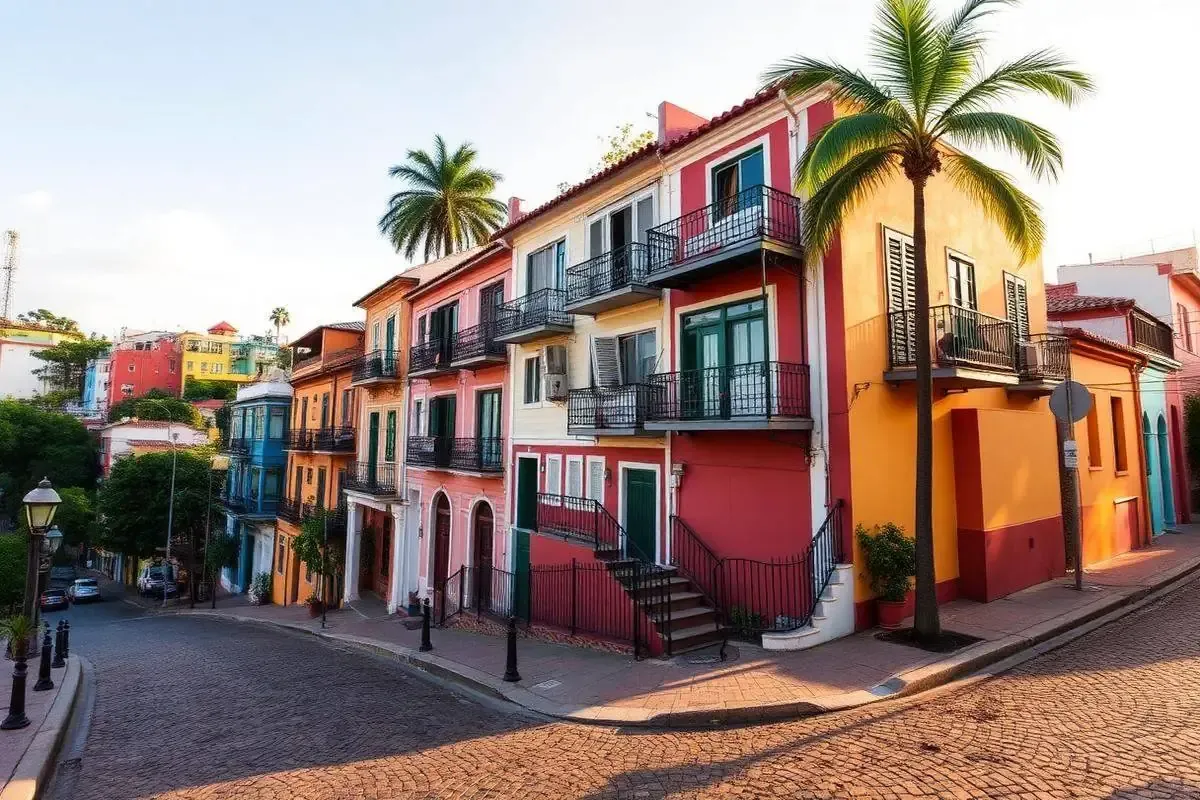
Santa Teresa
Colonial houses, artists' studios and the yellow tram make this Rio's most atmospheric stay, but the hills demand app rides.
Best for: Boutique stays, art, architecture and slow travel

Lapa
The place for a planned samba night, not our default overnight base: energetic main streets sit beside quiet blocks.
Best for: Samba, nightlife and budget-conscious visitors
Glória
Excellent geographic value between Centro and Flamengo, though some streets empty faster than the busier South Zone bases.
Best for: Budget stays between Centro and Zona Sul
Zona Norte (1)

Zona Oeste (2)

Barra da Tijuca
Modern, spacious and beach-rich, but far from classic Rio sightseeing and much easier with a car or frequent app rides.
Best for: Long beaches, events, families and travellers with cars
Recreio dos Bandeirantes
A quieter western beach district with more local rhythm and nature access, at the cost of very long sightseeing journeys.
Best for: Surf, families, Prainha and western Rio
Common mistakes tourists make
- Choosing on room price alone: Barra or Recreio can erase the saving in time and app rides if every day is in Zona Sul.
- Treating a bairro as one uniform block: check the exact hotel street, metro distance and late-evening route.
- Booking Lapa for every samba night: visit the music and sleep where the route home is simpler.
- Confusing Tijuca, Tijuca Forest and Barra da Tijuca: they are three different trip-planning decisions.
Local expert tips
- Map three real days: plot your hotel against Cristo, Sugarloaf and one evening area before paying.
- Measure the station walk: “near the metro” can mean 15 steep or exposed minutes.
- Use a flexible first booking: Rio room prices move, and cancellation flexibility is worth more than breakfast hype.
- Ask about the block: a local host's honest late-night route is more useful than a generic neighbourhood score.
Frequently asked questions
What is the best neighbourhood to stay in Rio de Janeiro?
Ipanema is the best all-round neighbourhood for a first Rio trip because it combines a swimmable beach, metro access, restaurants, shops and straightforward daytime walking. It costs more than Copacabana or Botafogo, but the location removes enough transport friction to justify the premium for many first-time visitors.
What are the safest neighbourhoods for tourists in Rio?
Leblon, Ipanema and Urca are among Rio's lower-friction visitor areas, while Botafogo is practical on its busy metro and restaurant corridors. No neighbourhood is risk-free: keep phones discreet, avoid empty streets and the beach after dark, and switch to a verified app ride when normal foot traffic disappears.
Should first-time visitors stay in Ipanema or Copacabana?
Choose Ipanema for the easiest overall first stay: a more compact grid, excellent restaurants and Arpoador sunsets. Choose Copacabana when hotel choice, lower room prices or nightlife matter more. The neighbourhoods meet around Arpoador, so either can reach the other quickly by metro, car or a longer walk.
What is the best budget neighbourhood in Rio?
Catete is our strongest budget base for travellers who want a metro, cheap por quilo restaurants and quick access to Centro and Zona Sul. Flamengo is calmer and greener for a little more money. Lapa can be cheaper, but we prefer visiting its nightlife and sleeping somewhere with a steadier late-evening rhythm.
Which Rio neighbourhood is best for families?
Leblon is the easiest family neighbourhood when the budget allows: calmer evenings, Posto 11 beach, good restaurants and Antero de Quental metro are close together. Ipanema near Posto 10 is the more energetic alternative. Families prioritising space and western beaches may prefer Barra, accepting longer sightseeing journeys.
Where should I stay in Rio for nightlife?
Copacabana offers the broadest mix of bars, late restaurants and hotels, while Botafogo has Rio's strongest modern bar-and-food scene. Lapa is the samba destination, but we recommend treating it as a planned night out rather than the automatic place to sleep, especially for a first visit.
How far apart are Rio's main neighbourhoods?
Ipanema, Copacabana, Leblon and Botafogo form a relatively compact Zona Sul circuit, often 5–20 minutes apart by metro or car outside heavy traffic. Santa Teresa and Centro require a separate journey. Barra and Recreio are far west and can add 45–90 minutes to classic sightseeing days.
Which neighbourhood is best to stay in for New Year's Eve (Réveillon)?
Copacabana is the obvious base for Réveillon — you can walk to the fireworks and stages — but rooms sell out months ahead, charge 3–6× normal rates and require a 4–7 night minimum. Ipanema and Leblon are calmer, still walkable to the celebrations via Arpoador, and easier to leave afterwards. Whichever you pick, book by mid-year and check the minimum-stay and cancellation terms. See our full New Year's Eve in Rio guide.