Rocinha
Quick answer
Rocinha is Brazil's largest favela — a vibrant, working community of ~200,000 people wedged between São Conrado and Gávea. It can be visited safely and respectfully only with a community-led walking tour. Never enter alone. Never photograph people without permission. Never enter after dark.
The only way to visit
Small-group, community-partnered walking tour. Pickup from your Zona Sul hotel, local Rocinha guide, moto-taxi ride up (optional), 3–4 hours. A share of the fee stays in Rocinha.
Rocinha at a glance
| What | Brazil's largest favela — a community of ~200,000 people |
| Where | The hillside between São Conrado and Gávea, Zona Sul |
| How to visit | Only with a community-led walking tour — never alone, never after dark |
| Tour length | 3–4 hours, with Zona Sul hotel pickup and a local guide |
| Etiquette | Never photograph people without permission; choose an ethical operator |
| Best for | Respectful travellers wanting real context, not a 'human safari' |
What Rocinha actually is
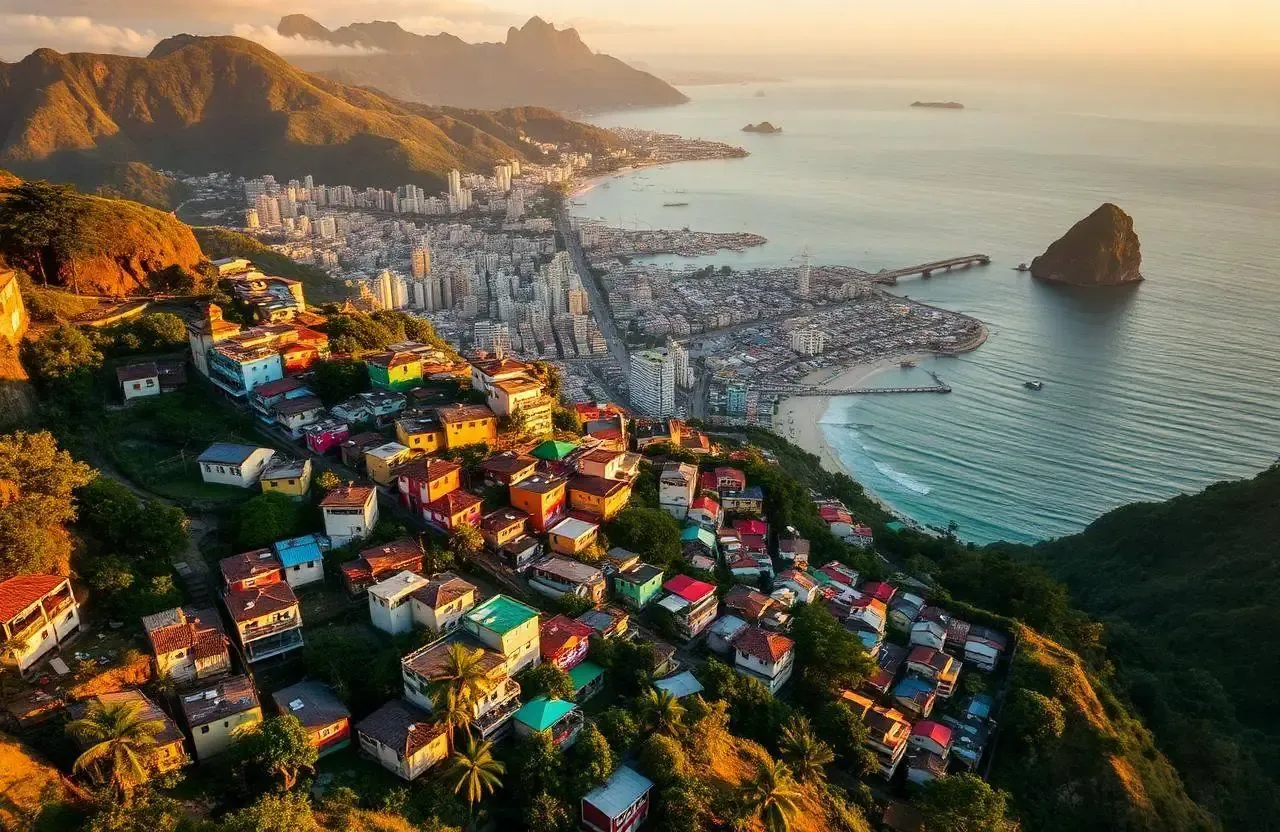
Not a slum, not a "no-go zone", not a movie set. Rocinha is a functioning city-within-a-city: banks, McDonald's, gyms, samba schools, a public health post, dozens of schools, thousands of small businesses, and a fibre-optic backbone. The hillside layout — houses stacked on houses on a 45° slope — is what makes it visually iconic and what makes navigation impossible for outsiders without a guide.
Roughly 60% of residents were born there. The community has its own accent, its own funk-carioca artists, its own food (feijão tropeiro, açaí spots) and its own rules. The presence of organised crime is real but rarely visible to visitors on a legitimate tour route.
A quick history
Rocinha ("little farm" in Portuguese) started in the 1930s as small plots sold to Northeastern migrants working construction in booming Zona Sul. It exploded through the 1960s–80s as rural Brazilians came south looking for work; the community built itself house-by-house, on land nobody else wanted — the steep slopes between São Conrado and Gávea. Today it is officially recognised as a bairro (neighbourhood), with municipal services, formal addresses, and a growing middle class of Rocinha-born professionals who stayed.
The view from the top
Rocinha's upper reaches, especially the Laboriaux mirante, deliver one of Rio's most extraordinary panoramas — a 270° sweep across São Conrado's crescent beach, Pedra da Gávea, Dois Irmãos, Ipanema in the distance and open ocean. Almost every tour includes this stop; bring water, the climb up in the sun is real.
Is Rocinha safe to visit right now?
For guided walking tours on the main commercial spine (Estrada da Gávea) during daylight — yes, with the caveats below. Operators track the situation daily via a network of Rocinha-based guides; if there is unrest (occasional police operations, community shutdowns), tours are cancelled and refunded. That responsiveness is exactly why you book a guide rather than freelance.
Real risks are: wandering into side alleys, taking phone photos of the wrong people, and being out after dusk. Not real risks: being kidnapped, robbed at gunpoint on a tour, or "getting caught in a shootout" (statistically extremely rare during tour hours on tour routes). For broader context see Rio safety now and Rio safety map.
Ethics — the honest version
Favela tourism is contested inside Rocinha itself. Community leaders draw a clear line between the ethical model (walking tours led by residents, money circulating locally, respectful behaviour, permission-based photography) and "human safari" tourism (jeeps, no interaction, photographing people like animals in a zoo). We only recommend the first. Our favela-tour comparison rates 5 operators on ethics, guide sourcing, group size, and community reinvestment.
What a typical tour includes
- Pickup from your Ipanema/Copacabana/Leblon hotel by van or Uber.
- Moto-taxi ride to the top of Rocinha (optional; alternatives on foot). The moto ride alone is worth the ticket.
- Guided walk downhill through main streets and safe alleyways with a Rocinha-born guide.
- Stops: panoramic viewpoints, community bakery, NGO project, street-art murals, açaí bar, a family-run home for coffee.
- Duration: 3–4 hours. Group size: 4–8 people (avoid 15+ groups).
- Cost: R$150–250. Bring an extra R$50 in cash to spend at community shops.
Photography rules
- Yes: panoramas, murals, general streetscapes without identifiable faces.
- Ask first: any person, any home interior, any shop counter with people in frame.
- Never: anyone armed. This is not negotiable and has nothing to do with squeamishness — it is a hard safety rule.
When not to visit
- After dark — always.
- Days after a major police operation (your operator will proactively cancel).
- Heavy rain — the steep alleys become dangerous.
- Carnaval weekend main days — the community is busy with its own celebrations; tours pause.
Where to base yourself
Rocinha is a visit, not a stay. The neighbouring options are excellent:
- Leblon — safest, most upscale, 10 min uphill Uber to the São Conrado tunnel side.
- São Conrado — quiet beach neighborhood directly below Rocinha's ocean side; big resort hotels.
- Vidigal — a smaller favela next door with a well-established boutique-hostel scene and Dois Irmãos hike.
Open Booking.com's Rocinha district results; verify the property's exact location before booking.
Compare Rocinha staysRelated
- Best favela tours compared (ethics + safety scores)
- Is a favela tour worth it?
- Vidigal guide
- São Conrado guide
- Rio safety guide
FAQ
Is it safe to visit Rocinha as a tourist?
Yes — on a guided tour from a reputable operator, walking the main commercial spine (Estrada da Gávea) during daylight. It is not safe to wander alone, take photos without permission, or enter side alleys (becos) without a local. Rocinha is an active community, not a theme park — the safety rules are social, not just physical.
How big is Rocinha?
Rocinha is Brazil's largest favela — officially ~70,000 residents, unofficially closer to 200,000. It climbs the hillside between São Conrado (beach) and Gávea (Zona Sul), giving it panoramic ocean-and-mountain views most Ipanema penthouses would envy.
Is a Rocinha tour ethical?
It can be — if the operator is community-owned or partners with local guides who live in Rocinha, keeps groups under 8, walks (never jeeps through), spends money at Rocinha-run businesses, and asks permission before photos. Avoid 'safari' style tours in open trucks; those are the ones locals object to. See our ethics-first comparison of five Rocinha & favela tour operators.
How much does a Rocinha tour cost?
R$150–250 per person for a 3–4 hour walking tour with pickup from Zona Sul, community-based guide, moto-taxi ride up (optional), and stops at NGO-run cafés, viewpoints and community projects.
Can I take photos in Rocinha?
Panoramic views and murals — yes. People, homes, alleys — only with explicit permission, and never any armed men (this is dangerous, non-negotiable). Your guide will tell you when to lower the camera. Respect it.
How do I get to Rocinha independently?
Don't. Ubers refuse most Rocinha addresses; the entrances are controlled and unfamiliar faces are noticed immediately. Every credible visit is with a guide. The safest and most rewarding way is a community-led walking tour.
What should I wear?
Comfortable trainers (steep streets, uneven steps), light clothes, small crossbody bag, no visible jewellery or high-end camera gear. Bring cash in small notes to spend at community businesses.
Keep planning
Best Neighborhoods in Rio de Janeiro (2026)
Compare 19 Rio neighbourhoods for first visits, beaches, families, nightlife, luxury and budget stays, with honest local verdicts and links to every guide.
Is a Favela Tour Worth It?
Honest 2026 verdict on favela tours — ethics, safety, cost, Vidigal vs Rocinha, best operators.
Favela Tours in Rio: Ethical Guide
Honest local guide to favela tours in Rio: which favelas, how to choose an ethical operator, safety, photography and what NOT to do.
Hang Gliding in Rio de Janeiro: Prices, Safety & Booking (2026)
Is hang gliding in Rio worth it? Tandem flights from Pedra Bonita: 2026 prices, ABVL-credentialed operators, weight and age limits, weather risk, the paragliding alternative and an honest verdict.
Rio de Janeiro Neighborhood Map – 19 Official Boundaries
Interactive street map using official municipal boundaries for all 19 PlanRio neighbourhood guides, with price, beach, nightlife, food and metro comparisons.