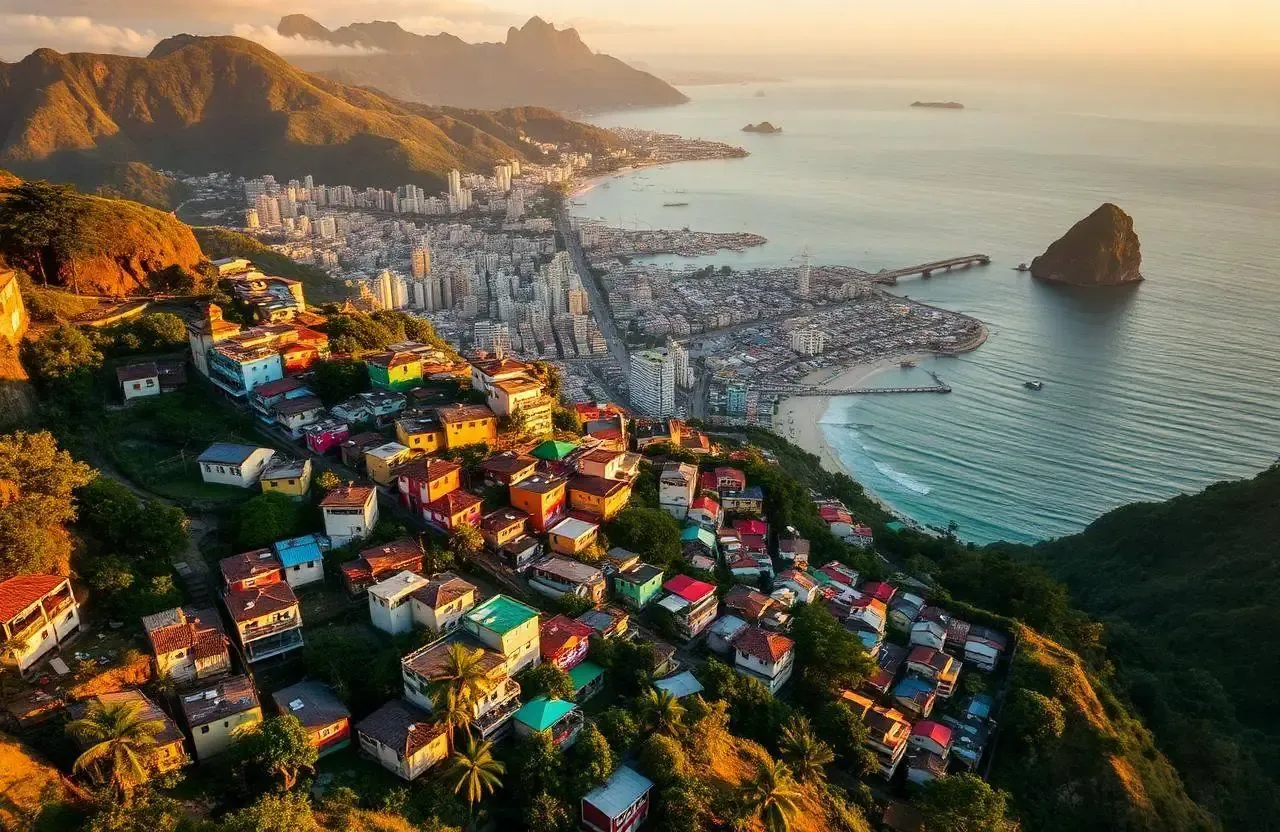
Favela Tours in Rio: The Ethical 2026 Guide
Roughly one in four Cariocas lives in a favela. You cannot understand Rio de Janeiro without understanding them — but the question of whether to visit one as a tourist deserves a careful, honest answer rather than the breezy yes/no most travel sites give.
This guide is written from the local perspective: when a favela visit is meaningful and economically positive for the community, when it tips into "poverty tourism", and how to tell the difference between a tour that funds the place you're visiting and one that extracts from it.
Quick Answer
Yes — favela tours can be one of the most genuine experiences in Rio, if you book a small-group walking tour with a resident-led operator in Santa Marta, Vidigal or Babilônia. Avoid bus-based "favela safari" packages, never enter without a local guide, and follow your guide's photography rules without exception.
Ready to pick an operator? See our side-by-side comparison of the 5 best favela tour operators in Rio — prices, ethics scores and community-impact breakdown.
What a Favela Actually Is
The word "favela" gets translated as "slum" — that's misleading. Favelas are self-built urban neighbourhoods, often on Rio's most dramatic terrain, with their own commerce, culture, sound systems, samba schools and political life. Some, like Rocinha, are full cities of 70,000+ people with banks, pharmacies, schools and cable internet.
Most have informal infrastructure (electricity, water, sanitation are often improvised) and complex security situations that vary block by block. They are not curiosities. They are home to about 1.5 million Cariocas.
The Ethical Question, Answered Honestly
A favela tour is ethical when it does three things: employs residents as guides at fair wages, funds at least one local project (a school, a daycare, a music programme), and treats residents as equals, not exhibits. Many operators do all three. Some do none.
The simplest test before booking: can the operator name the community-based organisation it supports, and is the lead guide from the favela you're visiting? If both answers are no, book elsewhere.
Which Favela Should You Visit?
Santa Marta (Botafogo) — best first visit
Small (~5,000 residents), highly organised, the first favela in Rio to be 'pacified', and the easiest tour to do well. You ride a panoramic incline tram up the hillside, walk down through the famous coloured houses (the 'Favela Painting' project) and meet the Michael Jackson statue from the They Don't Care About Us video shot here in 1996. Strong community-tourism cooperative.
Vidigal (Leblon side) — the South Zone view
Sits between Leblon and São Conrado with arguably the best view in the city. Vidigal has become a creative magnet — galleries, hostels, the trailhead to Dois Irmãos hike. A walking tour here pairs beautifully with the morning hike.
Babilônia & Chapéu Mangueira (Leme)
Two small, calm communities behind Copacabana. Babilônia hosts an environmental cooperative and one of Rio's best community restaurants — Estrelas da Babilônia. A 2-hour walking tour is gentle, rewarding and very Rio-South-Zone.
Rocinha — the biggest, the most complex
Latin America's largest favela, on the hillside above São Conrado. Visit only with a strongly recommended, locally-rooted guide; situations here change with little notice. The reward is the most layered, real experience of how a favela actually functions as a city.
Cantagalo & Pavão-Pavãozinho (Ipanema/Copacabana)
Two interconnected favelas above Ipanema, accessed by a free public elevator from the Cantagalo metro station. The lookout at the top is one of the great underrated South Zone viewpoints.
How to Choose an Operator (5-Step Checklist)
- Lead guide is a resident of the favela you're visiting — not just "from Rio".
- Group size of 6 or fewer. Big groups turn the visit into a procession.
- Walking tour, not bus. If you never get out of the vehicle, you're on a safari.
- Names a local project they fund — a daycare, NGO, music programme — and you can verify it.
- Cancels openly when security is uncertain. Operators that promise tours every day are red-flagging you.
Safety in 2026: The Honest Picture
Most favela visits in Santa Marta, Vidigal, Babilônia and Cantagalo run without incident year-round. However, since late 2024 specific communities (Rocinha included) have experienced periodic security operations and faction shifts. A good operator will simply postpone your tour rather than push through.
Always cross-check the day's situation — our Rio safety right now guide tracks how to read these signals, and the safety map shows which areas are currently active.
Never, ever enter a favela by yourself, with a delivery app driver, or by walking up "to see". A guide is non-negotiable.
What to Wear & Bring
- • Modest, comfortable clothing. Trainers (closed shoes) — alleys can be wet and steep.
- • Phone in pocket, no DSLR around the neck. Take photos when your guide says yes.
- • R$50–100 cash for water, a coffee at a community café, or a craft purchase that supports a resident.
- • No flashy jewellery, no political T-shirts. You are a guest in someone's neighbourhood.
What NOT to Do
- • Don't use a drone. Ever. This is read as surveillance and is genuinely dangerous.
- • Don't photograph children. It's considered deeply disrespectful.
- • Don't film any vehicle, group of young men, or anyone who appears to be working at an entrance.
- • Don't post location tags in real time — wait until you're back home.
- • Don't assume the favela is the "real" Rio and the South Zone is fake. Both are real Rio. One is just much harder to reach.
How a Favela Tour Fits the Rest of Your Trip
A favela visit pairs well with a day of cultural Rio: combine Santa Marta with a Botafogo lunch and the Sugarloaf cable car; do Vidigal in the morning then descend for an afternoon at Leblon beach; or build it into a wider live-like-a-local day. For first-timers building a wider plan, our 3 & 5-day itinerary places favela visits on day 3, after you've found your bearings.
FAQs
Are favela tours in Rio ethical?
They can be — and they often aren't. The ethical line is clear: tours led by residents, that pay local guides directly, contribute a meaningful share to community projects, and treat the favela as a place to meet people rather than photograph poverty are good. Bus-based 'safari' tours operated by outside agencies that drop tourists off for selfies are not. Always book with a community-based operator.
Are favela tours safe?
The pacified, tourism-active favelas — Rocinha, Vidigal, Santa Marta, Babilônia, Cantagalo — are genuinely safe to visit on a guided tour during the day. Conditions can change quickly though: in 2025–2026, security situations have shifted week to week in some communities. A reputable local operator will simply not run a tour when conditions are wrong. Never enter a favela without a local guide, and never with a visible camera.
Which favela should I visit?
Santa Marta (Botafogo) is the best first-timer choice: small, well-organised, with a Michael Jackson statue, mural project and panoramic tram ride. Vidigal offers South Zone views and a creative scene. Rocinha is the largest favela in Latin America and gives the most layered experience but requires a serious local guide. Babilônia and Cantagalo are easier add-ons from Copacabana.
How much does a favela tour cost?
Expect R$100–250 per person for a 2–3 hour walking tour with a resident guide, including the moto- or van-taxi up the hill. Anything dramatically cheaper is usually an aggregator reselling someone else's labour.
Can I take photos in a favela?
Always ask first. Photographing buildings and views is generally fine; photographing people, children, vehicles, or anyone who looks like they're working is not. A good guide will tell you exactly when to put the phone away. Drone use is forbidden.
Book ethical favela walking tours
Check availability & pricesProfessional aerial video tour
A licensed operator films Rocinha from the air with a professional drone — giving you an extraordinary bird's-eye perspective of the favela and surrounding hillside that no ground-level tour can match. Completely separate from (and complementary to) a walking tour.
Check favela drone tour