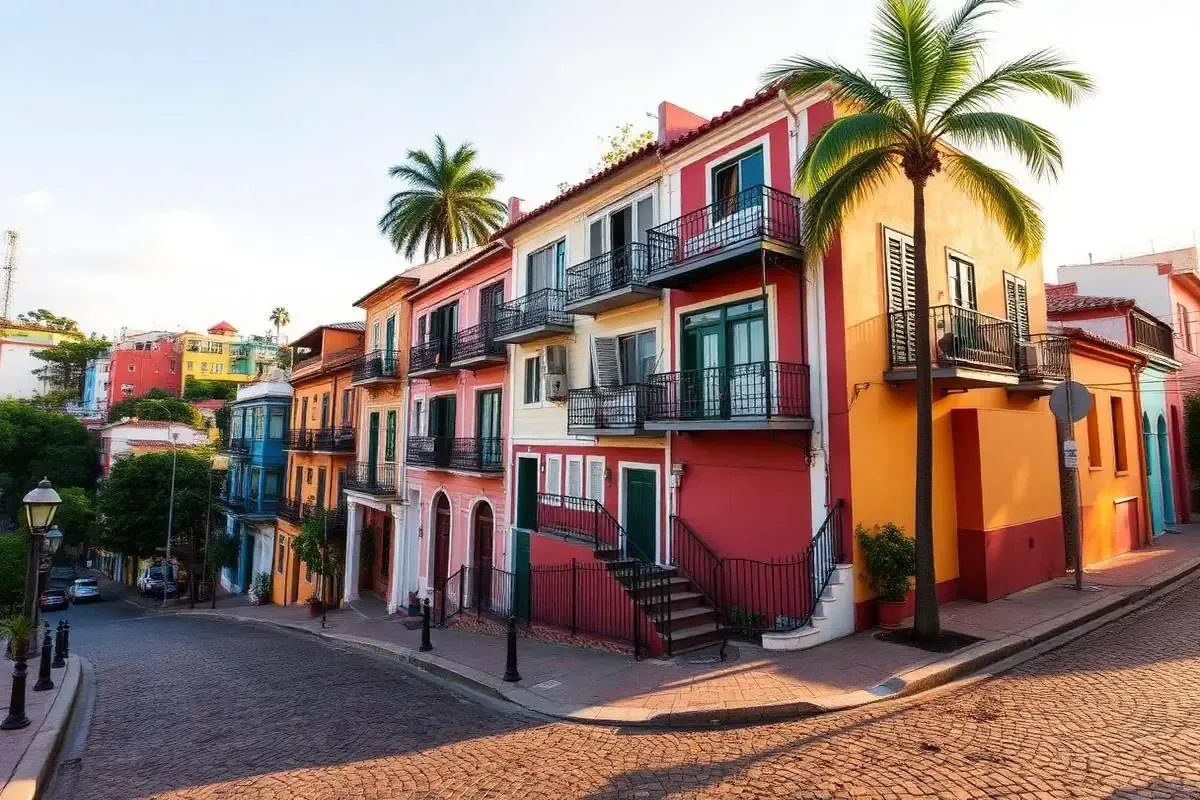
Santa Teresa, Rio de Janeiro
Written and reviewed by Lotte — Rio local, founder & editor of PlanRio · How we research · First published · Last reviewed
Quick answer
Santa Teresa is Rio's best choice for a slow, culture-led visit: a hillside neighbourhood of cobbled lanes, historic houses, small galleries and views above Centro. The bonde (tram) climbs from Carioca when service is running, but there is no metro in the neighbourhood and the beach is a separate journey. Visit for a half or full day, or stay only if you are happy to plan around hills and app rides.
Santa Teresa at a Glance
- Best for: Choose Santa Teresa when you want a culture-led day among historic buildings, galleries, viewpoints and neighbourhood bars. It can also suit a longer stay if atmosphere matters more than quick beach and metro access; for a short first trip, visit rather than making it your only base.
- Atmosphere: Creative and residential at once. The active stretches around Largo dos Guimarães mix cafés, small restaurants, studios, local errands and visitors; quieter roads can begin only a few turns away. This is a lived-in neighbourhood, not a continuous attraction district, so the mood changes with the street, the weather and the hour.
- Nearest metro: There is no metro station in Santa Teresa
- Typical cost: There is no useful fixed Santa Teresa price: restaurant menus, hotel rates and app rides vary by date and demand
Santa Teresa is a hillside neighbourhood above Centro where the yellow bonde (tram), old mansions, small galleries and independent bars share narrow, uneven streets. It rewards a slow daytime visit and a deliberate plan: there is no metro in the neighbourhood, distances on a map hide real climbs, and the beaches are a separate journey.
Why Visit / Why Stay Here
Choose Santa Teresa when you want a culture-led day among historic buildings, galleries, viewpoints and neighbourhood bars. It can also suit a longer stay if atmosphere matters more than quick beach and metro access; for a short first trip, visit rather than making it your only base.
Atmosphere
Creative and residential at once. The active stretches around Largo dos Guimarães mix cafés, small restaurants, studios, local errands and visitors; quieter roads can begin only a few turns away. This is a lived-in neighbourhood, not a continuous attraction district, so the mood changes with the street, the weather and the hour.
Pros
- • A distinctive hillside setting and a strong sense of place
- • Historic houses, cultural venues and small creative businesses
- • A compact central cluster for cafés, bars and restaurants
- • A memorable tram approach from Centro when service is running
- • Easy to pair with Lapa and the Selarón Steps in daylight
Cons
- • No metro station or direct beach access
- • Steep grades, cobbles and stairs make walking tiring
- • A short-looking map route can involve a difficult climb
- • Public transport and car access need a same-day check
Safety Tips for Santa Teresa
Use shoes with grip and treat the climbs as part of the itinerary. Almirante Alexandrino and the streets around Largo dos Guimarães are useful orientation points, but a nearby pin can sit on a different slope or staircase. Check the actual approach to each address, keep to busy, familiar routes in daylight, and take a verified ride door-to-door after dark. For current citywide safety context, use our Rio safety guide and safety map.
For a full Rio safety brief, see our Rio safety guide and our guide to checking Rio safety today.
Best Time to Visit
Plan for daylight and a weather window rather than a particular month. Cooler, drier conditions make the climbs easier; heavy rain can make the cobbles slick, while heat turns a long uphill walk into hard work. Check the forecast and the opening calendar for any museum or cultural venue you are travelling up to see.
See our best time to visit Rio and Rio weather by month.
How to Get to Santa Teresa
Getting here: The most memorable public-transport approach is the bonde from Estação Carioca in Centro, crossing the Arcos da Lapa before climbing into the neighbourhood. Service, destinations, ticket conditions and queues can change, so check our current Santa Teresa tram guide on the day. A ride-hailing car to the exact venue is more practical with luggage, limited mobility, rain or a late return; traffic makes journey times variable.
Public transport: There is no metro station in Santa Teresa. Carioca is the useful metro and VLT connection in Centro; from there, check whether the bonde is operating to your chosen stop. City buses serve surrounding corridors, but routes and service can change. For a direct trip between hillside addresses, ride-hailing is often the simplest option. See the tram guide for current service details and the Rio transport guide for the wider network.
Walking: Use shoes with grip and treat the climbs as part of the itinerary. Almirante Alexandrino and the streets around Largo dos Guimarães are useful orientation points, but a nearby pin can sit on a different slope or staircase. Check the actual approach to each address, keep to busy, familiar routes in daylight, and take a verified ride door-to-door after dark. For current citywide safety context, use our Rio safety guide and safety map.
Plan the airport leg to Santa Teresa
If you want a direct ride from GIG, check that the selected transfer covers your exact Santa Teresa address and luggage. Confirm the pickup instructions with the operator and your accommodation; ride-hailing after landing is another option, with live prices and waits.
More: GIG airport guide · private drivers · Rio Metro · Uber & 99 · full transport guide · current Santa Teresa tram guide.
Top Attractions in Santa Teresa
- • Escadaria Selarón — 215 mosaic-tiled steps by artist Jorge Selarón
- • The bonde route from Estação Carioca across the Arcos da Lapa, when operating
- • Parque das Ruínas — a former mansion transformed into a cultural centre and viewpoint
- • Museu Chácara do Céu — a house museum with art and a hillside garden
- • Largo dos Guimarães — the neighbourhood's most useful food and meeting-point cluster
How Santa Teresa fits together on the hill
Santa Teresa is not one neat square with attractions arranged around it. Think of it as a group of small centres connected by steep streets, stairways and a tram line. From Centro, the bonde climbs over the Arcos da Lapa and reaches stops that orient you to different parts of the hill; the route and operating destination are subject to current service, so treat the tram map as a planning aid rather than a promise that every branch is open.
Largo dos Guimarães is the most useful first-time anchor because cafés, restaurants and small businesses cluster around it. The tram corridor and nearby museum area make a different kind of visit: architecture, gardens and cultural programming rather than a continuous shopping street. Farther along the hill, residential lanes can feel quiet quickly. A hotel or restaurant described as 'Santa Teresa' may therefore be close to one service cluster but awkward for another. Check its exact address, slope and pickup point before booking or setting off.
The distinction matters most when you combine stops. Two places that look adjacent on a city map can be separated by a steep climb or a staircase that is not suitable for every traveller. Group one centre at a time, decide whether your route is uphill or downhill, and leave room to change the plan if rain, construction or tram service alters the easiest connection.
Plan around the route, not the list of sights
A good Santa Teresa visit has one clear arrival point, one central pause and one planned way out. If the tram is running to the stop you want, it can make the approach part of the outing. If it is suspended, shortened or crowded, a ride to a named venue is a sensible alternative; the point is to keep the rest of the day useful rather than waiting indefinitely for a particular carriage.
Use the first attraction to set the direction of travel. A museum or cultural venue gives the morning a fixed anchor, while lunch near Largo dos Guimarães gives you a natural pause before deciding whether to continue on foot. If Selarón is on the plan, think of it as a daylight descent toward Lapa, not a reason to climb back up after dark. Check the current venue hours and the final leg before you commit to a route.
For visitors with limited time, a short route with a proper meal is better than trying to cover every viewpoint, museum, bar and staircase. Santa Teresa is most rewarding when you notice the changes between its small centres. A rushed checklist mostly turns those changes into transport problems.
A first-visit half-day that leaves room to look around
Start with the transport decision. Check the operator's notice and choose either the tram from Carioca or a car to the first address. Do not buy a ticket until you know which destination is operating and what return arrangement applies. Once uphill, spend the first part of the visit at one cultural stop—Parque das Ruínas or Museu Chácara do Céu are close enough to consider together, but each has its own opening calendar and entrance conditions.
Walk toward the central cluster only if the weather, mobility and street approach make sense. Pause for lunch or coffee around Largo dos Guimarães, then browse a nearby studio or take a slow look at the houses along the main street. This is the part of the day where Santa Teresa feels like a neighbourhood rather than a collection of ticketed stops: residents are doing errands, bars are setting up, and the steep setting explains why the blocks do not behave like a flat grid.
Finish by choosing one direction. Continue downhill to the Selarón Steps and Lapa while it is still a sensible walking route, or return to your original pickup point and leave the staircase for another day. Keep a ride option available if the pavement is wet or tired legs make the last descent unappealing.
How to make a full day feel unhurried
A full day works when it has a strong middle, not when it contains the most pins. Use the morning for the tram and a museum or cultural centre whose current hours you have checked. Have a sit-down lunch before the afternoon heat or rain changes how much climbing you want to do. Then choose either a gallery-and-architecture wander around the hill or a route toward the Selarón Steps and Lapa; both are valid, but doing both plus several distant viewpoints can make the day unnecessarily fragmented.
If sunset is important, verify that the viewpoint or terrace you chose will be open and that access is public or included in your reservation. A photograph from a restaurant terrace is not the same thing as a guaranteed public viewpoint. Make the return ride part of the booking plan, especially if you are dining uphill, travelling with children or staying at a property reached by steps.
Santa Teresa also pairs well with Centro or Lapa because they sit below the hill and share the tram and Selarón route. It is a poor add-on to several beach stops on the same day: travel across Rio can take longer than a map suggests, and the change of pace is part of the visit.
Food, music and the journey home
The neighbourhood's food scene ranges from informal botecos (neighbourhood bars serving drinks and small plates) to planned destination meals. Pick the kind of evening you want before you choose a venue. A relaxed plate and a cold drink around the central lanes asks for a different schedule from a special-occasion reservation on a steeper street. Check the current menu, payment options, opening day and whether the kitchen serves at the time you expect; online listings can lag behind a venue's own notice.
For detailed restaurant choices, use the dedicated Santa Teresa restaurant guide, which compares meal styles and access. For a view-led dinner, reserve directly and ask what the table or terrace arrangement actually includes. The view is a bonus, not a substitute for confirming the booking details.
After dark, plan the return before you order the first drink. Ask the venue where drivers can stop, wait inside for the car and check that your accommodation's gate or reception is ready for a late arrival. Lapa has more concentrated nightlife, but the two areas are not interchangeable; compare them before deciding where to spend the evening.
Decide whether to sleep here or visit for the day
Staying in Santa Teresa is a choice about daily rhythm. It can be a good fit if you want quiet mornings, characterful architecture and a slower return to a hillside property after sightseeing. It is less convenient if your ideal day begins with a swim, depends on walking to the metro, or finishes with unplanned nightlife. A short first visit can usually see the neighbourhood without moving the hotel there.
Before booking, compare the exact property location rather than the neighbourhood label. Ask about stairs from the street, luggage help, the car drop-off, reception hours, air-conditioning, noise and the route to the nearest useful food stop. A 'central' address may still sit above a steep approach; a hotel photo cannot show the full walk from the car to the room. The dedicated Santa Teresa accommodation guide maps the trade-offs and hand-picked options, while Ipanema is a useful contrast for travellers who want beach and metro convenience.
For a split stay, only move hotels if the change genuinely improves the trip. Rio is spread out, so packing, checking out and waiting for a room can use the time you hoped to save. A single beach-side base plus a planned Santa Teresa day is often the simpler arrangement for a short holiday.
Rain, heat and uneven streets
Rain changes Santa Teresa more than it changes a flat beach grid. Cobblestones become slippery, steps need more care and ride-hailing pickup points can be harder to reach. Choose shoes with grip, carry a light layer for a wet or windy evening, and do not promise yourself a long walk just because it looked short in a route planner. In heavy rain, keep the visit to a venue with confirmed opening and use a car between points.
In hot weather, shorten the uphill section and put shade, water and a seated meal into the schedule. If a museum or cultural venue is your main reason for coming, confirm the day's opening before you travel; if it is closed, decide whether the street-and-food version of the visit is still worth the ride. This simple check prevents the common mistake of arriving with a rigid itinerary and no useful alternative.
Photograph a neighbourhood, not just a backdrop
Santa Teresa's strongest photographs often come from the relationships between details: a tram against the aqueduct, a balcony above a steep lane, a view that opens unexpectedly between houses. Take time to frame those layers, but step aside from doorways and keep the pavement clear. Residents use the same streets for school, deliveries and daily errands, so a popular photo point is still part of someone's route home.
Ask before photographing people, staff or an interior, especially in a small bar or shop. The Selarón Steps are public art and a busy visitor stop; avoid blocking the stairs for a long shoot, and be considerate when people are moving through. At the tram, follow staff instructions and keep phones inside the carriage. The Rio photography guide has broader camera advice and other public viewpoints.
If the light is poor or a viewpoint is closed, do not trespass for a better angle. The architecture and street life make a worthwhile subject without a rooftop or private terrace, and a second visit is better than forcing access to a view.
When Santa Teresa is not worth using as your base
Skip an overnight stay here if most of your holiday is built around daily beach time, frequent metro trips or a packed list of city sights. The neighbourhood's character does not erase the practical cost of going up and down the hill, and late-night transport needs a little more thought. Travellers with heavy luggage, limited mobility or a strict early-morning schedule should inspect the exact property approach before treating the room rate as a bargain.
That does not make Santa Teresa a poor visit. It makes it a better deliberate half-day or full-day destination for many travellers: come for the tram, a museum, lunch or a slow look at the streets, then return to a base that matches the rest of the itinerary. If you want samba and late-night venue choice, compare Lapa; if you want the simplest beach routine, compare Ipanema or Copacabana. The honest answer depends on what you want to do every morning, not only what looks atmospheric in a photograph.
Hidden Gems (Locals Only)
- • Armazém São Thiago (Bar do Gomes) — an old-school boteco (neighbourhood bar) near the central lanes
- • Small studios and galleries along the main hillside streets; check each one's current opening days
- • The tram crossing of the aqueduct is a moving piece of the city, not just a photo stop
- • A slower loop around the blocks near Largo dos Guimarães reveals everyday shops between visitor stops
- • The quieter lanes are best appreciated in daylight, with a mapped return route rather than aimless wandering
Parks, Museums & Culture
- • Parque das Ruínas — a cultural venue with an open-air terrace; check the current programme and access before visiting
- • Museu Chácara do Céu — a house museum whose collections and visitor arrangements are set by its current programme
- • Museu Casa de Benjamin Constant — a historic home museum; confirm its opening status before making a special trip
- • Centro Cultural Laurinda Santos Lobo — a neighbourhood cultural venue whose exhibitions and hours can vary
See our best museums in Rio.
Architecture
Look up as well as along the pavement: older houses, balconies, tiled details, gardens and later buildings sit side by side on the slopes. Some have been carefully restored, some show their age, and many are private homes. Parque das Ruínas is the most legible architectural stop; the nearby house museum gives a different contrast between historic setting and later design. Treat façades as homes first and photographs second.
Best Restaurants in Santa Teresa
Budget: Bar do Mineiro for Mineiro-style cooking and Cafecito for a lighter stop; check the day's menu and service
Mid-range: Espírito Santa and Sobrenatural for a sit-down meal; confirm current service before travelling up specifically
Luxury: Aprazível or Térèze for a planned occasion meal; reserve directly and confirm the current menu and access
Related: best restaurants in Rio · churrascarias · Brazilian food guide · Santa Teresa restaurant guide.
Best Cafés
- • Cafecito — Argentine café with sunny terrace
- • Café do Alto — mineiro breakfast, all-day pão de queijo
- • The Bakers — sourdough and pastries near Largo dos Guimarães
See: best coffee shops · best brunch.
Best Bars
- • Bar do Mineiro — cachaça temple
- • Armazém São Thiago (Bar do Gomes) — 100-year-old boteco
- • Aprazível bar — mountain-side cocktails
- • Explorer Bar — cocktail bar with mixology culture
See: best bars · best rooftop bars.
Nightlife
The evening is better suited to a long meal, a bar and conversation than a late club crawl. Lapa has a different, busier nightlife scene below the hill, but do not treat the stairs or a quiet downhill road as a night shortcut. Choose the venue first, arrange the ride back, and check that your pickup point is reachable from the door.
Shopping
Look for independent studios, small galleries and locally made objects around the central streets rather than expecting a conventional shopping district. Opening days can be irregular, so use a gallery visit as a bonus stop, not the one fixed reason for the trip. Lapa and Centro have their own markets and shops, but plan the connection instead of assuming an easy walk back uphill.
Hotels in Santa Teresa by Budget
Luxury: Full-service and boutique hotels in restored houses; compare the exact room, entry route and included facilities
Mid-range: Small guesthouses and design-led stays around the central hillside; verify the address and late-arrival process
Budget: Hostels and simpler guesthouses can work, but check the final uphill approach, stairs and transport options carefully
Digital Nomad Info
The neighbourhood can suit a creative longer stay, but do not assume that a charming room has work-ready internet. Ask the property for recent upload and download results, a desk and a backup plan before committing. Cafés are useful for a short session, not a substitute for a guaranteed quiet call space. The hills also make a quick beach break less spontaneous than in Ipanema or Botafogo.
Working remotely in Rio · best coworking · eSIM & SIM cards.
Family Friendliness
Older children who enjoy trams, art and looking for architectural details may like the visit. A stroller is awkward on steep, uneven pavements, and a full day can involve more climbing than the map suggests. Choose one indoor cultural stop, one meal and a clear pickup point; do not build a family plan around covering every attraction on foot.
Accessibility
Santa Teresa is challenging for many travellers with limited mobility: steep gradients, uneven paving, narrow pavements and steps are common. Accessibility varies by individual venue and can change with construction or event setup. Contact the tram operator and each museum, restaurant or hotel about boarding, entrances, toilets and drop-off points before booking; a car can remove some walking, but not every venue has step-free access.
Photography Spots
- • Escadaria Selarón — photograph the details as well as the full staircase
- • Parque das Ruínas terrace, when open — a broad view over Centro and the bay
- • The bonde crossing the Arcos da Lapa, from a safe public viewpoint
- • The streets around Largo dos Guimarães, where shopfronts and hillside architecture meet
Best Times of Day in Santa Teresa
Sunrise
Santa Teresa is more rewarding for architecture and changing light than for a guaranteed sunrise platform. If you want an early viewpoint, confirm that it is a public place, check the route in daylight beforehand and arrange how you will leave; do not enter private grounds or follow an unfamiliar staircase before dawn.
Sunset
Parque das Ruínas and selected restaurant terraces can frame the bay and Centro, but opening arrangements and sightlines vary. If a meal with a view is the point, reserve with the venue and confirm what the booking guarantees. For a public viewpoint, check same-day access and plan your ride home before sunset.
Local Etiquette
- • Remember that the streets, stairways and houses are part of a residential neighbourhood, not a film set
- • Ask before photographing residents, staff or the inside of a small business
- • Follow tram staff instructions and keep hands, bags and phones inside the carriage
- • At a boteco (neighbourhood bar), take your time and ask what is available today rather than assuming an online menu is current
Typical Costs in Santa Teresa
There is no useful fixed Santa Teresa price: restaurant menus, hotel rates and app rides vary by date and demand. Check the current menu before choosing a meal, compare the full room total and cancellation terms, and price the return ride at the time you travel. Use our Rio costs guide for trip-wide budgeting rather than relying on old neighbourhood averages.
Local Insider Tips
- • Check the tram's live service and destination before you leave; the neighbourhood has no metro fallback
- • Save the exact address of your next stop, not just the name of the neighbourhood, because the hill has several distinct approaches
- • Keep a flexible indoor alternative for rain and check the venue's own calendar on the day
- • If you are staying uphill, confirm luggage assistance, late check-in and the car drop-off before booking
- • Pair Santa Teresa with Lapa or Centro on the same outing; save a beach district for another half-day
Common Mistakes Tourists Make
- • Assuming a short map distance means a flat, simple walk
- • Planning the whole outing around the tram without checking same-day operation
- • Treating the museum, restaurant and viewpoint opening calendars as interchangeable
- • Walking unfamiliar stairways or quiet lanes after dark to save a short ride
- • Booking a hillside hotel without checking the entrance, luggage route and late-arrival plan
- • Trying to combine Santa Teresa with several far-apart beach attractions in one day
Suggested Santa Teresa Itineraries
Half-day
- Begin with the tram if it is running to a useful stop, or take a car to the first venue
- Choose one museum or cultural centre and confirm its opening status before setting out
- Have lunch around Largo dos Guimarães, then browse nearby studios if they are open
- Finish with a planned ride or a daylight route toward the Selarón Steps and Lapa
Full day
- Use the morning for the tram and one pre-checked museum or cultural stop
- Stop for lunch in the central cluster; allow time to sit rather than rushing between bookings
- Spend the afternoon on one gallery or architecture walk, with a weather and mobility check
- Choose either a viewpoint or Selarón and Lapa as the final stop, not both by default
- If staying for dinner, reserve and arrange a door-to-door ride in advance
Evening
- Arrive by a planned ride and go directly to the venue you booked
- Choose one dinner or bar anchor rather than improvising a long walk across the hill
- Ask staff to confirm the pickup point and arrange the return ride from the door
- If you want Lapa's nightlife, make it a separate destination with its own transport plan
Book Experiences in Santa Teresa
A focused guided tram and walking tour can connect Santa Teresa, Lapa, the Selarón Steps and Centro without making you solve every hillside connection. Check the live listing for its route, language, pickup, availability and cancellation terms.
Choosing a room here? Read the dedicated where to stay in Santa Teresa guide for micro-areas, property types and the booking checklist.
PlanRio hand-picked Santa Teresa stays
Two curated stays to start your shortlist. Check the exact hill, access route and live booking terms before choosing.
Villa Paranaguá Hotel & Spa
Best for: Boutique comfort close to Santa Teresa and Glória
Know before booking: The hillside setting is atmospheric, but ride-hailing is more practical than walking to the beach.
Check Villa Paranaguá Hotel & Spa availabilitySanta Teresa Hotel Rio de Janeiro - MGallery Collection
Best for: A retreat-style luxury stay away from the beachfront towers
Know before booking: The hillside setting is atmospheric, but ride-hailing is more practical than walking to the beach.
Check Santa Teresa Hotel Rio de Janeiro - MGallery Collection availabilityLinks may earn us a commission at no extra cost to you. This supports PlanRio and does not influence our recommendations.
Live stay prices around Santa Teresa
Hotels and apartment rentals around Santa Teresa with live prices. Add your dates inside the map; the booking itself happens on the provider's site.
Map by Stay22. It loads only when you tap, and then sets cookies from Stay22 and its analytics partners. Bookings made through the map may earn PlanRio a commission.
Combine With Nearby Neighborhoods
Frequently Asked Questions
Is Santa Teresa safe for tourists?
Santa Teresa is a lived-in hillside neighbourhood where conditions vary by street and time. For a visitor, use active, familiar routes in daylight, check the exact approach to each destination, keep valuables discreet and take a verified ride door-to-door after dark. Read current official travel advice and our Rio safety map before choosing a route.
How do I ride the Bonde tram to Santa Teresa?
The Santa Teresa bonde starts from Estação Carioca in Centro and crosses the Arcos da Lapa before climbing into the neighbourhood. Check the operator's current service status, ticket rules, destination and hours before setting out; weekends and special operating conditions can affect queues and availability. Our Santa Teresa tram guide keeps the transport details in one place.
Can I stay in Santa Teresa if this is my first Rio trip?
Yes, if you actively want a hillside, culture-led base and are comfortable arranging rides for beaches, late returns and some steep walks. Many first-time visitors find Ipanema or Copacabana easier for beach and metro access. Compare the exact property approach in our Santa Teresa stay guide before deciding.
Are Escadaria Selarón and Santa Teresa the same thing?
The steps sit between Lapa and Santa Teresa — most walking routes descend from Santa Teresa to Selarón and end in Lapa. Plan them as one connected route.
What are the best boutique hotels in Santa Teresa?
The best fit depends on the exact block, stairs, included facilities and how you plan to travel after dark. Santa Teresa has character-led hotels and guesthouses, but rates and availability change; use our updated Santa Teresa accommodation guide to compare hand-picked properties and check each current listing before booking.
Is Santa Teresa close to Rio's beaches?
No. Santa Teresa sits above Centro, while Rio's main visitor beaches are in other parts of the city. Allow a separate trip and check live traffic or transit before you leave; choose a beach-side base if you want to walk to the sand every day.
What should I do if the tram is not running?
Keep the neighbourhood visit and change the approach: use a verified ride to a named venue, then follow a short daylight route with a return pickup planned. Do not rely on an old bus number or assume a tram stop will be staffed. Check our transport guide and the operator's same-day notice.
Location & Map
Santa Teresa rises above Centro and Lapa. Largo dos Guimarães is a practical orientation point, while the tram line, museum area and upper hillside addresses have different approaches. Check the exact destination and current tram route before setting out; a map pin alone does not show the climb.