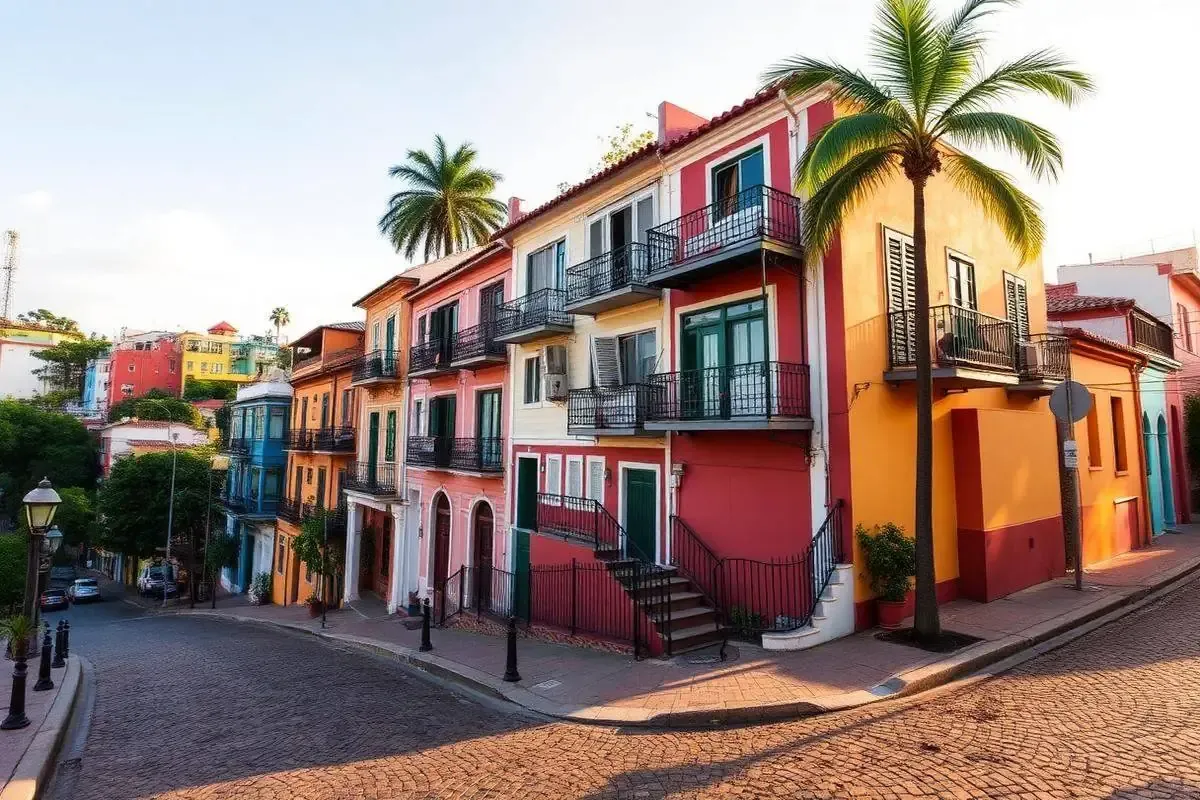
Santa Teresa Tram: Tickets, Hours, Route & Local Tips
Written and reviewed by Lotte — Rio local, founder & editor of PlanRio · How we research · First published · Last reviewed
Check service before you leave
The operator publishes regular weekday and weekend hours, but its current service status and branch departures can change. Check the live notice and confirm the destination with staff at Estação Carioca; do not rely on an interval or branch timetable copied from another listing.
The state government page is occasionally offline; the operator's own channel is the faster same-day check.
Quick answer
Rio's Santa Teresa tram costs R$20 for a same-day return and leaves from Estação Carioca in Centro, crossing the Lapa Arches into Santa Teresa. The operator publishes general hours, but same-day status and branch departures can change. Ask staff which destination is running; Curvelo and Largo dos Guimarães are useful stops on the shared section.
Prefer the tram inside a guided Santa Teresa and Lapa afternoon?
The four-hour tour rides the bonde, then walks Parque das Ruínas, the Selarón Steps and Lapa with a guide who handles the steep connections and the timing. Worth it if you only have one Santa Teresa slot.
Check the Santa Teresa, Lapa and tram tourThe yellow bonde (tram) is one of the rare Rio attractions that is still useful public transport. It is scenic, inexpensive and genuinely memorable: the car leaves modern Centro, rattles across the top of the 18th-century Arcos da Lapa, then squeezes between pastel houses on Santa Teresa's hills. It is also slow, capacity-limited and confusing if you rely on an old timetable.
Our honest take: ride it once, but treat the journey as the beginning of a Santa Teresa day rather than a theme-park loop. Pair it with lunch and a daylight descent toward Escadaria Selarón.
Santa Teresa tram at a glance
| 2026 fare | Operator lists R$20; state and visitor information describe a same-day return, one journey each way |
| Payment | Operator lists cash and debit/credit cards at Estação Carioca; no Pix listed |
| Current published hours | Weekdays 08:00–18:30; weekends and public holidays 09:00–17:00 |
| Current interval | Do not plan around a fixed headway; check same-day operator status and ask about the next departure |
| Branch network | Dois Irmãos and Paula Mattos/Largo das Neves are historic destinations; the state announced Silvestre passenger service from 11 June 2026. Confirm which route is operating today. |
| Capacity | 32 passengers per tram |
| Main boarding point | Estação Carioca, Rua Lélio Gama 2, Centro |
| Shared section | Carioca → Arcos da Lapa → Curvelo → Largo dos Guimarães, then the branches divide |
| Corcovado train link | Not yet an interchange — the state describes it as future integration |
| Best arrival | At opening, especially on weekends and public holidays |
The honest verdict: independent or guided?
Go independently if…
- You have a flexible half-day and can arrive early
- You are comfortable navigating Centro and using Uber as a backup
- You want a long lunch or time inside galleries
- R$20 transport is more appealing than a packaged tour
Book a guide if…
- It is your first visit and you want the history explained
- You need Santa Teresa, Lapa and Selarón connected efficiently
- You are short on time or uneasy about Centro logistics
- You prefer transport and route changes handled for you
The useful guided option
This specific four-hour product lists the tram with Santa Teresa, Parque das Ruínas, Selarón Steps, Lapa, Cinelândia and Confeitaria Colombo. It costs far more than travelling independently, but the route can make sense for a first visit. Check the exact inclusions, language, café opening and tram status for your date before paying.
See the Santa Teresa, tram & Lapa tourLinks may earn us a commission at no extra cost to you. This supports PlanRio.
How to get to Estação Carioca
The boarding point is Estação Carioca, Rua Lélio Gama 2, Centro. It is separate from Rio's modern VLT. From Carioca metro, leave toward Avenida República do Chile and walk uphill behind the Petrobras headquarters; from the VLT stop, allow roughly ten minutes.
- From Ipanema or Copacabana: metro to Carioca is the predictable choice in weekday traffic; Uber is easier for a group early in the morning.
- From Lapa: walk in daylight via the Metropolitan Cathedral area, but use your map rather than trying to climb directly onto the aqueduct.
- Buying tickets: every passenger must be present at the platform. The operator can stop sales before 16:00 on busy days.
- Return planning: keep the paper ticket and ask staff where to reboard. Carry enough mobile data and money for an Uber if the return queue becomes impractical.
The route and the stops that matter
1. Carioca and the Arcos da Lapa crossing
The tram soon emerges above Lapa and crosses the old Carioca Aqueduct. Sit on the right uphill for the broad city view, but do not lean out or hold an unsecured phone over the edge.
2. Curvelo
Curvelo is the practical stop for Parque das Ruínas and Museu Chácara do Céu. It also positions you well for a downhill walk toward Selarón later. If museums and views matter more than restaurants, this is often a better first stop than staying aboard to the end.
3. Largo dos Guimarães
This is Santa Teresa's social centre: cafés, restaurants, bars and Rua Almirante Alexandrino radiate from the square. Get off here for lunch and an easy introduction to the neighbourhood. Our nearby food guide compares the classic botecos (informal local bars) with the expensive view restaurants: see the best restaurants in Santa Teresa.
4. Beyond Largo dos Guimarães: the route branches
The historic route continues beyond the busy Largo dos Guimarães, but the live operating notice does not confirm which branches are running on a given day. Ask staff at Carioca before boarding and treat the destination shown on the tram as the current authority:
Dois Irmãos
The historic route continues up Rua Almirante Alexandrino toward Dois Irmãos. Confirm the current terminus and timetable at Estação Carioca; do not plan around an old branch schedule.
Paula Mattos → Largo das Neves
The Paula Mattos route historically reaches Largo das Neves via Paschoal Carlos Magno, Monte Alegre and Progresso. The operator’s live page does not publish its current departures; ask before choosing this as your destination. Largo das Neves is a quieter residential square when the branch is operating.
Silvestre
The state announced passenger service on the Silvestre branch from 11 June 2026. We could not confirm a current departure schedule on the operator’s live notice; ask staff before planning a ride there.
One important caveat on Silvestre: reopening the branch does not yet give you a tram-to-Corcovado-train connection. The state's own language is that the works “will allow the future integration of the trams with the Corcovado train” — the Silvestre station on the rack railway, shut since the 1960s, is not an open interchange. If Christ the Redeemer is the goal, book the Corcovado train or an official van separately and ride the bonde for its own sake.
A Santa Teresa and Lapa half-day that works
- 08:00 weekdays / 09:00 weekends: arrive at Carioca for the opening departures and buy the return ticket.
- Ride uphill: cross the Lapa Arches and get off at Curvelo or Largo dos Guimarães, depending on your first stop.
- Late morning: visit Parque das Ruínas for the city view, then walk through the adjoining streets rather than racing between photo pins.
- Lunch: choose Bar do Mineiro for a casual feijoada or reserve Aprazível when the bay view matters more than budget. Check current hours directly before going.
- Mid-afternoon: descend in daylight to Selarón Steps and continue to the Arcos da Lapa.
- Finish: take an Uber from Lapa, or continue into Centro for Confeitaria Colombo when it is open. Do not force Colombo into a Sunday plan; the tour listing also warns that the café closes Sundays.
This route uses the tram one way. The ticket covers a return, but walking downhill reveals more of the neighbourhood and avoids planning the afternoon around a seat. If anyone is tired, order an Uber from a busy venue.
A short history without the tourist-brochure myths
Tram service to Santa Teresa began in 1872. The line was electrified in 1896 and began using the former aqueduct as its rail viaduct. So 1872 is the beginning of the service; 1896 marks the electric tram and Lapa crossing visitors recognise today.
The system survived while Rio removed most streetcars. After the fatal 2011 derailment, it closed and returned gradually from 2015 with rebuilt infrastructure and modernised vehicles. The bonde is also everyday transport: make room for residents and follow staff.
Common mistakes tourists make
- Arriving late on a busy day and assuming tickets will still be available. The operator warns that sales may stop before closing when demand is high; a visitor guide also reports weekend capacity limits. Check status and leave time for a backup route.
- Trusting an undated blog timetable. Operations can change; check the official page or the operator's Instagram that morning.
- Believing Largo dos Guimarães is the terminus. The historic network continues beyond it, but current branch operation must be confirmed at the station.
- Planning a bonde-to-Corcovado-train transfer at Silvestre. The branch carries passengers again, but the interchange with the rack railway is still described as future integration.
- Leaving one person to buy for the group. The operator requires the passengers to be present at the platform when tickets are sold.
- Expecting unlimited hopping. The R$20 fare provides one journey each way, not a day pass for repeated boardings.
- Confusing the bonde with the Sugarloaf bondinho. In tourist English both get called “bondinho”, but Sugarloaf is a cable car in Urca; Santa Teresa is a street-running tram from Centro.
- Walking down after dark. The daytime Selarón descent is rewarding; after sunset, use Uber or a licensed taxi door to door.
Safety and accessibility
On board, sit fully inside, use the belt where provided and keep hands, bags and camera straps clear of the open sides. The tram passes close to walls, vehicles and street furniture. At stops, wait for staff rather than stepping into the road. We do not recommend hanging out for a photo—apart from being unsafe, it treats a public service like a film prop.
Routes can change quickly between busy visitor spots and quieter residential streets. Stay on your planned route, keep valuables discreet and read the current Rio safety update. The tram entrance, steep cobbles and uneven pavements can be difficult for limited mobility; a door-to-door vehicle tour may be a better fit.
Local expert tips
- Choose Curvelo for museums and views and Largo dos Guimarães for food and atmosphere. Ask at Carioca whether the Paula Mattos branch to Largo das Neves is operating before making it your plan.
- Ask staff at Carioca which branch the next tram runs. It costs nothing and decides whether your ride ends at Dois Irmãos or Largo das Neves.
- Wear shoes with grip. Santa Teresa's polished cobbles become slippery after rain.
- Download an offline map and keep mobile data for the return Uber; street names and staircases are easy to misread.
- Bring water but buy lunch locally. The tram matters to the neighbourhood partly because it brings visitors to small businesses.
- If the tram is suspended, do not abandon Santa Teresa: Uber up, walk the same cultural route and see the arches from below.
- For nightlife, compare the two areas first in our Santa Teresa vs Lapa guide; they feel very different after dark.
Stay here for boutique character and quiet mornings—not for quick beach access. Our Santa Teresa accommodation guide compares Largo dos Guimarães, Curvelo and the upper hills before you choose a property.
Stay near the tram route
These hand-picked Santa Teresa properties fit different boutique trips. Confirm the exact access route and plan door-to-door transport after dark.
Dates optional. Set guests and rooms on Booking.com.
Check what your room rate includes
- Breakfast, taxes and any extra fees
- Room type, guest count and bed setup
- Cancellation deadline and when payment is due
Confirm these on Booking.com for the rate you choose.
Villa Paranaguá Hotel & Spa
Best for: Boutique comfort close to Santa Teresa and Glória
Know before booking: The hillside setting is atmospheric, but ride-hailing is more practical than walking to the beach.
Check Villa Paranaguá Hotel & Spa availabilitySanta Teresa Hotel Rio de Janeiro - MGallery Collection
Best for: A retreat-style luxury stay away from the beachfront towers
Know before booking: The hillside setting is atmospheric, but ride-hailing is more practical than walking to the beach.
Check Santa Teresa Hotel Rio de Janeiro - MGallery Collection availabilityAltos de Colombo Guest House Boutique
Best for: A small boutique guesthouse on Santa Teresa's leafy Rua Aprazível
Know before booking: A recently opened hillside guesthouse — read the newest reviews and plan ride-hailing over walking.
Check Altos de Colombo Guest House Boutique availabilityFrequently asked questions
How much does the Santa Teresa tram cost in 2026?
The operator currently lists a R$20 ticket. State and visitor information describe it as a same-day return with one boarding in each direction; check the ticket conditions when buying at Estação Carioca. The operator lists cash and debit or credit cards, but not Pix. This is a working public service, so confirm today's operation before setting out.
What are the Santa Teresa tram opening hours?
The operator currently publishes service hours of 08:00–18:30 on weekdays and 09:00–17:00 on weekends and public holidays. Its status and intervals can change, and the live notice is not a reliable branch-by-branch timetable. Ask staff which destination is running that day and check the operator notice before setting out.
Where do you catch the Santa Teresa tram?
Visitors should board at Estação Carioca, Rua Lélio Gama 2 in Centro. It is a short walk from Carioca metro and VLT stops, behind the Petrobras building and close to the Metropolitan Cathedral. Tickets are normally sold only at Carioca; Curvelo sales depend on available seats.
What route does the Santa Teresa tram take?
The route leaves Estação Carioca, crosses the Arcos da Lapa and climbs past Curvelo and Largo dos Guimarães. Beyond Guimarães the historic network continues toward Dois Irmãos and Largo das Neves. The state announced passenger service on the Silvestre branch from 11 June 2026, but the current operator page does not publish dependable branch-by-branch departures. Ask which destination is operating before boarding; Guimarães is not necessarily the terminus.
Does the Santa Teresa tram connect to the Corcovado train for Christ the Redeemer?
Not yet. The state says the revived tram route allows *future* integration with the Corcovado rack railway; it does not announce an open tram-to-train interchange. The Silvestre station on the rack railway, closed since the 1960s, is not currently a passenger transfer point. Do not build a Christ the Redeemer plan around changing from the bonde to the train at Silvestre — book the Corcovado train or an official van separately.
Should I ride to Largo das Neves or Largo dos Guimarães?
Largo dos Guimarães is Santa Teresa's social centre, with cafés, restaurants and bars. Largo das Neves is a quieter residential square on the historic Paula Mattos branch. Since the operator does not publish a current branch timetable, ask staff at Estação Carioca whether that destination is running before buying a ticket for it.
Can you get off and reboard the Santa Teresa tram?
The same-day return ticket described by state and visitor information allows one boarding in each direction, not unlimited hops. That makes it possible to ride up, explore Santa Teresa and use the return portion later if service is operating. Keep the ticket, confirm the return point with staff and allow a backup ride budget in case queues or operations change.
How long is the queue for the Santa Teresa tram?
There is no fixed wait; queues and service can vary by day, time and operating conditions. The operator warns that tickets may sell out before closing on busy days, and a recent visitor guide also reports weekend capacity limits. Arrive early if the tram matters to your plan, and leave a generous buffer rather than relying on a precise departure.
Is a guided Santa Teresa and Lapa tour worth it?
A guided tour is worth it for first-time visitors who want the tram, Santa Teresa, Parque das Ruínas, Selarón Steps and Centro connected without solving the route themselves. Independent travel is much cheaper and better for unhurried wandering. We would book a guide for a short visit, a language barrier or anyone nervous about Centro logistics.
Is the Santa Teresa tram safe?
The tram itself is a regulated public transport service rebuilt after the fatal 2011 accident. Use the seatbelt where provided, keep arms and phones inside and follow staff instructions. Streets and routes can be quieter after dark; choose a well-lit route you know or arrange door-to-door transport if you are unsure about the walk.
Is the Santa Teresa tram wheelchair accessible?
Do not assume step-free access. Boarding the historic-style tram involves narrow, elevated steps, while Santa Teresa has steep cobbled streets and uneven pavements. Travellers with limited mobility should contact the operator before visiting and consider a door-to-door guided vehicle tour if the tram or hillside walking will not be practical.
Sources checked
- Bondes de Santa Teresa — official operator service page
- Visite Santa Teresa — branch hours and the R$20 return fare
- State government delivery of the Silvestre branch — passenger service from 11 June 2026, future Corcovado integration
- Rio State Transport Department — Silvestre branch reopening and timetable notice
Fare, payment methods, published hours and the changing status of branch services checked 4 October 2026. This is a working hillside tramway: verify the same-day operation before building a schedule around a specific departure.
Keep planning
Santa Teresa neighbourhood guide
Where to stay, what to see and how the hillside works.
Best restaurants in Santa Teresa
Honest picks for feijoada, views, cafés and dinner.
Arcos da Lapa guide
History, photography and what happens below the tracks.
Rio transport guide
Metro, VLT, buses, taxis and Uber explained.