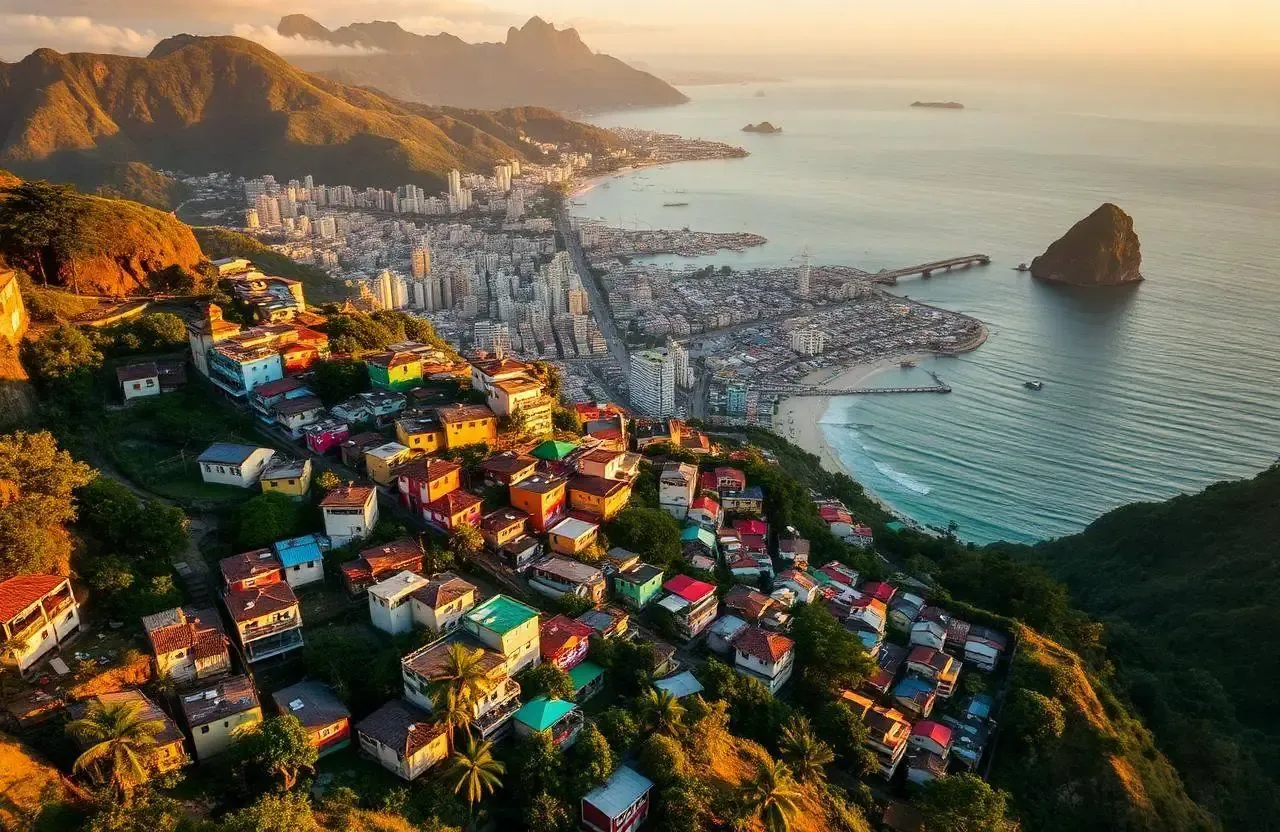
Baile Funk in Rio
Written and reviewed by Lotte — Rio local, founder & editor of PlanRio · How we research · First published · Last reviewed
Quick answer
Baile funk (funk carioca) is Rio's favela-born party culture: bass-heavy music, MCs, dance and community, with commercial club nights and very different community bailes. First-time visitors should choose a programmed venue, take a dance class, or enter a community baile only with a trusted local guide. Never follow an informal tip into a favela alone; plans and conditions can change.
The one way we would do a community baile as a first-timer
A local-led Rocinha funk-party crawl is the guided version of the night this page describes: a resident host, a group, agreed pickup and return, and the party itself rather than a club imitation of it.
Check the Rocinha funk-party crawlFunk carioca is the actual soundtrack of Rio. Not the bossa nova of the tourist restaurants, not even the samba of Lapa — funk is what blasts out of car boots on the way to the beach, what teenagers play on the bus, what launched Anitta from a Honório Gurgel bedroom to global stardom. Experiencing a real baile is one of the most electric nights Rio offers. It also demands more judgement than any other night out in the city, so here's the honest version — the culture, the two very different worlds of funk, and how to do it without getting yourself into trouble.
Baile funk at a glance
| What it is | Funk carioca — favela-born electronic party music |
| The sound | Bass-heavy beats, MC vocals and styles from melody to 150 BPM |
| Two settings | Programmed venues vs community street bailes |
| Easiest introduction | A Copacabana class or a ticketed club night |
| Closest guided experience | A local-led Rocinha funk-party crawl |
| Typical rhythm | Late start; the strongest crowd often comes after midnight |
| Dress code | Dress down · bring little · no valuables |
| Golden rule | Favela baile? Only with a trusted local guide |
| Related sound | Samba (traditional, acoustic, different night) |
First: what does baile funk mean?
In Rio, funk usually means funk carioca, not the American groove of James Brown. Baile simply means a dance or party. So a baile funk is the event, while funk carioca is the wider music and culture around it. People may shorten the whole thing to baile; context does the rest.
The MC is the voice, the DJ controls the momentum, the dancers answer both, and the sound system is part of the architecture. At a big community baile, the bass is something you feel through the street before you see the crowd. That scale is thrilling, but it also means you are entering somebody's neighbourhood rather than a purpose-built tourist attraction.
From the Black Rio dances to today's sound
The story begins before the first Portuguese-language funk hits. Rio's large sound-system dances grew from the Black Rio scene of the 1970s, when soul, funk and other Black music filled suburban dance halls. The 12 July 1970 Baile da Pesada is now treated as a national milestone: Brazil made 12 July the official National Funk Day in 2024. During the 1980s, Miami bass, electro and drum machines reshaped the parties; locally produced Portuguese tracks followed, with DJ Marlboro's Funk Brasil in 1989 an important turning point.
Rio did not merely import a sound. Producers rebuilt it around local percussion, slang and everyday favela life. The tamborzão — literally “big drum” — became one of its defining rhythmic bases, followed by faster and more minimal mutations. Funk melody, socially conscious tracks, sensual funk, proibidão, 150 BPM and newer hybrid beats can all appear under the same broad label. A single party will not represent the whole culture.
Funk has also been stigmatised and repeatedly treated as a security problem rather than a cultural form. That history matters when visiting: enjoy the music, pay the people producing the night, and resist treating poverty or armed territorial control as entertainment. Rio's own cultural programme recognises DJs, MCs and dancers as essential artists in traditional funk carioca.
Background checked against the Brazilian Chamber of Deputies, Rio's municipal culture programme and a recent peer-reviewed history of funk production.
What you will hear — and dance
Funk melody
More melodic hooks and pop structure; often the easiest gateway if you know Anitta or Ludmilla.
Tamborzão
The heavy, syncopated drum pattern most visitors recognise as classic Rio funk.
150 BPM
Faster, more relentless and built for peak-hour dancing rather than standing with a drink.
Passinho
Fast, inventive footwork born around the bailes, mixing influences such as break, frevo and samba.
The two worlds of funk (choose wisely)
Programmed venues — simpler
- Ticketed parties at clubs, concert halls and event spaces
- Published line-ups, formal door staff and a fixed address
- Easier meeting points and door-to-door rides afterwards
- Music may mix funk with pop, hip-hop, reggaeton or electronic sets
- Lower logistical complexity, but normal nightlife precautions still apply
Community bailes — only with current local knowledge
- Neighbourhood events created for local residents, not staged shows
- Huge sound systems, street-scale crowds and very late hours
- Access and security conditions can change without useful online notice
- Never arrive solo on an old blog, hostel rumour or social-media pin
- Go only with a trusted local who has checked that specific night's plan
Our three best ways to experience Rio funk
Our pick for a real baile: Rocinha funk-party crawl
The closest match to a community baile: meet by São Conrado metro, visit local spots with a guide and continue to a Rocinha funk party. We like the guided format for this intense late-night option; check recent reviews and follow the guide's instructions.
Our pick for beginners: women's funk dance class
A one-hour, beginner-friendly women-only class in Copacabana. This is our favourite low-pressure introduction because you learn the rebolado and basic funk movement before meeting the intensity of a late-night crowd.
Our pick for a social party: funk boat night
A four-hour party on Guanabara Bay with funk, reggaeton and electronic music. We like it for views and an easy mixed crowd, but choose it as a fun boat party—not as a substitute for a community baile.
Links may earn us a commission at no extra cost to you. This supports PlanRio.
Which option should you choose?
Choose Rocinha only if your main goal is a guided community-party experience and you are comfortable with a late, unpredictable night. Choose the Copacabana class if you want cultural context, movement and confidence without nightlife logistics. Choose the boat party if you want an organised social event where funk shares the playlist with international styles.
Our honest recommendation for many first-time visitors is the class first, then a ticketed funk night. It is a better progression than treating the most intense baile as a box to tick on night one.
What the night actually feels like
Do not expect a polished stage show with a neat beginning. A baile builds in layers: food and drinks at the edge, people arriving in groups, DJs stretching transitions, then the crowd thickening as the night gets later. You may hear only fragments of tracks before the beat switches. Participation matters more than knowing the words; a relaxed bounce and awareness of the people around you will take you further than a rehearsed routine.
Volume is part of the experience. If you are sensitive to loud sound, discreet earplugs are sensible, not uncool. Heat, dense crowds and long periods standing are normal. Eat beforehand, hydrate, wear shoes you can dance in, and agree on a meeting point with your group in case mobile service becomes unreliable.
The honest verdict
A baile is worth it if…
- You care about contemporary Rio culture, not only postcard sights
- You are comfortable with loud music, crowds and a genuinely late finish
- You can follow local advice without arguing when plans change
- You want to dance and listen rather than collect intrusive footage
Skip the community baile if…
- Your main interest is photographing a favela or chasing “danger”
- You need a fixed programme, early finish or guaranteed quiet exit
- You are travelling with children; many experiences are adults-only
- You cannot find a trusted guide with current knowledge of that event
Baile etiquette & safety
- Dress down, bring little. Leave jewellery and an expensive watch at your accommodation. Bring only the payment method and ID your booked experience says it accepts.
- Don't film everyone. Filming strangers, and especially anything that looks like the drug trade, is the fastest way to real trouble. Ask before photographing people.
- Plan the exit before the first drink. Confirm the meeting point, return arrangement and who is ordering the ride. Do not rely on finding transport spontaneously inside a community.
- Follow your guide or local, always. If they say leave, you leave — no negotiation.
- Watch your drink and your pace. Buy from the venue or a place your guide trusts, keep the drink with you and alternate alcohol with water.
- Protect your hearing. Good sound systems are extremely loud; small musician-style earplugs preserve the bass while reducing fatigue.
- Read the room on faction territory. If it feels off, it is — see our nightlife safety guide.
Common mistakes visitors make
- Following a hostel rumour into a favela at 3am. The most dangerous move there is. Use a real guide or don't go.
- Turning up at 10pm. The party hasn't started; you'll stand around and leave before it does.
- Treating a community as a theme park. These are people's homes — be a guest, not a spectator.
- Bringing valuables. Nothing you'd hate to lose comes to a baile.
- Confusing funk with samba. Two different nights — do a samba night in Lapa too.
Local expert tips
- Warm up with a playlist before you go — knowing a few MCs (Anitta's early tracks, Ludmilla, MC bootlegs) makes the night click.
- Learn the basic funk dance moves loosely; nobody expects perfection, but joining in beats filming.
- Eat a proper late dinner first — Rio parties on Rio time, and you'll be up till dawn.
- If you want the authentic favela experience, book a reputable community-led operator, ideally one based in the favela itself — see our honest take on favela tours.
- Sunday-into-Monday and midweek bailes exist but weekends are the big ones.
Frequently asked questions
What is baile funk in Rio de Janeiro?
Baile funk is the party culture built around funk carioca, Rio's home-grown electronic music. Its roots run through the Black Rio sound-system dances of the 1970s and the locally produced Portuguese funk that took shape in the late 1980s and 90s. Expect DJs, MCs, heavy bass, dance and styles ranging from melody to 150 BPM.
Can tourists go to a baile funk?
Yes, but choose the setting carefully. Ticketed funk nights and classes have published addresses and straightforward transport. Community bailes are local events whose access and security conditions can change quickly. A visitor should never enter one alone on an informal tip; go with a trusted local guide who has checked that specific night.
Are baile funk parties safe?
No nightlife event is risk-free. A formal venue is easier to plan because it has a fixed entrance, staff and a known ride-home point. A community baile may be peaceful and welcoming while still sitting in a territory where conditions change quickly. Current local knowledge, a planned exit and following your guide matter more than an old venue list.
Where can I hear funk carioca in Rio without going into a favela?
Check the current calendars of Rio's established concert halls and clubs, including Lapa venues such as Fundição Progresso and Circo Voador; programming changes, so neither is a permanent funk club. South Zone dance classes and ticketed parties are also easy entry points. Confirm the line-up before travelling because many nights mix funk with other genres.
What's the difference between funk and samba in Rio?
Samba is Rio's traditional, acoustic, century-old music — guitars, cavaquinho, live roda circles in Lapa and Pedra do Sal. Funk carioca is modern, electronic, bass-driven party music from the favelas. Both are essential Rio, but they're different nights out: samba is warm, communal and danceable in a bar; funk is loud, sweaty, high-energy and built around a sound system. Do both if you can.
What should I wear and bring to a baile funk?
Dress casually and wear comfortable trainers or other shoes you can dance in. Leave jewellery and an expensive watch at your accommodation. Bring only the payment method, phone and form of ID your booked experience says it accepts, keep them in a secure front pocket or small zipped bag, and avoid taking a large camera.
What time do bailes in Rio start?
Late. Rio nightlife runs on its own clock — bailes and funk nights rarely get going before midnight and often peak between 2am and 5am. Don't turn up at 10pm expecting a party; eat late, nap, and arrive after midnight. Plan your ride home in advance, because you'll be leaving in the small hours.
Is baile funk the same as Anitta's music?
Anitta grew out of funk carioca and still records it, but her global pop is a polished, radio-friendly branch of the genre. The bailes play a rawer, heavier spectrum — from bouncy 'funk melody' to the aggressive, uncensored 'proibidão' you'll only hear in the favelas. Think of Anitta as the mainstream gateway and the baile as the underground engine room the whole genre runs on.
Do I need to speak Portuguese at a baile funk?
You do not need fluent Portuguese to enjoy a baile funk, but a few basics make the night easier: boa noite (good evening), por favor (please), obrigado or obrigada (thank you), and posso passar? (may I get through?). At a community baile, language is another reason to go with a local guide rather than navigating alone.
Which baile funk experience is best for a first-time visitor?
For the closest guided version of a real baile, choose the Rocinha funk-party crawl. For a gentler introduction, the women-only Copacabana funk class teaches the movement and rhythm in daylight. The Guanabara Bay boat party is best for a social night with funk in the mix, but it is not a community baile.