Porto de Galinhas: The Complete Guide from Rio
Ipojuca · Pernambuco · Northeast Brazil
Written and reviewed by Lotte — Rio local, founder & editor of PlanRio · How we research · First published · Last reviewed
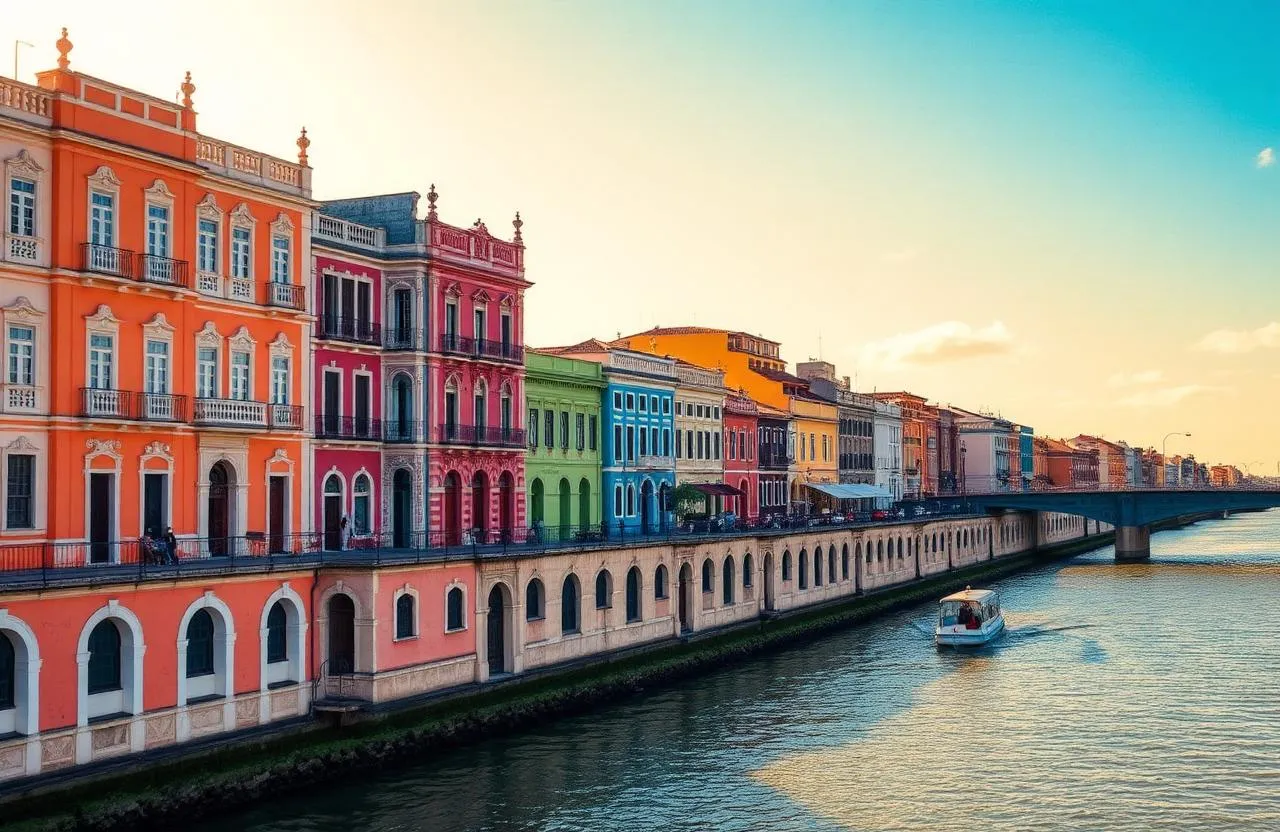
Illustrative gateway-city photograph of Recife; it does not show Porto de Galinhas.
Quick answer
Porto de Galinhas is a reef-protected beach village in Ipojuca, about 60 km south of Recife, and it is worth basing here rather than day-tripping. Its famous natural pools only exist at low tide, so the tide table — not your itinerary — decides which morning you go, and you reach them by jangada with an accredited operator. Give it three nights.
Porto de Galinhas is a beach village in Ipojuca, Pernambuco, known for reef pools that visitors reach by jangada. It is a practical base for the pools and nearby beaches, while Recife offers a city stay and access to Olinda. Your choice depends on whether you want to plan the trip around the tide or around the city.
For a pools-focused trip, staying near the village beach gives you more flexibility to choose a jangada departure around low tide. This guide explains how that affects the Recife-versus-Porto decision, where to stay, how to reach the coast and what to verify before booking.
Porto de Galinhas at a glance
| Getting there | Fly Rio → Recife (REC), then roughly 60 km / 1h–1h15 south by road |
|---|---|
| Ideal stay | 3 nights (2 is enough only if the tide cooperates on day one) |
| Best base | Porto de Galinhas village if you want to walk to everything; Muro Alto for calm resort beach |
| The headline sight | Piscinas naturais — reef pools visible only at low tide, reached by jangada raft |
| Tide rule | Go within an hour or two either side of low tide; check the table the evening before |
| Weather | Rain and sea conditions vary by date; check a current forecast and the tide table before building a beach day |
| Beaches | Porto village, Muro Alto, Cupe, Maracaípe, Pontal de Maracaípe, Praia dos Carneiros (further south) |
Complete destination guide
What makes it different: the reef and the tide
The whole destination is built on a geological accident. A sandstone and coral reef runs parallel to the shore a short distance out, and as the tide falls it emerges, trapping seawater between itself and the beach. What you get is a series of natural pools — piscinas naturais — that are warm, almost perfectly clear, shallow enough to stand in, and full of small reef fish that have learned that people arrive with food. It is a snorkelling experience that requires no skill and no boat trip beyond a ten-minute raft ride.
The non-negotiable consequence: there are no pools at high tide. At high water the reef is submerged and the beach in front of the village is just a beach. This catches out an astonishing number of visitors, who arrive for a two-night stay, find the sea flat and ordinary, and leave wondering what the fuss was about. Look up the tide table for your dates before you book your flights, and plan the rest of the trip around the low-tide windows rather than the other way round.
How the jangada trips work
You do not swim out. Access to the pools is by jangada — the traditional flat wooden sailing raft of the Pernambuco coast — operated by local jangadeiros working through an accredited association, and departures depend on the tide and local sea conditions. Check the ticket point and current arrangements before you go.
Confirm the current tariff at the association's beach kiosk and agree the amount before you board. Follow Ipojuca's visitor guidance: do not feed the fish or step on or touch the reef. Apply sunscreen before entering the water, and follow any additional instructions from the jangadeiros. Ask locally which trip is operating that morning.
The beaches, north to south
Muro Alto, a few kilometres north, is the postcard: a very long, very wide reef-enclosed lagoon where the water is calm and shallow for a huge distance. It is where most of the big resorts sit, and it is the best choice if you want a float-and-read beach with children. Cupe, between Muro Alto and the village, is a longer open stretch with more wind and more surf, and the beach-club and kiosk scene.
Porto de Galinhas village beach is the busy heart of it — the jangada departure point, the kiosks, the shops and the crowds. South of it, Maracaípe is the surf beach, with real waves, a younger crowd and a different atmosphere entirely; it is a ten-minute drive and worth a day. Just beyond it, Pontal de Maracaípe is the estuary where a small boat or kayak takes you to look for seahorses in the mangroves — a genuinely lovely late-afternoon trip, and one where choosing an operator who does not handle the animals matters. Further south again, Praia dos Carneiros is the most beautiful beach in this part of Pernambuco and a standard day trip.
The village, eating and the evening
The village itself is compact and pedestrianised in parts, with a dense grid of streets — the vilas — full of restaurants, craft shops, ice-cream, açaí and the ceramic chickens the place sells by the thousand. It is commercial and it is cheerful about it. Food is Pernambucan and seafood-led: moqueca, grilled fish, shrimp in every configuration, agulha (needlefish) fried whole, tapioca and bolo de rolo. Eat at least one meal at a beach kiosk with your feet in the sand, and at least one in the village where the prices are lower.
Evenings are relaxed rather than wild: dinner, a walk through the vilas, live music in a bar, forró if you look for it. This is a family destination more than a party one, and the nightlife is a fraction of what you would find in Jericoacoara or even Pipa. If a big night out is your priority, this is not that place, and we would rather tell you now than have you discover it on a Tuesday.
The name, and the history under the holiday
Ipojuca's visitor site repeats a local explanation linking the name to illegal slave-trade landings after 1850, when enslaved Africans were allegedly hidden beneath crates of guinea fowl and 'tem galinha nova no porto' served as a coded signal. Treat it as a local tradition, not settled etymology: the Atlas Digital da América Lusa cites a 1587 description that already uses 'porto das Galinhas', centuries before the usual date attached to the story.
There is an honest complication worth knowing, because it is the kind of thing a guide usually smooths over: a 'Vila de Porto de Galinhas' appears on a 17th-century Dutch map of Pernambuco, long before the 1850s, which suggests the name may be older than the story attached to it. Both things can be true — the name may predate the trade and the code phrase may have exploited it. Either way, the ceramic chicken souvenirs sit on top of a serious history, and Pernambuco's wider Afro-Brazilian heritage is the reason this coast looks and sounds and eats the way it does.
How to get there from Rio de Janeiro
Fly to Recife first
There is no airport at Porto de Galinhas; you fly to Recife (REC, Guararapes–Gilberto Freyre International), which is well served from Rio by the main Brazilian carriers and takes roughly three hours non-stop. Compare direct against one-stop options and book ahead for the sensible fares — this is a popular domestic route and prices climb hard into the Brazilian holiday calendar. Our domestic flights guide covers fare families, baggage and which Rio airport you will be leaving from.
From Recife airport the drive south is about 60 km and takes roughly an hour to an hour and a quarter in normal conditions, using the coastal expressway. Allow longer on a Friday evening or a holiday weekend. The airport sits on the south side of Recife, which helps — you are heading away from the city rather than through it.
Transfers, buses and cars
A pre-booked transfer, shared or private, is the least friction after a three-hour flight and is what most visitors use; your pousada can usually arrange one and quoting it in advance avoids the arrivals-hall negotiation. A taxi or ride-hailing from the airport also works, but confirm the fare or the app estimate before you set off, and be aware that return availability from the village is thinner than in a city.
There is a bus route involving a connection through Ipojuca town, and it is cheap and slow and unpleasant with luggage; we would not choose it. Renting a car at Recife airport is genuinely useful if you want Praia dos Carneiros, Maracaípe and the wider coast on your own schedule — but note that the village centre is congested and partly pedestrian, parking is awkward, and many pousadas have limited spaces. If your plan is pools, village and one day trip, skip the car and use local transport.
Getting around once you are there
The village is walkable and that is the point of staying in it. For the beaches either side — Muro Alto, Cupe, Maracaípe — the local options are the shared vans and the buggy drivers, and a buggy tour is the standard way to string several beaches together in a day. Agree the route and the price before you leave, and confirm whether the driver waits at each stop.
For Praia dos Carneiros, which is about 40 km further south, take an organised day trip or a car rather than improvising; the access is through private beach clubs with their own charges and arrangements, and turning up without a plan is how people end up paying twice. Our day-trip guides cover the comparison.
Best areas & neighbourhoods
Porto de Galinhas village (Vila)
The obvious base for a first visit: you walk to the jangada departure point, the restaurants and the shops, and you can respond to the tide in ten minutes rather than an hour. Busiest and noisiest, and the best value in pousadas.
Muro Alto
A few kilometres north, where the big resorts sit on an exceptionally calm, wide reef lagoon. Best for families and for anyone who wants a pool-and-beach holiday with the village as an outing rather than a doorstep.
Praia do Cupe
Between Muro Alto and the village: quieter, longer, breezier, with beach clubs rather than a town. A good compromise if you want calm but still want to drive to dinner.
Maracaípe
Ten minutes south and a different holiday — surf, a younger and more alternative crowd, simpler pousadas, better waves and no natural pools. Choose it if the reef is not your main reason for coming.
Serrambi / further south
Quieter still, with more isolated pousadas and reef pools of its own. For returning visitors who found the village too busy and are happy to drive for everything.
Where to stay in Porto de Galinhas
Porto de Galinhas is pousada country rather than hotel country, with a small number of large all-inclusive resorts concentrated at Muro Alto. The decision that matters is village versus Muro Alto: the village lets you walk to the jangadas and react to the tide; Muro Alto gives you a calmer, prettier beach and a resort day. For a first three-night trip built around the natural pools, we would stay in the village.
PlanRio's hand-picked hotel catalogue does not yet cover Porto de Galinhas, so we are not going to point you at a generic search and call it a recommendation. What we will tell you is what to check before booking: how far the pousada actually is from the jangada beach on foot, whether breakfast is included (it almost always is, and it is substantial), whether the rooms are air-conditioned rather than fan-only, and what the cancellation terms are — because if your dates turn out to have bad low tides, you may want to move them.
Safety guide
Use ordinary precautions for a busy beach destination: keep valuables attended, avoid leaving a phone or bag alone on the sand, and follow your accommodation's current advice about evening transport.
Sea conditions change by beach and tide. Ask local lifeguards or jangadeiros before swimming outside the reef, and follow their instructions if currents or weather make conditions unsuitable. At the natural pools, do not step on or touch the reef or feed the fish; the municipality asks visitors to protect the area.
Use sun protection, drink water and follow the operator's directions in the pools and mangroves. If you book a seahorse outing at Pontal de Maracaípe, choose an operator that lets you observe without handling the animals.
A 3-day Porto de Galinhas plan, built around the tide
Day 1 — Arrive, village, orientation: Transfer from Recife, settle in, walk the vilas and the village beach, and get the week's tide table from your pousada or the jangadeiros' kiosk. Dinner in the village. Do not book anything for tomorrow until you know when low tide falls.
Day 2 — Natural pools at the lowest tide, then Maracaípe: Take a jangada to the piscinas naturais on the best low tide of your stay, ideally on one of the first departures before the crowd. Afternoon at Maracaípe for the surf beach, then Pontal de Maracaípe at golden hour for the estuary and the seahorse mangroves.
Day 3 — Muro Alto or Praia dos Carneiros: Either a slow day on the calm reef lagoon at Muro Alto, or the full-day trip south to Praia dos Carneiros, the most beautiful beach on this coast. Last dinner at a beach kiosk with your feet in the sand.
Best tours & a practical booking guide
Two registry-listed activities match this destination: a full-day Porto de Galinhas tour and a scenic helicopter flight. Check each live listing for its meeting point, operating date, weather limits and inclusions; a listing from Recife may not start in Porto. The jangada trip itself is best arranged through the local association after checking the tide.
Praia dos Carneiros is a separate day trip farther south. Compare travel time and meeting point before booking it from a Porto base, and keep the low-tide morning free for the pools if those are your priority.
Porto de Galinhas tours worth booking
Porto de Galinhas full-day tour
Check the live listing for its meeting point, operating date and inclusions.
Scenic helicopter flight
The reef line and the pools from the air — short, and it explains the geology.
Links may earn us a commission at no extra cost to you. This supports PlanRio.
Common mistakes visitors make
- Booking dates without checking the tide table — the natural pools do not exist at high tide.
- Day-tripping from Recife and getting a mid-afternoon high tide, then concluding the place is overrated.
- Staying at Muro Alto for a pools-focused trip, then being an hour from the jangadas when the tide drops.
- Boarding a jangada without agreeing the price at the association's kiosk first.
- Feeding the fish, stepping on the reef, or ignoring local instructions at the pools.
- Swimming on the open beaches outside the reef without asking locally about currents.
- Walking on the reef or entering the pools without following the local visitor instructions.
- Expecting nightlife — this is a family beach town, not Jericoacoara.
Local expert tips
- Get the tide table on arrival and build both full days around it; everything else is flexible.
- Take one of the first jangadas of a falling tide rather than the mid-morning rush.
- Visit the pools on a weekday if you possibly can; Saturdays are a different experience.
- Check the forecast, tide table and local sea conditions close to your dates; weather and water conditions can vary.
- Confirm the jangada tariff at the jangadeiros' beach kiosk, not from a blog figure.
- Eat one meal in the village streets rather than only at beach kiosks — the prices are noticeably lower.
- Do Pontal de Maracaípe in the late afternoon, and refuse any operator who handles the seahorses.
- Carry cash as well as a card; some kiosks, buggy drivers and small pousadas prefer it.
- Book the Carneiros day trip rather than improvising — beach access there runs through private clubs.
Frequently asked questions
How do I get to Porto de Galinhas from Rio de Janeiro?
Fly from Rio to Recife (REC), around three hours non-stop, then travel about 60 km south by road, which takes roughly an hour to an hour and a quarter. A pre-booked shared or private transfer is the simplest option after the flight; a taxi or ride-hailing also works if you confirm the fare first. The bus involves a connection through Ipojuca and is slow with luggage.
Should I stay in Porto de Galinhas or Recife?
Stay in Porto de Galinhas if the natural pools are why you are going. They only appear at low tide, and being a ten-minute walk from the jangada departure point lets you take the best tide of your trip rather than whichever one your day trip happens to hit. Recife is the better base only if the city, Olinda and its museums are the main attraction.
When can you see the natural pools at Porto de Galinhas?
Only at low tide, when the offshore reef emerges and traps clear, shallow water between itself and the beach. Aim for the window within an hour or two either side of low water, and check the tide table for your dates before booking flights. At high tide the reef is submerged and there are no pools at all.
How much does the jangada ride to the natural pools cost?
The fare can change, so confirm the current price at the jangadeiros' official kiosk and agree it before boarding. The Porto de Galinhas Convention & Visitors Bureau identifies the association's kiosk at the end of Rua das Piscinas Naturais as the ticket point.
How many days do you need in Porto de Galinhas?
Three nights is the right length: one to arrive and read the tide table, one for the natural pools plus Maracaípe, and one for either Muro Alto or the day trip south to Praia dos Carneiros. Two nights works only if a good low tide falls conveniently, which is not something you can count on.
What is the best beach in Porto de Galinhas?
Muro Alto for calm, wide, shallow water and families; the village beach for the jangadas, kiosks and atmosphere; Maracaípe for surf and a younger crowd; Pontal de Maracaípe for the mangrove estuary and seahorses. Praia dos Carneiros, about 40 km south, is the most beautiful beach on this coast and is a day trip rather than a base.
When is the best time to visit Porto de Galinhas?
Choose dates around the low-tide windows you want to visit, then check the forecast and sea conditions close to travel. Rainfall and water conditions vary, so a fixed month range cannot guarantee a sunny beach day or a suitable pool visit.
Is Porto de Galinhas safe?
Use ordinary precautions in the village and on the beach, and treat the sea and reef with care. Ask locally before swimming outside the reef, follow jangadeiro instructions, and do not step on or touch the reef or feed the fish.
Why is Porto de Galinhas called that?
Ipojuca's visitor site repeats a local story connecting the name to illegal slave-trade landings after 1850 and a supposed coded phrase about new guinea fowl. Historical references cited by the Atlas Digital da América Lusa use 'porto das Galinhas' by 1587, so the later story is a tradition rather than settled etymology.
Is there nightlife in Porto de Galinhas?
Modest and family-oriented. Expect dinner, live music in the village bars, forró if you seek it out, and an early-ish end to the evening. If a serious night out is a priority, Jericoacoara, Pipa or a Brazilian city will suit you better; Porto's energy is daytime and beach-led.
Sources and image credit
Access, transport and conditions can change. Recheck the official local guidance and operator details before travelling.
- Ipojuca City Hall: Porto de Galinhas ↗
Local visitor guidance, including low-tide planning and care around the pools.
- Atlas Digital da América Lusa: Porto das Galinhas ↗
Historical references show the place name in late-sixteenth-century writing, so the popular nineteenth-century naming story is not settled etymology.
- Porto de Galinhas Convention & Visitors Bureau: Natural Pools ↗
Low-tide conditions, jangada access and the official ticket kiosk.
- Cooperativa dos Jangadeiros: Porto de Galinhas ↗
Accredited jangadeiro trips and advice to check the tide table.
- Brazilian Navy Hydrography Center: tide tables ↗
Check the forecast for the nearby Port of Suape before choosing a pool morning.