Bringing Prescription Medication to Brazil: Rules & Paperwork
Written and reviewed by Lotte — Rio local, founder & editor of PlanRio · How we research · First published · Last reviewed
Quick answer
Brazil allows medicines in accompanied baggage when the amount is compatible with your personal use, treatment and trip; Anvisa may request a prescription if the quantity suggests another purpose. Keep medicines in their labelled packaging and carry a prescription or clinician's letter. Controlled substances and cannabis products have additional rules, so check the exact active ingredient with Anvisa before travel.
At a glance
Quantity
Anvisa assesses whether the amount in accompanying baggage fits personal use and the length and circumstances of the trip.
Packaging
Keep medicines in their original labelled packaging where possible, and bring the leaflet and prescription as supporting documents.
Prescription
Carry a current prescription or clinician's letter, especially if the amount or product may need explaining.
Controlled medicines
Rules can depend on the substance and the international controls that apply; confirm your exact medicine with Anvisa before travel.
Prescription for controlled medicines
Anvisa's baggage guide says controlled medicines under Portaria 344/98 should be accompanied by a medical prescription; some substances are prohibited.
Import procedures
Anvisa's rules for importing medicines are not automatically the same as its rules for a traveller's accompanying baggage.
Cannabis products
Check the exact product and active ingredient with Anvisa in writing well before departure; do not assume a foreign prescription settles the baggage question.
Generic names
Write down the active ingredient, not just the brand — brand names differ in Brazil.
Carry-on
Keep medication in your cabin bag. A delayed checked bag should never be able to interrupt treatment.
Buying locally
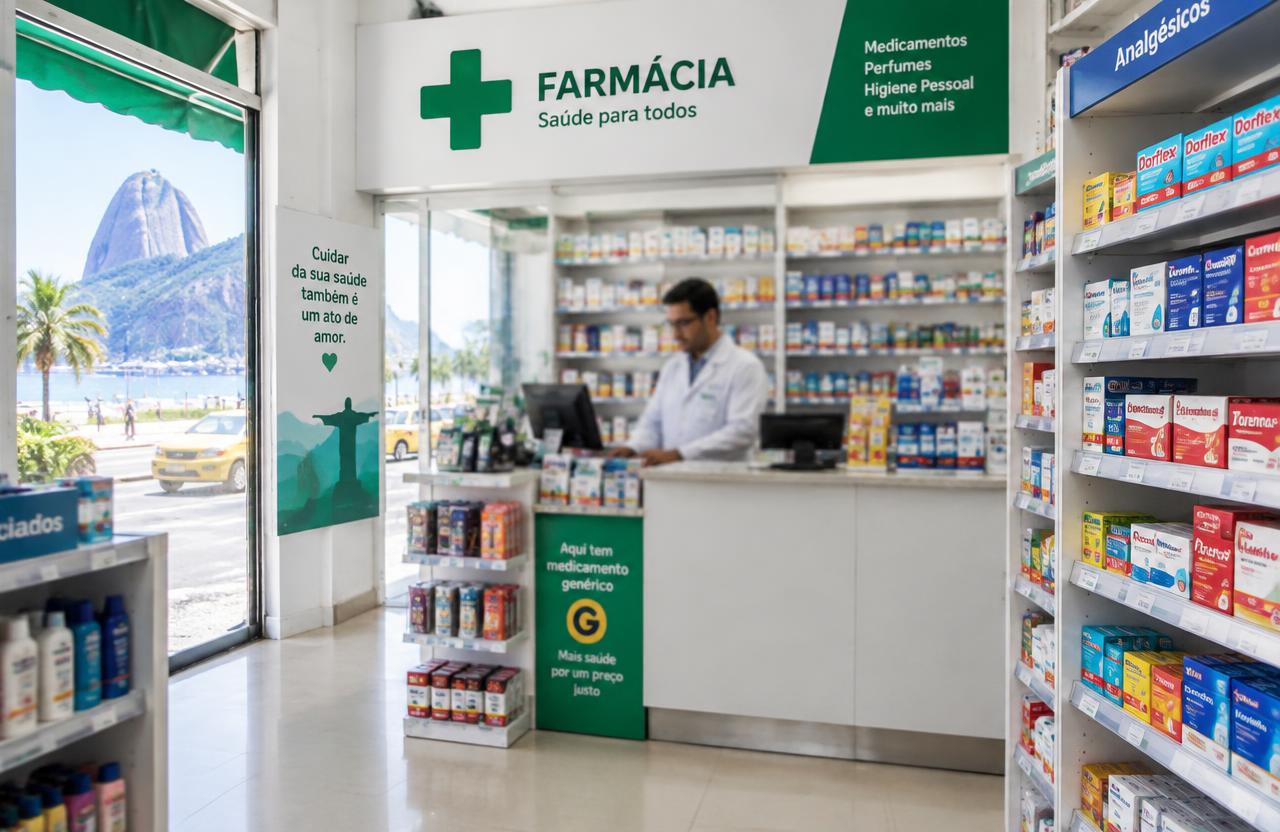
Brazilian farmácias are well stocked, but many drugs sold over the counter at home are prescription-only here.
Who decides
Anvisa and the Brazilian consulate responsible for your country — not an airline agent and not a travel guide.
What this page is and is not
This page explains the cross-border transport of your own prescription medicine into Brazil: how much you may carry, what paperwork should travel with it, and where the rules change sharply for controlled substances. It is a travel-logistics guide written by a travel editor. It is not medical advice, it is not legal advice, and it cannot tell you whether a specific drug is admissible — only Anvisa, Brazil's health-surveillance agency, and the Brazilian consulate responsible for your country can answer that for your medicine and your trip.
If you are looking for how to buy, find or replace medication once you are in Rio — which farmácias open late, what is available over the counter, how to ask for something in Portuguese — that is a separate guide and we cover it in our Brazilian pharmacy guide. This one is about getting your own medicine through the border with you.
The rule for ordinary prescription medicines
For medicines in accompanying baggage, Anvisa's traveller guidance focuses on whether the quantity is compatible with personal use and with the length and circumstances of the trip. It does not publish a universal tablet count. If the amount appears inconsistent with personal use or commercial in scale, officials may ask for a prescription or other supporting information.
Keep medicines in the manufacturer's labelled packaging where possible, with the patient leaflet, and carry a current prescription or a short letter from your clinician listing the medicine and dose. These documents help identify what you are carrying; they do not guarantee admission if a product is restricted. If you normally use a pill organiser, bring enough labelled packaging to identify the medicines as well.
Controlled substances: a genuinely different category
A medicine's legal status at home does not establish how Brazil treats its active ingredient. Controlled medicines can raise additional requirements, and the answer depends on the substance, formulation, amount and the rules that apply to a traveller entering with baggage. Anvisa's pages about importing controlled products describe a separate import process; do not assume every part of that process applies identically to a passenger carrying their own treatment.
Anvisa's baggage guide says medicines controlled under Portaria 344/98 should be accompanied by a medical prescription and lists proscribed substances that travellers cannot bring. Check the active ingredient, not just the brand, against the current controlled-substance rules before departure.
If you take an opioid, stimulant, sedative, sleeping medicine or another product that may be controlled, look up the active ingredient and ask Anvisa what applies to your exact product and trip. Request written guidance well before departure. A prescription and clinician's letter are sensible supporting documents, but this guide cannot promise that a particular medicine is admissible or that a translation or report is always required.
Cannabis-derived products need their own process
Cannabis-derived products have a separate Anvisa framework for importation, but a passenger carrying a product in accompanying baggage may be subject to a different procedure. Product labels such as CBD or medical cannabis are not enough to determine the active ingredient, concentration or applicable control category.
Before booking, send Anvisa the product name, active ingredient, concentration, amount and trip dates, and ask for written instructions for a non-resident carrying it in personal baggage. Do not infer from a foreign prescription or from the separate import authorisation process that the product is automatically permitted or prohibited in baggage.
Paperwork worth carrying, even when it is not required
Build a small medication folder and keep it with the medicines in your cabin bag. Include the prescription and, if useful, a clinician's letter listing each medicine by active ingredient and brand, the dose and why you take it. For a medicine that may be controlled, ask Anvisa what additional documents it expects for your specific case before paying for a translation or report.
List active ingredients, not only brand names. Brazilian brand names frequently differ from British, American or European ones, and a pharmacist who cannot recognise a brand will immediately recognise paracetamol, salbutamol, losartan or sertraline. Keep a copy of everything in your email or cloud storage as well as on paper, and keep the folder with the medicine, because a document in a checked bag protects nothing.
Packing: cabin bag, heat and humidity
Keep essential medicines in your cabin bag when airline and security rules allow, so a delayed checked suitcase does not separate you from treatment. Liquid-medicine screening is an aviation-security question as well as an entry question: check the rules for your departure airport and airline before you travel, and keep supporting documents accessible.
Rio's climate is a practical issue people forget. Summer temperatures and humidity in the city are hard on medicines that specify cool, dry storage, and a hotel room with the air conditioning off all day can get genuinely hot. Do not leave medication in a car, on a balcony or in a beach bag in direct sun. If something needs refrigeration, confirm before booking that your accommodation has a working fridge in the room rather than a minibar you are not allowed to use, and travel with a cool pouch for the journey.
Syringes, devices and medical equipment
If you travel with needles, pens, lancets, a CPAP machine, a nebuliser or an insulin pump, check your airline and airport-security rules before departure. A clinician's note identifying the device can help explain it at screening. Keep essential equipment with you when permitted, and check whether batteries or liquid supplies have separate restrictions.
Bring consumables for the whole trip plus a margin, because specific brands of cartridge, needle, test strip or mask part may not be available locally. Sharps need a safe disposal plan: Brazilian pharmacies and clinics can usually advise, and a travel sharps container is a sensible addition. If your device needs mains power, remember that Rio runs at 127 volts, so check that it is dual-voltage and bring the right adapter.
What happens if you run out in Rio
Do not plan on replacing a specific medicine at a local pharmacy without checking its availability and prescription status. Brand names, formulations and dispensing rules can differ, and a foreign prescription may not be accepted for every product.
If your plans change or medication is lost, contact your prescriber and travel insurer for help finding an appropriate local clinician. Keep the medicine's active ingredient, dose and prescription details available so a professional can assess the replacement. For a controlled product, ask the local clinician or Anvisa how Brazilian rules apply before seeking a substitute.
How this interacts with customs
Anvisa's health-surveillance rules and Receita Federal's customs rules are separate. Do not assume that a product allowed under one agency's rules is automatically cleared by the other, or that every medicine is excluded from customs calculations. If you have a medicine that may be restricted or a large quantity, check both agencies' current guidance and declare goods when customs rules require it.
For the baggage value quotas, declaration process and other goods, see our Brazil customs and duty-free guide. For medication admissibility, contact Anvisa with the exact product details; a general travel page cannot resolve an individual case.
A pre-trip sequence that works
Well before departure, list each medicine by active ingredient and contact Anvisa about anything controlled, cannabis-based or unclear. Give the agency the product name, formulation, amount and travel dates, and keep its reply. Ask your prescriber for enough medicine for the trip and a margin for delays, plus a letter if you need help identifying the treatment.
Before packing, keep medicines in their labelled packaging and put essential supplies and documents in your cabin bag when airline rules permit. Save copies of prescriptions and written guidance securely. Check your travel insurance for cover that applies to your condition and planned activities.
Common mistakes tourists make
- Decanting tablets into a pill organiser and leaving the labelled boxes and leaflets at home.
- Assuming a medicine's legal status at home determines how Brazil classifies its active ingredient.
- Assuming a foreign prescription alone settles whether a controlled or cannabis-based product can be carried in baggage.
- Packing medication in the checked bag on a connecting itinerary.
- Carrying a prescription that lists only brand names a Brazilian pharmacist will not recognise.
- Carrying a quantity that does not appear consistent with the trip without supporting documents or advance guidance.
- Assuming a specific medicine will be available locally or that a foreign prescription will be accepted for every product.
- Leaving heat-sensitive medicine in a beach bag, a parked car or a hot room all day in a Rio summer.
Local expert tips
- Bring only what the trip needs plus a sensible margin, in the original labelled packaging.
- Carry a current prescription and, if useful, a clinician's letter listing active ingredients and doses.
- Check each uncertain active ingredient with Anvisa well before you fly, and keep the written reply.
- Ask Anvisa which documents it expects before arranging a translation or medical report.
- Keep every medicine and document in your cabin bag, with photographs backed up to email.
- Check liquid-medicine rules with your airline and departure airport before security.
- Confirm your accommodation has a usable in-room fridge before relying on refrigerated storage.
- Carry spare device consumables; specific cartridges, needles and mask parts may not be sold locally.
- Check that your travel insurance covers the condition you are treating before you leave.
Frequently asked questions
Can I bring my prescription medication into Brazil?+
Anvisa's traveller guidance says medicines in accompanying baggage should be compatible with personal use and the length and circumstances of the trip. Keep the product labelled and carry a prescription or clinician's letter. If the medicine may be controlled or cannabis-based, check the exact active ingredient and product with Anvisa before travelling.
How much medication can I take to Brazil?+
Anvisa does not publish one tablet count for all trips. The amount in accompanying baggage should fit your personal use and the length and circumstances of the visit. If your quantity may look inconsistent with personal use, carry supporting documents and ask Anvisa for guidance before travelling.
Do I need a doctor's letter to bring medicine to Brazil?+
A prescription or clinician's letter is useful to identify your medicine and explain the amount, but this guide cannot state that one document is mandatory for every product. Anvisa may ask for a prescription when a quantity is not consistent with personal use. Ask Anvisa what additional paperwork applies to a controlled medicine.
How do I check whether my medicine is controlled in Brazil?+
Check the active ingredient, not only the brand name, against Anvisa's current controlled-medicine information and ask Anvisa about the exact formulation and amount you will carry. Anvisa's baggage guide says Portaria 344/98 controlled medicines should be accompanied by a medical prescription and that some substances are prohibited. A medicine's status at home does not determine its Brazilian classification.
Can I bring CBD or medical cannabis into Brazil?+
Do not rely on a foreign prescription or on a general import page to answer a passenger-baggage question. Send Anvisa the product name, active ingredient, concentration, amount and travel dates, and request written guidance for a non-resident carrying it in personal baggage.
Should I keep medication in hand luggage or checked baggage?+
Keep essential medication in your cabin bag when permitted by your airline and airport-security rules, so a delayed suitcase does not separate you from it. Check liquid-medicine and medical-device requirements for your departure airport, and keep supporting documents accessible.
Can I buy my usual medicine in a Brazilian pharmacy instead of bringing it?+
Do not assume a particular brand or formulation will be available or that a foreign prescription will be accepted. Check with a local clinician or pharmacy if your plans change, and have the active ingredient and dose available so they can advise on an appropriate option.
What do I do if I lose or run out of medication in Rio?+
Contact your prescriber and travel insurer for help finding an appropriate local clinician. Keep the active ingredient, dose and prescription details available. For a product that may be controlled, ask the clinician or Anvisa how Brazilian requirements apply before seeking a replacement.
Do medicines count against Brazil's customs allowance?+
Do not assume that every medicine is excluded from customs calculations. Anvisa's health-surveillance rules and Receita Federal's customs rules are separate, so check both agencies' current guidance and declare goods when customs rules require it.
Does Rio's climate affect how I should store medication?+
Yes. Summer heat and humidity in Rio are hard on medicines that require cool, dry storage, and a hotel room with the air conditioning off can become very warm. Do not leave medication in a parked car, on a balcony or in a beach bag in the sun, and confirm you will have a usable in-room fridge if anything needs refrigeration.
Sources and image credit
Details, eligibility and requirements can change. Use these official, operator and public-information sources to check current access and procedures before you plan or act.
- Anvisa: rules for accompanying baggage ↗
The rules for medicines and other products carried by travellers in accompanying baggage, including personal-use quantity and circumstances.
- Anvisa: information for travellers ↗
Anvisa's English-language traveller guidance, including directions for controlled medicines under international narcotics rules.
- Anvisa: what travellers may bring in baggage ↗
Anvisa's baggage guide covers personal medicines, prescriptions for Portaria 344/98 controlled medicines and prohibited substances.
- Anvisa: import of controlled medicines by individuals ↗
Import guidance for controlled products; check directly whether a particular requirement applies to a traveller carrying medicine in baggage.
- Ministry of Health: traveller health guidance ↗
General official travel-health guidance; ask a clinician how to transport medicines that need special storage or handling.
- Receita Federal: customs and duty-free rules ↗
Customs value quotas and declaration rules are separate from Anvisa's health-surveillance rules.
Keep planning
Plan Your Trip to Rio
Essential travel guides for Rio de Janeiro: safety, costs, transport, best time to visit, and where to stay.
Pharmacies in Rio (2026): Medicines, Prescriptions & Care
Find an open Rio pharmacy, understand prescription rules, ask about delivery, compare Brazilian medicine names safely and know when to seek urgent medical care.
Pet-Friendly Rio de Janeiro: Dogs, Beaches, Parks & Hotels (2026)
Planning Rio with a dog or cat? Check beach rules, parks that exclude pets, Brazil's current entry paperwork, pet-friendly hotels and transport.
Portuguese Menu Decoder: Brazilian Food Words Translated
Search a Brazilian menu glossary of dishes, cuts, cooking methods and service wording, with the allergen and dietary questions to ask a Rio kitchen before you order.
Rio de Janeiro for First Timers
The complete first-time Rio orientation: planning timeline, neighbourhood geography, bookings, weather flexibility, arrival, money and safety.