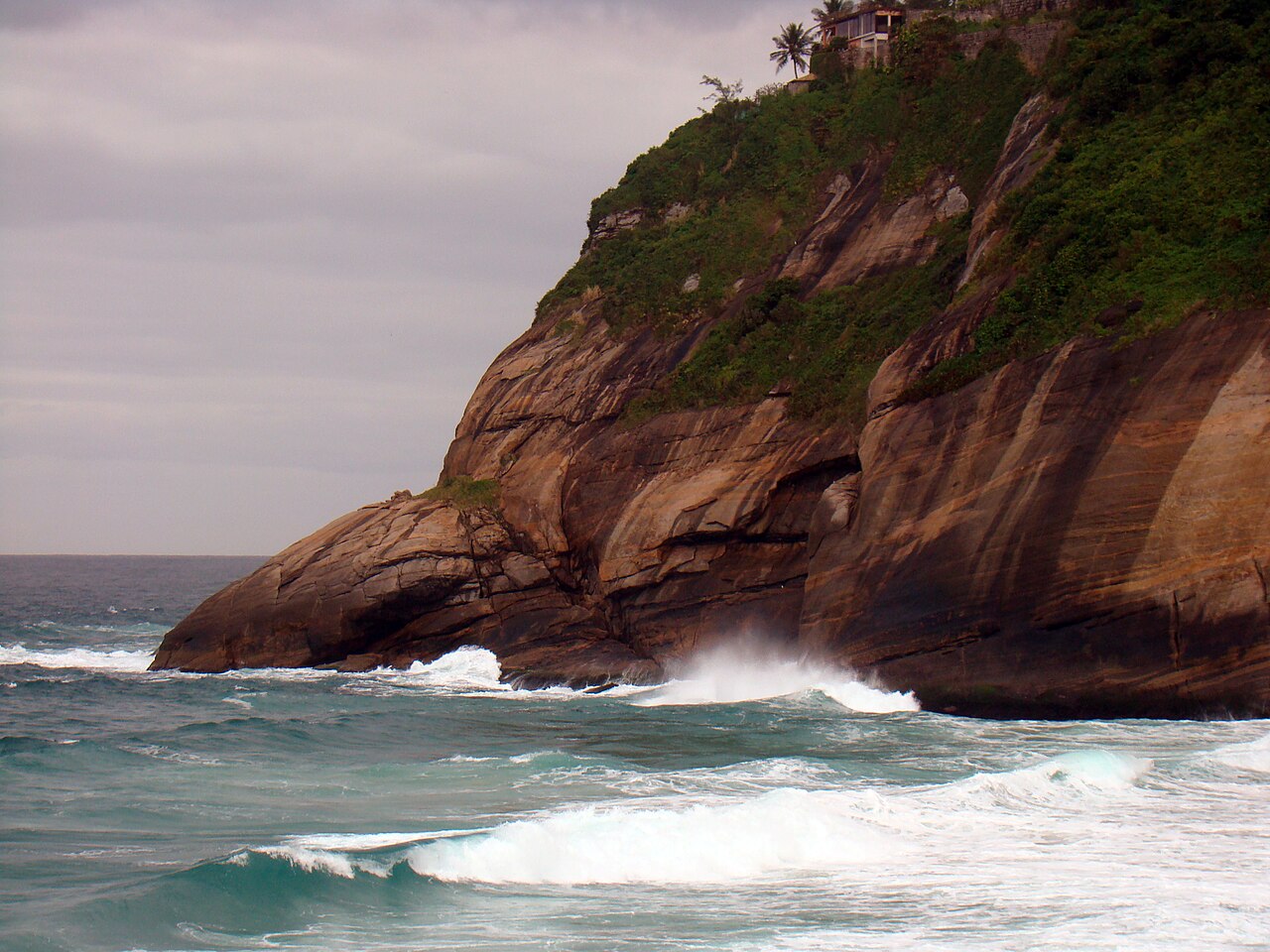
Praia da Joatinga: Tide, Access & Local Visitor Guide
PlanRio Editorial Team · Sources cross-checked 27 September 2026 · How we research
Quick answer
Praia da Joatinga is a small cove below Joá, reached through a residential approach and a steep path; high water can cover its narrow sand. Plan around the day’s tide, check INEA’s current bathing bulletin and the sea conditions, and wear secure footwear. Skip it if you need step-free access, supervised swimming or full beach facilities.
Check INEA’s current bathing-water bulletinAt a glance
Where
Joá, on the coast between São Conrado and Barra da Tijuca
Approach
Residential access, followed by a steep foot descent and uneven shoreline
Tide
High water can cover the narrow strip of sand; there is no reliable fixed daily window
Water quality
Check INEA’s latest bathing bulletin before swimming, especially after heavy rain
Facilities
Plan as a low-service cove: carry water, food, sun cover and a bag for rubbish
Best fit
Visitors comfortable with stairs, rocks, changing sea conditions and a self-managed visit
Poor fit
Step-free access, supervised swimming, dependable facilities or a guaranteed sandy beach
Costs
No verified visitor fee or parking tariff is published; confirm any service before accepting it
What Praia da Joatinga is — and what makes this visit different
Praia da Joatinga is a small Atlantic cove below the steep residential slopes of Joá, on the western side of Rio’s South Zone. It is part of the city’s coast, not a resort with a staffed entrance, marked swimming lanes or a visitor centre. The Rio Film Commission describes a small band of sand surrounded by rocks, reached through a residential condominium and down a trail. That geography explains both the appeal and the planning problem: the beach is visually sheltered, but its sand is narrow and the sea can cover it at high tide.
The visit is governed by three separate checks: whether the approach is open to visitors when you arrive, whether the tide leaves usable sand and a safe way back, and whether the latest water-quality information supports swimming. A blue sky only answers one small part of that question. We would not book transport, promise children a swim or build a full day around Joatinga until those checks line up. If any one fails, the sensible decision is to switch beaches; the cove is not worth forcing.
Where it sits, and which nearby places are not the same beach
Joatinga is in Joá, the hilly coastal neighbourhood between São Conrado and Barra da Tijuca. Search results and older guides sometimes label it São Conrado because that is the familiar nearby district, or use Joá and Joatinga interchangeably. For navigation, the official Rio Film Commission location listing places Praia da Joatinga at Rua Lasar Segal, Joá. Treat that as a map reference for the area, not a promise that every navigation app will take you to a visitor gate or an open car park.
Do not confuse Praia da Joatinga with Praia dos Amores beneath the Ponte da Joatinga, with Praia do Pepino at São Conrado where gliders land, or with the long Barra shoreline. Those are separate beaches with different access and conditions. Our Best Beaches Near Rio comparison helps choose a destination; this page is for deciding whether Joatinga’s access and tide work on the day you want to go.
Is Joatinga worth the effort for your kind of beach day?
Joatinga is worth considering if the cove itself is the point: you want a smaller, cliff-backed setting, accept the descent and ascent, can bring your own supplies, and have enough flexibility to change plans. It can be a memorable contrast with Rio’s long urban beaches. Its small scale is also a constraint. On a busy day the usable sand may feel crowded quickly, and there is no broad promenade where a group can spread out when the water advances.
Skip it if you want a predictable swim, a beach kiosk lunch, toilets close at hand, lifeguard supervision, wheelchair access, a pram-friendly route or a guaranteed open strip of sand. It is also a poor choice as a last-minute stop between scheduled attractions: a gate approach, stairs, rock footing and a tide window all take time. For those needs, choose an easier beach first and keep Joatinga as an optional detour. The right call is about matching the place to your group, not collecting a hidden-beach photograph.
The entrance: public shore, residential approach
The city’s location listing says access is through a residential condominium. Brazil’s Coastal Management law treats beaches as public goods and guarantees free access to the shore, subject to legal exceptions; that does not turn private driveways, residents’ parking or every internal road into public visitor facilities. In practice, arrive calmly, follow instructions at the access point, identify yourself if asked, and use only the indicated route. Entry management can change, and the official listing does not publish a visitor procedure or guarantee a parking space.
Do not tailgate a resident’s vehicle, try a side gate, photograph security staff, block a driveway or argue your way through. If access is unavailable, do not enter private property or look for an improvised path over the cliff. Ask courteously whether there is an authorised visitor route at that time; if there is not, leave and choose another beach. This advice protects residents’ privacy and keeps a public-beach visit within the actual access route. Save the official location page before you set out so you can confirm that you have the right cove and address.
Getting there without relying on a guessed bus or parking plan
For most visitors staying in Ipanema, Copacabana or central Rio, the simple plan is to use a licensed taxi or rideshare to the Joá access area, then walk the final approach. Travel time depends heavily on traffic over the coastal road and tunnels, so avoid promises such as “15 minutes from Ipanema” in your itinerary. Confirm the drop-off point with your driver before the trip and keep the map pin for the official Joatinga location available offline. The driver can take you to the area; they cannot make the beach accessible at high tide.
Public transport may get you into the broader Joá or Barra corridor, but the final connection and walking route are not the same as arriving at a staffed beach entrance. Routes, stops and service patterns change, and the city’s location page does not give a visitor transit itinerary. Check the municipal transport planner on the day, verify where the bus actually stops, and do not assume a short map distance means an easy walk: local roads climb, have limited pedestrian comfort and lead through residential areas. If the return depends on an infrequent service or a phone signal you may not have, arrange a realistic backup before descending.
Parking is not a dependable part of the plan. The official location record mentions parking, but it does not publish capacity, visitor eligibility, charges or current availability. Do not treat it as a public car park or leave a vehicle across a driveway while you look for the entrance. A drop-off and later pick-up can reduce pressure on residential streets, but coordinate the return in advance and keep enough battery to contact your driver. If you are renting a car for several west-side beaches, compare the whole day’s route in our Rio car-rental guide; a car does not remove the tide or access constraints.
Plan with the tide, not a fixed clock time
The Rio Film Commission states that high tide can cover Joatinga’s sand and make the beach inaccessible. That is why fixed advice such as “go between 10 AM and 3 PM” is unreliable: high and low water move through the day and change with the date. Check the tide forecast for the visit date before leaving. The Brazilian Navy’s Hydrographic Center publishes tide tables for Rio harbour stations; a harbour prediction is a planning reference, not a measurement at this small cove. Local tide services can help add context, but none removes the need to look at the sea when you arrive.
Build a margin on both sides of low water. If you reach the beach as the water is already rising, do not settle in at the far end or assume you can climb over the same rocks later. Leave while the route remains comfortably passable, before waves are washing over the path. A tide table predicts water level at a station; swell direction, wave sets and the shape of the cove affect what reaches the sand. If the beach looks smaller or rougher than expected, that is current information, not a challenge to overcome.
Use a simple go/no-go routine: look up the day’s tide, check the latest local surf and weather conditions, confirm that you can arrive with time to spare, and decide on a turnaround point before stepping onto the sand. Do not use a lunar phase, a social-media photo or yesterday’s tide chart as a substitute. If the prediction is confusing, the low-water window is short, or your group cannot leave promptly, select a broad beach with an easy exit instead. The reward at Joatinga is not worth being trapped against wet rocks.
Check bathing water quality separately from the wave forecast
INEA, the Rio de Janeiro state environment agency, publishes regular bathing-water bulletins for monitored beaches. Check its current bulletin for Joatinga before you swim; a previous week’s green status is not a guarantee for today. INEA specifically advises avoiding the sea for the first 24 hours after heavier rain and near storm-water channels or drainage outlets. If a current bulletin marks the monitored point unsuitable, follow that advice rather than judging water quality by colour, smell or how many people are in the water.
A water-quality result and a safe surf decision answer different questions. The bulletin is about bathing-water conditions at sampling points; it does not measure the next set of waves, the footing on Joatinga’s rocks or whether a swimmer can get back to shore. Conversely, clean-looking water does not establish that it is safe to enter. Check the latest bulletin, observe any posted local warning, and make a separate decision about sea state and your ability. If the bulletin is missing, old or unclear, treat that uncertainty as a reason to choose a more manageable plan.
Swimming and surfing: a cove is not a natural swimming pool
Joatinga’s cliff setting can make photographs look sheltered, but the cove faces the Atlantic and conditions change. A shallow-looking patch beside rocks is not automatically a safe children’s pool; incoming water, submerged rock and outgoing flow can change what it feels like within minutes. Do not jump from the rocks, swim around a headland, climb onto wet boulders for a photograph or enter if you cannot see a clear return to the sand. Keep children within arm’s reach in the water and stay out when waves are surging across the approach.
Surfing is also a conditions-based decision, not a property of the beach name. Swell, wind, tide, crowd and the rock entry all matter. If you are learning, use a qualified instructor at a lesson beach with a product and meeting point that actually match the activity; do not infer that a bookable Arpoador lesson operates at Joatinga. Experienced surfers should still check a local forecast and watch the entry and exit before carrying a board down. If the rocks are wet, the sets are reaching the access line, or you cannot comfortably time the exit, sit this session out.
There is no reason to prove anything by swimming when the cove is at its most dramatic. A short shoreline walk, a look from a permitted viewpoint or a different beach can still make a good day. Our Rio beach-safety guide explains flags, currents and water checks across the city; here the extra rule is to keep an exit in view and leave before the tide removes your margin.
The descent, mobility and travelling with children
The approach is not step-free. The official listing describes a trail descent, and independent visitor descriptions report stairs and an uneven rocky finish. There may be changes to rails, surfaces or the exact access route, so do not rely on a photograph as proof that the path is manageable. Wear shoes with grip for the approach; flip-flops are useful on the sand but are poor footwear for wet steps and rock. If anyone in your group has balance, joint, vision or mobility limitations, assess the route before committing and be comfortable turning around.
This is not an accessible beach for a wheelchair user or anyone who needs a level path. A carrier does not make a steep, slippery descent safe for an infant, and a stroller is not useful on stairs or rocks. Children who can walk still need an adult beside them at the access and shoreline; the group should agree to stay together and not scramble onto cliffs. If you need reliable accessible beach facilities, begin with our Accessible Rio guide and contact the relevant operator or facility directly about current access before travelling.
The route back matters as much as the walk down. Heat, wet footwear, a tired child, a full beach bag and a rising tide make the return harder than the first descent. Keep the load light and carry only what the group can bring back safely. If someone becomes uncomfortable before reaching the sand, stop at a safe place and return together; do not split up or send one person to find another entrance. Choosing a different beach is a good judgement call, not a failed outing.
Facilities and what to pack when you cannot count on a kiosk
Plan as if you will be self-sufficient. The official location listing is not a visitor services directory and does not promise toilets, showers, changing rooms, chair rental, food sales or a lifeguard. Independent accounts describe a low-service cove; availability on the sand can vary with season and conditions. Bring drinking water, any food you need, sun protection, a light cover-up and a small bag to take rubbish out. Use a bathroom before leaving your accommodation or a known facility on the route rather than expecting to find one at the cove.
Keep belongings compact and secured for the climb. A towel, water, a snack, reef-safe sun protection, a charged phone and a dry pouch for essentials cover most short visits. Bring cash only if you have a specific confirmed reason; we found no verified visitor tariff for entry, parking or services and will not invent one. Ask the price before accepting any service offered at the entrance or beach. Never leave rubbish, glass or disposable packaging behind, even if someone else’s litter is already there.
Pack for a tide-dependent stop, not an all-day beach camp. A bulky umbrella, cooler or several chairs make the rocky route more awkward and take away room for other people. There may be little or no shade on the sand once the sun reaches it, while nearby cliff shade changes through the day; do not treat cliff shade as a substitute for sun cover. If you need dependable shade, accessible toilets, lunch, fresh water or a long comfortable stay, pick a larger serviced beach instead.
Respect the neighbourhood as well as the public beach
The approach crosses a residential setting. Keep voices down, follow the indicated pedestrian route, do not film houses or residents without consent, and leave the street clear for people who live there. Beach access rights do not grant permission to wander through private gardens, use residents’ facilities or park wherever there is an empty-looking kerb. If a gate attendant gives an instruction, stay courteous and ask for clarification; if you cannot use the authorised route, leave without trying another property.
Carry every item back up, including fruit peels, cigarette ends and small bits of plastic. A cove with no dependable waste service can look clean only when visitors take responsibility. Avoid amplified music and do not bring glass onto a rocky shore. The best etiquette is ordinary: do not make a quiet residential entrance feel like a tour bus stop, do not claim that the beach is “private” just because the route is controlled, and do not describe a public place as an exclusive secret that should be kept from other visitors.
Brazilian law describes beaches as public goods, while the route to a shoreline can pass through privately managed land. Both facts matter. Visitors should be able to reach the shore through lawful access, and neighbours should not have their homes treated as a tourist attraction. Use the designated access, protect the environment and accept that a public beach can still have a constrained and carefully managed approach.
A practical half-day plan with a real fallback
Before you leave, check the current INEA bulletin, the date-specific tide table and a local forecast. Confirm that your group is comfortable with stairs and uneven rocks, save the official location listing, and agree how you will get back. If the access or forecast is uncertain, pick the fallback first and keep Joatinga optional. On arrival, pause before descending: check the gate instructions, the sea, the route and the usable width of sand. If anything does not match your plan, turn around while you are still at the top.
If the conditions suit, take only the essentials down, choose a place that leaves room for the incoming water and keep the route back visible. Set a leave-by signal on your phone or watch, but do not rely on having data at the cove. Recheck the water and the tide while you are there. Leave early enough that the climb is not a rush. When you reach the road, confirm your return transport before your battery is low; a beach visit should not end with someone walking an unfamiliar residential road in search of a signal.
For a broader coastal day, São Conrado is the practical nearby alternative when Joatinga’s access or tide does not work. It has a different, wider shoreline and is the landing beach for tandem hang-gliding flights from Pedra Bonita. That is a separate activity, not a Joatinga tour, and weather can affect flights. A specific, registry-backed option is listed below for travellers already planning to visit that part of the coast.
When to choose another beach instead
Choose São Conrado if you want to stay in the same broad coastal area but need a wider beach and a more conventional shoreline. Choose Praia Vermelha if calmer water and an easier outing matter more than a wild-cove feel. Choose Ipanema or Copacabana if you want transport, food, rentals and a long promenade nearby. None is universally safer in every condition; check the day’s water advice, flags and weather wherever you go.
Prainha and Grumari make sense for visitors specifically seeking Rio’s far-west beaches, but they require their own transport and access planning. They are not automatic fallbacks if you are already in Joá. For a short itinerary, do not string Joatinga, a mountain activity, a museum and a sunset booking together without allowing for traffic and the coast’s changing conditions. A good Rio beach day has one main objective and a backup that is easy to reach.
If you have only one beach day in Rio, Joatinga is a high-variance choice: the scenery is distinctive, but its small footprint and access make it less dependable than the city’s main beaches. We would put a first visit to Ipanema, Copacabana or a sheltered Praia Vermelha ahead of it unless the tide and route happen to suit. If you have more time and like planning around natural conditions, Joatinga can be the optional second outing that earns its effort.
The honest verdict
Joatinga is a beautiful but conditional beach visit. Its strongest selling point is the cove’s setting beneath the Joá cliffs; its biggest costs are the access effort, dependence on tide and sea conditions, limited facilities and uncertain parking. It is not a hidden beach that removes the need for planning. Treat the official access listing, INEA’s current water bulletin and the same-day tide forecast as separate inputs, then be willing to change plans.
Go only if the group can handle the route, the access point is accepting visitors, the tide leaves a generous window and the water and surf conditions are appropriate for what you intend to do. Bring your own essentials and leave the neighbourhood as you found it. If any part of that checklist fails, the honest answer is to skip Joatinga that day. Rio has plenty of coastline; you do not have to force the most difficult option to have a good beach day.
Add a nearby São Conrado experience or Joá stay
The tandem flight lands at São Conrado’s Praia do Pepino, not Joatinga. The hand-picked Joá hotel is secluded and car-dependent, so it is a poor base for most first visits.
Links may earn us a commission at no extra cost to you. This supports PlanRio.
Common mistakes tourists make
- Using a fixed clock window from an old article instead of checking the tide for the actual date.
- Assuming a residential gate, parking area or internal road is a public visitor facility.
- Treating the cove’s appearance, crowd or clear water as proof that swimming is safe.
- Wearing only flip-flops on the descent and expecting the rocky approach to feel like a promenade.
- Arriving without water, a return plan or a realistic alternative if the access is unavailable.
- Bringing a stroller, heavy cooler or too many bags for a steep route with an uneven finish.
Local expert tips
- Save the Rio Film Commission location pin and the INEA bathing-water page before leaving reliable Wi-Fi.
- Use the Navy’s tide table as a nearby harbour reference, not an exact prediction for the sand at Joatinga.
- Set a leave-by time before descending; the return route is part of the tide plan.
- Wear grippy footwear for the approach and pack light enough to climb back comfortably.
- Check the latest water bulletin after rain; do not trust a week-old screenshot.
- Keep the gate approach quiet, follow the marked visitor route and do not photograph homes.
- Ask about any offered parking or service charge before accepting it; we have not verified a fixed visitor tariff.
- Keep São Conrado or another accessible beach as a real fallback, not a rushed afterthought.
Frequently asked questions
Where is Praia da Joatinga in Rio de Janeiro?+
Praia da Joatinga is a small cove in Joá, between São Conrado and Barra da Tijuca. The Rio Film Commission’s location entry points to Rua Lasar Segal, Joá. Use that as an area reference and follow current access instructions; the map pin does not guarantee that a gate or parking area is open to visitors.
Is Praia da Joatinga open to the public?+
Brazilian law treats beaches as public goods, but the approach to Joatinga passes through a residential condominium. Use the authorised access route, follow instructions at the entrance and do not assume private roads or parking are public facilities. If visitor access is unavailable, leave rather than trying another gate or property.
When is the best time to visit Joatinga Beach?+
Plan around the tide on the actual date, not a fixed clock-time recommendation. High water can cover Joatinga’s narrow sand, and swell can make the rocky approach hazardous even near low tide. Check a current tide forecast, local sea conditions and the INEA bathing bulletin before setting out, then leave with a margin.
Can you swim at Praia da Joatinga?+
Only consider swimming when the current INEA bulletin supports bathing and the sea is suitable for your ability. Joatinga faces the Atlantic, and its cove shape does not make it a supervised pool. Avoid the sea during the first 24 hours after heavier rain and near storm-water outlets, and follow local warnings and lifeguard instructions where available.
Is Joatinga Beach suitable for children?+
It can be a poor fit for young children because the access includes a steep descent and uneven rocks, the usable sand changes with the tide, and facilities are limited. A child must remain under close adult supervision at the entrance and water. Choose a more manageable beach if you need lifeguard support, toilets, shade or a pram-friendly route.
Is Praia da Joatinga wheelchair accessible?+
No. The route described by the city includes a trail descent, and visitor reports describe stairs and uneven rocks. There is no step-free path to the sand. Travellers who need accessible facilities should plan from our Accessible Rio guide and confirm access directly with a beach or venue before travelling.
Can beginners surf at Joatinga?+
Do not assume Joatinga is a beginner lesson beach. Surf conditions vary, and getting a board across the uneven rocky approach adds a separate challenge. Check a local forecast and use an instructor at the lesson location shown in the actual booking. Our registry-backed Arpoador lesson is in Arpoador, not at Joatinga.
Are there toilets, food kiosks or chair rentals at Joatinga?+
The official Rio Film Commission entry is a location record, not a visitor amenities list, and it does not guarantee toilets, food, chairs or showers. Plan as if none will be available: use facilities before travelling and bring water, food and a bag for your rubbish. Ask locally before relying on any seasonal service.
Is there parking at Praia da Joatinga?+
The official location listing mentions parking but publishes no visitor capacity, opening rules, price or availability. Do not depend on finding a public space inside the condominium or leave a car blocking a residential street. A planned drop-off and pick-up may be simpler, but confirm the arrangement and return connection in advance.
What should I do if the tide or water-quality report is unsuitable?+
Skip Joatinga for that visit. The INEA bulletin is updated regularly, while tide predictions and the sea can change the practical access window. Choose a beach whose access and conditions fit your group that day; São Conrado is the nearby wider-shoreline alternative, while Praia Vermelha and Rio’s central beaches are easier options for other itineraries.
Sources and image credit
Conditions and access can change. Use these primary references for the latest checks before your visit.
- Rio Film Commission — Praia da Joatinga ↗
Official location listing for the area, residential approach, trail descent and tide-covered sand. Its film-production availability and fee fields are not visitor opening hours or beach charges.
- INEA — current beach-bathing bulletins ↗
State agency’s regularly updated bathing-water status and advice after heavy rain.
- Brazilian Navy Hydrographic Center — tide tables ↗
Use the current Rio harbour prediction as a reference, not as an exact cove-level reading.
- Federal law 7.661/1988, Article 10 ↗
Brazilian Coastal Management law on public beaches and access, subject to legal exceptions.
- Photo: Praia da Joatinga by Rodrigo Soldon ↗
CC BY 2.0. The photo is used as a visual of surf and cliff conditions; the view shown is not a promise of the conditions on your visit.
- Creative Commons Attribution 2.0 license ↗
Image attribution license.