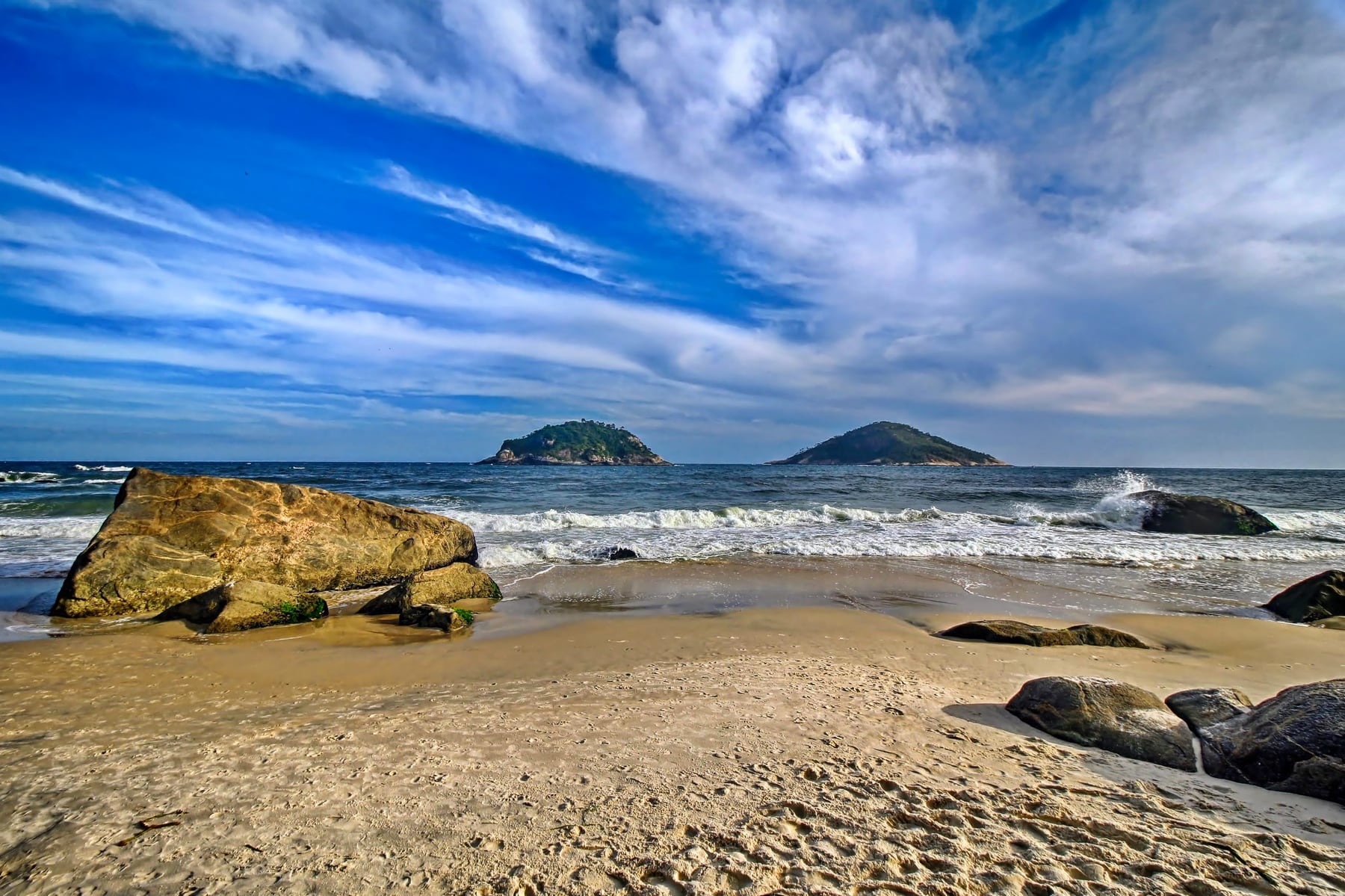
Praia do Abricó Naturist Beach Guide: Rules, Access & What to Expect
PlanRio Editorial Team · Primary source references checked 27 September 2026Quick answer
Praia do Abricó is Rio’s legally designated naturist beach in Grumari. The city law permits nonsexual naturism there; ANAbricó separately sets visitor guidance and a weather-dependent presence schedule. Check its latest notice, plan a live West Zone route and return, respect the strict privacy code, and verify water and surf conditions before travelling.
At a glance
Where
Praia do Abricó, in Grumari on Rio de Janeiro’s far western coast
What makes it different
Rio’s city-designated beach where naturism is legally permitted
Best first visit
A dry weekend or holiday when ANAbricó confirms that its team will be present
Clothing
Follow the association’s current day-specific guidance; do not assume every day has the same rule
Conduct
Naturism is nonsexual; respect privacy, personal space and the posted visitor code
Getting there
A remote West Zone outing; check the exact route and return journey on the day
Facilities
Limited and changeable; bring water, sun protection and anything essential
Sea and water
Check current sea conditions and INEA’s latest bathing-water information before entering
Praia do Abricó is a naturist beach, not a clothing-optional resort
Praia do Abricó sits beyond the familiar Copacabana–Ipanema circuit, along the coast of Grumari in Rio’s far West Zone. Its distinctive purpose is naturism. Rio’s municipal Law 5,807 of 2014 authorizes naturism within the sandy area of Praia do Abricó and defines the practice as a nonsexual way of being in harmony with nature. That local legal designation makes Abricó different from an ordinary beach where a visitor might expect clothing rules to be informal or negotiable. Read the law itself before you go if the legal distinction matters to your plans.
The law and the visitor code answer different questions. The statute authorizes naturism at this named beach; it does not describe every day’s operating arrangements, promise staff on the sand, or replace the conduct rules used by the local naturist association, ANAbricó. In practical terms, visitors should plan around both: understand the legal setting, then check the association’s current notices and follow the guidance posted for the day. The association acts as a local point of orientation and stewardship, while the public beach remains subject to weather, access and normal municipal conditions.
This is not a place to treat nudity as a spectacle, a dare or a photo opportunity. Naturism here is a social and beach practice built around comfort, respect and nonsexual behaviour. If your interest is primarily voyeuristic, if you expect a party scene, or if you cannot accept that other visitors have a strong privacy interest, choose a different beach. If you are curious but unsure, the association’s visitor information gives you a way to understand the expectations before you travel, without putting first-time visitors or regulars on the spot.
Know which rules come from the law and which come from ANAbricó
The municipal statute is the starting point for the location’s legal status. It identifies Praia do Abricó as the place where naturism is permitted and sets out a public-interest framework. ANAbricó’s published ethics and visitor guidance are operational: they explain how people are expected to behave in the naturist area and when the association aims to be present. It is useful to keep those layers separate. A visitor should not claim that every association custom is written into the law, and should not use the law as an excuse to disregard the local code.
For a first visit, the association’s presence is a meaningful planning signal. Its FAQ says the team is generally present on Saturdays, Sundays and holidays when weather, tide and the amount of usable sand allow. The association also warns that difficult weather or too little sand can change that plan. Its homepage and notices have at times described staffing and funding uncertainty, so a general weekly pattern is not a guaranteed schedule. Check the current homepage or latest Comunicado, and contact ANAbricó if an important detail is unclear, before setting off across the city.
The association describes a day-specific clothing practice: on dry Saturdays, Sundays and holidays when its team is operating, nudity is expected in the naturist area; on other weekdays, its guidance describes the beach as clothing optional. These are the association’s published visitor rules, not language to attribute to Law 5,807 itself. Weather, available sand, special notices or changed operations can alter what applies. Re-read the latest notice shortly before your trip and follow any instructions at the beach. If you arrive and cannot tell which arrangement is in force, ask an association representative rather than arguing from an old screenshot or a third-party blog.
Decide whether Abricó is right for your day
Abricó is a good fit for an adult who wants to try naturism in a designated setting, a naturist who wants to respect the local community, or a traveller who values a quieter and more nature-oriented beach experience. The association’s presence can make a first visit less uncertain because someone familiar with the beach can explain the code and help visitors settle in. That support is one reason not to plan around a convenient but unconfirmed weekday visit if you are new to naturism.
It is less suitable as a spontaneous stop between central Rio attractions, a guaranteed full-service beach day, or a place to go when you need a specific accessible path, staffed facility or calm-water guarantee. The beach is remote relative to the city’s main visitor neighbourhoods, and services can be sparse or variable. A long ride does not guarantee that the association will be present, that the sand area will be spacious, or that ocean conditions will suit swimming. Build flexibility into the day and be prepared to change plans if the latest information, weather or your comfort level points elsewhere.
If you are mostly looking for a beautiful protected beach and do not want a naturist experience, compare Grumari or Prainha instead. If you want a conventional urban beach with more nearby services, a beach in Recreio or the South Zone may suit you better. Abricó’s identity is not just scenery: the designated naturist use and its privacy culture are central to what happens there. Choosing it knowingly is more considerate to regular visitors and makes the trip more comfortable for you too.
The privacy code matters from the moment you arrive
ANABricó’s posted ethics emphasize discretion, respect and a nonsexual atmosphere. Do not photograph, record or film naturists without their permission. Treat that as a firm boundary, not a request to negotiate after taking a picture. A wide landscape image can still capture identifiable people, so check the frame before using a camera or phone. If you want a personal keepsake, photograph the scenery only when no one is identifiable and the association’s current guidance permits it; when in doubt, put the device away.
Respect also means not staring, following someone along the sand, making comments about bodies, or using a conversation as a pretext to test another visitor’s boundaries. Keep an ordinary, comfortable distance between towels and groups. Ask before sitting close, joining a conversation or borrowing an item. A brief friendly greeting is fine; people are not obliged to explain their bodies, relationships, identity or reasons for visiting. The beach is a public place, but the naturist setting creates a particularly strong expectation that visitors will not turn one another into content.
Sexual conduct, harassment, intimidation, discriminatory behaviour, intrusive attention and litter are incompatible with the association’s published code. Follow directions from the people responsible for stewarding the beach, and leave if you cannot meet the standard. Never bring a drone or use a telephoto lens to observe people. Do not post a recognisable visitor online, even if you think the person is in the background. If you accidentally capture someone, delete the image rather than asking them to tolerate it. The easiest privacy rule is simple: the experience belongs to the people present, not to your social feed.
For everyday Brazilian beach manners beyond the naturist setting, see our Rio beach etiquette guide. Abricó’s privacy expectations add a stricter layer that deserves its own attention.
Naturism is nonsexual, and visitors are not one type of person
A naturist beach is not a sexual venue. The city law’s own definition makes the nonsexual nature of the practice explicit, and the association’s code reinforces that boundary. Visitors may come alone, with a partner, with friends or as a family. ANAbricó’s FAQ says children may attend with a parent or guardian and recommends visiting when the association is present. That is the association’s practical guidance; a parent or guardian remains responsible for deciding whether the setting is right for their child and supervising them throughout the visit.
The association says solo men are welcome, alongside other visitors, provided everyone follows the same rules. The useful distinction is conduct, not a visitor’s gender or relationship status. Arrive with a respectful reason to be there, do not approach strangers in a way that makes them feel watched, and accept a clear no without debate. People who are new to naturism often worry about being the only person who feels uncertain. There is no need to perform confidence: read the guidance, ask the association for help, and take time to get comfortable at your own pace.
Naturism should not be conflated with sexual orientation or gender identity. Abricó may be welcoming to a broad mix of people, but it is not a queer-only beach and no visitor should be treated as a representative of a group. Likewise, do not assume that a couple, family or solo traveller wants to discuss their identity. Courtesy looks much the same as it does anywhere: let people enjoy the day without turning their presence into a question. If you feel uncomfortable, you can cover up where the current rules allow, move to another area or choose another beach; you do not need to justify your choice to anyone.
Getting to Abricó takes more planning than a South Zone beach
Praia do Abricó is in Grumari, beyond the urban beachfronts of Barra and Recreio. Treat it as a dedicated West Zone outing, not an easy extension of a Copacabana or Ipanema beach day. The exact time and cost depend on where you start, traffic, the route available and any restrictions in effect. We avoid giving a bus number or fixed fare because these details change, and an old route description can leave you stranded far from the beach.
Before leaving, enter Praia do Abricó itself as the destination and compare current public transport with a taxi or rideshare for your group. Check the live route all the way to the beach access, not merely to the Grumari neighbourhood or a nearby major road. Confirm the last walking segment, phone coverage expectations, available return options and a reasonable time to leave. If using a rideshare, do not assume the same vehicle will be easy to request for the return journey; save the route and identify a backup before you arrive.
The association’s location and access page is a useful first-party reference, but use its current instructions alongside a live mapping service. Road conditions, diversions, weather, event traffic and beach access arrangements can change. If driving, check current parking and any access controls before committing, and never park across a gate, private entrance or emergency route. When possible, travel with a companion and tell someone your broad plan. Keep enough phone battery for directions and a return booking, and carry a little water for the final approach.
A sensible itinerary puts Abricó first or makes it the main stop, then leaves enough daylight and transport margin for the return. Do not promise yourself an onward visit to Grumari, Prainha or Recreio until you know how the first transfer is working. These beaches are geographically close on a map but not necessarily connected by a convenient walk or reliable quick ride. For a wider coastal plan, use our Grumari guide and Prainha guide as separate destination checks.
What to expect on the sand and what to bring
Think of Abricó as a natural beach with a limited-service setup rather than a beach club. The association’s visitor FAQ says vendors and rentals can vary and shade is scarce. Do not count on a particular umbrella, chair, meal, toilet or shower being available when you arrive. Check the latest local notice if a facility is essential to your visit, and bring the essentials you would need if no seller were operating: drinking water, sun protection, a towel or canga, snacks, any medication and a small bag for rubbish.
A lightweight wrap or towel is useful for sitting on shared surfaces and for travelling to and from the beach. Bring enough sun protection for a long period outdoors and reapply it after swimming. Naturism does not make sun exposure harmless: skin that is usually covered can burn quickly. Use shade when available, avoid the strongest sun if that is sensible for you, and bring clothing for the approach and return. Store valuables discreetly and keep only what you can comfortably carry; beach conditions are not a secure place to leave a phone or wallet unattended.
Carry small cash only if useful, but do not assume every seller accepts it or that a vendor will be there. Ask the price before ordering or renting anything. Pack out every item you bring, including food packaging and cigarette ends. If a bin is full or absent, take rubbish with you rather than leaving it beside a natural area. Avoid glass, noisy speakers and equipment that occupies more sand than your group needs. These are ordinary beach courtesies with particular importance on a smaller beach where the usable space changes with tide and sea.
There is no need to buy a special outfit or equipment to visit. A first-timer can arrive in ordinary clothes, learn the current instructions from the association and decide how comfortable they feel after settling in. Bring a cover-up for the walk, vehicle or public transport, and follow the day’s clothing rule once you are in the designated area. If a clothing rule is in force and you do not want to follow it, choose another beach rather than expecting staff or other visitors to make an exception for you.
Check the sea and water quality as separate questions
A beach can look clear and still be unsuitable for swimming, and a favourable water-quality result does not mean the surf is safe. Make two checks: first the latest official bathing-water bulletin, then the actual sea, weather and lifeguard advice at the beach. INEA publishes bathing information for monitored locations across Rio de Janeiro state. Use its newest bulletin and read the named sample point and date. If Abricó is not separately named in the current data, a result for a nearby Grumari or Recreio point does not certify every part of Abricó’s shoreline.
INEA advises avoiding bathing during the first 24 hours after heavier rain and near storm-water outlets. Follow that guidance even if the water appears inviting. Runoff can affect water after a storm, and conditions can differ between a channel, a point sampled by INEA and the section where you plan to swim. Check for unusual discharge, debris, smell or visible pollution, and ask an active lifeguard or local authority when available. If you are unsure, staying out of the water is the better choice; a beach visit can still be worthwhile without swimming.
Abricó faces the open Atlantic, so surf, shore break and currents deserve respect. Do not use an internet photo, a previous visit or another swimmer’s confidence as a safety assessment. Watch the sets from a safe place, note where trained lifeguards are stationed, and follow their instructions. Avoid entering alone, do not swim after drinking alcohol, and keep children within close reach of a responsible adult. If waves are breaking powerfully, the current is pulling alongshore, or you cannot identify a safe entry and exit, remain on shore.
For more detail on flags, rip currents and the water-quality decision, read our Rio beach safety guide. The latest local bulletin and lifeguard advice take precedence over general travel guidance.
Respect the protected coastal setting
Abricó belongs to the Grumari coast, where beach, rocky shore, restinga and surrounding vegetation form a sensitive landscape. The city describes the Grumari municipal natural park as protecting native coastal ecosystems and local biodiversity. Stay on established access routes, avoid trampling plants, do not climb barriers to make a shortcut and leave shells, rocks and wildlife where you find them. A small change in where people walk can matter when a beach edge is narrow or vegetation is recovering.
Take care with food scraps and disposable packaging, and never feed wildlife. Keep dogs and other animals out where local rules prohibit them, and follow posted signs rather than relying on a general assumption about Rio beaches. Noise also travels across a small shoreline: use headphones if you want music and keep conversations at a normal level. The quieter atmosphere some visitors seek depends on people not treating a protected coast as an outdoor party venue.
The same restraint applies to photos of the landscape. A view of rock, sea and vegetation can be a good memory; a frame that turns nearby naturists into identifiable subjects violates the purpose of the privacy code even if the beach scenery is beautiful. Step away from other people before taking any permitted scenery image, inspect the edges of the frame and delete accidental captures. The beach’s natural setting and its visitors deserve care at the same time.
Plan a calm first visit, with an easy exit
For your first trip, give yourself time to read ANAbricó’s current FAQ and ethics page before travel. Check whether the association expects to be present, what clothing practice it lists for that date, and whether a latest notice changes its usual arrangement. Save the association’s contact and access information. If the published details conflict or you are uncertain, ask a concise question before travelling. That is more helpful to everyone than arriving with an assumption based on a months-old review.
When you arrive, pause before choosing a place. Look for the association’s representative or posted guidance, introduce yourself if you need orientation, and ask where visitors should settle. Follow the instructions without demanding a tour or personal attention. Choose a spot that leaves space around other groups, keep your phone away and give yourself permission to take the day slowly. You do not have to undress immediately or prove anything to anyone; you do need to follow the clothing rule in force once you enter the naturist area.
If you prefer a guided arrangement, the bookable activity below is specifically titled as a naturism experience at Abricó Beach. Read its live listing for the meeting point, schedule, inclusions and cancellation terms before booking. A tour does not replace checking whether the association is present, which local visitor rules apply that day, or whether the sea conditions suit you.
Agree with your companion how you will check in, where you will meet if separated and what time you plan to begin the return. Keep your transport details and an emergency contact accessible. If your comfort changes, dress or leave according to the day’s rules and your transport plan. If sea conditions, weather or crowding deteriorate, end the beach part of the day without treating that as a failed visit. A well-planned outing includes a clear option to leave early.
Accessibility and practical needs: confirm specifics first
We could not verify a current, beach-specific accessibility audit that confirms step-free access from a drop-off point to the sand, accessible toilets, beach wheelchairs, firm paths or assistance on request. Do not infer accessibility from a map pin or a photo of the shore. If you use a wheelchair, have limited mobility, travel with a service animal, need frequent shade or depend on accessible facilities, contact the relevant city service and ANAbricó before setting out. Describe the exact support you need and ask about the surface, distance, slope, sand access and what is available on the date.
The same advance check helps anyone with medical, sensory or dietary needs. Confirm whether you can bring required medication, whether there is a reliable place to obtain food and water, what mobile signal is like along the route, and how you would get help if you needed to leave quickly. Because staffing and services can vary, do not assume that the association team is a medical service, lifeguard station or transport provider. Carry the essentials you personally need and have a realistic plan for support.
If the available information is not enough to make the trip workable, choose a beach with facilities you can confirm. That is not a verdict on whether Abricó is welcoming; it is a practical response to the specific access information currently available. A clear answer from a service provider is more useful than a vague assurance from an old visitor review. Recheck close to the date because routes, maintenance, weather and staffing can change.
Abricó, Grumari and nearby beaches are different experiences
Grumari is the natural comparison because it is nearby, but it is not a naturist substitute with identical rules. Grumari is a broad, scenic protected beach where visitors generally arrive clothed and the day revolves around swimming, scenery and planning around its access. Abricó is a smaller, specifically designated naturist area with its own association guidance and privacy expectations. A visitor who wants the landscape without naturism should choose Grumari; a visitor who wants the naturist experience should follow Abricó’s current rules rather than wandering between beaches in search of a similar atmosphere.
Prainha is another nearby option, known for a compact natural setting and surf. It can have its own access limits and strong sea conditions, and it is not an alternative naturist area. Farther east, Praia da Macumba provides a more urban Recreio beach day with kiosks and a surf identity. These distinctions can help you build a plan if Abricó’s conditions do not align with your needs, but each destination requires its own route, water-quality and access check.
Use the Rio Beaches hub to compare these areas, then read the dedicated Grumari, Prainha and Praia da Macumba guides. Those are separate outings, not guaranteed additions to the same-day trip.
A respectful visit starts before you reach the sand
The most useful preparation is a short sequence: read the municipal law and the association’s current code; verify whether ANAbricó expects to be present and which clothing practice applies; plan a live route with a return option; pack for limited services and strong sun; then check the newest water bulletin and same-day sea conditions. If any essential detail remains unclear, postpone or pick another beach. A remote location makes last-minute improvisation more costly than it is at an urban beachfront.
Once there, follow the association’s directions, respect other people’s space, keep cameras and phones from intruding, and leave the sand and vegetation clean. Naturism works because visitors share responsibility for the setting and for one another’s comfort. A first-time visitor does not need to know every local convention by instinct; they do need to approach with humility, ask when necessary and accept correction without turning it into a confrontation.
Abricó can be a memorable part of a Rio trip precisely because it is unlike the city’s most familiar beach stops. Treat it as a community-led, nature-facing beach visit rather than a novelty attraction. That approach is better for the people who use the beach regularly, better for the protected coast, and more likely to give you the relaxed experience you came for.
A guided way to experience Abricó
This specific listing is for a naturism experience at Praia do Abricó. Confirm the operator’s current schedule, meeting point, inclusions and cancellation terms before booking.
Links may earn us a commission at no extra cost to you. This supports PlanRio.
Common mistakes tourists make
- Assuming the city law alone tells you the current clothing rule, association schedule or beach-day conditions.
- Travelling from the South Zone without checking whether ANAbricó expects to be present that day.
- Treating naturism as sexual, or visiting primarily to stare, film or collect content about other people.
- Photographing people in the background without permission, even when the image is framed as a landscape shot.
- Relying on an old bus number, fare, opening note or social-media post for a remote West Zone route.
- Assuming there will be shade, food, chairs, toilets, showers or a particular vendor operating.
- Using a nearby INEA sample result as a guarantee for every part of Abricó’s shoreline.
- Swimming after heavy rain, near visible discharge or in rough surf because other people are in the water.
- Confusing Abricó’s naturist area with the clothed visitor areas at Grumari, Prainha or Macumba.
- Leaving rubbish, walking through vegetation or continuing to stay after you feel uncomfortable or conditions change.
Local expert tips
- Read ANAbricó’s latest homepage notice and FAQ before travel; a typical weekend pattern is not a guarantee.
- Check the association’s ethics page before arriving, especially its privacy and nonsexual-conduct rules.
- Save the exact destination, route home and a backup transport plan while you still have reliable signal.
- Pack water, sun protection, food, medication, a towel and a small bag for rubbish as if no vendor will be open.
- Bring a cover-up for the journey and follow the association’s current clothing practice in the naturist area.
- Keep cameras away from people; check the full frame before taking any scenery photo that the current rules allow.
- Read INEA’s latest bulletin by sample-point name and date, then make a separate same-day sea-safety decision.
- Give yourself time to ask the association where to settle and leave immediately if the day no longer feels right.
Frequently asked questions
Is Praia do Abricó legally a naturist beach?+
Yes. Rio de Janeiro municipal Law 5,807 of 2014 authorizes naturism on the sandy area of Praia do Abricó in Recreio dos Bandeirantes and defines naturism as nonsexual. The statute gives the beach its legal designation; ANAbricó’s current visitor guidance separately explains day-to-day conduct and clothing expectations.
Is Praia do Abricó clothing optional every day?+
Do not assume that. ANAbricó’s published guidance says nudity is expected on dry Saturdays, Sundays and holidays when its team is present, while other weekdays are described as clothing optional. Weather, usable sand and current notices can change operations. Check the latest association notice before travelling; this day-specific practice is not the wording of the municipal law.
When is the naturist association at Abricó?+
ANAbricó says it is generally present on Saturdays, Sundays and holidays when climate, tide and beach conditions allow, but warns that weather and limited sand can affect this. Its current homepage or notices may also report staffing changes. Verify directly before a trip, especially if this is your first visit.
Can I take photos at Praia do Abricó?+
ANAbricó’s published ethics prohibit photographing, recording or filming naturists without permission. Do not capture identifiable visitors in the background, and put your phone away if you cannot keep other people out of the frame. Ask before taking any image that could include someone, and follow the association’s current guidance.
Is Abricó a sexual or swingers beach?+
No. Naturism at Abricó is a nonsexual beach practice. The city statute defines it that way, and the association’s conduct code rejects sexual behaviour, harassment and intrusive attention. Visitors should come to enjoy the beach respectfully, not to treat other people as a spectacle.
Can women, solo men, couples and families visit Abricó?+
ANAbricó describes the beach as open to visitors who follow its rules, including solo men, and says children may attend with a parent or guardian. It recommends visiting when the association is present. Each visitor must respect privacy and nonsexual conduct, while a parent or guardian decides whether the setting is suitable for their child.
How do I get to Praia do Abricó from Copacabana or Ipanema?+
Abricó is in Grumari in the far West Zone, so treat it as a dedicated outing. Use a live route to the exact beach access, compare current public transport with a taxi or rideshare, and plan the return before leaving. Road conditions and route details change, so avoid relying on old bus numbers or fixed travel times.
Are there toilets, showers, food and shade at Abricó?+
Services are limited and variable. ANAbricó’s visitor information says vendors and rentals can vary and shade is scarce; it is not a live guarantee of toilets, showers or food. Bring drinking water, sun protection, snacks, medication and a cover-up, and confirm any essential facility before you travel.
Is the water at Abricó safe to swim in?+
Check INEA’s newest bathing-water bulletin and read its exact sample-point name and date. If Abricó is not separately listed, a result for nearby Grumari or Recreio does not certify every part of its shore. INEA advises avoiding bathing in the first 24 hours after heavier rain and near storm-water outlets. Then assess the surf and follow lifeguard advice on arrival.
Is Praia do Abricó wheelchair accessible?+
We could not verify a current beach-specific audit confirming step-free access, accessible toilets, firm paths or beach wheelchairs. Contact the city service and ANAbricó before travelling with precise questions about the route, slope, surface, distance and available facilities. A map pin or beach photo is not proof of accessible access.
What should I bring to a naturist beach for the first time?+
Bring drinking water, strong sun protection, a towel or canga, food, any medication, a small rubbish bag and a cover-up for the journey. Services and shade can be limited. You do not need special equipment; read the current rules, ask the association for orientation and take your time while following the clothing practice in force that day.
Is Abricó the same as Grumari or Prainha?+
No. Abricó is a designated naturist area with its own association guidance and privacy code. Grumari and Prainha are separate, generally clothed beach destinations with different access and sea conditions. Choose the right beach for the experience you want and check each route separately.
Sources and image credit
Conditions and access can change. Use these primary references for the latest checks before your visit.
- Rio de Janeiro Municipal Law 5,807/2014 ↗
Primary legal source authorizing naturism in the sandy area of Praia do Abricó and defining the practice as nonsexual.
- ANAbricó — Frequently asked questions ↗
Association guidance on its usual presence, weather-dependent operations, day-specific clothing practice, families, services and visitor planning. Check the latest notice because arrangements can change.
- ANAbricó — Naturist ethics ↗
The association’s published conduct and privacy expectations, including its restrictions on photography and nonsexual behaviour.
- ANAbricó — Location and access information ↗
First-party orientation for the beach. Verify route details against live transport and road information on the day.
- Riotur — Rio beach guide ↗
Official city tourism context identifying Abricó as Rio’s naturist beach.
- INEA — Bathing-water quality for beaches in Rio de Janeiro state ↗
Use the latest bulletin, sample-point name and date. INEA advises avoiding bathing for 24 hours after heavier rain and near storm-water outlets.
- Rio City Hall — Grumari Municipal Natural Park ↗
Municipal overview of the park’s coastal ecosystems and conservation purpose.
- Photograph: Abricó.jpg — Filipo Tardim, CC BY-SA 4.0 ↗
Landscape photograph used as the cropped page hero; no beach visitors are shown. Licensed under Creative Commons Attribution-ShareAlike 4.0: https://creativecommons.org/licenses/by-sa/4.0/.
Keep planning
Rio Beaches Hub
Browse dedicated beach guides by coast, swimming conditions and atmosphere.
Grumari Beach Guide
Plan the nearby protected beach as a separate, generally clothed destination.
Prainha Beach Guide
Check access and surf conditions for another West Zone coastal outing.
Praia da Macumba Guide
Compare Abricó with Recreio’s more urban surf beach.
Rio Beach Safety
Review rip-current, lifeguard and bathing-water decisions.
Rio Beach Etiquette
Understand everyday beach conduct, with Abricó’s stricter privacy code in mind.