Best Beach Barraca Food in Rio: What to Eat and How to Order
Written and reviewed by Lotte — Rio local, founder & editor of PlanRio · How we research · First published · Last reviewed
Quick answer
At a Rio barraca (beach stall), check the displayed menu, prices, rental conditions and extra fees before you accept a chair or umbrella. Order simple beach food such as grilled cheese, corn, sandwiches or seafood only after confirming the portion and price. Payment methods vary; check the amount on the card terminal before tapping. City rules require visible sales information, and food or drinks may not be supplied in glass on the sand. For a separate guided food option, GetYourGuide lists a multi-stop crawl from Ipanema toward downtown; it is not a barraca reservation or a promise of a beach-stall stop.
Links may earn us a commission at no extra cost to you. This supports PlanRio.
At a glance
Before you sit
Confirm chair/umbrella rental, minimum spend, service and any extra fee.
Before you order
Check the item price, size, ingredients and whether it is for sharing.
Before you pay
Check the card terminal amount; payment options vary by seller.
Current rule
Beach kiosks and barracas must show prices, menu and sales terms clearly.
Barraca, kiosk and beach vendor: know who is serving you
On Rio’s beaches, a barraca usually refers to a beach-stall operator serving a patch of sand, often with chairs and umbrellas; a kiosk is a fixed establishment along the promenade or waterfront. A roaming vendor is a separate seller carrying products along the beach. Their menus, rental arrangements and payment options are not interchangeable. Look at the name or number of the stall, ask who provides the chair and umbrella, and agree what you are buying before your group settles in.
A beach setup can bundle food service, drinks and equipment, but there is no universal package that applies to every operator. A chair may be free with a purchase in one place, rented separately in another, or tied to a stated minimum spend. Ask in Portuguese whether there is a charge to sit, whether you pay for each chair and umbrella, and what happens if you leave for a swim. The current Rio rules require clear display of menu, prices, conditions of sale and additional charges, so use the posted information as your starting point.
This guide focuses on food decisions and the transaction at the sand. It does not repeat the broader etiquette, equipment-rental or beach-cost guides. For current price examples, see the separate beach costs page; here we explain how to read the offer and order without misunderstanding the unit, portion or service. A menu photograph from another beach or season cannot tell you today’s price at this stall.
What to eat: snacks that work in the sun
Queijo coalho is grilled cheese, often served on a skewer; milho is corn; biscoito Globo is a familiar airy snack; and açaí can be ordered as a bowl with toppings. These foods are easy to recognize and can suit a short beach stop, but recipes, serving sizes and prices vary. Ask whether the açaí includes syrup, sugar or toppings, and whether the cheese has been cooked on a shared grill if you have a dietary restriction.
A sandwich, pastel or portion of fish can make a more substantial meal, especially if you are staying for a long swim or an afternoon by the sea. Ask what comes with it and how many people one portion serves. A menu may list a singular item but the local serving may be designed for two or more. If the plate is meant to share, ask for an extra fork or napkins before the food arrives.
Fresh seafood is appealing at the beach, but do not choose it on the assumption that every seller has the same cold-storage or preparation setup. Prefer a busy, established kiosk or barraca with visible turnover and ask how a dish is prepared. For a serious allergy, an outdoor stall may not be able to guarantee separation from shellfish, sauces or shared tools. If the answer is unclear, order a sealed, labeled item or eat at a restaurant with a kitchen that can discuss preparation.
How to read a menu and price the whole beach stop
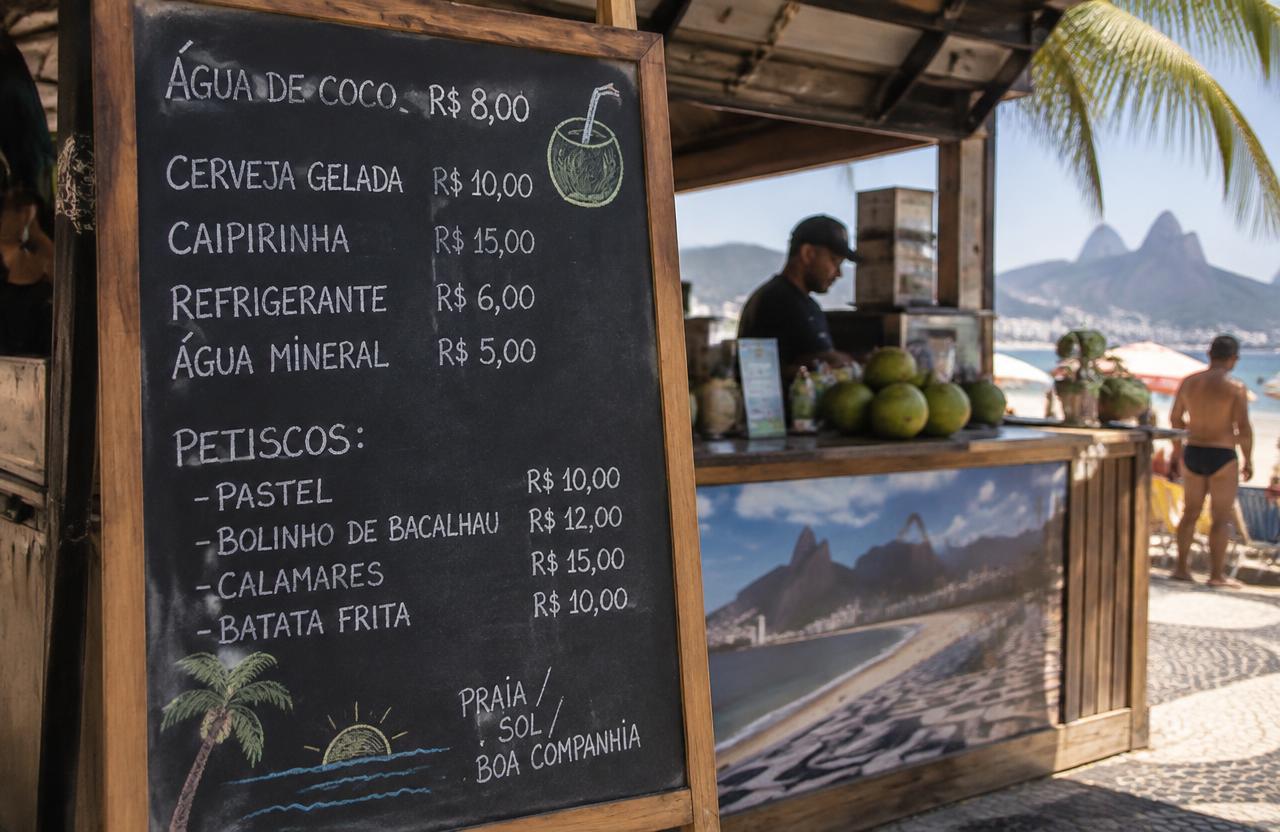
Check the menu before ordering anything and make sure it belongs to the stall serving your chairs. Look for the exact unit—per item, per portion, per kilogram or per person—and ask whether the listed amount includes a side or garnish. A photo menu can be useful but it may show an older price. If the item is not visible on the board, ask for the price before it is prepared.
For a group, add the food and rental together. A low-priced drink can still be part of a more expensive afternoon if the chairs, umbrella, service or minimum spend are separate. Ask if a service charge applies and whether it is already included. If a vendor offers an open tab, confirm how the items will be recorded and who is keeping the bill. Do not let a vague ‘you can settle later’ replace agreement on charges.
A small menu board is not the same as a quote for the entire setup. The City of Rio says beach kiosks and stalls should display prices, menu, sales conditions, extra fees and other services clearly. Read the visible information and ask about anything missing before using equipment. If the displayed details do not match what you were told, pause the order and clarify with the responsible operator rather than arguing after the group has eaten.
Order phrases that make the transaction clear
A few short Portuguese questions can remove the most common ambiguity: ‘Quanto custa?’ (How much does it cost?), ‘É por unidade ou porção?’ (Is that per item or portion?), ‘Serve quantas pessoas?’ (How many people does it serve?), and ‘A cadeira e o guarda-sol estão incluídos?’ (Are the chair and umbrella included?). Point to the exact item on the menu and repeat the price back if the answer is hard to hear over wind or music.
If you are sharing, say ‘É para dividir’ (It is to share) and ask for the portion size. To request a small amount, ‘Pode trazer uma porção pequena?’ means ‘Could you bring a small portion?’ If you want to decline a rental or extra service, say ‘Obrigado, só vou pedir a comida’ (Thank you, I’m only ordering the food). A polite, clear answer helps avoid a service being added automatically.
For food allergies, a simple translation app may help start the conversation, but it cannot verify kitchen practice. Show a written Portuguese allergy statement, name the ingredient and ask about cross-contact. If the seller cannot answer reliably, do not rely on a guess. The state tourism safety guide also advises checking the amount displayed on a card machine before confirming, which is particularly useful when the beach is noisy and the terminal is passed across a table.
Payment: card, cash and Pix are not the same everywhere
Do not assume that every sand-side vendor accepts a foreign card or that every kiosk has a working terminal. Ask about payment methods before ordering, and keep a small backup amount of cash if that suits your trip. A stall that accepts Pix may expect a Brazilian account or compatible payment setup; international visitors should not assume they can use it. Check with your bank about card fees and contactless use before travel.
If you pay by card, watch the terminal while the amount is entered. Confirm the currency and total, check whether a tip or service is already included and do not hand over your card if you are uncomfortable. Keep the receipt until you have left the beach. If the transaction fails, ask whether it was declined or merely timed out before trying again so you do not pay twice.
For a shared group bill, settle how the charges will be split before the end of the day. Write down your chairs, drinks and food if the stall is keeping a running tab. Review the final total against the menu and rental terms. If you do not understand a line, ask the operator to explain it before paying. Clear questions are easier when everyone is still together and the day is not ending in a rush.
Beach rules that affect food and packaging
The City of Rio prohibits vendors from giving customers food or drinks in glass containers on the sandy part of its beaches. A November 2025 amendment allows licensed fixed beach stalls to handle original, capped bottles of distilled spirits inside their tents to prepare cocktails, subject to health requirements. That exception is for preparation, not a glass bottle handed to a customer. Ask for your drink in an allowed serving container and do not carry glass onto the sand yourself.
The city’s waterfront order rules also require stalls and kiosks to keep their sales information visible and current. Other rules cover licensed trading, cleanliness and waste handling. These rules do not make every vendor’s service identical, so confirm your price and arrangement with the individual operator. The legal requirement is a minimum of transparent information; it is not a guarantee of a particular menu or a fixed rental rate.
Use bins or take your rubbish with you, and keep food packaging secure so it does not blow into the water. Avoid leaving seafood or dairy snacks in direct sun for long periods. If your group buys a meal, eat it while fresh and wash or sanitize hands before handling food. Beach heat and sand can make an otherwise familiar snack less convenient than a shaded kiosk table. Rules can change by season and license type, so check current signs or City Hall updates if an operator uses equipment you are unsure about.
Where the kiosk fits and where it does not
A kiosk is useful for a longer beach visit, a shaded break or a meal when you do not want to leave the waterfront. Riotur’s current kiosk directory can help you identify named establishments along the coast, but a directory entry does not tell you today’s seating, menu, music or service level. Check the venue’s own current channels for event or menu details and choose the one that fits your beach and transport plan.
A barraca on the sand is especially convenient when you are renting chairs and want food brought nearby. The trade-off is a less formal space where wind, sand and busy service affect the experience. If you need a quiet meal, shade, accessible seating or a detailed allergy conversation, a fixed kiosk or nearby restaurant may be a better fit. Think of the beach stall as one flexible option rather than the default meal for every day.
If you want to swim, order food before or after rather than leaving a hot meal unattended. Agree who stays with the bags and who is placing the order. Keep phones and wallets out of sight, and do not ask a vendor to watch valuables while serving other customers. For a beach-day plan that includes rentals and safety advice, use the etiquette and cost guides linked below.
A clear beach order from arrival to payment
On arrival, identify the operator and ask what the chair, umbrella and any service cost. Read the visible menu and take a quick photo if you need to remember the prices. Ask about portions, minimum spend, payment options and any service charge before the order. Only then choose how long to stay and where the group will sit. A two-minute check can prevent a longer disagreement after a swim.
Order a modest amount first, especially if you do not know the stall’s portion size. Add another item after it arrives instead of guessing how much the group can finish. Keep cold drinks and perishable food in the shade, follow the staff’s directions about the furniture and ask if a table is included with the order. For families, check whether the seating arrangement leaves a safe path between the chairs and the waterline.
When the bill comes, compare it with the menu and the services you accepted. Check the card terminal display, pay only the amount you agreed and collect your belongings before leaving. If there is a genuine discrepancy, speak calmly with the operator and use the city consumer-protection contact if you need to make a formal complaint. Keep a photo of the board and receipt as a record.
Common mistakes tourists make
- Assuming chair and umbrella rental is included with food or drinks.
- Ordering before confirming portion size and whether the listed price is per item or per group.
- Treating a kiosk, sand-side barraca and roaming vendor as the same business.
- Assuming every seller accepts a foreign card, Pix or the same payment methods.
- Confirming a card payment without checking the total displayed on the terminal.
- Taking glass containers onto the sand or expecting a kiosk to hand one over there.
- Leaving a hot snack in full sun while the group swims.
Local expert tips
- Read the price board first; city rules require clear prices, menu, sale terms, fees and services.
- Ask ‘A cadeira e o guarda-sol estão incluídos?’ before sitting down.
- Use ‘É por unidade ou porção?’ to clarify the price unit.
- Ask ‘Serve quantas pessoas?’ when you plan to share an order.
- Check the terminal amount before tapping or entering your PIN.
- Keep the stall name or number and a photo of its menu until the bill is settled.
- If you have a serious allergy, choose a kitchen that can explain its ingredients and cross-contact confidently.
Frequently asked questions
What food should I order at a Rio beach barraca?+
Common beach snacks include grilled queijo coalho, corn, sandwiches, açaí and fried or seafood portions. Menus and preparation vary, so check the current board, ingredients, portion size and price before ordering.
Do beach barracas in Rio charge for chairs and umbrellas?+
Some include equipment with a purchase and others charge separately or set a minimum spend. Ask the specific operator before sitting down and check the displayed conditions of sale.
Can I pay by card at a Rio beach stall?+
Payment options vary by seller and terminal. Ask before ordering, and check the full amount displayed on the card machine before confirming. Do not assume Pix will work with an international account.
Can I take glass bottles onto Rio's beaches?+
The City of Rio prohibits selling or supplying food and drinks in glass containers on the sandy part of city beaches. Ask for an allowed container and follow the current local rules.
Are beach kiosk prices required to be displayed?+
Rio's published waterfront rules require beach kiosks and stalls to display prices, menus, sale conditions, additional fees and services clearly. Check the board before accepting a rental or placing an order.
How do I order a portion to share in Portuguese?+
Ask ‘Serve quantas pessoas?’ which means ‘How many people does it serve?’ You can also say ‘É para dividir?’ (‘Is it to share?’) and confirm the total price before ordering.
Is seafood safe to eat from a beach stall?+
Food handling differs by operator. Choose a busy, established place, ask how the food is stored and prepared, and avoid a stall that cannot answer a serious allergy question. For greater control, eat at a fixed restaurant kitchen.
Are Rio beach kiosks open every day?+
Schedules vary by kiosk, season, weather and event. Use the venue's current channel or Riotur directory as a starting point and check the specific location on the day you plan to visit.
Sources and image credit
Details and access can change. Use these venue, operator and public-information sources to recheck key details before visiting.
- Rio City Hall: waterfront rules and visible menus ↗
- Official text of Decree Rio 56,160 ↗
Requires prices, menu, sale conditions, additional fees and offered services to be clearly displayed.
- Rio City Hall: glass containers on beaches ↗
- SEOP: November 2025 cocktail-preparation exception for fixed beach stalls ↗
Licensed stall operators may handle original, capped spirit bottles inside tents to prepare cocktails; this does not authorize handing customers glass containers on the sand.
- O Dia: report on updated beach stall glass rules ↗
- Rio State Tourism: beach and payment safety ↗
Advises checking the card-terminal amount before confirming a payment.
- Riotur: beach kiosks directory ↗
Keep planning
Rio Beach Etiquette & Chair Rentals
Understand beach behavior, equipment and service expectations.
What Things Cost on Rio’s Beaches
See current dated examples for food, drinks and rentals.
Rio Beach Guide
Choose a beach and plan the transport and facilities.
Rio Restaurants & Food Index
Compare cafés, casual meals and neighborhood restaurant guides.
Street Food in Rio
Learn about snacks beyond the waterfront stalls.