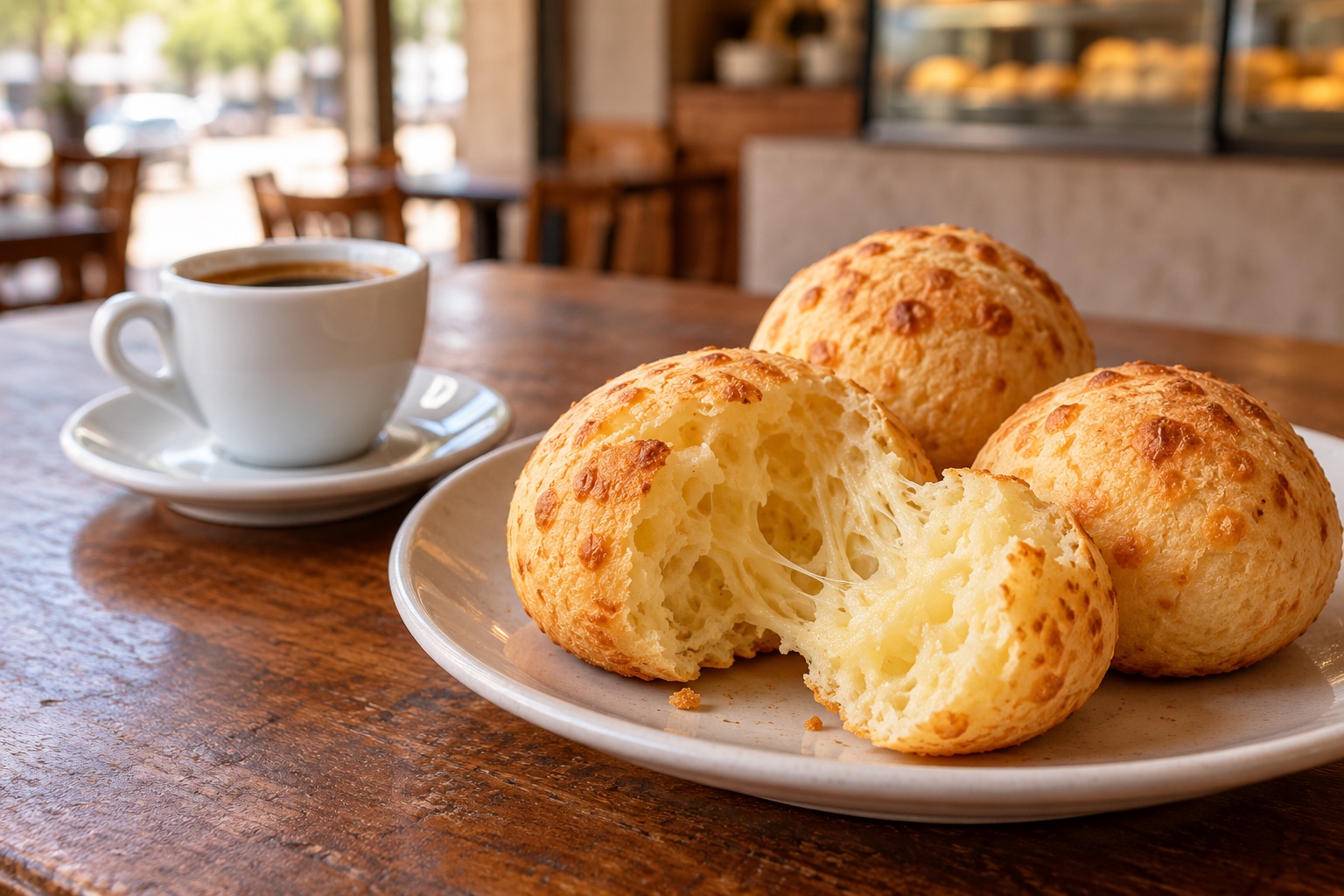
Best Pão de Queijo in Rio
Written and reviewed by Lotte — Rio local, founder & editor of PlanRio · How we research · First published · Last reviewed
Quick answer
For a filled pão de queijo, current local reporting points to The Slow Bakery and Cirandaia in Botafogo, Pendê in Copacabana, and Café Delas in Jardim Botânico. For the classic plain version, try a busy nearby padaria and ask when the next batch is due. Check current menus before detouring; no single shop is objectively best for every style.
Turn it into a food morning
Two ways to go further than a bag from the padaria. A guided food tour walks you through bakeries and street food; a Brazilian breakfast cooking class lets you make pão de queijo yourself. Neither is necessary: a nearby bakery can be a more useful stop than a tour if all you want is a fresh roll. Check inclusions and meeting points for your date.
Links may earn us a commission at no extra cost to you. This supports PlanRio.
Pão de queijo at a glance
| What | Chewy cassava-starch and cheese bread; ask about wheat and cross-contact |
| Filled versions | Botafogo, Copacabana, Jardim Botânico and Laranjeiras options appear in current local reporting |
| Plain version | Ask a nearby padaria when its next fresh batch is coming out |
| Price | Varies by venue, portion and filling; check the live menu or counter |
| When | Ask when the next batch is baked; there is no universal bakery schedule |
| Take home | Frozen dough from any supermarket — a classic gift |
Six locally reported places to try
1. The Slow Bakery
Check the current menuBotafogo
VEJA Rio reported its sacanagem mineira: pão de queijo used as the base for slow-roasted pork and vinaigrette. This is a substantial filled snack rather than a plain roll; confirm it is still on the menu before going.
See the reported menu item2. Pendê
Check the current menuCopacabana
A 2026 local dining report highlighted a Romeu e Minas version with creamy guava. A useful stop if you want a sweet-and-savoury filled pão de queijo; check today's selection and price.
See the reported menu item3. Cirandaia
Check the current menuBotafogo
The reported lombo defumado with Catupiry is a filling, distinctly Carioca take. Ask whether it is being served at the current location and whether it is available to eat in or take away.
See the reported menu item4. Café Delas
Check the current menuJardim Botânico
VEJA Rio described a sweet version with soft brigadeiro and cinnamon. Pair it with the café's current drinks menu; the listing is a reported dish, not a guarantee of daily availability.
See the reported menu item5. Esperança Eco
Check the current menuLaranjeiras
A 2026 local report described a griddled pão de queijo sandwich with requeijão. It is closer to a small meal than a traditional plain breakfast roll; verify the current serving hours.
See the reported menu item6. Rubaiyat Rio
Check the current menuJardim Botânico
VEJA Rio's August 2026 restaurant coverage describes house-made pão de queijo in its couvert. This is a sit-down restaurant option, not a quick padaria stop; check the current couvert and service charge.
See the reported menu itemWhat is pão de queijo, exactly?
Pão de queijo (literally "cheese bread") is a chewy Brazilian roll made with cassava starch and cheese; recipes commonly also use egg and milk or water. Texture, size and cheese vary by bakery. Ask what is in the recipe rather than assuming one fixed formula.
Cassava starch is the defining ingredient, but recipes vary and may include wheat flour or share equipment with other products. Traditional ingredients do not make a bakery kitchen safe for coeliac disease or allergy; ask the venue about both ingredients and cross-contact.
Where does pão de queijo come from?
Pão de queijo is associated with Minas Gerais and spread nationwide from there. Its exact origin is not settled in one tidy story: cassava starch, cheese and colonial-era foodways shaped a regional dish whose recipes developed across households and bakeries.
Today it is sold throughout Brazil, from neighbourhood bakeries and coffee shops to restaurants that reinterpret the format with fillings. In Rio, the difference between a plain breakfast roll and a filled snack is a useful way to plan what to order.
When and how Brazilians eat pão de queijo
- Breakfast — a common time to order it with coffee; ask when the next fresh batch is due rather than assuming a fixed baking hour.
- Afternoon snack — it also works as a lanche with coffee; opening hours and fresh batches depend on the venue.
- Party appetizer — served mini-sized at any birthday, wedding or business meeting in Brazil.
- Travel snack — some airport cafés and flight menus offer pão de queijo, but availability varies by terminal, carrier and route. Check the menu rather than counting on it.
What should pão de queijo cost?
Prices vary with size, filling, venue and service. Compare like with like: a plain counter roll, a stuffed pão de queijo and a restaurant couvert are different portions. Check the menu or displayed counter price before ordering; we do not publish a citywide price band without a current, comparable sample.
Pão de queijo variations you should try
- Traditional — Canastra or meia-cura cheese, plain interior. The benchmark.
- Recheado — stuffed. Catupiry (Brazilian cream cheese), requeijão, or dulce de leite for a sweet spin.
- Pão de queijo mineiro grande — bigger, denser, more cheese. Sold at highway padarias on the road to Minas.
- Mini "coquetel" — bite-sized version served at parties and hotel breakfasts.
- Regional cheese — some bakeries name Canastra or other Minas cheeses; ask which cheese is used instead of assuming every recipe is the same.
How to spot a great pão de queijo before you bite
- Freshly baked — ask when the next batch is due; cooling and reheating affect texture.
- Texture that suits the style — a plain roll, a filled sandwich and a restaurant couvert will not have the same crust or interior.
- Ask which cheese is used — some bakeries name Canastra or meia-cura, while recipes and ingredients vary.
- Check the portion and price — especially for filled versions sold by weight or as a restaurant couvert.
- For allergies, ask about ingredients and shared equipment — appearance cannot confirm wheat or dairy cross-contact.
Order it like a local
Walk into a padaria and ask "pão de queijo quentinho, por favor" ("a hot pão de queijo, please") — then ask whether a fresh batch is available. Pair it with café pingado (coffee with milk) or a fresh suco de laranja. Prices depend on the bakery and the size of the order.
If the counter attendant answers "acabou de sair do forno" — "just out of the oven" — you're in the right place. If they hand you one at room temperature, ask them to warm it: "pode esquentar?".
Common mistakes tourists make
Assuming every bakery has a fresh batch ready.
Baking schedules differ. Ask when the next tray is due or choose a place that lists the item on its current menu.
Assuming it is always wheat-free.
Cassava starch is traditional, but recipes and shared equipment vary. Ask about the ingredients and cross-contact if you have an allergy or coeliac disease.
Expecting one standard style.
A plain roll, filled snack and restaurant couvert can differ in size, texture and price. Check what the menu describes.
Eating it with butter.
It already contains fat and cheese. Brazilians eat it plain with coffee. Adding butter is the sort of thing that makes a padaria owner wince politely.
Ordering one.
They are small and sold by the piece or by weight. Two or three with a coffee is a normal breakfast; one is a taster.
Buying frozen dough without checking travel rules.
Import restrictions for dairy and frozen food differ by destination. Check your customs authority before packing it.
Skipping a bakery because the hotel has a buffet version.
A bakery may have a different recipe or texture, but ask about freshness and ingredients rather than assuming one style is better.
Local expert tips
- Ask “acabou de sair?” — “did it just come out?” Four words that get you the fresh tray instead of the display one. If the answer is no, ask when the next batch is due and come back.
- Try it with coffee. A small coffee with milk, called café pingado, is a familiar pairing; order whichever style you like.
- At a per-kilo counter, ask how the price is calculated. Portion sizes and weighing practices vary between venues.
- Pair it with a market visit only if that is already your plan. CADEG is a large food market; check current vendors and opening hours rather than expecting every stall to sell pão de queijo.
- If you are coeliac, still ask. Traditional pão de queijo uses cassava starch, but recipes and kitchen practices vary. Ask about wheat ingredients and cross-contact: “tem contaminação com trigo?”
- Check customs before taking frozen dough home. It may be a useful souvenir where import rules allow it, but dairy and frozen-food restrictions vary by destination.
- Ask which cheese is used. Canastra and meia-cura are useful terms to recognise, but the cheese alone does not tell you whether a recipe is fresh or suits your taste.
The previous version also named Casa Carandaí, Talho Capixaba, Ferro e Farinha, Casa Graziela, Padaria Ipanema, Padaria Jasmim, Rei do Pão de Queijo and CADEG. Their current pão de queijo menus or the specific recipe claims could not all be confirmed, so check directly before making a special trip. Faz de Conta appeared in the same local article for a broader kaol-style meal, not as a confirmed pão de queijo stop.
Sources and current menu checks
- VEJA Rio: filled pão de queijo around Rio — local reporting from April 2026; menu items can change.
- VEJA Rio: restaurant couvert options — August 2026 coverage includes house-made pão de queijo at Rubaiyat Rio.
Pair with
- Best padarias in Rio
- Best coffee shops in Rio
- Best brunch in Rio
- Rio food tours
- Brazilian food guide
- Gluten-free Rio and food allergy guide — dedicated kitchens, allergen labels and cross-contamination
FAQ
What is pão de queijo?
A chewy Brazilian cheese bread made with cassava starch. It is associated with Minas Gerais and is eaten across Brazil at breakfast, as a snack or with a meal. Ingredients and texture vary by recipe.
Where can you find the best pão de queijo in Rio?
For filled versions, current local reporting names The Slow Bakery and Cirandaia in Botafogo, Pendê in Copacabana, and Café Delas in Jardim Botânico. For a plain roll, look for a busy nearby padaria and ask when the next batch is coming out. Menus and availability change, so confirm before making a special trip.
Is pão de queijo gluten-free?
Traditional recipes use cassava starch rather than wheat flour, but ingredients and kitchen practices vary. It is not automatically safe for coeliac disease or a wheat allergy: ask about the recipe and cross-contact, and do not rely on the dish name alone.
How much does pão de queijo cost in Rio?
There is no single citywide price: a plain bakery roll, a filled snack and a restaurant couvert are different products. Check the current menu or counter price, including whether a service charge applies.
When do you eat pão de queijo in Rio?
Breakfast and afternoon coffee are common occasions, but bakeries set their own baking schedules. Ask when the next fresh batch is due.
Can I take pão de queijo home?
Some shops sell frozen pão de queijo, but stock varies and import rules for dairy and frozen foods depend on your destination. Check the shop and your destination customs authority before buying. For a ready-to-eat snack, ask the bakery about packaging and storage rather than relying on a fixed travel time.
Keep planning
Where to Eat in Rio: Guide Index
Browse Rio restaurant and food guides by dish, occasion and neighbourhood, plus practical tipping and meal-time advice.
Best Padarias in Rio: 5 Bakeries & What to Order
Find Rio's best padarias by neighborhood: pão na chapa, pingado, naturally leavened bread, brunch and historic café stops, with current addresses and ordering tips.
Gluten-Free Rio & Food Allergy Guide
Gluten-free Rio plus every other allergy: dedicated coeliac kitchens, Brazil's ALÉRGICOS label rules, where peanut, cashew, dried shrimp, milk, egg and sesame hide in Rio food, venue-by-venue risk, Portuguese ordering and emergency scripts, and why no adrenaline auto-injector is sold in Brazil.
Best Brunch in Rio
Where to find breakfast and brunch in Rio, from Brazilian café da manhã at Quitéria to bakery and deli counters in Botafogo and Leblon.
Money, Cards & PIX in Rio
Best cards for Brazil, how PIX works, safe ATMs, currency exchange, and how to avoid fees.