Jericoacoara: The Complete Guide from Rio
Ceará · Northeast Brazil
Quick answer
Jericoacoara ('Jeri') is a car-free sand-street village inside a national park in Ceará, reached by flying to Fortaleza (or the small Jericoacoara airport) and finishing on a 4x4 across the dunes. Give it 3 nights for its sunset dune, hammock lagoons and world-class wind, stay in the village, and see the surrounding beaches by buggy.
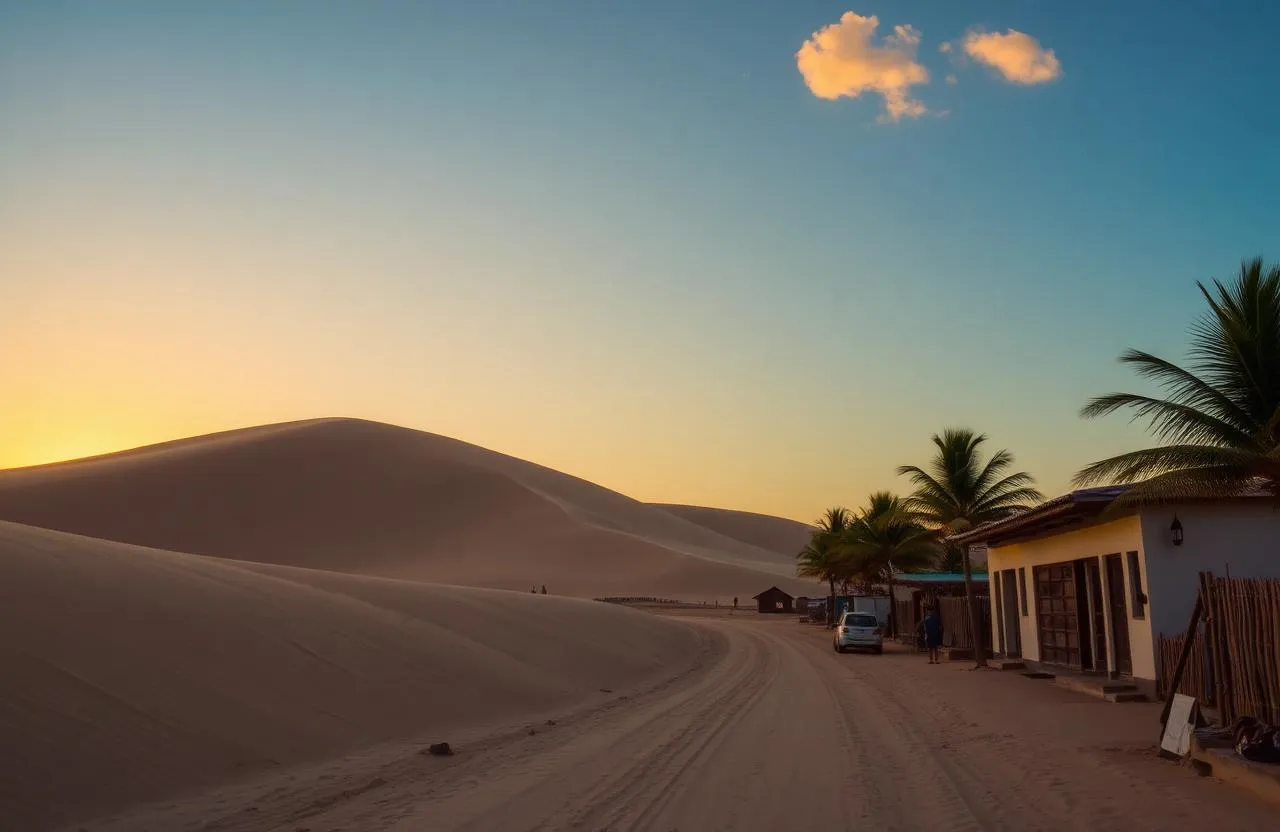
Jericoacoara is the end-of-the-world beach village Brazilians dream about — sand streets instead of roads, no street lights (so the stars are absurd), a giant dune you climb every evening to watch the sun drop into the sea, and lagoons where the bars float hammocks in turquoise water. It sits inside a national park in remote Ceará, and getting there is half the adventure.
This is the practical local guide to Jeri from Rio in 2026: how to make the long journey up, why the village's car-free rhythm is the whole point, which lagoons and beaches are worth a buggy day, and how to time your trip for the wind, the sun and the forró.
Jericoacoara at a glance
| Getting there | Fly Rio → Fortaleza (FOR) then ~4.5–5h transfer, or Rio → Jericoacoara (JJD) + ~1h |
|---|---|
| Ideal stay | 3–4 nights |
| Best base | Jericoacoara village itself (walkable, sand streets, no cars) |
| Best months | July–December (dry, strong wind); rainier Feb–May |
| Known for | Sunset Dune, Pedra Furada, blue lagoons, kitesurfing, forró nights |
| Getting around | On foot in the village; 4x4 and buggy tours for everything else |
Complete destination guide
Why go, and who it's for
Go to Jericoacoara for a rare kind of unplugged beauty: a village with no cars and no paved roads, wrapped in dunes and mangroves, with a nightly ritual of climbing the Duna do Pôr do Sol for sunset, capoeira on the beach and forró in the sand-floored bars afterwards. By day you buggy out to freshwater lagoons with underwater hammocks, and the wind that funnels in from August to December makes it one of the planet's great kitesurfing spots.
It suits adventurous travellers, couples, kitesurfers and anyone happy to trade convenience and luxury polish for atmosphere and nature. It is remote and rustic — sand in everything, a long journey in, simple infrastructure. If that sounds romantic, you'll love it; if it sounds like hard work, it's not the trip for you.
The village and its rituals
Everything in Jeri happens on foot. The village is a grid of soft-sand streets lined with pousadas, restaurants (surprisingly good and international), craft shops and bars. The daily highlight is sunset from the Duna do Pôr do Sol, the huge dune at the edge of the village — the whole town climbs it with a caipirinha for the show. Afterwards, the beachfront fills with capoeira circles, and the bars turn to live forró.
Just along the beach, Pedra Furada — a natural stone arch you can walk to at low tide — is the classic photo, and the Árvore da Preguiça (the 'lazy tree' bent flat by the wind) is another. There's no need to plan much: the village's slow rhythm is the point.
Lagoons, dunes and beaches
The showpiece day trips are the freshwater lagoons: Lagoa do Paraíso (Paradise Lagoon) and Lagoa Azul, where beach bars set hammocks and tables in the shallow, warm, impossibly blue water. Buggies and 4x4s reach them across the dunes in under an hour.
West of the village, Tatajuba has a huge dune you sandboard down into a lagoon and a river crossing on a hand-pulled ferry. East, the fishing village of Preá is the kitesurfing beach and the gateway to Paradise Lagoon. A full-day 'leste' (east) or 'oeste' (west) buggy tour strings several of these together — this is how you see the region.
How to get there from Rio de Janeiro
Fly to Fortaleza (or Jericoacoara airport)
There are two ways in. The classic route: fly from Rio to Fortaleza (FOR) — around 3.5 hours, often with a connection — then take a road transfer of about 4.5–5 hours northwest, ending with a 4x4 leg across the dunes into the village (ordinary cars can't reach Jeri). Shared jardineira trucks and private transfers both make this run daily.
The faster route: fly into the small Jericoacoara Airport (JJD, at Cruz), which some airlines serve seasonally, leaving only about an hour's transfer to the village. It cuts a long day to a short one but has fewer flights and higher fares — worth checking, especially if your time is tight.
Transfers and the final 4x4 leg
However you arrive, the last stretch into Jericoacoara is always by 4x4 over sand — you leave normal vehicles at Jijoca and transfer. Book your transfer end-to-end in advance through your pousada or a transfer company so the connection and the 4x4 are arranged; turning up and improvising the final leg is stressful with luggage.
Don't try to self-drive a regular rental all the way in — you'll get stuck. If you want independence, a proper 4x4 with dune experience is the only option, and even then a local driver is wiser.
Getting around Jeri
In the village you walk — there are no cars, and it's small enough to cross in ten minutes. For the lagoons, dunes and outer beaches, you take a buggy or 4x4 tour (with a driver), which is genuinely part of the fun. There are no ATMs to rely on and patchy card acceptance, so plan your cash.
Best areas & neighbourhoods
Jericoacoara village centre
The only sensible base — sand streets lined with pousadas, restaurants and bars, a short walk from the beach and the Sunset Dune. Everything is here; choose your pousada by comfort and quiet, not location.
Near the Sunset Dune / beachfront
Pousadas toward the dune and beach put you steps from the sunset ritual and the nightlife, at the cost of a little evening noise. Great for first-timers who want to be in the thick of it.
Quieter village edges
Set back a few sandy streets, you trade a two-minute walk for calmer nights and often better value — our hand-picked stays sit in this sweet spot.
Preá (kitesurf base)
The fishing village 15–20 minutes east is the kitesurfing beach and a calmer, cheaper alternative for wind-sports travellers who don't need Jeri's nightlife on the doorstep.
Tatajuba (day trip)
West of the village — a giant dune, a lagoon and a river crossing. Not a base, but one of the best buggy-day destinations from Jeri.
Where to stay in Jericoacoara
There are no big resorts in Jericoacoara — it's pousadas only, and you want to be in the village so you can walk to the beach, the restaurants and the Sunset Dune. Below are three PlanRio hand-picked stays in the heart of Jeri, all a short sandy stroll from the action but set back enough for a calmer night.
Three hand-picked Jericoacoara stays
Village pousadas a short sandy walk from the beach and the Sunset Dune — set back enough for a calmer night.
Dates optional. Set guests and rooms on Booking.com.
Check what your room rate includes
- Breakfast, taxes and any extra fees
- Room type, guest count and bed setup
- Cancellation deadline and when payment is due
Confirm these on Booking.com for the rate you choose.
Villa Medina Oasis
Best for: A quiet, well-rated guesthouse a short walk from the village and Sunset Dune
Know before booking: Jericoacoara is a car-free sand-street village — arrange the 4x4 transfer from Jijoca in advance.
Check Villa Medina Oasis availabilityPousada Coral Negro (Vila Rufino)
Best for: A friendly village pousada near the Nossa Senhora de Fátima chapel
Know before booking: The property recently rebranded to Pousada Coral Negro — book under its current Booking listing.
Check Pousada Coral Negro (Vila Rufino) availabilityHotel Jeri
Best for: A central, no-fuss base in the heart of Jericoacoara
Know before booking: Sandy streets and a rustic village setting — pack accordingly and expect simple comforts.
Check Hotel Jeri availabilitySafety guide
Jericoacoara is one of the safest destinations in this guide — a tiny, remote village inside a national park with a strong tourism culture and very little crime. You can walk the sand streets at night comfortably; just bring a phone torch, because there are deliberately no street lights (part of the charm, and why the stars are so good).
The real risks are practical and natural rather than criminal. Plan your cash: ATMs are unreliable and card acceptance patchy, so bring enough reais (and use Pix where possible). Protect valuables from sand and water, and use reputable, insured operators for buggy tours, kitesurfing lessons and the 4x4 transfer.
Respect the elements: the sun and wind are fierce, so hydrate and cover up; the open Atlantic beaches have currents, so swim at the calm lagoons and patrolled spots; and if you're kitesurfing, only go out within your level in the strong August–December wind. Confirm your outbound transfer a day ahead — missing the 4x4 connection is the classic Jeri mishap.
A 3-day Jericoacoara itinerary
Day 1 — Village & the Sunset Dune: Arrive, settle into the village rhythm, walk the beach to Pedra Furada at low tide, then climb the Duna do Pôr do Sol for the sunset ritual, followed by capoeira on the beach and forró in a sand-floored bar.
Day 2 — The blue lagoons (east): A buggy day east to Preá and the freshwater lagoons — Lagoa do Paraíso and Lagoa Azul — for hours in the hammocks and shallow turquoise water, with a lagoon-bar lunch. Back for another dune sunset.
Day 3 — Tatajuba dunes (west): A west buggy tour to Tatajuba: sandboard the giant dune into a lagoon, cross the river by hand-pulled ferry, and explore the wilder western beaches before a final night out in the village.
Best tours & a practical booking guide
In Jeri the tours are the destination — the lagoons, dunes and beaches are all reached by buggy or 4x4 with a driver, and that's exactly how you want to see them. The bookings that pay off are a full-day dunes-and-lagoons tour, the east-coast run to Preá and Paradise Lagoon, and a classic buggy tour of the east coast. Reserve a day ahead.
Best Jericoacoara tours to book
Dunes & lagoons full-day tour
The classic full day across dunes, lagoons and village culture.
Preá Beach & Paradise Lagoon
East to the kitesurf beach and the blue lagoon's hammocks.
East-coast buggy tour
A buggy run along Jeri's east-coast beaches and dunes.
Alchymist & Blue Lagoon experience
A premium full-day lagoon experience.
Links may earn us a commission at no extra cost to you. This supports PlanRio.
Common mistakes visitors make
- Trying to self-drive a regular car into Jeri — the last leg is 4x4-only over sand; you'll get stuck.
- Not booking the transfer end-to-end — missing the 4x4 connection at Jijoca is the classic Jeri arrival disaster.
- Arriving without enough cash — ATMs are unreliable and cards are patchy; bring reais and use Pix.
- Only staying one or two nights — with the long journey in, three or four nights is what makes the trip worthwhile.
- Coming in the rainy months (Feb–May) expecting the classic wind-and-sun Jeri — July–December is the season.
Local expert tips
- Bring a small torch or use your phone light after dark — the village has no street lighting on purpose.
- Time your Pedra Furada walk for low tide, and be on the Sunset Dune 30–40 minutes before sundown for the ritual.
- The lagoon hammocks (Lagoa do Paraíso) usually have a consumption minimum per table — factor it in and settle in for the afternoon.
- August to December brings the strong, reliable wind that makes Jeri a top kitesurfing spot; February to May is greener but wetter.
- Pack light, sand-friendly gear and reef-safe sunscreen — everything you own will get sandy, so leave the delicate luggage behind.
Frequently asked questions
How do I get to Jericoacoara from Rio?
Fly from Rio to Fortaleza (FOR) — about 3.5 hours, often with a connection — then take a road transfer of roughly 4.5–5 hours northwest, finishing on a 4x4 across the dunes into the village. Alternatively, some airlines serve the small Jericoacoara airport (JJD) at Cruz seasonally, leaving only about an hour's transfer. Book the whole journey, including the 4x4 leg, in advance.
How many days do you need in Jericoacoara?
Three to four nights. That covers the village, the Sunset Dune ritual, Pedra Furada, an east buggy day to the blue lagoons (Paraíso and Azul), and a west day to Tatajuba's dunes and river crossing. Given the long journey to get there, anything less than three nights isn't really worth the travel.
Is Jericoacoara safe?
Yes — Jeri is one of the safest destinations in Brazil for visitors, a tiny remote village with very little crime; you can walk the sand streets at night (bring a torch, as there are no street lights). The real considerations are practical: bring enough cash, use insured operators for buggies and kitesurfing, respect the sun, wind and Atlantic currents, and confirm your transfer out a day ahead.
When is the best time to visit Jericoacoara?
July to December is the classic season — dry, sunny and windy, ideal for the beach, the dunes and kitesurfing (the wind is strongest roughly August to December). February to May is the rainy season, greener but wetter and less reliable. The village is busiest around Brazilian holidays in July and December–January.
Do you need a 4x4 to get to Jericoacoara?
For the final leg into the village, yes — Jeri sits inside a national park and the last stretch is soft sand that only 4x4 vehicles can cross, so you leave normal cars at Jijoca and transfer. Inside the village there are no cars at all; you walk, and take buggy or 4x4 tours (with drivers) to the surrounding lagoons and beaches.
What are the blue lagoons near Jericoacoara?
Lagoa do Paraíso (Paradise Lagoon) and Lagoa Azul are freshwater lagoons a short buggy ride east of the village, where beach bars set hammocks and tables in warm, shallow, turquoise water. They're the region's signature experience — plan a half or full day, and expect a consumption minimum for the hammock tables.
Where should I stay in Jericoacoara?
In the village itself — there are no big resorts, only pousadas, and you want to walk to the beach, restaurants and the Sunset Dune. Staying a few sandy streets back from the beachfront gives you quieter nights and better value while keeping everything a short stroll away. Preá, 15–20 minutes east, suits kitesurfers.
Is Jericoacoara good for kitesurfing?
It's world-class. From roughly August to December, strong, steady wind funnels along this coast, and the nearby village of Preá is one of the best kitesurfing beaches on earth, with schools for all levels. Flat-water lagoons make it beginner-friendly too. Come outside those months and the wind is far less reliable.