Búzios vs Ilha Grande: Which Fits Your Trip?
Written and reviewed by Lotte — Rio local, founder & editor of PlanRio · How we research · First published · Last reviewed
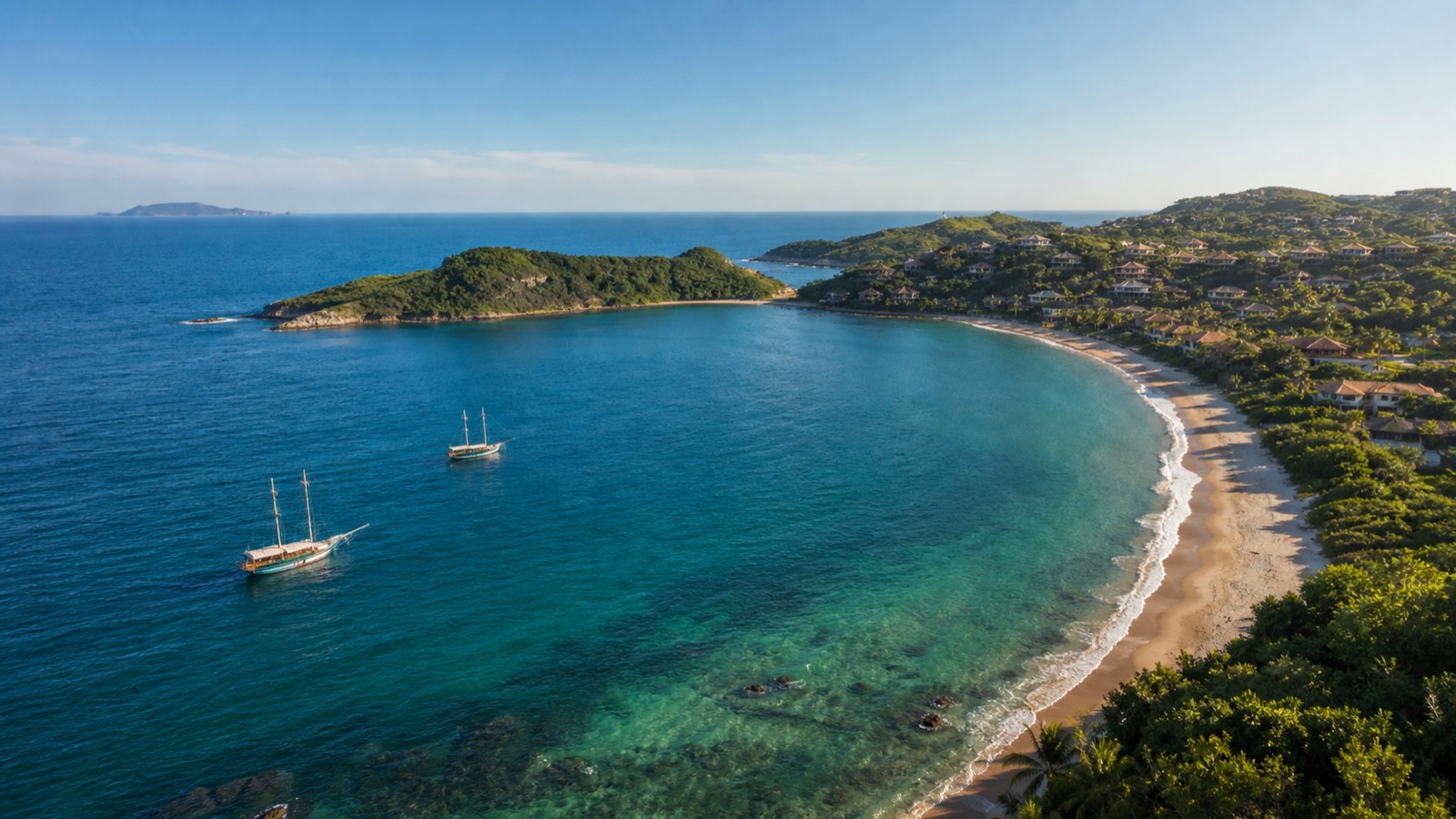
The hero shows Búzios, not Ilha Grande; the official sources below cover both destinations and their different access patterns.
Quick answer
Choose Búzios for road access, varied peninsula beaches, restaurants and a lively evening centre. Choose Ilha Grande for a car-free island stay with trails, boat-access coves and a slower nature-focused pace. Búzios is simpler for a short break; Ilha Grande needs a mainland transfer, boat crossing and flexible schedule. Allow at least three nights for either destination.
Links may earn us a commission at no extra cost to you. This supports PlanRio.
At a glance
Choose Búzios for
A mainland peninsula, beach-hopping, restaurant choice and a more flexible road or coach approach.
Choose Ilha Grande for
A car-free island stay built around trails, boat-access beaches, forest and a slower pace.
Best first base
Central Búzios for evenings; Vila do Abraão on Ilha Grande for the broadest first-visit services and connections.
Getting there
Búzios is reached by road. Ilha Grande requires a mainland transfer followed by a boat crossing.
Time to allow
Give either destination at least three nights; add a buffer night to Ilha Grande if boat timing matters.
Our verdict
Búzios is easier to combine with other road-trip stops; Ilha Grande rewards travellers who want to slow down and stay on the island.
The short answer: Búzios is a beach town; Ilha Grande is an island escape
Choose Búzios if you want a mainland beach destination with a lively centre, a choice of pousadas and hotels, restaurants for different budgets, and the freedom to arrive by coach or car. Its beaches are spread around a peninsula, so you still need to plan local transport, but you can leave for Rio by road without coordinating a boat. It is a good fit for a long weekend, a couple’s escape, or a longer Costa do Sol route that also includes Cabo Frio and Arraial do Cabo.
Choose Ilha Grande if the journey is part of the experience: leave the road network behind, cross by boat, unpack in a village and spend days between trails, coves and boat excursions. The island has no public road network for visitors to use as a car-based beach-hopping shortcut. That creates a more nature-focused atmosphere, but it also makes luggage, weather, return transfers and accommodation location more consequential. For a wider regional route, see our Costa Verde itinerary from Rio and the practical Angra dos Reis guide.
There is no universal winner. Búzios is easier when you value choice, evening dining and a predictable road exit. Ilha Grande is more compelling when you want to walk, swim, take a boat and accept that plans depend on the sea. If you have only one or two nights, Búzios is usually the simpler overnight. If you can stay longer and keep your schedule flexible, Ilha Grande can feel like a genuine change of scene rather than another beach town.
Búzios vs Ilha Grande at a glance
Búzios is Armação dos Búzios, a coastal municipality on the Costa do Sol northeast of Rio. It is connected to the mainland by road, and its beaches, neighbourhoods and services are distributed across a narrow peninsula. The state tourism portal describes 23 beaches and highlights Rua das Pedras, Orla Bardot and Porto da Barra as visitor areas. That variety is real, but it does not mean every beach is a short walk from the centre or from your accommodation.
Ilha Grande belongs to the municipality of Angra dos Reis on the Costa Verde southwest of Rio. Visitors reach it by boat from the mainland; Vila do Abraão is the main arrival and service hub for many first-time travellers. The island’s protected landscapes, beaches and trails are the draw, and the state tourism portal describes more than a hundred beaches across the island. The number matters less than the practical point: many places are reached by footpath, boat or a combination of the two, not by car.
Think of Búzios as a peninsula with several beach neighbourhoods and a central evening district. Think of Ilha Grande as a set of small settlements and coves connected by water and trails. The first can be busy, polished and convenient in its centre; the second can be quiet in one bay and lively in Abraão, but overall asks you to plan around limited access. A hotel map pin is therefore only the start of the decision.
The feel of Búzios: a varied peninsula with a social centre
Búzios works well for travellers who like choosing a different beach or neighbourhood each day and having somewhere to go for dinner afterward. Rua das Pedras and the Orla Bardot waterfront create a recognisable centre for restaurants, shops and evening walks. Porto da Barra is another dining and sunset area, while the beaches have individual settings, from open Atlantic-facing stretches to more sheltered coves. The town’s rhythm changes with season, weekends and holidays, so a quiet weekday and a peak-season Saturday can feel like different trips.
A Búzios stay is not automatically car-free just because the centre is walkable. Your lodging could be uphill, on a quieter beach, or several kilometres from the restaurant area. Beach-hopping may involve local vans, taxis, app rides, a rental car or a boat outing, depending on where you stay and what you want to visit. Pick accommodation around the part of the peninsula you most want to enjoy, then check how you will travel after dinner and how you will reach a beach with limited public transport.
The feel of Ilha Grande: village life, forest and boat days
Ilha Grande feels most straightforward when you accept that the village where you sleep becomes your base. Abraão has the most visitor services and connections for many first visits, with guesthouses, restaurants, small shops, boat operators and trailheads. It is not a resort strip with a road to every beach. The arrival experience includes carrying or wheeling bags along pedestrian paths and coordinating a crossing from the mainland. After that, daily plans may be a walk, a boat trip, a beach close to the village or a combination.
Other island settlements and bays can be beautiful choices, but they may have fewer services, less frequent boat access or a more complicated transfer. A remote stay can suit someone who wants quiet and has confirmed the logistics directly with the host. It can be frustrating for a first-time visitor who expects to walk out for varied dinner options or change plans easily when weather turns. Before reserving, ask how guests and luggage reach the property, where boats land, what happens if a crossing is delayed, and whether food is available nearby.
The island’s car-free character makes the environment feel close. Forest, hills and water sit beside village paths, and a beach that looks nearby on a map may require a substantial walk or a boat. Respect signs, marked trails and protected areas. Do not step off a trail to make a shortcut or treat a protected cove as an unregulated picnic site. Bring back rubbish and plan for limited places to buy water or snacks once you leave the village.
Which has the better beaches? It depends on how you want to reach them
Búzios is the easier choice if you want to compare a range of beaches while keeping a road-based base. Its peninsula has beaches with different exposure, landscapes and levels of activity. Some are associated with swimming and watersports; others face more open water or have a quieter residential setting. Rather than trying to collect every beach name, pick two or three that match your group and check current wind, waves, access and facilities before setting out. The beach that looks calm in a photo may not be calm on your date.
Ilha Grande has the stronger appeal for a beach day that feels remote or reached through nature. Lopes Mendes is widely known, but it is not a simple, universally accessible promenade beach: reaching it requires planning the trail or boat component and accounting for the day’s conditions. Other beaches around the island may be reached by boat, by trail, or both. Some are more sheltered; others face open water. Confirm the route with a local operator or your host, and do not assume a boat will land at the exact beach shown in a social post.
For small children, older travellers or anyone with limited mobility, ask a more practical question than “which has the best beach?”: how far is the walk from lodging, is there shade, are there toilets or food, how does the beach access change with tide, and how quickly can we leave if the sea changes? A central Búzios beach day can be easier to adapt. Abraão gives Ilha Grande visitors some accessible options close to the village, while the more famous remote beaches can require more stamina and a flexible plan.
Swimming, snorkelling and sea conditions
Neither destination guarantees calm water. Conditions vary by beach, tide, wind, swell, rainfall and season. In Búzios, a protected-looking bay and an exposed beach can have very different water on the same afternoon. On Ilha Grande, a boat may visit sheltered coves while an ocean-facing beach has stronger surf. Check local advice on the day, follow lifeguard or operator instructions, and be conservative with children and inexperienced swimmers. Clean-looking water is not a safety assessment.
If snorkelling is important, compare the actual excursion, not just the destination name. Ask what the operator includes, how much time is in the water, whether equipment is supplied, where the boat departs, and what happens if visibility or weather is poor. A boat tour is not the same thing as a dedicated dive trip, and an island beach visit is not guaranteed to include snorkelling. Travellers prone to seasickness should consider the crossing and the excursion separately and carry any remedy they normally use.
A sensible beach plan includes a backup. If wind or swell makes swimming unattractive, choose a short walk, a meal, a village day or a different protected activity instead of forcing the original plan. Do not enter the water because other visitors are doing so if local signs or lifeguards advise against it. For Ilha Grande, be especially cautious about adding a remote beach and a long crossing on the same day you need to return to the mainland.
Getting from Rio to Búzios
Búzios is reached from Rio by road. Auto Viação 1001 lists coach services, and the coach is often the least complicated option if your accommodation is near the town’s arrival point or can arrange a short transfer. Before booking, check the date-specific departure terminal, arrival stop, luggage allowance, service changes and return options with the operator. A ticket to Búzios does not necessarily drop you at the door of a beach-area pousada, so include the last leg in your plan.
Driving gives more flexibility for beach areas and for combining Búzios with Cabo Frio or Arraial do Cabo, but it brings traffic, parking, tolls and a need for a sober driver. The route can become much slower on holiday weekends and during major summer departures. If you rent a car, compare total cost with coach plus local rides, not just the rental price. Decide in advance whether your accommodation has parking and whether you actually need a car for the days you will spend in the central area.
For a route that includes nearby mainland towns, use our Costa do Sol multi-stop itinerary. It explains why adding stops is easier by road, while our Cabo Frio vs Búzios comparison helps you choose between those two bases.
Getting from Rio to Ilha Grande
Ilha Grande has no road from Rio. A typical journey combines ground transport to a mainland embarkation point with a boat crossing to the island. Common departure areas include Mangaratiba, Conceição de Jacareí and Angra dos Reis, but the best one depends on your island destination, chosen boat service, travel date and onward transport. The state park information and current operator pages explain the sea access; check the actual sailing provider for the current port, departure, arrival village, luggage limits, cancellation policy and return plan before paying.
Treat the ground leg and the boat leg as one itinerary. If a coach arrives late, you can miss a crossing; if the sea or weather disrupts a boat, you may not reach your island accommodation as expected. Avoid scheduling a tight flight, long-distance coach or major appointment immediately after the planned return. Leave a buffer, especially if your stay is remote or your route uses more than one transfer. Confirm whether your ticket includes a transfer from Rio, a mainland van, the boat, or only one segment.
Since June 2026, Angra dos Reis has required visitors to issue the Viva Angra / Taxa de Turismo Sustentável voucher for access to the municipality. The city describes different rules for island access, mainland stays and day visits, so confirm which applies to your route and travel date before paying for transport. Do not use an old blog post or screenshot as a rate quote. See the municipality’s Viva Angra implementation notice, the municipal TTS legislation and official visitor portal for current instructions.
Our Angra dos Reis from Rio guide separates the mainland city, island boat trips and Ilha Grande crossing so you can choose the right departure plan. For the wider coastline, see Costa Verde in four to five days.
Island access, boats and luggage: the detail that changes the trip
On Ilha Grande, a boat is transport as well as an activity. The crossing takes you to a village or landing point; a separate tour boat may take you to beaches or coves. Confirm which service you are booking and where it ends. A speedboat excursion advertised as a “paradise islands” route is a day tour from the island, not a transfer from Rio. Keep those products distinct in your itinerary so you do not confuse a sightseeing cruise with the arrival crossing.
Pack for the final walk. In Abraão and other settlements, wheeled luggage may be awkward on uneven or sandy paths, and the boat landing can be busy. A smaller bag, waterproof pouch for documents and a way to keep electronics dry make arrival easier. Ask your host what the path is like and whether they can explain the landing point. Travellers carrying medication, mobility aids, camera equipment or child gear should discuss boat boarding and baggage handling before booking.
Boat departures can be affected by weather, sea state, operator decisions and demand. A posted schedule is a planning aid, not a guarantee that the exact departure will operate in every condition. Save the operator’s contact details, reconfirm close to travel and know the alternatives if your planned service changes. If the trip is important, arrive the previous day near your departure point or keep a spare night in your route rather than relying on a last-minute connection.
Do you need a car?
You do not need a car to stay in central Búzios, but one can help with a scattered beach list or a multi-town itinerary. It may also be an inconvenience if you plan to spend most evenings in the centre, where parking and congestion can reduce the advantage. Check whether your hotel offers parking, what local transport is available and whether your chosen beaches have practical access without driving. If travelling by coach, you can still visit several beaches using local options, but the plan should be based on current routes and pickup points.
A private car is not a way to explore Ilha Grande. Visitors leave the car on the mainland and continue by boat; once on the island, movement is on foot, by boat or with local arrangements. Do not book accommodation on the assumption that a rental car will make a remote property easy to reach. Confirm the walk, boat landing and luggage transfer with the property. For both places, “no car” is possible; the difference is that in Búzios it is a choice about convenience, while on Ilha Grande it is built into the geography.
Where to stay in Búzios
Stay in or near central Búzios if dinners, Rua das Pedras, Orla Bardot and nightlife are the priority. This reduces the need for a late ride after a meal, although you may still need transport to beaches farther around the peninsula. A beach neighbourhood can be a better match if the morning swim matters more than a spontaneous evening out. The trade-off is that one beach base does not put every other beach within walking distance.
Before reserving, map the actual property rather than relying on the town label in a listing. Check steepness, stairs, road access, parking, distance to restaurants and what transport operates after dark. Ask whether the room has air conditioning, whether the accommodation is quiet at night, and how staff recommend getting around. Those details often matter more than an abstract ranking of the “best” neighbourhood.
PlanRio’s hotel catalogue has a small hand-picked Búzios collection with individual properties and location notes. Use it as a starting shortlist if Búzios is your choice, then compare room details and cancellation terms for your dates. We do not have an equivalent curated Ilha Grande hotel collection for this page, so we do not present a generic hotel search as a hand-picked island recommendation.
Where to stay on Ilha Grande
For many first-time visitors, Vila do Abraão is the most flexible base. It is a common arrival point and has more restaurants, small shops, accommodation choices and tour connections than many other settlements. You can plan a trail or boat day without having to arrange every meal in advance. The village still feels small and pedestrian, and access is not the same as staying in a fully serviced mainland town; bring the essentials you need and follow local directions for water, waste and trail access.
A quieter beach or remote hamlet can be rewarding for a second visit, a longer stay or a traveller who specifically wants fewer choices. It also narrows your options when weather changes, a boat is cancelled or you want dinner somewhere else. Confirm how often a boat comes, what time the last practical return is, whether the property serves meals and how emergency help is reached. A “private beach” description does not guarantee exclusive access or easy swimming.
For a short visit, save travel time by staying in the village you arrive at or in a place with a clearly confirmed transfer. If you want both Abraão and a remote stay, consider splitting the trip only if the luggage move and boat transfer are straightforward. Moving accommodation for one night can consume more of a small island itinerary than it appears on a map.
Food, nightlife and the end of the day
Búzios is stronger for choice and late evenings. The central area has a visible dining and nightlife district, with restaurants, bars and shops within a compact walkable zone. It suits couples and groups who want to decide at dinner time where to go next. Expect busier streets and higher demand during holidays; reserve a popular restaurant if it is central to your evening. Visitors who want quiet can choose lodging away from the centre, but should check the ride home and local services.
Ilha Grande’s evenings are more shaped by where you sleep and what the island can support. Abraão has the broadest range of food for many visitors, but this is still an island village, not a large city’s all-night district. Smaller settlements may have limited meal options or opening patterns that depend on season and occupancy. Ask your host what is available on your dates and carry snacks if you have a long trail or boat day. Do not count on finding a late meal after returning from a remote excursion.
For dietary needs, confirm directly with restaurants or your accommodation rather than assuming a beach destination will have broad specialist options. This matters especially on Ilha Grande, where resupply and menu choice can be more limited outside Abraão. In both destinations, bring cash or a backup payment method for a small vendor or connectivity interruption, while keeping valuables discreet and securing your phone when walking in crowded areas.
Hiking and active days
Ilha Grande is the better choice if walking and nature are at the centre of the trip. Trails connect parts of the island and pass through protected landscapes, but not every route is an easy beach stroll. Distance, heat, elevation, mud and navigation can make a hike more demanding than a map suggests. Follow marked routes, ask locally about current trail conditions, start early, carry enough water and return with daylight. Do not walk alone on a route you have not researched or rely on a mobile signal in forested areas.
Búzios can be active too, with beach walks, swimming, snorkelling, boat outings and water sports, but most trips are organised around separate beach stops rather than a single island trail network. It may suit a group with mixed energy levels because not everyone needs to hike to reach the main evening district. Choose a boat activity only after checking its departure point, conditions and inclusions, and avoid scheduling a strenuous outing immediately before a long road return.
Neither destination is a reason to ignore heat or hydration. Use sun protection, drink water, take breaks and keep a route option that fits the least experienced person in the group. If a traveller has a health condition, mobility constraint or limited hiking experience, speak with the operator or accommodation about the actual terrain rather than judging suitability from a marketing photo.
Which destination is better for families?
Búzios can be easier for families who want a choice of restaurants, a road arrival and the option to change beaches without making every outing a boat trip. A central or beach-adjacent hotel can simplify naps and meals, but the peninsula’s distances still matter. Look at the specific route from room to sand, the number of stairs, shade, toilets and the availability of local rides. Choose a beach based on the day’s conditions and your children’s swimming ability, not its popularity in a guidebook.
Ilha Grande can be a memorable family trip for children who like boats, walking and outdoor days, especially if the family is comfortable with a slower pace. The crossing, bag handling, village paths and limited road access add friction with infants or bulky equipment. A stay in Abraão keeps more services close than a remote beach property. Ask about life jackets, child fares, age limits, bathroom access and weather cancellation before booking a boat activity.
Families should not plan every day as a high-energy excursion. Keep time for rest, snacks and a short walk back to the accommodation. On Ilha Grande, a boat cancellation may remove the planned beach day; on Búzios, wind or surf may change which beach is suitable. A flexible itinerary is more useful than a long checklist of beaches.
Accessibility and mobility considerations
Búzios is generally the more adaptable choice for travellers who need road access, a vehicle or a wider range of lodging styles, though beach paths and slopes still vary. Ask properties about step-free entry, bathroom layout, parking and the route from car to room. Contact boat operators before booking to understand boarding, seating and whether the vessel can accommodate mobility equipment. Accessibility on one beach or in one restaurant should not be assumed across the peninsula.
Ilha Grande’s boat crossing and pedestrian paths create real access constraints. Uneven ground, sand, slopes and boat boarding may make some accommodation or excursions unsuitable for a wheelchair user or for anyone who cannot manage a long walk. This does not mean every visitor with a mobility limitation must rule out the island, but it does mean you should get direct, specific answers from the accommodation and operator before booking non-refundable travel. Ask for photos or a description of the full route, including landing and luggage handling.
For either destination, request accommodations in writing. State what the traveller can and cannot do, rather than asking only whether a place is “accessible.” Confirm whether the answer refers to the room itself, the route into it, public areas, bathrooms, transport and excursions. Build contingency into the plan and avoid making a remote booking based only on a general accessibility badge.
How many nights should you spend?
Three nights is a useful minimum for Búzios if you are travelling from Rio: one day for arrival and the centre, two beach-focused days, and enough time to leave without reducing the trip to transfers. Two nights can work for a long weekend, but it leaves less room for weather or a slow morning. Add a night if you want both distant beach areas and a boat outing, or if your return falls on a busy road-travel day.
For Ilha Grande, plan at least three nights on the island and preferably four if you have a long ground journey or want a trail, a boat day and a rest day. A two-night visit can feel rushed because both arrival and departure include a crossing. If one boat outing is cancelled, a short stay may have no second chance. Staying longer also makes it easier to enjoy a nearby beach without trying to turn every day into a full circuit.
Count nights at the destination, not just calendar days away from Rio. A late departure from the city or an early return can make the first or last day mostly transport. For Ilha Grande, consider a mainland buffer if your flight, coach or onward connection is important. For Búzios, account for road traffic and the location of your hotel relative to the terminal.
Sample three-night Búzios plan
On arrival day, check into a central or beach-area stay, keep the schedule light and orient yourself around the nearest beach or the centre. In the evening, walk around Rua das Pedras and Orla Bardot if that is part of the reason you chose Búzios. Avoid a long beach transfer after a tiring coach ride. If you arrive by car, confirm parking before exploring on foot.
Use the first full day for two nearby beaches with different settings. A short list gives you time to swim, eat, rest and check local conditions. On the second full day, choose either a boat outing or another cluster of beaches, not a rushed attempt to cover the entire peninsula. Leave the final morning open for breakfast and departure. If you have a fourth night, use it to add a slower morning or a beach farther from your base.
This plan works because it puts the centre and beach areas into separate blocks without pretending they are all beside each other. If you are staying outside central Búzios, reverse the order so you do not rely on a late transfer every night. Check the current departure stop and leave a road buffer for the return to Rio.
Sample four-night Ilha Grande plan
Use arrival day to reach your island village, check in and find food and water. Do not book a long hike or remote boat excursion immediately after a multi-leg trip from Rio. Spend the next day near Abraão or on a shorter route that lets you learn how the island paths and boat operators work. Keep a flexible day for a longer beach excursion, trail or boat tour, depending on weather and your group’s energy.
On the final full day, choose the activity you most want to do and keep a backup that does not depend on the same boat route. The fourth night helps protect the itinerary from a weather change and makes the island feel less like a transfer stop. Confirm the return crossing early enough to protect your ground connection, and consider an extra mainland night if a missed connection would be costly.
The plan is intentionally modest. Ilha Grande rewards lingering, and the apparent distance between coves does not tell you how much time the trail or boat logistics will take. If you want a multi-village trek, arrange luggage and overnight stops before arriving. Do not improvise a long hike based on a map screenshot or an old forum post.
Costs and booking decisions without false precision
Neither place has one dependable daily budget. Accommodation dates, room type, location, meals, boat activities and transport change the total. Búzios may have a broad range of stays, but a room that looks inexpensive outside the centre can require repeated rides. Ilha Grande may appear simple because there are no car costs on the island, but the crossing, ground transfer, boat excursions and more limited meal choices shape the budget. Compare the complete trip rather than one nightly rate.
When comparing prices, put the same dates and group size into each accommodation search, then add transport from Rio, local movement, meals, luggage needs and planned activities. Check cancellation terms and whether a room rate includes breakfast or any transfer. On Ilha Grande, verify whether the transfer is included and whether the boat ticket is refundable or weather-dependent. On Búzios, check parking and local transfer assumptions.
Use current operator and property pages for prices. We avoid quoting fixed fares here because they can change and depend on route and date. Book a specific activity only when its product page matches what you want: a Búzios catamaran is not a transfer to Ilha Grande, and an Ilha Grande speedboat tour is not the Rio-to-island crossing.
Best season and weather flexibility
The coast is affected by wind, rain, swell and holiday demand, and the two destinations do not respond in identical ways. Búzios has more road-connected alternatives if weather changes a beach plan, though open beaches can still be uncomfortable or unsafe in strong conditions. Ilha Grande’s activities depend more heavily on sea access and trails, so a weather disruption can affect both arrival and day excursions. Check forecasts close to travel and ask local operators what conditions mean for the route you booked.
Summer and holiday periods bring more visitors and can make transport, accommodation and restaurant reservations more competitive. Shoulder periods may feel calmer, but conditions and service frequency still need checking. A broad climate average cannot promise a sunny beach day or an operating boat. Avoid planning the only boat excursion for the same morning as your departure from the island, and leave open time for a change of plan.
Pack for sun and rain: a light waterproof layer, sun protection, footwear that works when wet, and a way to protect your phone and documents. For trails, carry water and a small first-aid kit; for a boat crossing, keep important medicine in your day bag. Ask your accommodation about local conditions rather than relying on a forecast alone.
Safety and responsible travel
Use the same beach judgment you would anywhere: follow local signs, ask lifeguards, stay within your ability, and do not swim after drinking. Keep children close and do not dive from rocks or boats unless the operator and conditions explicitly make it safe. On a boat, listen to the crew, wear the provided safety equipment and avoid operators who ignore sea conditions or pressure passengers to board. Carry valuables discreetly and keep devices secure in crowded areas.
On Ilha Grande, stay on marked trails and respect protected-area rules. Take rubbish back, use established access points and avoid damaging vegetation. Do not feed wildlife, remove plants or shells, or make a fire where it is prohibited. Remote does not mean unregulated. Tell someone your route if you are hiking, check local trail advice, and turn back if weather, time or conditions change. Keep emergency contacts and accommodation details available offline.
Choose Búzios and Ilha Grande as living places, not just backdrops. Support local businesses, ask before photographing residents, keep noise low near homes and follow municipal beach rules. On Ilha Grande, limited services and fragile ecosystems make careful packing and waste disposal especially important. On Búzios, respect residential areas and local traffic rules around busy beach approaches.
Can you combine Búzios and Ilha Grande in one trip?
Yes, but they sit on opposite sides of Rio and belong to different regional routes. Búzios is on the Costa do Sol northeast of the city; Ilha Grande is on the Costa Verde southwest of it. Combining both can mean returning through or around Rio, or arranging a long overland connection with a boat leg. It is not a simple direct hop between neighboring beach towns. Allow enough nights and do not assume a transfer service covers every segment.
A longer Brazil trip might spend several nights in Búzios, return toward Rio, then continue to Angra or a mainland launch town for Ilha Grande. Another option is to choose one coast for this visit and save the other for a future trip. For a short holiday, prioritising one destination usually gives you more beach time and fewer luggage changes. A multi-stop route should account for road traffic, transfer departure times, boat connections and where you sleep each night.
If your trip is focused on the Costa Verde, our Angra, Ilha Grande and Paraty itinerary is the better route planner. If it is focused on the Costa do Sol, use the Cabo Frio, Arraial and Búzios itinerary. Those guides treat each coastline as a sequence rather than implying that all stops are close together.
Who should choose Búzios?
Choose Búzios if you want a polished seaside town with a strong dinner scene, varied beach settings and the convenience of a road arrival. It works particularly well for couples, friend groups, first-time beach visitors who value a town centre, and travellers who want to pair one base with nearby mainland destinations. It is also easier to adjust for a short stay because you can leave by road without a boat connection.
Búzios may be a weaker fit if your main goal is an uninterrupted nature stay, forest trails or a sense of being far from the mainland. Its tourism centre can be busy, and you may need local rides to reach the beaches you want. If you dislike town evenings or prefer a small island village, Ilha Grande may fit better. If you choose Búzios, select a base intentionally rather than booking only by the number of stars or the word “beachfront.”
Who should choose Ilha Grande?
Choose Ilha Grande if you want the journey to slow you down. It suits travellers who enjoy boat rides, trails, swimming, simple village routines and planning around the outdoors. It can be especially rewarding when you have enough nights to wait out a weather change and do not need a packed evening schedule. A first stay in Abraão provides more flexibility, while a remote beach stay is best for travellers who understand the access trade-offs.
Ilha Grande may be a poor match if you need a car, have a tight connection, dislike boat travel, want broad nightlife or depend on fully step-free paths. It can still be possible for some travellers with mobility needs, but only after a detailed conversation with the property and boat operator. If those constraints sound stressful, choose Búzios or a mainland Costa Verde base instead of forcing the island into a short itinerary.
Final recommendation: choose the trip you want to live
Búzios is the more convenient beach-town choice: easier road access, more evening variety, a peninsula of different beach areas and a strong fit for a short break or Costa do Sol road trip. Ilha Grande is the more immersive nature choice: boat access, no visitor car network, protected landscapes, trails and days shaped by weather and the water. Both can be excellent, but they ask different things from a traveller.
If your ideal trip ends with dinner and a waterfront walk, choose Búzios. If it ends with a trail, a boat landing and an unhurried village evening, choose Ilha Grande. Read our separate Búzios from Rio guide and Ilha Grande from Rio guide for destination planning, then use the appropriate regional itinerary to organise the journey. Choose one coastline well before adding another stop.
Check the Ilha Grande boat option
The remaining Ilha Grande excursion departs from Vila do Abraão and is not the mainland crossing. The Búzios catamaran is linked above; confirm each operator’s route, departure point, inclusions and weather policy.
PlanRio hand-picked Búzios stays
If you choose Búzios, compare these locally selected properties and check each location against your beach and evening plans.
Dates optional. Set guests and rooms on Booking.com.
Check what your room rate includes
- Breakfast, taxes and any extra fees
- Room type, guest count and bed setup
- Cancellation deadline and when payment is due
Confirm these on Booking.com for the rate you choose.
Ferradura Resort
Best for: A resort-style Búzios stay near Ferradura
Know before booking: Búzios transport is easiest when your chosen beach matches your daily plans.
Check Ferradura Resort availabilityVilla Santa Fé
Best for: A small pousada base for exploring central Búzios
Know before booking: Confirm the exact room category and distance to your preferred beach.
Check Villa Santa Fé availabilityCommon mistakes tourists make
- Treating Búzios as one walkable beach when its coves and lodging areas are spread around a peninsula.
- Booking Ilha Grande as if a road or car ferry connects the island to Rio.
- Confusing a speedboat excursion from Abraão with the mainland-to-island transfer.
- Planning a tight return connection on the same day as a weather-dependent crossing.
- Choosing a remote island stay without confirming food, luggage and boat access.
- Assuming a famous beach is calm, easy to reach or suitable for every swimming ability.
Local expert tips
- Choose a Búzios stay by the beach or evening area you value most, then check local transport after dark.
- For a first Ilha Grande visit, compare Abraão with remote properties and ask exactly how guests reach the door.
- Keep a spare night or a mainland buffer if a missed boat would disrupt a flight or long-distance connection.
- Verify current crossing, luggage and cancellation details directly with the transport operator.
- Check Angra’s official Viva Angra portal for current visitor voucher requirements before travelling.
- Plan one main excursion per day and keep a weather-friendly alternative.
Frequently asked questions
Is Búzios or Ilha Grande better?+
Búzios is better for a road-accessible beach town, dining, nightlife and a short break. Ilha Grande is better for a car-free island stay, trails, boat-access beaches and a slower nature-focused trip. The right choice depends on whether you value convenience or the island experience.
Is Ilha Grande near Búzios?+
No. Búzios is northeast of Rio on the Costa do Sol, while Ilha Grande is southwest of Rio on the Costa Verde. Combining them usually means a substantial ground transfer and a boat crossing, so they are not an easy same-day hop.
How do I get to Ilha Grande from Rio?+
Travel overland from Rio to a mainland embarkation point such as Mangaratiba, Conceição de Jacareí or Angra dos Reis, then cross by boat to the island. Confirm the current route, port, schedule, luggage rules and return connection directly with the transport operator.
Can I drive on Ilha Grande?+
Visitors do not use a public road network or private car to tour Ilha Grande. Leave a rental car on the mainland and continue by boat; on the island, plan to walk or arrange boat transport.
How many days do I need in Búzios?+
Three nights gives most visitors time for the journey, a few beach days and an evening in the centre. Add a night if you want a boat excursion, distant beach areas or more weather flexibility.
How many days do I need on Ilha Grande?+
Plan at least three nights on the island and preferably four if you want both a trail and a boat day. The arrival and departure crossings use time, and a weather disruption can cancel an excursion.
Which is better for families?+
Búzios is often simpler for families who want road access, restaurant choice and flexible beach plans. Ilha Grande can be rewarding for outdoor-oriented families but adds boat transfers, pedestrian paths and more limited services. Check beach conditions, lodging access and boat suitability for your children.
Which destination has better beaches?+
Búzios offers a varied peninsula of beaches that can be reached from a road-based stay. Ilha Grande offers beaches reached by trails and boats, including remote settings. Water, wind and access vary by day, so neither place has one universally best beach.
Is Ilha Grande accessible for people with limited mobility?+
Access can be challenging because boat boarding, uneven paths, sand and hills are common. Contact the exact accommodation and operator with specific questions about boarding, luggage, paths and bathrooms before booking. Conditions vary by village and property.
Can I visit Búzios on a day trip from Rio?+
It is possible, but the road journey can make the day long and leaves limited time for beach-hopping. An overnight stay is a better choice if you want to experience the centre, beaches and evening atmosphere without rushing.
Do I need a tourism voucher for Ilha Grande?+
Since June 2026, Angra dos Reis has required visitors to issue a Viva Angra / Taxa de Turismo Sustentável voucher for access to the municipality. The rules differ by visit type and route, so check the official instructions for your travel date before arranging a crossing.
Can I combine Búzios and Ilha Grande in one week?+
Yes, if you allow several nights in each and plan the return through Rio or a suitable overland transfer. They are on different coasts, and Ilha Grande adds a boat crossing. For a shorter week, choosing one region usually leaves more time to enjoy it.
Sources and image credit
Details and access can change. Use these venue, operator and public-information sources to recheck key details before visiting.
- Rio de Janeiro State Tourism: Armação dos Búzios ↗
Official destination overview of Búzios, its beaches and visitor areas.
- Rio de Janeiro State Tourism: Angra dos Reis ↗
Official overview of Angra and Ilha Grande, including sea access and visitor attractions.
- Rio de Janeiro State Tourism: Costa Verde ↗
Regional context for Ilha Grande and the protected Costa Verde landscape.
- INEA: Parque Estadual da Ilha Grande ↗
State park access and visitor guidance for the island’s protected area and trails.
- Barcas Rio: Angra dos Reis–Ilha Grande line ↗
Current operator information; verify the live status and travel details before departure.
- Prefeitura de Angra: Viva Angra begins operation ↗
Municipal notice on the digital visitor system and current access requirements.
- Prefeitura de Angra: Taxa de Turismo Sustentável legislation ↗
Municipal Law 4,522 and amendments that establish the TTS framework and distinguish island and mainland stays.
- Viva Angra official visitor portal ↗
Official portal for the current visitor voucher rules and instructions.
- Auto Viação 1001 ↗
Official coach operator information for road services from Rio; confirm date-specific routes and terminals.
Keep planning
Búzios from Rio
Plan the peninsula’s beaches, local movement and where to stay.
Ilha Grande from Rio
Plan the mainland crossing, island base, trails and boat days.
Costa Verde itinerary
Connect Angra, Ilha Grande and Paraty at a realistic pace.
Costa do Sol itinerary
Combine Cabo Frio, Arraial do Cabo and Búzios by road.
Cabo Frio vs Búzios
Compare the two mainland Costa do Sol bases.
Angra dos Reis from Rio
Understand the mainland port, island access and local planning.