Catedral Metropolitana do Rio
Quick answer
Rio's Metropolitan Cathedral is a 75-metre modernist concrete cone that's free to enter and worth a 20–30 minute stop for its interior alone. Four stained-glass windows run the full height of the walls to a cross-shaped skylight, flooding a column-free space that holds 20,000 people. It sits two minutes from the Arcos da Lapa — pair them with the Selarón Steps for a perfect Centro morning.
Locals have a complicated relationship with the Catedral Metropolitana. From the street it's a grey concrete cone that divides opinion — some see a Mayan pyramid, others a giant beehive or, less kindly, a nuclear cooling tower. Then you step inside, look up, and the argument ends. This is a building that saves everything for the interior, and it's one of the most underrated 30 minutes in central Rio.
At a glance
| Full name | Catedral de São Sebastião do Rio de Janeiro |
| Style | Modernist truncated cone (1960s–70s) |
| Architect | Edgar de Oliveira da Fonseca |
| Height / width | ~75 m tall · ~106 m diameter |
| Capacity | Up to ~20,000 standing |
| Entry | Free (Sacred Art Museum: small fee) |
| Hours | ≈ 7:00–17:00 daily (varies for Mass) |
| Address | Av. República do Chile 245, Centro |
| Nearest metro | Cinelândia or Carioca |
| Time needed | 20–30 min (+15 for the museum) |
What makes it special
Architect Edgar de Oliveira da Fonseca deliberately abandoned the traditional cross-shaped church. Built between 1964 and 1979, the cathedral is a truncated cone about 106 metres across at the base, which means the interior has no columns at all — just one vast, open, circular hall. Four stained-glass windows, each in a different dominant colour, rise some 60 metres from floor level and meet at a cross-shaped skylight at the peak. On a bright day the effect is genuinely moving: shafts of red, blue, green and gold light falling through an otherwise raw concrete space.
Don't skip the Museu de Arte Sacra (Sacred Art Museum) in the basement. It's small and cheap, and it holds objects from Brazil's imperial and colonial church — including items linked to the royal family — that add a layer of history the modernist shell doesn't advertise.
How to get there
- Metro: the easiest option — Cinelândia or Carioca station, then a 5–10 minute walk.
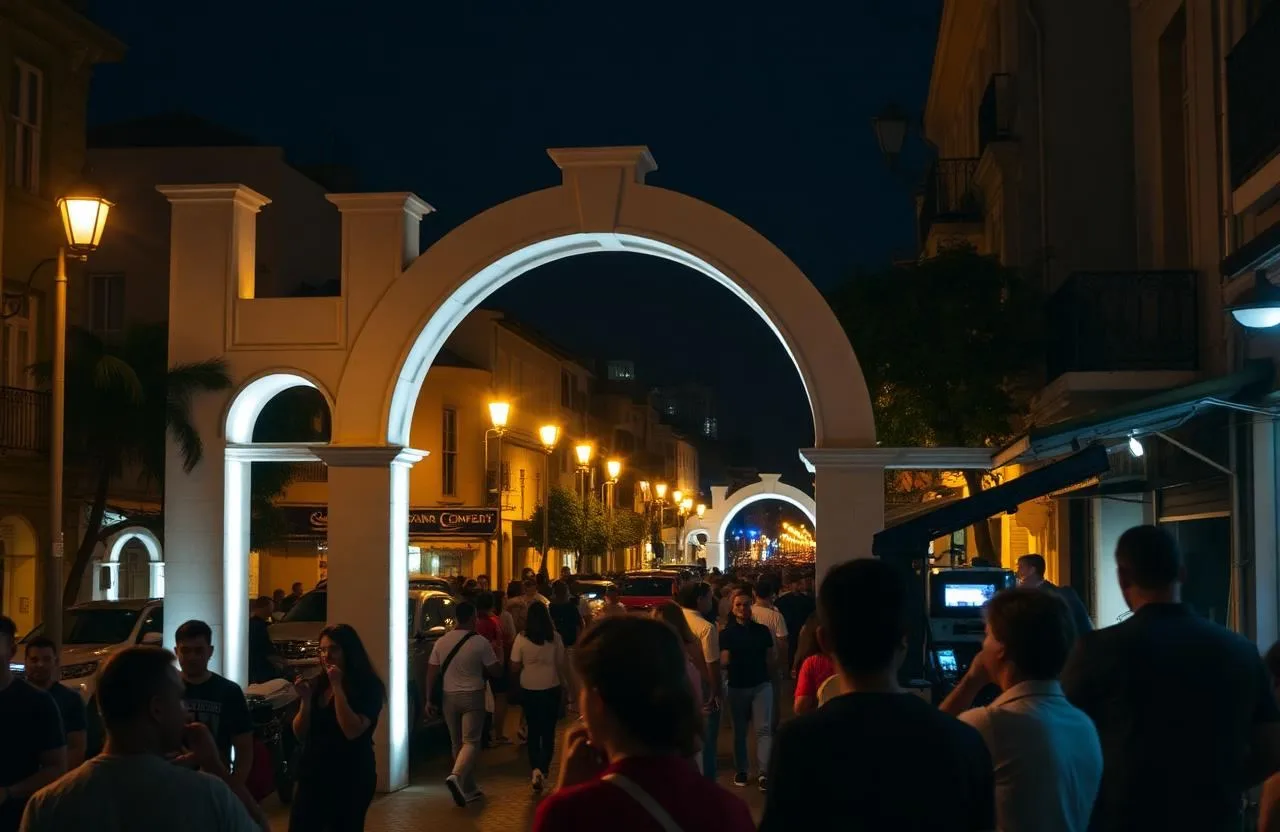
- On foot from Lapa: two minutes from the Arcos da Lapa, so it's a natural add-on to a Lapa/Selarón walk.
- Hop-on-hop-off bus: the Centro loop stops nearby if you're doing the sightseeing bus.
- Uber: cheap and simple, but Centro traffic is slow on weekdays — the metro usually wins.
Best way to see it: a Centro walking tour
The cathedral makes far more sense with context. A guided historic-Centro walk ties it together with the Arcos da Lapa, Cinelândia, the Theatro Municipal and colonial downtown — with a local who knows the back-streets and a lunch stop. Our favourite way to do downtown in one go.
See the Centro walking tourWhen to go
- Late morning to early afternoon — strongest sun through the stained glass.
- Weekdays — Centro is liveliest and safest when the offices are full.
- Sunday Mass — for the organ, the congregation and full atmosphere (respect the service; it's a working cathedral, not just a photo stop).
- Avoid late afternoon on weekends, when Centro empties out and quietens.
Common mistakes visitors make
- Judging it from the outside and walking off. The whole point is the interior light — go in.
- Treating it as a half-day. It's a 30-minute stop; build a Centro cluster around it.
- Missing the basement museum. The Sacred Art collection is the historical counterweight to the concrete.
- Coming after dark alone. Centro quietens at night — do it by day, save Lapa's bars for the evening with a group.
- Flashing a phone on the street. Normal downtown awareness applies — see our safety guide.
Local expert tips
- Stand in the centre of the nave and look straight up — the cross-shaped skylight lines up with all four windows.
- Pair it in one loop: cathedral → Arcos da Lapa → Santa Teresa tram → Selarón Steps.
- It's a rain-day winner — indoor, dramatic and free when the beach is a write-off.
- Dress is relaxed, but it's a place of worship — cover up a little and keep quiet during Mass.
- Photographers: the light is best on clear mornings; overcast days flatten the stained glass.
Doing downtown by bus?
If you'd rather graze the sights at your own pace, the hop-on-hop-off loop links the cathedral with the Boulevard Olímpico, Museu do Amanhã and the port — easy on a hot day.
Check the hop-on-hop-off busFrequently asked questions
Is the Metropolitan Cathedral of Rio worth visiting?
Yes — briefly. The Catedral Metropolitana is one of Rio's boldest buildings: a 75-metre modernist cone that looks brutal and grey from outside but opens into a soaring interior lit by four stained-glass windows running floor to ceiling. It's free, takes 20–30 minutes, and sits a two-minute walk from the Arcos da Lapa, so it slots perfectly into a Centro or Lapa walking day. Go for the light, not the facade.
How much does it cost to enter the Rio cathedral?
Entry to the Catedral Metropolitana is free. The only paid part is the small Museu de Arte Sacra (Museum of Sacred Art) in the basement, which holds religious relics, crowns and objects from Brazil's imperial era for a modest fee. Photography inside the main nave is free and welcome.
What are the opening hours of the Metropolitan Cathedral?
The cathedral is generally open daily from around 7am to 5pm, with Mass held at set times (usually mid-morning and, on Sundays, later). Hours can shift for services and events, so aim for late morning to early afternoon when the sun lights the stained glass best. Sunday Mass is a real spectacle if you want the organ and a full congregation.
Where is the Metropolitan Cathedral and how do I get there?
It's at Avenida República do Chile 245 in Centro (downtown Rio), a short walk from the Arcos da Lapa aqueduct and the Lapa nightlife district. The easiest route is the metro to Cinelândia or Carioca station, then a 5–10 minute walk. It's also a stop on most Centro walking tours and the hop-on-hop-off bus.
Why is the Rio cathedral shaped like a cone?
Architect Edgar de Oliveira da Fonseca designed it in the 1960s as a modernist truncated cone, often described as Mayan-pyramid-inspired, deliberately breaking from traditional cross-shaped churches. The conical form creates a vast, column-free interior — around 106 metres wide and capable of holding some 20,000 people standing — with the four stained-glass strips drawing the eye up to a cross-shaped skylight at the peak.
Is the area around the cathedral safe?
Centro is busy and fine by day, but it empties and quietens after office hours and on weekends, so keep normal city awareness, don't flash phones, and don't linger alone after dark. Combine your visit with the Arcos da Lapa and Selarón Steps while it's daytime and lively, then head to Lapa in the evening with a group. See our Rio safety guide for street-smart specifics.
How long do you need at the Metropolitan Cathedral?
Twenty to thirty minutes is plenty for the main nave and the stained glass, plus another 15 if you visit the Sacred Art Museum downstairs. It's not a half-day attraction — it's a striking 30-minute stop that pairs with the Arcos da Lapa, the Selarón Steps and a Centro lunch to make a full morning.
What's nearby the cathedral worth seeing?
A lot, all walkable: the Arcos da Lapa aqueduct and the Santa Teresa tram right beside it, the Selarón Steps a few minutes uphill, Cinelândia square with the Theatro Municipal and the National Library, and the whole Lapa nightlife strip. This corner of Centro is one of Rio's best walking clusters — the cathedral is the anchor, not the whole trip.