Fishing Charter Rio de Janeiro: Bay & Offshore Trips
Written and reviewed by Lotte — Rio local, founder & editor of PlanRio · How we research · First published · Last reviewed
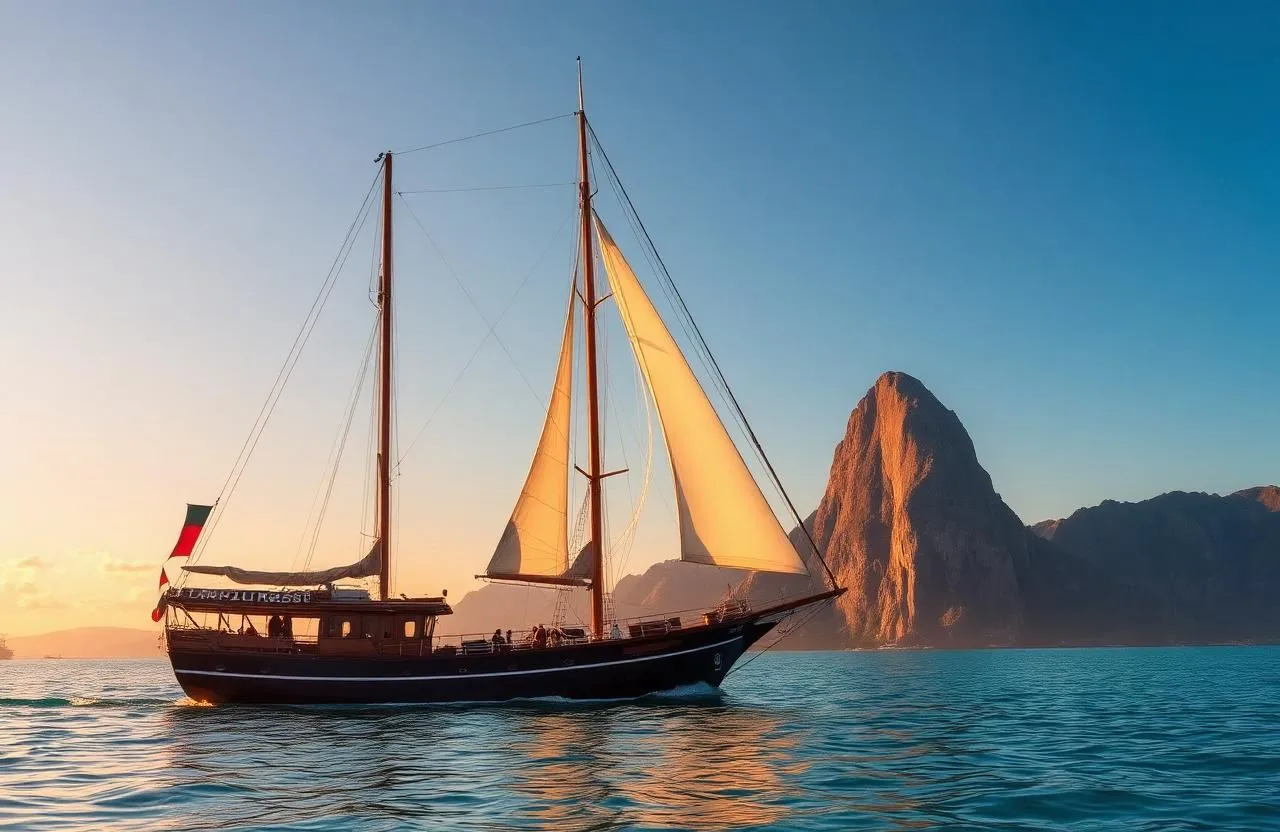
Illustrative boat scene; it does not identify a current fishing operator or vessel.
Quick answer
A fishing charter in Rio de Janeiro can mean a shorter sheltered outing in Guanabara Bay or a longer trip toward open water, with departure points and inclusions set by each operator. Confirm the vessel, exact marina, fishing method, licence responsibility, equipment, food, cancellation policy and catch-and-release rules in writing. A captain can choose promising grounds, but nobody can guarantee a catch.
At a glance
Trip styles
Ask whether the charter targets the bay, coast or offshore grounds.
Departure
Marina da Glória and Urca appear in local operator itineraries; confirm your boat’s dock.
Itaipu
Treat Itaipu as a separate launch area and verify the named operator and meeting point.
Licence
Federal rules distinguish amateur fishing and require checking local restrictions.
Catch
A charter can improve access, not promise a fish.
Sea state
Offshore departure and return depend on weather and captain judgment.
Equipment
Confirm rods, tackle, bait, ice and any gear-damage terms.
Booking
Ask for the total price and cancellation rules before paying a deposit.
What a Rio fishing charter actually is
A fishing charter is a boat trip arranged around fishing rather than a standard sightseeing loop. In Rio, that can involve a private vessel with a skipper, fishing gear, bait and a route chosen for the day, or a small group joining a more specific excursion. The word “charter” alone does not tell you whether the boat is fully private, how many anglers share it, where it leaves from or how far offshore it goes. Ask for the vessel name, group size and the meeting point in the first conversation.
Some operators describe departures from Marina da Glória or Urca, while Itaipu is another coastal area visitors may encounter in listings. They are not interchangeable meeting points. A marina on the western side of Guanabara Bay, a beach harbour and an offshore route each create different travel and sea-state considerations. Never make a taxi plan from a vague “Rio harbour” description. Request a map pin, arrival time, parking or rideshare instructions, and the contact person who will meet you at the dock.
The trip’s structure depends on what the captain is trying to do. A sheltered bay outing may spend more time moving between fishing spots close to land. A deep-sea trip can involve a longer transit, more exposure to swell and less flexibility for a passenger who becomes seasick. A boat can also alter its plan because of wind, current, visibility or a local restriction. The best first question is not “what species will I definitely catch?” but “what route and technique are realistic for my date, group and experience?”
Bay fishing and offshore fishing are different days
A Guanabara Bay trip is usually the more natural fit for a visitor trying fishing for the first time without committing to a long open-water run. The bay is a complex estuary with shipping, marinas, islands, shoreline communities and changing water conditions. A captain can select a fishing area based on the day, but a short bay trip still depends on tide, local weather and where fish are feeding. Ask how long the boat will motor before lines go in and whether the plan includes sightseeing or is focused on fishing.
An offshore charter is a larger commitment. The boat may travel toward islands, reefs or other grounds outside the bay, and the journey itself can occupy a substantial part of the outing. Ask the operator what “deep sea” means for its particular route, how much time is spent travelling versus fishing, whether there is a toilet or shade, and what happens if the sea becomes uncomfortable. A listing that promises many possible species is not a seasonal forecast; it may simply be naming fish recorded in the wider region.
Itaipu should be planned as its own departure rather than appended casually to a Marina da Glória itinerary. Ask whether the fishing provider actually operates there, whether a private charter starts at Itaipu or only visits the area, and what transport will get your group to the dock at the required time. Some boating businesses advertise general tours and may not offer fishing equipment or the correct permissions. Confirm the activity and vessel specifically, not just a boat rental or a route to a beach.
Choose the fishing style that suits your group
For a first charter, ask what techniques the captain expects to use and whether a beginner can participate. Trolling, bottom fishing, spinning and live-bait methods all require different tackle and physical involvement. The provider should explain whether passengers will cast, hold a rod, take turns, or watch the crew handle the setup. If you have children or a mixed-experience group, ask whether the planned method is suitable for short attention spans and whether spare life jackets fit every passenger.
A dedicated fishing trip is different from a yacht rental that permits passengers to bring a rod. If fishing is the main purpose, get the included equipment listed: rod, reel, line, hooks, lures or natural bait, leader, landing net, cooler, ice and any required safety gear. Ask whether bait is replenished during a long outing, and what happens if a rod breaks or a lure is lost. If the charter expects guests to pay for damaged equipment, read the replacement terms and check each item before leaving the marina.
Decide whether you want to keep a legal catch, release it, or are happy with either outcome. A responsible operator can explain its rules, local limits and how fish are handled. Catch-and-release is not a guarantee of survival if a fish is exhausted or handled poorly, so ask about de-hooking and release technique. If keeping a fish is permitted and the group wants to eat it, ask whether the boat has safe ice storage and what the captain recommends doing after landing. Never assume the crew will cook or transport your catch.
Licences, protected waters and seasonal closures
Brazil’s federal government offers an amateur or sport fishing licence through an online service. The current federal service says the licence is valid across the country for one year, while protected places may have separate restrictions. It lists R$60 for the embarked category and R$20 for the non-embarked category; ask the operator which category applies to your trip and recheck the live amount before applying. The online service says a foreign applicant needs a valid CPF, but the Ministry of Fisheries’ current handbook describes an option where a Brazilian citizen can submit an application on behalf of a foreign angler without a CPF. Confirm who will handle that step before departure. Neither route overrides local restrictions or protected-area rules.
Fishing rules vary by species and location. A defeso is a closed season or protection period that limits fishing when a species is reproducing or otherwise protected. Exact dates and rules are not one universal calendar for “Rio fishing”; they can depend on the species, method and specific water body. Before your trip, ask the captain which species are currently off limits, whether any seasonal closure affects the planned target, and whether the charter keeps a copy of the current rules. If an answer sounds like “tourists do not need to worry about that,” ask for the legal basis.
The government licence page says amateur and sport fishing is non-commercial: captured fish are not for sale. A charter is a paid service, but that does not turn the passenger’s catch into commercial product. If you are uncertain about bag limits, transportation or the right to keep a particular species, check the current government guidance and let the captain explain the local application. A visitor should not carry a catch across state borders or through an airport based on a casual assurance. Use the licence and conservation rules as part of choosing a legitimate operator.
Season, species and the problem with guaranteed-catch marketing
The species a captain sees can change with water temperature, current, season, baitfish, depth and recent weather. A website may list anchovy, tuna, dourado or grouper as examples from the wider Rio coast, but that list is not a promise that each fish is available on your date or in your chosen area. Some species also have size, capture or closed-season rules. Ask which target is realistic for your time window and what a normal day looks like if the preferred fish are not active.
For a bay trip, a local Guanabara fishing guide lists robalo-peva, carapeba, pescada-amarela, tainha and pampo among the species found around its mapped spots. It describes June to December as a broad drier-season window, but that is a regional planning clue, not a charter forecast. A peer-reviewed study of fish communities in Guanabara Bay links seasonal variation to rainfall, temperature, salinity and coastal upwelling, so a simple month-by-month promise would be misleading. For offshore departures, a Marina da Glória operator's list includes anchova, tuna, olhete, dourado, pargo, garoupa, cherne, badejo and cavala; a separate charter listing says some species are only found at certain times of year. Ask the captain what has actually been caught recently and which species may legally be kept.
A good captain describes the method and likely conditions rather than selling certainty. Ask how recent the catch reports are, whether the photos show the same boat and route, and whether the operator will adapt the trip if fish are not appearing. A guarantee of a fish is not a sensible standard for an outdoor activity. The captain can choose a productive spot and provide good instruction, but the water is not a restaurant menu. If the booking terms promise a catch without defining what happens when none is landed, treat that claim cautiously.
If you are a keen angler, bring the target species and technique you care about into the planning conversation. Ask whether the local boat has equipment for that method or if you may bring your own. International travellers should check airline rules before packing hooks, knives or tackle. A casual traveller may care more about learning to cast or seeing the coastline than a particular fish. Tell the crew what success means to your group so they can set expectations before you board.
What to verify before paying
Request a written quote with the vessel, departure point, total duration, maximum group size and all inclusions. Confirm whether the price is per person or for the whole boat, whether a deposit is due, which payment methods work for visitors, and whether there is a fee for an extra passenger. Ask whether the charter includes transport to the marina. Some local fishing excursions advertise hotel transfers; others expect guests to meet the boat. Do not assume a transfer shown for one product is included in a separate private charter.
Clarify food, drinks, water, shade, toilet, safety briefing and fishing kit. Some crews provide ice and basic equipment but ask passengers to bring food and drinks; others may offer a different onboard arrangement. Ask whether alcohol is allowed and whether that changes safety rules. Find out how the group should dress, whether sunscreen or a hat is required, and what happens if you arrive late. A late passenger can lose fishing time even when the boat has already been paid for.
Read the weather and cancellation policy before sending a deposit. Ask who decides that conditions are unsafe, how the operator communicates a change and whether you can reschedule or receive a refund. Get a clear answer about rough seas, storms, light rain and a passenger who becomes ill. Keep the written terms and the operator’s direct phone number. If the company requests payment to a personal account, does not name the vessel or cannot tell you where to board, do not fill in the missing details yourself; ask for documentation or choose another provider.
Seasickness, accessibility and safety aboard
The bay can feel calm from shore while a boat is moving across chop or swell. If anyone in the group is prone to motion sickness, ask the operator how exposed the route is and whether a shorter trip is available. Discuss medication with a clinician or pharmacist before travel, and follow product instructions. Do not wait until the boat is already underway to mention an important health or mobility need. The crew can explain boarding height, deck space and whether passengers can sit in shade, but a boat may not be accessible in the same way as a city attraction.
Before boarding, identify life jackets and ask whether there are appropriate sizes for children. Listen to the safety briefing and learn where to sit while the vessel moves. Keep hands clear of lines under tension, hooks, gaffs and moving equipment. Do not stand at the rail while the boat is turning unless the crew says it is safe. If a passenger wants a photo, they should wait until they are seated or the captain confirms that the deck is stable. A fishing charter is a working boat environment even when the trip is sold to tourists.
Ask the captain whether the vessel has current safety equipment, a working communication device and a plan for a medical emergency or engine problem. You do not need to inspect every piece of equipment, but a calm answer about readiness, passenger count and local conditions is reasonable. Share the boat name, operator contact and expected return time with someone on land. Keep a charged phone in a waterproof case, but do not let photography distract you from instructions. If the crew behaves recklessly or ignores weather concerns, speak up and do not board.
Marina da Glória, Urca and Itaipu: plan the approach
Marina da Glória is a central departure point used by local charter and boating operators. It sits by the Flamengo waterfront, but visitors still need to confirm the exact dock, gate and arrival time. A large marina can contain multiple vessels and businesses; the operator should tell you where to meet and who will check you in. Do not assume that a rideshare can stop at the vessel or that a nearby public promenade is the boarding point. Allow enough time to find the right entrance and use a bathroom before departure.
Urca departures can involve a beach-side meeting point or a separate harbour, depending on the operator and boat. Ask whether the trip starts from Praia de Urca, a marina berth or another location, and what the tide or boarding method means for shoes and mobility. If your charter departs from Itaipu, calculate travel from your accommodation at the actual check-in time; the route can be less convenient than an activity from central Rio. A named beach is not a complete boat boarding instruction.
For any departure, agree what happens if traffic delays you, where to leave luggage and whether someone who is not fishing may wait nearby. Avoid bringing a full suitcase onto a small boat unless the operator confirms storage. If you plan to continue to dinner afterwards, allow time to return, shower and travel across town. A half-day on the water can feel longer in sun and wind than the clock suggests. Build the day around the charter and treat every other activity as optional.
When a fishing charter is worth booking
A charter can be a good choice for an angler who wants a local captain, a boat suited to the route and equipment without trying to assemble it in a city shop. It can also work for a small group that values time on the water and accepts that fish are uncertain. The local knowledge may be the point: understanding why a captain chooses a bay edge or changes a route can be as interesting as landing something. Pick a length and location that fit your group rather than the most ambitious description.
It is probably not the best activity if your priority is guaranteed wildlife sightings, an inexpensive boat ride or a fixed return time. A sightseeing boat tour may be more suitable if you mainly want to see Guanabara Bay landmarks, while a sailing or yacht charter can fit a relaxed social outing. Those products are not interchangeable with a fishing trip, even if they use the same marina. Choose the page and booking type that match your purpose, and do not pay a fishing rate for an itinerary that never plans to fish.
For most visitors, the strongest value is a transparent operator, a route you understand, a realistic catch conversation and fair rules for weather, equipment and licences. If you receive those answers and the trip suits your interests, book with the written terms saved. If the operator cannot answer them, keep the day open and try another provider. The fish are the least controllable part of the experience; the planning quality is entirely within your control.
Common mistakes tourists make
- Treating a general yacht rental as a fishing charter without confirming rods, bait and the skipper’s fishing plan.
- Assuming Marina da Glória, Urca and Itaipu are the same meeting place or easy last-minute transfer.
- Expecting a particular species or guaranteed catch from a marketing photo or regional list.
- Paying a deposit before learning who obtains the licence and which local rules apply.
- Forgetting to ask who pays for broken rods, lost tackle, food, drinks or transport.
- Scheduling a long offshore trip before a flight or fixed commitment that cannot move.
- Assuming a calm beach means the open-water route will be calm for a seasick passenger.
Local expert tips
- Ask for the vessel name, exact dock pin, skipper contact and total duration in writing.
- Clarify the route: bay, coast or offshore, plus the time spent travelling versus fishing.
- Ask whether the charter is private, shared, per person or priced for the full boat.
- Check current federal and local fishing rules before the trip, especially protected species and seasonal closures.
- Confirm life-jacket sizes, shade, toilet, food, water, bait and ice before boarding.
- Bring a hat, sun protection, water and a waterproof phone case if the captain allows them.
- Tell the captain if someone is a beginner, seasick-prone, a child or has a mobility need.
- Give a person on land the boat name, operator number and expected return time.
Frequently asked questions
Can tourists book a fishing charter in Rio de Janeiro?+
Yes, local operators advertise private or guided fishing outings from locations including Marina da Glória and Urca. Verify that the provider is currently operating, confirm the exact departure point and ask who is responsible for fishing licences and local rules.
Where do fishing charters leave from in Rio?+
Some local operators list Marina da Glória or Urca, while Itaipu may appear for a separate boat or fishing plan. The exact dock depends on the operator and vessel, so request a map pin and named meeting point before travel.
Do foreigners need a fishing licence in Brazil?+
For a charter, confirm the required licence category and who will arrange it. The federal service says foreign applicants can apply with a valid CPF; the Ministry of Fisheries handbook also describes a Brazilian citizen applying for a foreign angler without a CPF. A licence does not remove protected-area or local restrictions.
How much is a Brazilian fishing licence?+
The federal service currently lists R$60 for the annual embarked category and R$20 for the non-embarked category. Those are licence fees, not charter prices. Confirm the correct category for your activity and check the live government service before paying.
Will I definitely catch a fish on a Rio fishing charter?+
No. A captain can choose productive grounds and provide equipment, but fish activity depends on conditions, season and chance. Treat any guaranteed-catch promise cautiously and ask what the operator considers a successful trip if no fish are landed.
Is Guanabara Bay fishing better than deep-sea fishing?+
Neither is automatically better. Bay trips can be shorter and more sheltered, while offshore charters may involve longer travel and more swell. Ask the captain about the exact route, fishing method and conditions for your date.
What is usually included in a Rio fishing charter?+
Inclusions vary. Ask whether the price covers the boat, skipper, rods, reels, bait, ice, food, drinks, hotel transfer, fishing licence and any equipment-damage charge. Get the list in writing before paying.
Can I keep the fish I catch?+
That depends on species, location, seasonal rules and the charter’s policy. Brazil’s amateur fishing rules are non-commercial, and protected species or local restrictions can apply. Ask the skipper what can legally be kept or must be released.
Where is Itaipu for a Rio fishing trip?+
Itaipu is a coastal area in Niterói across Guanabara Bay from Rio municipality. Treat an Itaipu departure as a separate transport plan and confirm that the named operator really boards there.
What should I bring on a fishing charter?+
Ask the operator first. Common useful items include sun protection, a hat, water, comfortable non-slip clothing and a waterproof phone case. Confirm whether food, drinks and motion-sickness planning are your responsibility.
Can weather cancel a fishing charter?+
Yes. Wind, storms and sea state can change the route or cancel departure. Ask who makes the safety decision, how updates are sent, and whether you receive a refund or reschedule when conditions are unsafe.
Sources and image credit
Details and access can change. Use these venue, operator and public-information sources to recheck key details before visiting.
- Brazil federal service: Amateur or sport fishing licence ↗
Current federal application, validity, fee categories and CPF-based application route; check local restrictions too.
- Ministry of Fisheries and Aquaculture: Amateur and sport fishing handbook ↗
Official handbook with the no-CPF application route for a foreign angler submitted by a Brazilian citizen.
- ICMBio: Sport fishing rules in protected areas ↗
Explains that protected areas identify permitted places, seasons and gear.
- Rio de Janeiro ocean fishing operator ↗
Operator description of its Marina da Glória departures and equipment; verify current availability, price and terms directly.
- Rio Adventures: Fishing Tour in Rio de Janeiro ↗
A specific local product page that states inclusions and explicitly does not guarantee a catch; confirm current offer before booking.
- Rio Boat Charters ↗
Local marina and route context; a boat charter is not automatically a fishing product.
- Iscabox: Guanabara Bay fishing guide ↗
Local fishing reference for mapped bay spots, common species and a broad seasonal window; not a charter availability promise.
- PubMed: Seasonal and abiotic factors in Guanabara Bay fish communities ↗
Peer-reviewed study on seasonal variation in the bay's fish communities and environmental conditions.
Keep planning
Sports & Fitness in Rio de Janeiro
Complete guide to sports, fitness and outdoor activities in Rio: running, swimming, cycling, football, climbing, hiking, yoga and more.
Niterói Beaches: A Guide to Itacoatiara, Itaipu & More (2026)
Compare Niterói's ocean and Guanabara Bay beaches, choose by surf, calmer water, access and local character, and plan transport from Rio with current water-quality checks.
Rio Yacht Charter & Sailing Tours: Private Boats and Shared Trips (2026)
Compare private yacht, speedboat, catamaran and sailing activities in Rio. Check each live listing for its current price, departure point, route, inclusions and weather policy.
Best Boat Tours in Rio de Janeiro
The best boat tours in Rio: Cagarras Islands snorkel, Guanabara Bay sunset cruise, Ilha Grande day trip, Angra schooner and private yacht.
Travel Insurance for Rio de Janeiro: What to Check (2026)
Compare travel insurance for Rio by medical and evacuation cover, theft limits, cancellation, activity exclusions, credit-card gaps and claims.