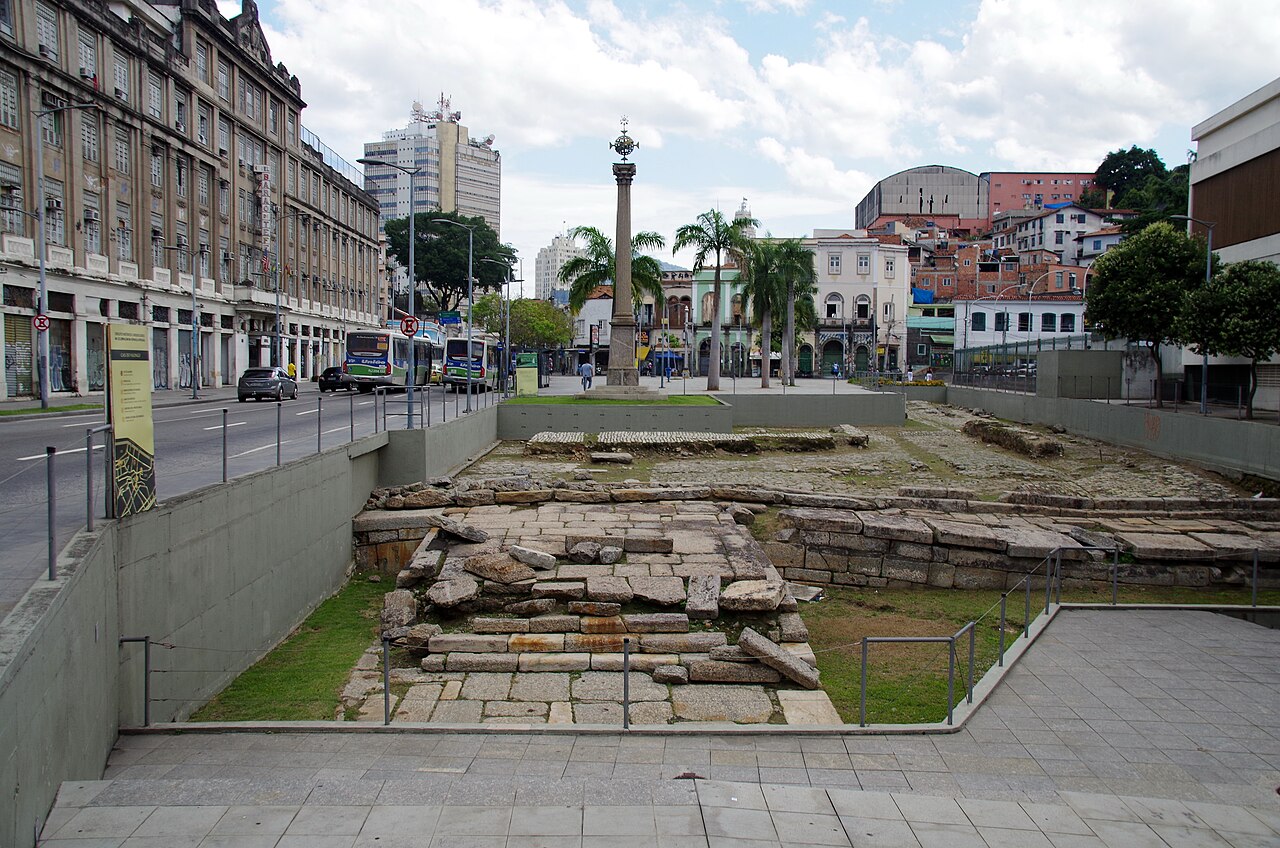
Little Africa Rio Walking Guide
Photo: Balou46 via Wikimedia Commons, licensed under CC BY-SA 4.0.
Written and reviewed by Lotte — Rio local, founder & editor of PlanRio · How we research · First published · Last reviewed
Quick answer: How should I visit Little Africa?
Plan a daylight, context-led half-day through Rio's port district. Cais do Valongo, Pedra do Sal, the Jardim Suspenso, the Instituto Pretos Novos and community cultural spaces tell different parts of an Afro-Brazilian story. The IPN requires a dated ticket, and museum or event hours vary, so check those first. Allow two to three hours for an outdoor walk, more if you add a museum or guided visit. Leave room to read, listen and treat the memorial sites with care.
Little Africa is not a theme park or a single attraction. It is a living part of Saúde, Gamboa and Santo Cristo, where monuments to slavery and resistance sit beside homes, cultural organisations, religious life, food and music. This guide connects the principal stops while keeping the history and community in view.
At a glance
Best time
Daylight for the history walk; check live evening-event notices separately.
Time to allow
2–3 hours outdoors, plus any booked museum visit or event.
Possible start
Cais do Valongo or Praça Mauá; let museum bookings shape your order.
Terrain
Mostly city walking with uneven historic paving, hills and steps on optional branches.
Timed stop
Book the Instituto Pretos Novos through its current ticket calendar.
Good next read
Our Pedra do Sal samba guide for current event-planning advice.
Why this area matters
The name Pequena África (“Little Africa”) is associated with the samba composer and artist Heitor dos Prazeres and the port-side neighbourhoods of Saúde, Gamboa and Santo Cristo. The area holds a wider set of landmarks than any single walking tour can cover: archaeological remains, memorial museums, religious and cultural spaces, public art and streets where community life continues.
A short Valongo timeline
- 1811: construction began on the wharf that became a major landing place for enslaved Africans arriving in Brazil.
- 1831: Brazil enacted a law prohibiting the importation of enslaved Africans, but the law was weakly enforced and illegal trafficking continued.
- 1843: a later wharf layer, the Cais da Imperatriz, was built over the earlier structure.
- 2011: archaeological remains were uncovered during port-area works.
- 2017: UNESCO inscribed the Valongo Wharf Archaeological Site on the World Heritage List.
UNESCO estimates that up to 900,000 African captives entered the Americas via Valongo. The site is significant both as physical evidence of that forced arrival and as a place of memory for African-descended communities.
Self-guided Little Africa walking route
These are planning estimates, not attraction opening hours. The stops are spread across the port area; a booked IPN session, weather or an event can change the best order. VLT stops near the route include Parada dos Museus by Praça Mauá, a Valongo stop and Praça da Harmonia by the IPN. Check the live line map and service status, and use the VLT or another current route option if you do not want to walk between every stop.
1.Cais do Valongo
Suggested time: 20–30 minutes
Start with Rio's UNESCO-listed archaeological site at Praça Jornal do Comércio. The stones mark the arrival of enslaved Africans; take time to read the interpretation and understand why this is a place of memory, not a conventional photo backdrop.
2.Jardim Suspenso do Valongo
Suggested time: 15–20 minutes
This early-20th-century garden offers another layer of the port landscape. Riotur dates its opening to 1906 and notes the replicas of four statues that once decorated the Cais da Imperatriz. Check local access information before making it a fixed stop.
3.Morro da Conceição
Suggested time: 30–45 minutes if you take the uphill branch
Add the hill for historic streets, buildings and views over Centro. The climb, steps and uneven surfaces make this an optional branch; don't force it into a route if the terrain or weather does not suit you.
4.Largo de São Francisco da Prainha
Suggested time: 15–20 minutes
Pause at the square and the statue of Mercedes Baptista, the first Black dancer in the permanent ballet company of Rio's Municipal Theatre. The surrounding area is also a lived-in place for bars, restaurants and cultural activity.
5.Pedra do Sal
Suggested time: 20–30 minutes by day; allow more for an event
This historic and religious landmark is closely connected with Black port workers, samba and Afro-Brazilian resistance. Learn the context before photographing. Samba nights are event-led, so check the latest organiser notice rather than relying on a fixed weekly schedule.
6.Instituto de Pesquisa e Memória Pretos Novos (IPN)
Suggested time: Book a dated visit
The memorial museum interprets the archaeological site of the Cemitério dos Pretos Novos and the history of enslaved Africans who died after arrival. The IPN uses timed ticketing; select a live date and visit format before building the route around it.
7.MUHCAB, MAR or Museu do Amanhã
Suggested time: Allow at least an hour for a museum stop
Choose the Museu da História e da Cultura Afro-Brasileira (MUHCAB) for Afro-Brazilian art and history, MAR for art and Rio context, or Museu do Amanhã for science and futures. They have different programmes and opening days; check the museum's current visitor information.
Book the IPN visit before you set the route
The Instituto Pretos Novos is both a memorial museum and a research institution connected to the archaeological site of the Cemitério dos Pretos Novos. Its current visitor information asks guests to select a date and ticket in advance. The IPN's separate information pages differ on some weekly details, including Saturday hours and free-entry days; use the live ticket calendar instead of an old schedule screenshot.
The IPN also describes its own guided Circuito de Herança Africana. See the official visit formats and booking information for available dates, group rules and current prices.
Want an English-language guided walk?
The listed GetYourGuide experience is a specific 2.5-hour walk that starts outside Museu de Arte do Rio and includes Morro da Conceição, Largo da Prainha, Pedra do Sal, Jardim Suspenso and Cais do Valongo. The live listing says the tour is in English and does not enter the museum. Compare it with the IPN's own circuit above and check the meeting point and route for your date.
Check the English Little Africa heritage walkA respectful visit
Do
- Read about Valongo before arriving; the exposed stones are only one layer of the story.
- Support a cultural space or guide whose work is rooted in the area when it suits your visit.
- Ask before photographing residents, artists, religious activity or event participants.
- Follow museum and memorial rules, and give people room to use public space.
Avoid
- Posing on the Valongo stones as if they were ordinary ruins or a playful set.
- Reducing a living neighbourhood to a slavery-history or nightlife backdrop.
- Assuming that every tour enters the museums or covers the whole historical circuit.
- Following an old samba schedule without checking the event organiser's current notice.
Practical tips for the walk
- Start in daylight. That gives time to read the site interpretation and visit any cultural space that has confirmed it is open.
- Check every timed venue yourself. IPN, museums and cultural centres have their own booking and event calendars; hours and access can change.
- Expect an urban walk, not a flat promenade. The historic paving can be uneven and the Morro da Conceição branch is uphill. Wear shoes with grip and take water.
- Keep the evening plan separate. If you are going to a samba event, verify that night's programme and decide your return transport before it ends.
- Use an accessible alternative if needed. Ask the specific museum or guide about step-free access and surface conditions; this route includes outdoor archaeological paving and optional hills.
Official sources to plan with
- UNESCO: Valongo Wharf Archaeological Site — history, layers and World Heritage significance.
- Riotur: Pequena África — local history, sites, cultural organisations and visitor references.
- Instituto Pretos Novos: visitor information — current ticket calendar and museum visit details.
- Instituto Pretos Novos: visit formats — its guided heritage circuit and entry rules.
- Riotur: Jardim Suspenso do Valongo — address and a reminder to confirm access information.
- VLT Carioca: map and service status — check current lines before choosing your stops.
The honest verdict
Worth prioritising if...
- You want to understand Rio beyond its beach districts.
- You can set aside daylight time for a thoughtful walk.
- You are interested in Black Brazilian history, community culture, archaeology or samba.
Rethink the plan if...
- You only have time for a quick photo stop.
- You need step-free routes but have not confirmed access with each venue.
- You are expecting one attraction with a single gate, schedule or complete interpretation.
Staying near Centro and the port
PlanRio's central hotel picks are useful for a Centro- and museum-led itinerary, but this is not a beach-base shortlist. Centro is quieter after business hours, so compare the exact address, current transport options and your plans for evenings before booking.
PlanRio hotel picks
Specific properties from our independently selected shortlist. Compare the live room, cancellation and payment terms before booking.
Dates optional. Set guests and rooms on Booking.com.
Check what your room rate includes
- Breakfast, taxes and any extra fees
- Room type, guest count and bed setup
- Cancellation deadline and when payment is due
Confirm these on Booking.com for the rate you choose.
Vila Galé Rio de Janeiro
Best for: Travellers prioritising Lapa and Centro over daily beach time
Know before booking: Lapa is lively at night; plan door-to-door transport after dark.
Check Vila Galé Rio de Janeiro availabilityItajubá Hotel
Best for: Budget access to Cinelândia and daytime Centro sights
Know before booking: This is an event or business base, not our first choice for a beach holiday.
Check Itajubá Hotel availabilityHotel and tour links may earn PlanRio a commission at no extra cost to you. This supports our guide and does not influence which stays we select.
Keep planning
Centro Rio guide
Plan the wider downtown route and transport connections.
Pedra do Sal samba
Context and practical checks for an evening event.
Museu de Arte do Rio (MAR)
Plan a museum visit at Praça Mauá.
Museu do Amanhã
Check this nearby science museum's current visitor information.
Rio street-art guide
Explore murals and public art with place-specific context.
Free walking tours in Rio
Compare other guided routes and what they actually cover.
Frequently asked questions
What is Little Africa in Rio?+
Little Africa, or Pequena África, is a name for part of Rio's port-side cultural landscape, especially Saúde, Gamboa and Santo Cristo. It connects sites of enslavement and resistance with Afro-Brazilian community life, samba, religious memory, food, art and cultural institutions.
What is the best Little Africa walking route?+
A useful first route links Cais do Valongo, Jardim Suspenso do Valongo, Pedra do Sal, Largo de São Francisco da Prainha and the Morro da Conceição. Add the Instituto Pretos Novos only after booking a visit slot; its location and entry time may shape the order. The VLT operator points visitors to Parada dos Museus by Praça Mauá and a Valongo stop for the heritage area; the IPN lists Praça da Harmonia nearby. Check the live map and service status because these stops serve different parts of the route.
Can I visit Little Africa without a guide?+
Yes. A self-guided walk works if you prepare with reliable historical sources, check which museums and cultural spaces are open, and allow time to read and reflect. A guide can explain how the sites connect and bring community perspectives that are not always visible from street signs alone.
Can I visit the Instituto Pretos Novos without booking?+
The IPN's current visitor information directs visitors to choose a date and ticket in advance. Its separate official pages are not fully consistent about weekly hours and free-entry days, so follow the live ticket calendar and contact the museum if you need a particular date or visit format.
Is Cais do Valongo worth visiting?+
Yes, if you give it context. UNESCO recognises Valongo Wharf as the most important physical evidence of the arrival of enslaved Africans in the Americas. The archaeological remains are understated, so read the site's interpretation and consider a museum or knowledgeable guide as part of the visit.
Is Little Africa safe to visit?+
Conditions vary by street, time and event, so a blanket guarantee would be misleading. Plan a daylight route, stay aware of your surroundings, check current local conditions and arrange a clear way back if you are attending an evening event. Hills and uneven paving also affect how comfortable the walk will be.
When is the Pedra do Sal samba night?+
Pedra do Sal hosts samba and other public events, but line-ups, days, times and conditions can change. Check the organiser's current notice on the day and read our Pedra do Sal samba guide before planning a night around it.
How long does a Little Africa walk take?+
Set aside two to three hours for a focused outdoor walk, then add time for a booked IPN visit, museum, meal or event. Distances, hills, opening times and how long you spend at memorial sites all affect the day.
What should I know before taking photos?+
Cais do Valongo is a place of painful memory for many people of African descent. Avoid staged or celebratory poses on the memorial stones. Ask before photographing residents, artists, religious activity or people at an event, and follow any museum or community-space photography rules.