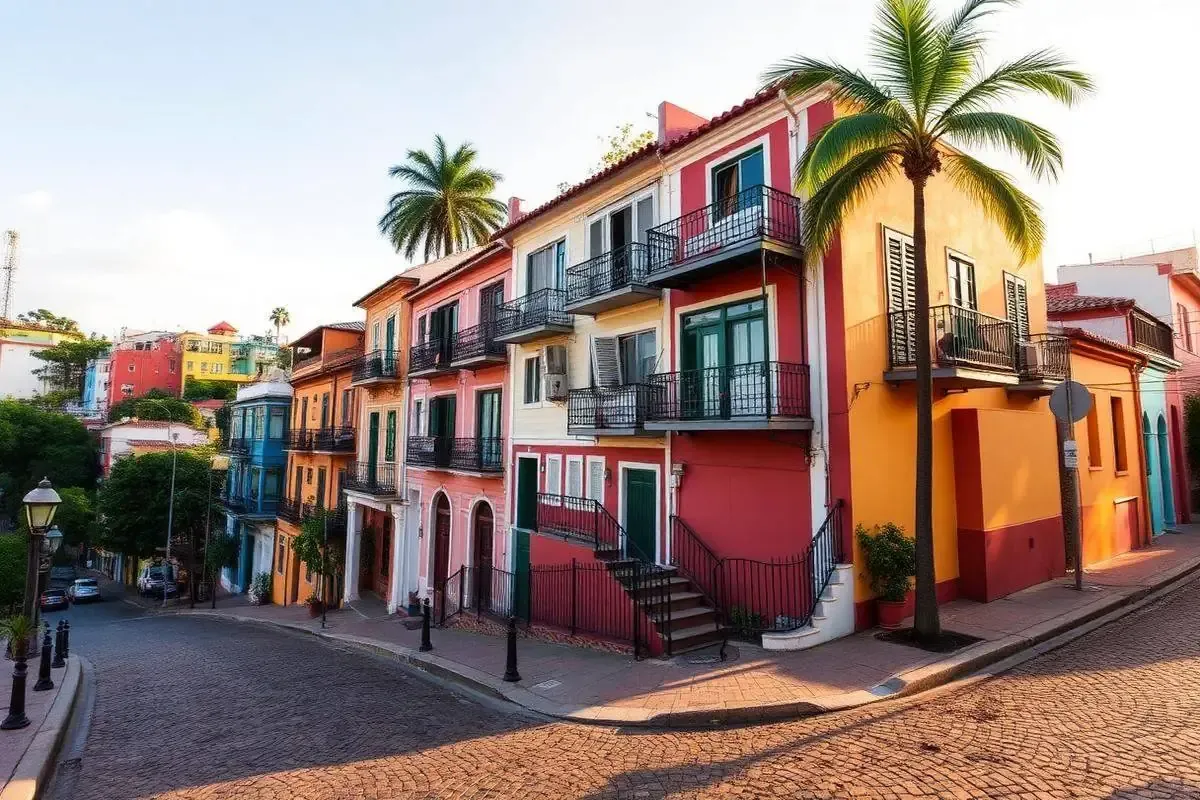
Free Walking Tours in Rio de Janeiro
Written and reviewed by Lotte — Rio local, founder & editor of PlanRio · How we research · First published · Last reviewed
Quick answer
Free walking tours in Rio de Janeiro are tip-based, not free — budget R$50–R$100 per person in cash. The best value is a weekday-morning Centro and Lapa walk (2–3 hours, flat but cobbled), which turns a confusing downtown into a readable city. Book with Free Walker Tours, Rio Free Walking Tour or Rio by Foot, confirm the meeting point on the operator's own page the day before, and take a ride-hail car back if the walk ends after dark. If you want a guaranteed guide, a small group and a fixed price, a paid Centro, Little Africa or Santa Teresa tour is usually the better buy.
Rio walking tours at a glance
| Real cost | R$50–R$100 per person in cash — the 'free' refers to the booking model |
| Typical length | 2–3 hours, 3–5 km on foot |
| Best route for first-timers | Centro & Lapa historic core |
| Best day and time | Tuesday–Friday, starting 09:00–09:30 |
| Hardest route | Santa Teresa — steep hills, uneven cobbles |
| Languages | English and Portuguese daily; Spanish often; others by request |
| Bring | Water, hat, sunscreen, closed shoes, cash for the guide |
| Skip if | You have under 24 hours in Rio — prioritise Christ and Sugarloaf instead |
What "free" really means in Rio — and what to pay
The pay-what-you-feel model arrived in Rio in the 2010s and never left. The guide receives nothing from the operator; your contribution at the end is their entire income for those three hours, minus a per-head fee many of them pay back to the company. That is not a reason to avoid the format — it is a reason to arrive with cash and treat the tip as the ticket price you would have paid anyway.
| Situation | What locals pay |
|---|---|
| Standard 2-hour Centro group walk | R$50 per person |
| Excellent guide, long or uphill route | R$70–R$100 per person |
| Small group (under six people) | R$100+ — you effectively had a private guide |
| Couple paying together | R$120–R$150 total is normal and well received |
Practical detail most guides won't tell you: break your notes before the walk. Handing over a R$200 note and asking for change at the end is awkward for everyone, and a guide who has just finished a tour rarely carries a float. Pix is the local default but generally requires a Brazilian bank account, and card readers are the exception rather than the rule.

Centro is the standard first walk: flat, dense with history, and best on a weekday morning.
Where to book: the operators and marketplace, compared
Free Walker Tours
Routes: Centro history, plus paid food and nightlife formats · Languages: English, Spanish, Portuguese
The most reliably running daily Centro departure; also the easiest to combine with a paid evening tour by the same operator.
Rio Free Walking Tour
Routes: Centro, Little Africa and Santa Teresa routes · Languages: English, Portuguese, seasonal Spanish
The strongest choice if you specifically want the port-zone Afro-Brazilian heritage route rather than a generic downtown loop.
GuruWalk (booking marketplace)
Routes: Aggregator of independent guides — Centro, Santa Teresa, Little Africa and more · Languages: English, Portuguese, Spanish, Italian, German (varies by guide)
Not a single operator but a marketplace: the simplest way to compare individual guides, read recent reviews and find a less common language. Quality varies guide to guide, so read the reviews on a specific listing before you commit.
Schedules move. Every one of these operators has changed a meeting point or dropped a departure at short notice in the last two years, which is why this guide sends you to their own pages instead of printing a timetable that would be wrong within a month. Screenshot the meeting point the day before, not the month before.
Route 1 — Centro & Lapa: the historic core
2.5 hours · 3.5 km · flat, cobbled · weekday mornings. The standard route threads Cinelândia, the Municipal Theatre, the National Library, Largo da Carioca, the brutalist cone of the Metropolitan Cathedral, Confeitaria Colombo and Praça XV, sometimes finishing under the Lapa Arches. It is the single most useful three hours a first-time visitor can spend in Rio: after it, downtown stops being a maze and becomes a map.
What a guide adds that a map cannot: Centro changes character by the hour. The same block that is packed with office workers at 11:00 empties out by 18:00. A guide reads that rhythm for you, knows which arcade is open on a given day, and quietly reroutes around whatever is happening that morning.
Pair it with our museums guide — the route passes MAR and finishes within walking distance of Museu do Amanhã.
Route 2 — Little Africa and the port zone

The port-zone route covers the most important — and least visited — history in the city.
2–3 hours · 3 km · flat, little shade. This is the walk that changes how you see Rio. Valongo Wharf, a UNESCO World Heritage site, is where roughly a million enslaved Africans were landed; the route continues past the Cemitério dos Pretos Novos, Pedra do Sal, Praça Mauá and the murals of the redeveloped port. Very few "Centro and Lapa" tours include it, so book it explicitly rather than assuming.
Do it with a guide. Physically, most of the sites are unremarkable-looking stone and pavement — the meaning is entirely in the telling. This is the one route where a self-guided version is genuinely worse. See our Little Africa walking guide for the full site-by-site background.
Route 3 — Santa Teresa: the bohemian hill
2–3 hours · steep · the hardest of the four. Santa Teresa walks link the tram-era core around Largo do Guimarães, Parque das Ruínas, the Chácara do Céu viewpoints and the artists' studios along Rua Almirante Alexandrino. Two points that look adjacent on a flat map can be separated by a punishing climb, so ask where the route actually starts and finishes before you book.
The descent matters more than the walk. Ending near the Selarón Steps does not mean you should improvise a quiet back-street walk down into Lapa afterwards, especially at dusk — take the tram or a car. Read the Santa Teresa neighbourhood guide before you go.
Guided Santa Teresa & Lapa tram walk
A fixed-price alternative when you want a guaranteed guide, a small group and the tram included instead of a tip-based group of thirty.
Check availability & pricesRoute 4 — Copacabana: promenade, fort and fish market
1.5–2 hours · 4 km · flat, no navigation required. The waterfront is the least complicated introduction in the city and the best self-guided option: keep the ocean on one side, use the posto numbers as mile markers, and turn inland only on busy streets. Forte de Copacabana at Posto 6 gives the walk a proper anchor (there is an entry fee and a café with the best view of the beach), and the fishermen's colony beside it is where the morning catch is sold. Check the fort's opening hours before you set out — see the Forte de Copacabana guide.
Five self-guided routes that actually work
1. Centro civic loop · 2 h · weekday 10:00–15:00
Cinelândia → Metropolitan Cathedral → Largo da Carioca → Confeitaria Colombo (coffee) → Praça XV → Travessa do Comércio. Major streets the whole way. Finish while the office crowd is still out and take the metro or VLT onward.
2. Copacabana promenade · 1.5 h · early morning or late afternoon
Forte de Copacabana → Posto 5 → Posto 3. Stay on the populated promenade, keep phone use brief, and don't carry beach valuables in an open tote.
3. Ipanema to Arpoador sunset walk · 1 h · 17:00 onwards
Praça General Osório → the waterfront → Arpoador rock for the applauded sunset. Use the main access afterwards rather than cutting through quiet side streets.
4. Botafogo to Urca shoreline · 1.5 h · daytime
Botafogo cove → Praia Vermelha → Pista Cláudio Coutinho trail at the base of Sugarloaf. Residential, calm and one of the prettiest flat walks in the city, with monkeys on the trail.
5. Flamengo Park to Glória · 1 h · weekend mornings
Burle Marx's modernist landscape park, the Monument to the Dead of World War II, and the Outeiro da Glória church on its hill. Busiest — and best — on Sunday when the roadside lanes close to cars.
Accessibility, heat and who should skip which route
Free walking tours are not designed around step-free access, and the terrain changes enormously by route. Centro is flat but paved with uneven Portuguese cobblestones (pé de moleque) and frequent kerbs; a wheelchair user, or anyone with limited stamina, will find the flat Copacabana promenade or Flamengo Park far easier than a group Centro walk. Santa Teresa is the hardest route in the city — steep hills, broken pavement and long stair connections — and is not realistic for wheelchairs or strollers. Little Africa is flat but has long, shadeless gaps between stops.
There is no lift, seating or shelter on any of these routes, so message the operator in advance if you need a slower pace or more frequent stops, and consider a private guided car-and-walk tour if standing for three hours in the sun is the real limiting factor. On heat: between roughly November and March, start by 09:00, carry water, and treat any walk beginning after 11:00 as a genuinely tiring activity rather than a gentle stroll — the humidity does as much work as the temperature.
Mistakes to avoid
- Turning up with no cash. The single most common mistake. Guides rarely take foreign cards, and Pix usually needs a Brazilian account.
- Booking a Sunday Centro tour. Downtown is shuttered and empty at the weekend — the walk technically runs, but you see a ghost town and the safety picture is worse.
- Assuming every downtown tour covers Little Africa. It is a separate route with a separate departure. Read the itinerary, not the title.
- Wearing flip-flops in Centro or Santa Teresa. Cobbles, kerbs and hills. Save the Havaianas for the beach — see our Havaianas guide.
- Stacking two walks in one day. Three hours on foot in Rio's heat is a full activity. Plan a museum, a long lunch or a beach afternoon after it, not another tour.
- Reserving and not showing up. Tip-based guides plan group size around reservations. If you can't make it, cancel.
Local insider tips
- Take the earliest departure available: cooler, busier streets, and a guide who isn't on their second walk of the day.
- Stand near the front of the group. Rio's traffic noise swallows the guide's voice from six people back.
- Ask the guide where they eat lunch nearby — it is consistently better advice than any restaurant list, and it costs you nothing.
- Between December and March, carry a light rain layer: afternoon downpours are short but total.
- Bring a refillable bottle; the juice bars along the route sell fresh coconut for far less than a bottled drink.
- If the group is over 25 people, consider paying for a small-group tour instead — the experience genuinely degrades at scale.
When a paid tour is the better choice
Pay for the walk when you want a guaranteed departure, a small group, a specialist theme, or included transport and food. A fixed price also removes the awkward end-of-tour maths.
Guided walks worth paying for
Historic Centro walking tour with lunch
The downtown route with a guaranteed guide and a traditional Brazilian lunch included.
Little Africa heritage walk
Valongo Wharf, Pedra do Sal and the port zone with a guide who specialises in the history.
Links may earn us a commission at no extra cost to you. This supports PlanRio.
Frequently asked questions
Are free walking tours in Rio de Janeiro actually free?
No — they are tip-based. There is no fixed ticket price, but the guide works for the contribution collected at the end. Cariocas budget roughly R$50–R$100 per person for a good two- to three-hour walk, more for a private or specialist guide. Always confirm the operator's current terms before you go.
How much should you tip a free walking tour guide in Rio?
R$50 per person is a fair baseline for a standard two-hour Centro walk, R$70–R$100 if the guide was excellent, the group was small, or the route was long or uphill. Bring the notes with you: many guides cannot take a foreign card, and Pix normally needs a Brazilian bank account.
Which free walking tour companies operate in Rio?
Free Walker Tours and Rio Free Walking Tour are the two long-running, independently branded operators publishing their own current Centro and Santa Teresa routes and booking rules. Beyond them, the GuruWalk marketplace lists dozens of individual guides — the easiest way to find a specific language or a less common route. Compare language, meeting point, theme and recent reviews on the operator's or guide's own page rather than trusting a schedule copied into a blog.
Are free walking tours safe in Rio?
A group and a local guide reduce the two biggest risks — getting lost and walking into the wrong street — but no tour makes a district risk-free. Carry one card and a small amount of cash, keep your phone out of sight between photos, and take a ride-hail car back if the walk finishes after dark.
Do you need to book a Rio walking tour in advance?
Check the operator's current instructions. Some require a reservation or a minimum group size, others take walk-ins at the meeting point. In high season (December to March and Carnaval week) reserve; in low season confirm the tour is running at all before you cross town.
What is the best day and time for a Centro walking tour?
Tuesday to Friday morning. Centro is a working business district: it is busiest and safest on weekday office hours, quieter and less pleasant on Saturday afternoon, and largely shuttered on Sunday. Start by 09:30 so you finish before the midday heat and while the streets are still full.
Are Rio walking tours available in languages other than English?
Yes. Portuguese and Spanish are widely offered, and French, German and Italian appear seasonally with individual guides rather than as a fixed schedule. If you need a specific language, message the operator ahead — a language-specific departure often runs only on certain days.
Can you do a self-guided walking route in Rio instead?
Yes, during active daytime hours. Keep the route short, stay on major squares and busy avenues, and do not improvise through quiet streets. The Centro civic loop, the Copacabana promenade and the Ipanema-to-Arpoador waterfront are the three easiest routes to do on your own.
How long are Rio walking tours and how much walking is involved?
Most run two to three hours and cover three to five kilometres. Centro is flat but cobbled; Santa Teresa involves steep hills and uneven pavement; Little Africa is flat with long distances between stops and little shade.
What should you bring on a walking tour in Rio?
Water, sunscreen, a hat, closed comfortable shoes for Centro or Santa Teresa, cash for the guide, and a light rain layer between December and March. Leave your passport, jewellery and second phone in the hotel safe.
Keep planning
Free things to do in Rio →
Everything worth doing that costs nothing at all.
Rio on a budget →
Daily costs, cheap eats and how to stretch a real budget.
Little Africa walking guide →
The port zone's history, site by site.
Santa Teresa neighbourhood guide →
Where to stay, eat and walk on the hill.
Lapa samba nightlife →
What to do after the daytime walk finishes.
Is Rio safe? →
Honest, current safety advice by neighbourhood.
Best museums in Rio →
Pair the Centro walk with the right museum.
What does Carioca mean? →
Rio identity, slang and how to behave respectfully.
24 hours in Rio →
A morning walk slotted into a one-day plan.