Forte de Copacabana: The Local's Guide to Rio's Best Beach View
Written and reviewed by Lotte — Rio local, founder & editor of PlanRio · How we research · First published
Quick answer
Forte de Copacabana is a working army fort at Posto 6 with a military museum, 1914 Krupp gun batteries and two waterside cafés. Pay the small admission, go in the first hour on a weekday, drink coffee on the terrace above the waves, and photograph the full Copacabana curve with Sugarloaf behind it. Allow 60–90 minutes and pair it with Arpoador at sunset.
At a glance
Where
Av. Atlântica end of Copacabana, Posto 6, next to Arpoador
Entry
Small museum fee; the seaward cafés and the terrace views are the real draw
Best time
Opening hour on a weekday, or late afternoon for the Sugarloaf light
Time needed
60–90 minutes, or half a morning with breakfast at the waterside café
Why the fort is Copacabana's best-kept view
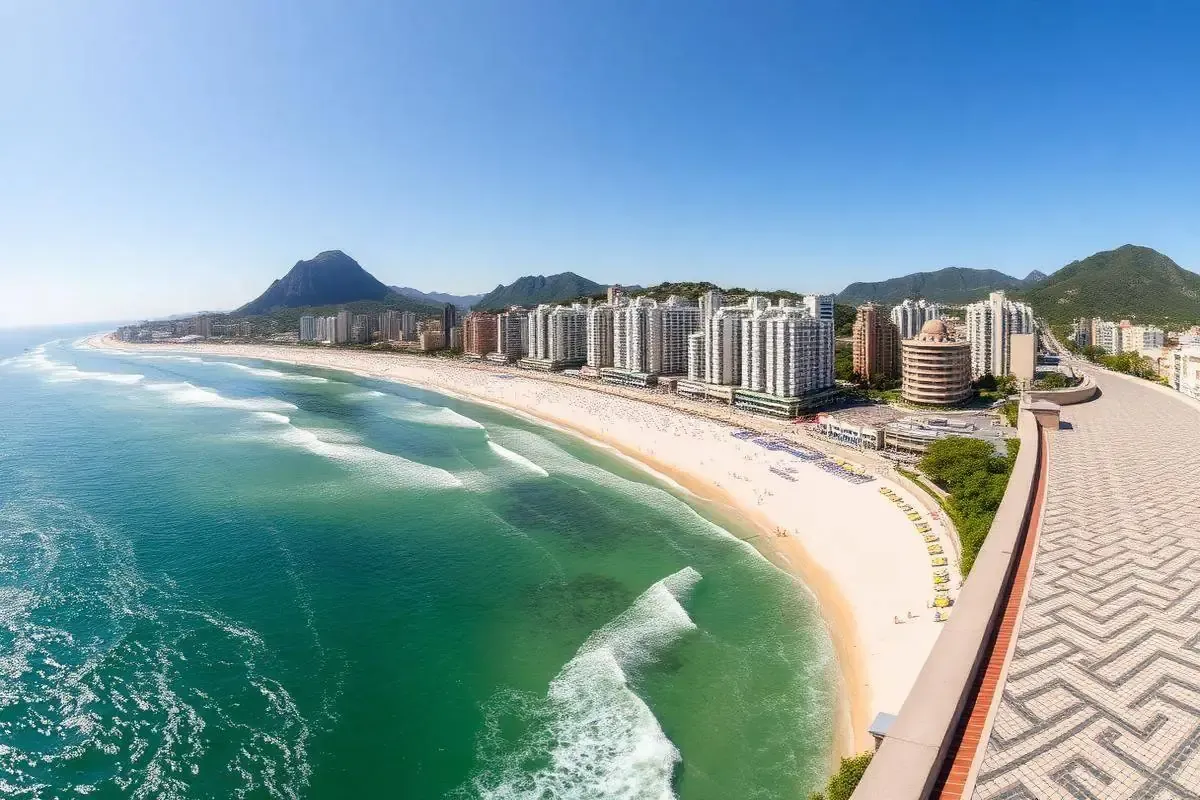
Forte de Copacabana sits on the rocky point that closes the southern end of Copacabana beach. From inside the walls you look straight back along the full four-kilometre curve of Avenida Atlântica towards Leme, with the Sugarloaf massif standing behind it. It is the one angle that makes sense of Copacabana's geography — and almost no first-time visitor thinks to walk the extra ten minutes to reach it.
The military architecture is genuinely interesting: 1914 concrete emplacements, German Krupp guns, thick earth-covered casemates you can walk through. But the reason Cariocas come is quieter. Inside the perimeter there is no traffic noise, no beach vendors and no touts — a rare combination on this stretch of the city.
How to visit: entrances, timing and the café that locals actually use
The entrance is at the far south end of Avenida Atlântica, a five-minute walk from Posto 6 and roughly fifteen from the Cantagalo metro station. You pay a small admission at the gate, then walk up the ramp past the parade ground to the gun batteries. Bring ID; the site is still an army property and staff sometimes check it.
The two cafés inside are the local secret. One occupies a terrace directly above the water, where you drink coffee with waves breaking below and the beach curving away in front of you. Go on a weekday morning: by 11 am on a Saturday the queue for a table can be twenty minutes. Weekday breakfast between opening and 10 am is the single best hour of the week here.
Combine the visit with Arpoador. The fort sits on one side of the point; the Pedra do Arpoador sunset rock is on the other. A logical half-day is fort in the morning, lunch in Ipanema, back to Arpoador for the applause-at-sunset ritual.
What you actually see inside
The Museu Histórico do Exército occupies the interior galleries, tracing Brazilian military history from the colonial period onward. Signage is mostly in Portuguese with partial English, so the exhibits reward a translation app. The best rooms are the underground casemates, where the temperature drops several degrees and the original ammunition hoists are still in place.
Outdoors, the two main turrets carry the 190mm and 305mm Krupp guns, aimed permanently out to sea. You can walk the full parapet. Photographers should note the geometry: the northward view frames the beach and Sugarloaf together, while the seaward parapet gives clean horizon shots with no buildings at all.
The fort also played a real part in Brazilian history — the 1922 revolt of the 18 do Forte began here, when a small group of officers marched out along Copacabana beach against the federal government. A plaque marks it; most visitors walk past without noticing.
Practical notes and honest limitations
This is not a large or dramatic fortress in the European sense. If you have visited Cartagena's walls or Lisbon's São Jorge, the built heritage will feel modest. Treat it as a viewpoint with a museum attached rather than the reverse, and it never disappoints.
There is very little shade on the upper batteries, and the concrete radiates heat. Between 11 am and 3 pm from December to March, the walk around the guns is genuinely punishing — hat, water and sunscreen or a different hour. Accessibility is mixed: the main ramp and parade ground are manageable with a wheelchair, but the casemates and parapet steps are not.
Security inside the walls is excellent, which makes the fort one of the few places on Copacabana where you can have a phone out relaxedly. The walk there along Avenida Atlântica is standard beachfront: fine in daylight, not somewhere to wander with valuables on display after dark.
Book the practical essentials first
Choose a flexible booking, confirm service details directly with the provider, and keep every confirmation accessible offline.
Links may earn us a commission at no extra cost to you. This supports PlanRio.
Common mistakes tourists make
- Arriving at midday in summer, when the concrete batteries have almost no shade.
- Turning up on a Monday, when the site is usually closed.
- Queuing for the terrace café at weekend brunch time instead of going on a weekday morning.
- Treating it as a full-day attraction — it is a 60–90 minute stop, best combined with Arpoador.
Local expert tips
- Bring photo ID; staff occasionally check it at the gate because the site is army property.
- Shoot north from the parapet for the beach-and-Sugarloaf frame, seaward for clean horizon shots.
- Use a translation app on the exhibit panels — English signage is only partial.
- Walk out the other side of the point to Pedra do Arpoador for sunset once you leave.
Frequently asked questions
Is Forte de Copacabana worth visiting?+
Yes, especially for the view. It offers the best angle on the full Copacabana curve with Sugarloaf behind it, plus two quiet seaside cafés and a walkable military museum. Budget 60–90 minutes; go early on a weekday to avoid the café queue.
How much does Forte de Copacabana cost?+
Admission is a small fee at the gate (well under R$50 for adults at the time of writing), with reduced and free categories for children, students and seniors. Prices change, so confirm at the entrance; the cafés inside are separate.
What are the opening hours?+
The fort typically opens mid-morning and closes in the late afternoon, Tuesday to Sunday, with Monday closures. Because it is an active army property, hours can change for ceremonies — check on the day if you have a tight schedule.
How do I get to Forte de Copacabana?+
Walk to the far southern end of Avenida Atlântica at Posto 6. From Cantagalo or Siqueira Campos metro stations it is a 12–18 minute walk. Uber and 99 drop you at the gate; there is no need for a tour.
Is there a good café at the fort?+
Yes — the waterside terrace café is the reason many Cariocas come at all. Coffee and pastries with waves breaking below and the beach in front of you. Weekday mornings have no wait; weekends do.
Can you swim or access the beach from the fort?+
No. The fort occupies a rocky point with no beach access inside the walls. Swim at Posto 6 or Arpoador before or after your visit.
Is Forte de Copacabana good for kids?+
Reasonably. Older children enjoy the guns, tunnels and casemates; younger ones tire quickly in the heat with limited shade. Pair it with the beach rather than making it the day's main event.
Forte de Copacabana or Sugarloaf for views?+
Different things. Sugarloaf gives the 360-degree panorama from above; the fort gives the eye-level, beach-length view that photographs Copacabana as a place rather than a map. Do both — they cost very different amounts.