Brazilian Portuguese Phrasebook for Rio
Search the phrase you need now, then learn the small repair vocabulary that keeps a real conversation moving when the reply is faster than expected.
Written and reviewed by Lotte — Rio local, founder & editor of PlanRio · How we research · First published · Last reviewed
Quick answer
For Rio, learn a greeting, a polite request and a way to repair a misunderstanding. This Brazilian Portuguese phrasebook lets you search without accents, show large Portuguese cards and practise likely replies. Start with the essentials, then choose the restaurant, transport or hotel phrases your own day needs.
Portuguese Travel Phrasebook
Search in English or Portuguese, with or without accents. Try “nao entendi”, “still water” or “credit”. Open a category to browse, or choose “Show phrase” for large Portuguese text you can show someone or screenshot.
154 phrases across 13 categories
Greetings & Basics
13 phrases
OY
A casual everyday greeting. Add bom dia, boa tarde or boa noite when the setting calls for a more formal opening.
oh-LAH
Slightly more formal greeting
CHOW
A casual, widely understood goodbye.
bohn JEE-ah
A daytime greeting used in the morning; the transition to boa tarde is conversational rather than a strict clock rule.
BOH-ah TAR-jee
A daytime greeting after the morning. Use the greeting that fits the moment; there is no need to calculate an exact changeover.
BOH-ah NOY-chee
Can greet someone in the evening or say good night when leaving.
por fah-VOR
Add it to a request or refusal to make the wording more polite.
ohbree-GAH-doo
Traditionally the ending agrees with the speaker: obrigado (masculine), obrigada (feminine)
ohbree-GAH-dah
Traditionally the ending agrees with the speaker, not the person being thanked
jee NAH-dah
Standard response to thank you
kohn lee-SEN-sah
To pass through a crowd or get attention
jees-KOOL-pah
Casual apology or to get someone's attention
nown oh-bree-GAH-doo
A clear, polite refusal; no long explanation is needed.
Restaurant & Food
15 phrases
ah KON-tah por fah-VOR
Use this when you are ready to pay; add com licença to get a server's attention politely.
kar-DAH-pee-oo
Ask for the cardápio when seated
KEH-roo peh-JEER
Follow with the dish name or point at the menu
sayn KAR-nee
Ask separately about chicken, fish, stock and other ingredients you avoid
soh veh-jeh-tah-ree-AH-noo
State upfront — many dishes have hidden meat
soh ah-LEHR-zhee-koo ah
Name the specific allergen and ask staff to check with the kitchen
es-TAH een-kloo-EE-doo oo ser-VEE-soo
Ask whether service is already included in the displayed total
OO-mah ser-VEH-zhah por fah-VOR
A simple way to order a beer in a bar or restaurant.
AH-gwah kohn GAHS / sayn GAHS
Specify com gás for sparkling or sem gás for still water
MOOY-too gos-TOH-zoo
An informal compliment when you like the food. Muito bom is another simple option.
soh EE-soo oh-bree-GAH-doo
A short answer when asked whether you want anything else.
PAH-rah vee-AH-zheng por fah-VOR
You may hear the shorter pra viagem. Confirm before the order is prepared.
TEN-yoo ah-lehr-ZHEE-ah ah ah-men-DOYNG
Use only for a peanut allergy; name your actual allergen and ask the kitchen to confirm.
POH-jee kon-feer-MAR kohn ah koh-ZEE-nyah
A follow-up for ingredients. A vague answer is not confirmation.
oo keh teng NES-chee PRAH-too
Ask about ingredients rather than relying on the dish name.
Transport & Taxis
11 phrases
KWAN-too KOOS-tah ah-TEH
Ask taxi drivers before getting in
PAH-rah [lugar] por fah-VOR
Show the address on your phone to help
POH-jee pah-RAR ah-KEE
Tell your driver where to pull over
OHN-jee FEE-kah oo meh-TROH
Metro stations have clear signage too
kwahl LEEN-yah VY PAH-rah
Add your destination or station name so the direction is clear; check the current route in the transit app or station.
tayn OO-ber ah-KEE
This asks whether a ride service is available nearby; check the app for live availability and the pickup point.
es-TOH EEN-doo PAH-rah
Useful when confirming your destination
oo TRAHN-zee-too es-TAH hoo-EEN
Traffic depends on the route and time. Check a live map or ride app for your own journey.
es-TOH nah en-TRAH-dah preen-see-PAHL
Add the building name or address when messaging a driver.
POH-jee man-DAR oo en-deh-REH-soo kom-PLEH-too
Ask a host or guide for the street, number and neighbourhood.
OHN-jee DEH-voo es-peh-RAR
Clarify the meeting point before moving away from a known entrance.
Shopping & Money
12 phrases
KWAN-too KOOS-tah
Ask the price of an item or service; point to it if the context is unclear.
tayn des-KON-too
Use where bargaining is appropriate; respect a fixed price
POH-soo pah-GAR kohn kar-TOWN
Ask before ordering or buying; acceptance can vary by business and card issuer.
ah-SAY-tah PEEKS
Ask only if you have a payment method that supports Pix
MOOY-too KAH-roo
Direct rather than particularly polite; não, obrigado/a is a softer way to decline
soh es-TOH oh-LYAHN-doo
A neutral reply if someone asks whether you need help in a shop.
tayn tah-MAHN-yoo my-OR / meh-NOR
Ask for another size; show the item or label if the number or fit is unclear.
POH-jee em-bah-LAR
Useful when buying gifts or fragile items
POH-jee mos-TRAR oo vah-LOR
Read the displayed total before confirming payment.
seng par-seh-LAR por fah-VOR
Requests one payment; it does not determine whether your card will be accepted.
nown TEN-yoo seh-peh-EH-feh
Use only if true; CPF is a Brazilian individual taxpayer registration number.
POH-jee kon-feh-REER ah KON-tah
Point to the item or amount you want clarified.
Emergency & Health
13 phrases
soh-KOH-hoo
An urgent call for help; do not assume a bystander has called emergency services
preh-SEE-zoo jee ah-ZHOO-dah
Calmer way to ask for assistance
SHAH-mah ah poh-LEE-see-ah
Emergency number: 190 for police
es-TOH per-JEE-doo / per-JEE-dah
Show your hotel address on your phone
preh-SEE-zoo jee oon MEH-jee-koo
Emergency number: 192 for ambulance (SAMU)
OHN-jee FEE-kah ah far-MAH-see-ah
Ask to speak with a pharmacist; show medicine names and existing prescriptions
hoh-BAH-rahn MEEN-yah BOHL-sah
Go to the nearest delegacia (police station) to file a report
MEH-oo pah-sah-POR-chee
Keep a photo of it on your phone as backup
SHAH-mee OO-mah ahm-boo-LAHN-see-ah por fah-VOR
Ask someone to call 192 for urgent medical help and give your exact location.
es-TOH nah HOO-ah [NOH-mee], NOO-meh-roo [NOO-meh-roo], eng [BAI-hoo], PEHR-too jee [heh-feh-REHN-see-ah]
Give responders the street, number, neighbourhood and a nearby landmark. Replace every bracketed prompt before showing the phrase.
preh-SEE-zoo fah-LAR kohn ah deh-FEH-zah see-VEE-oo
In Brazil, call 199 for Civil Defense on disaster risks such as flooding or landslides. Explain what is happening and where.
preh-SEE-zoo jee oong far-mah-SEH-oo-chee-koo
Ask for a qualified pharmacist when discussing medicines.
nown kon-SEE-goo hes-pee-RAR
A phrase for urgent distress; ask for emergency help immediately.
Beach & Outdoors
8 phrases
kwee-DAH-doo kohn ah OHN-dah
A warning you can call out to someone. Follow lifeguard instructions and beach warning flags.
tayn proh-teh-TOR soh-LAR
Ask for sunscreen in a shop or kiosk; check the label for the protection and ingredients you need.
POHS-too jee SAL-vah VEE-dahs
Numbered posts along the beach — use them as landmarks
OHN-jee eh ah PRY-ah
Ask for the beach name or an exact entrance to avoid a vague direction
ah AH-gwah es-TAH FREE-ah
A question about temperature, not whether swimming conditions are safe
KWAN-too KOOS-tah ah-loo-GAR ah kah-DAY-rah ee oo GWAR-dah SOHL
Before sitting down, confirm the total, how long the rental lasts and what is included; arrangements vary by vendor.
POH-soo day-SHAR MEEN-yahs KOY-zahs ah-KEE
Asking does not arrange secure storage; avoid leaving valuables unattended
ah mah-REH es-TAH soo-BEEN-doo
Move your things up the sand before it reaches you
Directions & Places
9 phrases
OHN-jee FEE-kah
Follow with a place or address. Showing the written name can prevent a misheard destination.
eh LON-zhee
Follow up with quanto tempo a pé? (how long on foot?) and check the route, especially if hills or heat matter to you.
VEE-rah ah es-KEHR-dah
Pair with hand gestures for clarity
VEE-rah ah jee-RAY-tah
Pair with hand gestures for clarity
SEH-gee HEH-too
Often followed by 'até o sinal' (until the traffic light)
PEHR-too dah-KEE
Useful when asking if something is nearby
POH-jee mee mos-TRAR noo MAH-pah
Show your map while keeping hold of your phone
KWAN-too TEM-poo ah PEH
Walk times in Rio's heat feel longer than expected
teng ah-SES-soo seng es-KAH-dahs
Ask about the complete route, including the entrance and destination.
Numbers & Time
12 phrases
oon / OO-mah
Gender changes with the noun — um café, uma cerveja
doys / DOO-ahs
Dois copos (two glasses), duas águas (two waters)
trays
Useful for ordering, counting, paying
KWAH-troo
Useful for ordering, counting, paying
SEEN-koo
Useful for ordering, counting, paying
dez
Key number for prices — 'dez reais' (R$10)
sayn
Cem reais — common for mid-range purchases
mew
Mil reais (R$1000) — hotel bills, big purchases
kee OH-rahs sown
If a booking time is unclear, repeat the time and confirm the date as well.
MAY-ah
In a time phrase, três e meia means 3:30.
eh OH-zhee oh ah-mahn-YAH
Confirm the date as well as the time for a booking.
POH-jee fah-LAR oo NOO-meh-roo jee NOH-voo
Ask for repetition instead of guessing a price or room number.
Social & Small Talk
13 phrases
TOO-doo bayn
A common greeting question. A short answer is tudo bem, obrigado/a; you can add e você? (and you?).
jee OHN-jee voh-SEH eh
A friendly conversation question; use it when the other person seems open to chatting.
soh jee
Follow with your country or city name
FAH-lah een-GLES
Ask politely — many will try even with limited English
nown FAH-loo por-too-GES
Pair this with a greeting and your short request, or show the key detail in writing.
POH-jee fah-LAR mice deh-vah-GAR
A polite way to ask someone to slow down; pode repetir? asks them to say it again.
prah-ZER
A simple introduction. Match the other person's greeting; physical greetings vary by person and setting.
kwahl eh oo SEH-oo NOH-mee
A direct question; in a service interaction, you usually do not need to ask a staff member's name.
sow-DAH-jee
A noun for missing or longing for someone, somewhere or something; it is not slang.
kah-ree-OH-kah
Carioca refers to the city of Rio de Janeiro; fluminense refers to the state.
nown en-ten-JEE
Use this before guessing what the other person asked.
POH-jee heh-peh-CHEER por fah-VOR
Ask for the same information again; add mais devagar if needed.
POH-jee es-kreh-VER por fah-VOR
Useful for an address, price, time or name.
Hotel & Accommodation
9 phrases
TEN-yoo OO-mah heh-ZEHR-vah
Show your booking confirmation on your phone
kwahl eh ah SEN-yah doo WY-fy
Usually posted at reception — ask if you can't find it
kee OH-rahs eh oo kah-FEH dah mahn-YAH
Ask when breakfast starts and where it is served.
preh-SEE-zoo jee toh-AHL-yahs
Call reception or ask housekeeping
oo ar kon-jee-see-oh-NAH-doo nown foon-see-OH-nah
Tell reception what is wrong and ask whether they can check the unit or move you.
POH-soo day-SHAR MEEN-yah MAH-lah
Ask about storage availability, cost and collection time
tayn KOH-free noo KWAR-too
Ask whether there is an in-room safe and how it works before relying on it.
CHECK-out eh kee OH-rahs
Confirm the time on your own reservation
teng eh-leh-vah-DOR
Ask whether it reaches the floor you need; the entrance may still have steps.
Nightlife & Bars
8 phrases
OO-mah ky-pee-REEN-yah por fah-VOR
Ask for this cachaça-and-lime drink; check the menu for its ingredients and size.
KWAN-too eh ah en-TRAH-dah
Ask the venue what the amount covers and whether it changes for the event or date.
tayn MEH-zah
Ask whether a table is available; check the venue's current reservation policy.
OHN-jee FEE-kah oo bahn-YAY-roo
A useful question at a bar, restaurant or public venue.
POH-jee feh-SHAR ah KON-tah
Ask to settle the bill. Some venues use a comanda to record orders; follow that venue's payment instructions.
OO-mah DOH-zee jee kah-SHAH-sah
Ask for one serving; check the menu for the brand, size and price.
VAH-mohs dahn-SAR
A direct invitation to dance; use it only if the situation feels welcome.
kee OH-rahs FEH-shah
Ask the venue for its closing time that day
Informal & Carioca Words
24 phrases
beh-LEH-zah
An informal word that can mean okay or all good; the exact meaning depends on context.
vah-LEH-oo
An informal thank-you. Use obrigado/a in a more formal exchange.
ee ah-EE
Casual greeting between friends — respond with 'Beleza'
KAH-rah
Informal address for a male friend or a way to refer to a guy; avoid it in formal exchanges.
tah lee-GAH-doo
Filler phrase — like saying 'you know what I mean?'
MAH-sah
An informal Brazilian expression; not specific to Rio
GAH-tah / GAH-too
Informal or flirtatious; avoid addressing strangers this way
hoh-LEH
An informal word for an outing or hangout; it is heard beyond Rio too.
mer-MOWN
The single most carioca form of address. Between friends it is warm; to a stranger it is over-familiar. A paulistano would say mano.
mah-NAY-roo
Reliably carioca and safe in any company. Que maneiro! is 'how cool!'
par-CHEE-oo
Turns an idea into a plan: Partiu praia? is roughly 'beach, then?' Safe to use.
see PAH
Distinctly carioca hedge, used the way 'maybe' or 'I reckon' is. Common among younger speakers.
see-NEES-troo
Context decides whether it is admiration or alarm. Listen before copying.
zoh-AY-rah / zoh-AR
Affectionate teasing between friends, a core carioca social mode. Não leva a mal, é zoeira — 'don't take it badly, it's a joke'.
boh-LAH-doo
Context-sensitive and not a one-to-one English word. Ficar bolado com algo is to be bothered by it.
KREE-ah
Cria da Zona Norte means raised in the north zone. A statement of belonging, said with pride.
deh-moh-ROH
Literally 'it took a while', used to accept a plan. Reply to Partiu praia? with Demorou.
feh-SHOW
Closes an arrangement, including with a vendor or a waiter. Safe in any company.
trahn-KEE-loo
The standard answer to thanks or an apology. One of the most useful words on this list.
SHEH-fee
A warm, everyday way to address someone serving you — a beach vendor, a waiter, a kiosk owner. Not sarcastic.
vah-see-LOWN / vah-see-LAR
Mild between friends and an insult to a stranger. Recognise it rather than using it.
kah-RAH-kah
A softened exclamation that stands in for stronger words. Acceptable in company where the alternatives are not.
MAH-chee MAH-chee
The call you will hear most on Rio sand, from a vendor with a metal cylinder. Nothing to do with Argentine mate. Often paired with biscoito Globo.
es-too-pee-dah-MEN-chee zheh-LAH-dah
A fixed phrase, originally advertising, now how people genuinely order a beer. Uma cerveja estupidamente gelada.
Replies you may hear
7 phrases
mice al-GOO-mah KOY-zah
Answer só isso when your order is complete.
ah-KEE oh PAH-rah vee-AH-zheng
Answer aqui to eat here or para viagem to take away.
DEH-bee-too oh KREH-jee-too
A payment-type question. Use the option supported by your card and issuer.
ah VEES-tah oh par-seh-LAH-doo
À vista asks for a single payment here; it does not necessarily mean cash.
nown SAY
Treat this as uncertainty, especially when asking about ingredients or access.
ah-kah-BOH
At a counter this may mean the item is sold out.
teng keh es-peh-RAR
Ask quanto tempo? to clarify roughly how long.
The pronunciation line is a practical memory prompt for English speakers. Rio accents vary, and an approximation cannot reproduce nasal vowels or rhythm exactly.
At a glance
How to turn a phrase list into usable Portuguese
| Language | Brazilian Portuguese, with Rio-focused vocabulary and usage |
|---|---|
| Coverage | 154 searchable phrases, including everyday replies, with English meanings and pronunciation prompts |
| Start here | First essentials for a short list; open a category or search to reveal matching phrase cards |
| Emergency contacts | 192 SAMU ambulance · 190 police · 193 fire/rescue · 199 Civil Defense for disaster risks |
| Pronunciation key | Practical English approximations, not a substitute for hearing a native speaker |
| Politeness formula | Greeting + short request + por favor + obrigado/a is a useful starting pattern |
| Offline plan | Save the emergency numbers, your exact hotel address, one nearby landmark, and any allergy notes before leaving Wi-Fi |
The survival set
Ten phrases to learn before you add vocabulary
A long menu of nouns is less useful than a short conversational frame. These phrases open politely, repair a misunderstanding and close the exchange. Learn them in pairs with the action you will take—point to the address, show the price, or call the emergency number.
Ask for repetition
Pode repetir, por favor?
Can you repeat, please?
Ask for the same words again. Add mais devagar if the speed is the problem.
Ask for writing
Pode escrever, por favor?
Can you write it down, please?
A written amount or street name is easier to check than a second guess.
Start an interaction
Oi, tudo bem?
Hi, everything good?
A friendly opener before a request; leave a moment for the other person to answer.
Ask politely
Por favor
Please
Add it after the request. Tone and a greeting matter as much as perfect grammar.
Say thank you
Obrigado / obrigada
Thank you
Traditionally agrees with the speaker: obrigado for a man, obrigada for a woman.
Ask the price
Quanto custa?
How much does it cost?
Point to the item, then repeat the amount before paying if the setting is noisy.
Ask for the bill
A conta, por favor
The bill, please
In most sit-down restaurants the bill comes only when requested.
Say you do not understand
Não entendi
I didn't understand
Follow with pode repetir? (can you repeat?) or mais devagar (more slowly).
Find a place
Onde fica…?
Where is…?
Show the written address as well; pronunciation of a proper name can be the hard part.
Call for help
Preciso de ajuda
I need help
Choose the right service: police 190, ambulance 192, fire/rescue 193; Civil Defense 199 for disaster risks.
Keep the exchange moving
What to do when you understand the question but lose the answer
At a busy bakery, your prepared order can work perfectly and the next sentence can still disappear into the noise. Repeating your original request louder will not tell you whether the server asked about milk, takeaway or payment. Pause at the missing detail and change how you receive it.
- 1. Stop the guess. Say “Desculpa, não entendi” — sorry, I did not understand. This names the problem without pretending the answer was yes. You do not need to explain your whole level of Portuguese.
- 2. Ask for one change. Use “Pode repetir mais devagar?” — can you repeat more slowly? If it is a number, narrow the request to “Pode falar o número de novo?” — can you say the number again?
- 3. Switch to something visible. Ask “Pode escrever?” for a street or time, or “Pode mostrar o valor?” for an amount. You can point to the menu, ticket or address already on your screen instead of starting a new sentence.
- 4. Confirm the one thing you will act on. For a meeting, “Então, amanhã às nove, na entrada principal?” means “So, tomorrow at nine, at the main entrance?” Wait for a clear response. If tomorrow is ambiguous, show the calendar date as well.
Small words that reverse the instruction
Tem / não tem
There is / there isn't
After you ask for an item, listen for não before deciding it is available.
Pode / não pode
You can / you cannot
A permission question needs a clear answer. A smile is not permission to enter.
Já / ainda não
Already / not yet
After já pediu? (have you ordered?), já means you have; ainda não means you are still waiting to order.
Aqui / ali
Here / over there
Ask someone to point if the direction remains unclear; these words do not identify a street or entrance by themselves.
Practise the answer as well as the request: ask for still water, then imagine hearing that only sparkling water is available. Your useful next phrase is a simple choice or “não, obrigado / obrigada”. The aim is to complete one decision, not to win a test of vocabulary.
Write the detail once
Four Portuguese message templates for your own trip
Written messages help when a voice note is too fast or several entrances share the same building. Replace every bracketed field before sending. These are original examples you can adapt; they are not a booking confirmation or a promise that a business uses WhatsApp.
Find your driver
Olá! Estou na entrada principal de [local], na [rua e número]. É aqui que devo esperar?
Hello! I am at the main entrance of [place], at [street and number]. Is this where I should wait?
Use the messaging channel for your actual booking. A landmark helps, but keep the street number and neighbourhood visible too.
Confirm arrival with your host
Olá! Tenho uma reserva no nome de [nome]. Chego no dia [data], por volta das [hora]. Como faço o check-in?
Hello! I have a reservation under [name]. I arrive on [date], at around [time]. How do I check in?
Use the local arrival date, which may differ from your flight's departure date. Ask for written entry instructions if the reply is a voice note.
Check a tour meeting point
Pode confirmar a data, o horário e o endereço completo do ponto de encontro? O transporte está incluído?
Can you confirm the date, time and full meeting-point address? Is transport included?
Meeting at the attraction and being collected at your hotel are different arrangements. Check what your selected booking actually includes.
Ask about an ingredient
Tenho alergia a [ingrediente]. Este prato contém esse ingrediente? Pode confirmar com a cozinha?
I am allergic to [ingredient]. Does this dish contain that ingredient? Can you check with the kitchen?
Name the actual allergen. A message asking about ingredients does not establish that preparation avoids cross-contact or is suitable for your needs.
For a date, spelling out the month avoids a day/month mix-up: “vinte e dois de setembro” means 22 September. For an evening meeting, write the agreed 24-hour time rather than a bare number. Finish with “Está correto?” — is that correct? — and check the reply against the details you sent.
Save before you need it
Ask for help, explain an allergy or check step-free access
Keep an offline note with the full address of your accommodation and the Portuguese wording for your own needs. A phrase containing three dots is unfinished: replace the gap with the actual ingredient, medicine name or location. Showing a precise written detail is more useful than trying to pronounce a long explanation under pressure.
Preciso de ajuda. Chame uma ambulância, por favor.
I need help. Call an ambulance, please.
Não consigo respirar.
I cannot breathe.
Tenho alergia a amendoim.
I am allergic to peanuts. Replace amendoim only with your actual allergen.
Tem acesso sem escadas? Tem elevador?
Is there access without stairs? Is there a lift?
Estou na Rua [nome], número [número], em [bairro], perto de [referência].
I am on [street], at number [number], in [neighbourhood], near [landmark].
Preciso falar com a Defesa Civil.
I need to speak with Civil Defense. For disaster risks such as flooding or landslides, call 199.
192
SAMU ambulance · medical emergencies
190
Police · Polícia Militar
193
Fire service and rescue
199
Civil Defense · disaster risks
In Brazil, call 192 for medical emergencies, 190 for police, 193 for fire and rescue, and 199 for Civil Defense during disaster risks such as flooding or landslides. The Anatel emergency-number list, Rio State’s English emergency contacts page and the Ministry of Communications guide list the services. The Ministry also recommends giving your location, a nearby reference point and what happened. Rechecked on 6 October 2026. For everyday prevention advice, see our Rio safety guide.
These phrases help you communicate; they do not assess symptoms or choose treatment. For an allergy, ask staff to confirm with the kitchen rather than treating an unfamiliar “yes” as enough information. For access, a lift somewhere in the building does not answer whether there are steps between the street, entrance and your room. Ask about the specific part of the route you need.
Sound more understandable
Six Brazilian Portuguese sounds worth recognising
Do not chase a perfect Carioca accent. Aim to recognise the sound when it comes back to you and keep the stressed syllable clear. Rio speech often softens sounds that a dictionary spelling makes look hard, while nasal vowels carry more meaning than an English-style final consonant.
| Sound | Examples | Practical guide |
|---|---|---|
| ão | não / estação | A nasal sound with no exact English equivalent. Do not split it into two hard syllables. |
| lh | trabalho / melhor | Close to the 'lli' in million, with the tongue kept light. |
| nh | manhã / banheiro | Close to 'ny' in canyon. |
| j and soft g | já / gente | Usually the sound in the middle of measure. |
| r at the start | Rio / reais | Often sounds breathy, closer to an English h in Rio speech. |
| final -e / -o | noite / obrigado | Often relaxes towards 'ee' / 'oo' in connected Brazilian speech. |
Brazil, not Portugal
What changes in Brazilian Portuguese
A bus is ônibus, breakfast is café da manhã, a mobile phone is celular and the bathroom is banheiro. Rio also has its own rhythm and slang. None of that makes European Portuguese wrong; it simply means a Portugal-first app may teach words you will rarely hear in a Rio bakery or bus stop.
Use neutral Brazilian Portuguese for practical exchanges. Carioca terms such as valeu (thanks), beleza? (all good?) and rolê (an outing) are valuable first as listening vocabulary. You never need to perform slang to prove you are relaxed.
Common mistakes tourists make
What gets in the way of being understood
- ×Using Spanish as if it were slower Portuguese. A shared word does not guarantee the same sound or meaning.
- ×Skipping the greeting and opening with a command. 'Oi, tudo bem?' buys more goodwill than a perfect verb tense.
- ×Saying gracias. Use obrigado or obrigada; save valeu for informal thanks once the tone is clearly casual.
- ×Memorising a long sentence you cannot understand in reply. Learn the follow-ups 'não entendi', 'pode repetir?' and 'mais devagar'.
- ×Trusting the pronunciation spelling as an exact accent. It is a memory aid designed for recognition, not phonetic training.
- ×Using Carioca slang with every stranger. Understand slang first; use neutral Portuguese with staff, police and formal situations.
Say it so the driver hears it
How to pronounce Rio place names
A driver needs the destination, not a demonstration of fluent grammar. Practise the names on your own itinerary, then show the written street, number and neighbourhood to remove ambiguity. These English spellings are rough memory aids: nasal vowels and Rio’s variable consonants do not have exact English equivalents. Stressed syllables are in capitals below.
| Place | Say it like | What to watch |
|---|---|---|
| Ipanema | ee-pah-NEH-mah | Four syllables, stress on the third. Not "eye-". |
| Leblon | leh-BLOHN (nasal) | Two syllables, with stress on the second and a nasal ending. Never "le-blonn-e". |
| Copacabana | co-pah-cah-BAH-nah | Four syllables, with the stress on BAH. Show the written destination too. |
| Botafogo | bo-tah-FOH-goo | Final -o relaxes to "oo". Same word as the football club. |
| Niterói | nee-teh-ROY | Stress the ói. Across the bay, not part of Rio city. |
| Urca | OOR-kah | Two syllables. The Sugarloaf neighbourhood. |
| Maracanã | mah-rah-cah-NAH (nasal) | Stress the final nasal ã. "Mara-CANA" is a different word. |
| Corcovado | cor-co-VAH-doo | The mountain. The statue is Cristo Redentor (KREES-too heh-den-TOR). |
| Pão de Açúcar | pow (nasal) jee ah-SOO-kah | Sugarloaf. Drivers also understand "Bondinho" for the cable car. |
| Cosme Velho | KOZ-mee VEH-lyoo | The Corcovado train station address — worth rehearsing. |
| Jardim Botânico | zhar-DEENG bo-TAH-nee-koo | Initial J is the soft "zh" of measure. |
| Lagoa | lah-GO-ah | The lagoon. Full name Lagoa Rodrigo de Freitas. |
| Jacarepaguá | zhah-cah-reh-pah-GWAH | West-zone district and airport; stress the very last syllable. |
| Grumari | groo-mah-REE | The wild western beach. |
| Paquetá | pah-keh-TAH | The car-free bay island. |
| Sambódromo | sam-BOH-droo-moo | Stress the second syllable, not the last. |
| Arpoador | ar-poh-ah-DOR | The sunset rock at the end of Ipanema. |
| Rocinha | ho-SEE-nyah | Initial R is breathy, like an English H. |
One habit beats all of them: say the name, then show it written. Rio drivers navigate by street plus neighbourhood, so “Rua Farme de Amoedo, Ipanema” is far more useful than a hotel name. More of this logic in the Rio transport guide and the Uber, taxi and 99 guide.
Whole exchanges, in order
Eight scripts for conversations you will actually have
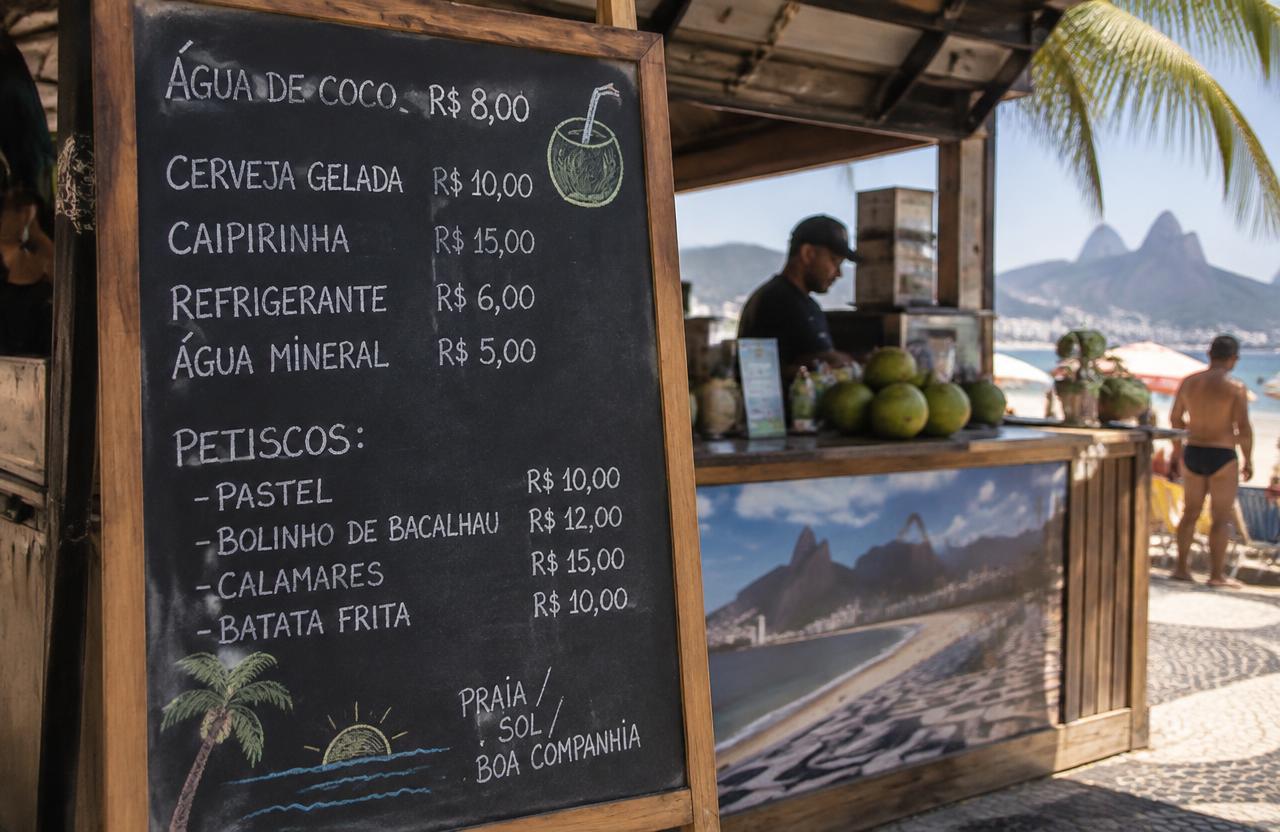
Use these original practice exchanges to connect a request with its next step. Real conversations will change order or use different words; the aim is to recognise the situation, not predict every sentence. Read the English first, say your line, then rehearse the follow-up. Bracketed information should be replaced with your own details.
Padaria (bakery counter)
- Bom dia! Um pão de queijo e um café, por favor.
Good morning! One cheese bread and a coffee, please. - — Mais alguma coisa?
— Anything else? (a common follow-up) - Só isso, obrigado.
That's all, thank you. - Pra viagem, por favor.
To take away, please.
In many padarias you order at the counter, receive a paper ticket, pay at the caixa (till), then collect. If someone says "pagou?" they are asking whether you have paid already.
Beach kiosk or vendor on the sand
- Um coco, por favor. Quanto é?
One coconut, please. How much is it? - Depois de beber, pode cortar?
After I drink it, can you cut it open? - Tem sombra? Quanto custa a cadeira e o guarda-sol?
Do you have shade? How much for the chair and umbrella? - Vou ficar até umas cinco.
I'll stay until about five.
Ask the barraca (beach stall) what is included, when payment is due and how long the rental lasts. Agree the total before sitting; there is no single arrangement that every vendor follows.
Por quilo (per-kilo restaurant)
- É por quilo? Onde pego o prato?
Is it by weight? Where do I get a plate? - Onde pesa?
Where do I weigh it? - O que tem neste prato? Pode confirmar com a cozinha?
What is in this dish? Can you check with the kitchen? - A conta, por favor. No cartão.
The bill, please. By card.
Keep any comanda (order slip or card) you receive and ask how drinks are recorded. If you lose it, tell staff and ask them to check your consumption; do not treat a maximum charge as an automatic rule.
Uber, 99 or a taxi
- Boa noite! É o (name)?
Good evening! Are you (driver's name)? - Vou para este endereço. (show the screen)
I'm going to this address. - Pode entrar pela entrada principal?
Can you go to the main entrance? - Pode parar aqui, por favor.
You can stop here, please.
Confirm the plate and the driver's name in the app before you get in — the phrase does not replace the check. "Pode fechar a janela?" (can you close the window?) is the polite way to ask at a red light at night.
Bus, metro or BRT
- Este ônibus passa em Copacabana?
Does this bus go to Copacabana? - Quanto é a passagem?
How much is the fare? - Pode avisar quando chegar?
Can you tell me when we arrive? - Com licença, vou descer.
Excuse me, I'm getting off.
"Com licença" is how you move through a packed bus or metro carriage; it works better than physically pushing. On the metro, ask for a "cartão" or use the ticket machine — station staff sit in a booth marked "bilheteria".
Farmácia (pharmacy)
- Boa tarde. Tem algo para dor de cabeça?
Good afternoon. Do you have something for a headache? - Estou com dor de barriga / com febre.
I have a stomach ache / a fever. - Isso precisa de receita?
Does that need a prescription? - Tem genérico?
Is there a generic version?
Ask to speak to the farmacêutico (pharmacist), and show the medicine name or prescription. These are language examples, not advice to choose or change a medicine.
Hotel, hostel or apartment check-in
- Tenho uma reserva no nome de…
I have a booking in the name of… - A que horas é o café da manhã?
What time is breakfast? - Posso deixar as malas depois do check-out?
Can I leave my bags after check-out? - Qual é a senha do Wi-Fi?
What's the Wi-Fi password?
"Senha" means password — but it also means the queue number you take at a bank or busy bakery. Context decides.
Ticket window at Sugarloaf, Corcovado or a museum
- Dois adultos, por favor.
Two adults, please. - Tem entrada para o próximo horário?
Is there entry for the next time slot? - Já comprei online — este é o voucher.
I already bought online — this is the voucher. - Onde é a fila?
Where is the queue?
"Meia-entrada" means reduced admission. Ask which categories and documents the specific attraction accepts; a student card or age alone does not establish eligibility everywhere.
The half nobody rehearses
What they say back — and what the card machine asks
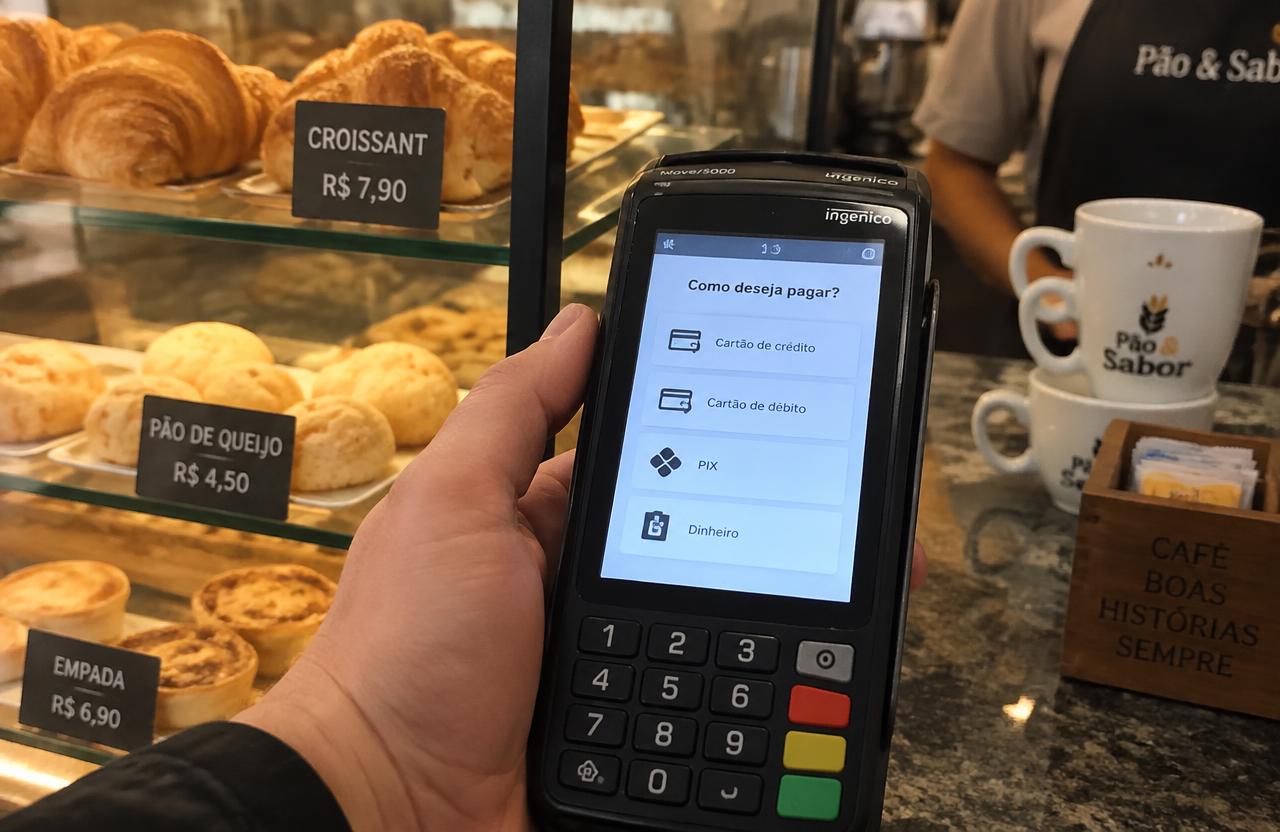
Knowing how to ask for something is only half the exchange. The answer may offer a choice, ask you to wait or tell you an item has run out. Learn these as listening prompts, then use the repair phrases when you hear an unfamiliar answer. Recognising one word is a starting point, not proof that you understood the whole message.
At payment, separate the payment type from the number of payments. Débito ou crédito? asks debit or credit; à vista ou parcelado? asks whether to pay once or in instalments. Sem parcelar, por favor makes a single-payment request clear. Use the type your card and issuer support rather than assuming all foreign cards work the same way. If you cannot use Pix, ask posso pagar com cartão? instead. See our Rio money, cards and Pix guide for payment planning.
Pode ser?
Is that OK? — a soft check before they act. Answer "pode" or "pode sim".
Só isso?
Just that? Answer "só isso" or add the next item.
Débito ou crédito?
Debit or credit? Use the payment type supported by your card and issuer; the phrasebook cannot determine that for you.
À vista ou parcelado?
In one payment or split into instalments? Ask for "à vista" or "sem parcelar" if you want one payment.
Quantas vezes?
How many instalments? Answer "uma vez".
Vai querer a nota?
Do you want the receipt? "Sim, por favor" or "não precisa".
CPF na nota?
Tax number on the receipt? If you do not have a CPF, say "não tenho". Some foreign visitors do have one.
Tem trocado?
Do you have change or a smaller note? A follow-up when paying in cash.
É pra comer aqui ou pra viagem?
Eat in or take away?
Vai mais alguma coisa?
Anything more? Same as "mais alguma coisa?".
Já pediu?
Have you already ordered? Common in busy botecos.
Aceita cartão? / Só dinheiro.
Do you take cards? / Cash only. Ask before ordering; acceptance varies.
Fica logo ali.
It's just over there — usually with a hand gesture that carries the real information.
Pois não?
Yes? How can I help? A formal opener from staff, not a question about you.
Imagina!
Don't mention it — the standard reply to obrigado, alongside "de nada".
Tá tranquilo / relaxa.
It's fine, no problem. Informal reassurance; the meaning depends on the situation.
Numbers you have to hear correctly
How Rio prices are said out loud
The amounts below are language examples, not current prices for any product. In everyday speech the currency words may be omitted, so R$ 8,50 becomes “oito e cinquenta” with no reais and no centavos in the sentence. Informally a real is a conto. And the separators are the reverse of English: a comma marks decimals, a dot marks thousands.
| Written | Said as | Note |
|---|---|---|
| R$ 8,00 | oito reais | "Reais" is the plural of real. One is "um real". |
| R$ 8,50 | oito e cinquenta | In an informal spoken price, the words reais and centavos may be left out. |
| R$ 12,90 | doze e noventa | Prices ending in ,90 are read the same way. |
| R$ 15 | quinze contos | "Conto" is informal for real. "Quinze pila" also exists, more in the south. |
| R$ 100 | cem reais / uma nota de cem | A way to name a banknote. Ask whether the seller can give change before offering a large note. |
| R$ 1.000 | mil reais | Note the Brazilian separators: comma for decimals, dot for thousands. |
| 10% | dez por cento | An example percentage, not a promise of the service charge on your bill. |
| 2x sem juros | duas vezes sem juros | Two instalments, no interest — an instalment offer, not a discount. |
The safe habit at a kiosk or market: ask “quanto é?”, then repeat the number back as a question before you hand over money. If the amount is still unclear, ask to see it written or on the terminal before confirming. Repetition helps, but it does not guarantee that both people heard the same number. Our scams and payment traps guide covers the rest.
Read, don't say
Twelve signs worth recognising instantly
Some Portuguese that changes your next step is written rather than spoken: on doors, tills, beach flags and shop shutters. These are words worth recognising before you need to ask what they mean.
PUXE / EMPURRE
Pull / push — on almost every door, and the pair most reversed by visitors.
CAIXA
Till / cashier. In some counters you order in one place and pay at the caixa.
SAÍDA / ENTRADA
Exit / entrance.
BANHEIRO · WC · LAVABO
Toilet. "Feminino" women, "masculino" men.
FECHADO PARA ALMOÇO
Closed for lunch. Look for a posted return time or ask when the shop reopens.
SÓ DINHEIRO
Cash only.
NÃO FUNCIONA / FORA DE SERVIÇO
Not working / out of service.
CUIDADO · PERIGO
Caution · danger. On wet marble and on beach warning flags.
PROIBIDO BANHO
Swimming prohibited. Follow the restriction; the words alone do not state its reason.
OBRAS
Building works. Explains a closed pavement or a diverted bus.
ELEVADOR SOCIAL / DE SERVIÇO
Main lift / service lift in older buildings.
VÁLIDO ATÉ
Valid until — on tickets and dated promotions.
Familiar, and wrong
False friends that change your meaning
A familiar spelling can help you guess, but several everyday words have different meanings or more than one sense. Treat these examples as context clues, not as a rule that a word can only have one translation.
puxe
Looks like "push". It means PULL. Empurre means push.
esquisito
Not exquisite — it means weird or off. Use "delicioso" for food you like.
embaraçada
Can mean tangled, confused or embarrassed. For pregnancy, use "grávida"; do not assume the everyday Spanish sense of embarazada.
pretender
To intend, not to pretend. "Pretendo ficar dez dias" = I intend to stay ten days.
realizar
Often means to carry out or achieve. For noticing or becoming aware of something, "perceber" is a clearer beginner choice.
batata
Potato. "Batata frita" is chips, and "é batata" colloquially means "it's a sure thing".
legal
In informal conversation it can mean cool or nice; context tells you whether it means lawful.
café
Coffee, but "café da manhã" is breakfast and "um café" at a counter means a small strong one.
Typed Portuguese
WhatsApp shorthand your host and guide will use
Hosts, guides and drivers may use WhatsApp for practical arrangements. Short messages can leave out words and accents, while a voice note may contain the detail you need to check. These examples help with recognition; you can reply in full sentences and ask for an unclear message to be written out.
vc
você — you
blz / blza
beleza — all good, deal
pf / pfv
por favor — please
obg / vlw
obrigado(a) / valeu — thanks
tb / tbm
também — also, too
kkkk
laughter in informal messages; it is not a literal word to say aloud.
hj / amnh
hoje / amanhã — today / tomorrow; ask for a calendar date if unclear
tmj
tamo junto — we're in this together, friendly sign-off
flw
falou — bye, got it
qlqr
qualquer — any; short forms vary between writers
bora
let's go / shall we go? — an informal invitation
confirmado ✅
confirmed — still check which date, time and service the message refers to.
A thumbs-up or “confirmado” can acknowledge a message without settling every detail. Before relying on it, confirm the date, time, meeting point and what is included. If you need something in writing, ask “pode confirmar por escrito, por favor?”
Make this work with no signal
Screenshot the large phrase cards and save your hotel address before leaving Wi-Fi. A page already open may remain usable, but reloading this website offline is not guaranteed. If you want mobile data for maps and messaging, compare a suitable plan and check device compatibility, activation instructions and whether calls are included. Connectivity is optional for using a saved screenshot.
Links may earn us a commission at no extra cost to you. This supports PlanRio.
Compare Brazil eSIM data plansLocal expert tips
Small Rio habits that make a phrase work
The useful local detail is often the next step after the words. These are practical patterns to look for, not rules that every business follows.
At a padaria
Ordering and payment can happen at different counters. Ask “Onde eu pago?” (Where do I pay?), and keep any ticket or comanda until you have finished.
On the beach
Before sitting down, ask the total for the chair and umbrella, how long the rental lasts and what is included. Each barraca may handle the arrangement differently.
For a ride pickup
Give the street, building number, neighbourhood and entrance in a message, then confirm the driver and plate in the app. A hotel name alone may not identify the exact pickup point.
At the card machine
Listen for the two separate choices: débito ou crédito? is debit or credit; à vista ou parcelado? is one payment or instalments. Check the displayed amount before confirming.
Turn the words into a real conversation
A guided food tasting can put the vocabulary in context if the food itself interests you. Check the tour language, itinerary and dietary suitability for the selected date. It is a food experience, so use a language course or teacher when structured conversation practice is your goal.
Check the Rio food tourHow to use the pronunciation notes and sources
PlanRio’s examples connect ordinary Brazilian Portuguese to Rio travel situations. The scripts and message templates are original practice material, not transcripts of a claimed visit. Standard phrases naturally occur in other language guides. English sound prompts are approximate; they do not reproduce every vowel, regional accent or speaking speed.
For listening practice, the University of Texas at Austin’s Língua da Gente offers Brazilian Portuguese dialogue lessons with English translations and explanations. Use it to hear voices alongside the written prompts here. The university did not review or endorse this phrasebook. For words with several meanings, compare context with a dictionary such as Priberam’s entry for embaraçado; a single “false friend” label can hide a valid meaning.
Emergency numbers were checked against the two official sources linked above. Currency amounts elsewhere are reading exercises, not current prices for food or transport. Use the Rio language guide for a broader introduction and the situation filters here for a phrase to use now.
Direct answers
Frequently asked questions
How do I use this Brazilian Portuguese phrasebook in Rio?
For Rio, learn a greeting, a polite request and a way to repair a misunderstanding. This Brazilian Portuguese phrasebook lets you search without accents, show large Portuguese cards and practise likely replies. Start with the essentials, then choose the restaurant, transport or hotel phrases your own day needs.
Can I search Portuguese without typing accents?
Yes. Type nao entendi, cartao or farmacia without accents, or search in English. Search applies within the selected category; choose All or Clear search and filters if a phrase is missing. Several words can match the Portuguese, English meaning or usage note together.
Does the phrasebook work offline?
The text and search can remain usable in a page that has already loaded, but reopening this website without a connection is not guaranteed. Screenshot the phrase cards you need and save important addresses in an offline note before leaving Wi-Fi. The tool does not claim to be an installed offline app.
Do people speak English in Rio de Janeiro?
English availability varies by person and situation, so do not rely on it for every interaction. A greeting, a few repair phrases and a written address or request make it easier to continue when you do not share a language.
What Portuguese phrases should I learn before visiting Rio?
Start with oi, tudo bem? (hi, everything good?), por favor (please), obrigado/a (thank you), quanto custa? (how much?), a conta, por favor (the bill), onde fica…? (where is…?), não entendi (I didn't understand), pode repetir? (can you repeat?), mais devagar (more slowly) and preciso de ajuda (I need help).
Is Brazilian Portuguese different from European Portuguese?
Yes. Brazilian and European Portuguese are the same language, but pronunciation, everyday vocabulary and preferred grammar differ noticeably. In Rio you need Brazilian forms such as ônibus for bus, café da manhã for breakfast and celular for mobile phone. A Portugal-focused phrasebook may be understood but will not sound locally natural.
Should I say obrigado or obrigada?
In traditional usage, the ending agrees with the person speaking: a man says obrigado and a woman says obrigada, regardless of who receives the thanks. In fast speech both are often shortened. If you forget, the effort and tone matter more than a perfect ending.
What does tudo bem mean?
Tudo bem? literally asks whether everything is good, but in everyday conversation it can work like 'how are you?' or 'all good?'. A short answer is tudo bem, sometimes followed by e você? (and you?). Use it as a friendly greeting when it fits the moment.
How do I ask someone to speak English in Brazil?
Say você fala inglês? (do you speak English?) or, more softly, desculpa, você fala inglês? (sorry, do you speak English?). Avoid assuming. If the answer is no, show the written address or key noun and use short phrases rather than reading a machine-translated paragraph aloud.
How do I ask for the bill in a Rio restaurant?
Say a conta, por favor when you are ready to pay. Check whether taxa de serviço (service charge) appears on the total and ask staff to explain any charge you do not recognise. For dietary needs, use the exact phrase and ask the server to confirm with the kitchen.
What Portuguese do I need for Uber or a taxi in Rio?
Keep the destination written and learn pode parar aqui? (can you stop here?), é aqui? (is it here?), entrada principal (main entrance) and vou esperar dentro (I will wait inside). In an app car, verify the plate and driver in the app; language never replaces the normal identity check.
What should I say in a medical emergency in Brazil?
Say preciso de ajuda (I need help), chame uma ambulância (call an ambulance), tenho alergia a… (I am allergic to…) or estou com dor aqui (I have pain here). For medical emergencies call 192 for SAMU. Call 190 for police or 193 for fire and rescue. Keep diagnoses, medicines, allergies and your accommodation address written down offline.
Which emergency number should I call in Brazil?
Call 192 for a medical emergency, 190 for police and 193 for the fire service or rescue. Call 199 for Civil Defense when there is disaster risk such as flooding or landslides. Give the operator your street, building number, neighbourhood and a nearby landmark, then describe what happened and follow their directions.
What does carioca mean?
Carioca means a person or cultural trait from the city of Rio de Janeiro. Someone from Rio State but outside the city is fluminense. Visitors can call food, speech or habits carioca, but should not describe every Brazilian custom as uniquely Rio's.
Can I use Spanish in Rio?
Spanish may help with an isolated written word, but speaking Spanish at full speed is not a reliable way to communicate in Portuguese. Start in Portuguese, ask whether the person speaks Spanish and switch only if they agree. Portunhol—an improvised mixture—can help, but it also creates confident misunderstandings around numbers and directions.
How should I practise this Portuguese phrasebook?
Choose ten phrases for the situations you will actually face, say them aloud, then practise the likely reply. Add one repair phrase—não entendi or pode repetir?—to every set. Screenshot the emergency and hotel sections, and use search inside the phrasebook when you know the English idea but not the category.
How do you pronounce Ipanema, Leblon and Niterói?
Ipanema is ee-pah-NEH-mah (stress the third syllable, never "eye-"). Leblon has two syllables, leh-BLOHN, with the stress on the second and a nasal ending. Niterói is nee-teh-ROY with the stress on the final ói. Other names drivers often mishear: Botafogo (bo-tah-FOH-goo), Maracanã (mah-rah-cah-NAH, nasal ending), Cosme Velho (KOZ-mee VEH-lyoo) and Jacarepaguá (zhah-cah-reh-pah-GWAH).
What does the card machine ask in Brazil?
Débito ou crédito? asks whether you want debit or credit. À vista ou parcelado? asks for one payment or instalments. Say sem parcelar, por favor if you want a single payment, and use the payment type your card supports. CPF na nota? asks about a Brazilian taxpayer number on the receipt; não tenho means I do not have one, if that is true.
How are prices said out loud in Rio?
In an informal spoken price, R$ 8,50 may be read as "oito e cinquenta", without saying reais or centavos. R$ 12,90 can be "doze e noventa". Informally a real is sometimes called a "conto", so "quinze contos" means R$ 15. Brazil uses a comma for decimals and a dot for thousands, so R$ 1.000 is one thousand reais, not one.
Does puxe mean push in Portuguese?
No. Puxe means pull and empurre means push. Esquisito usually means strange, while pretender means to intend. Be careful with absolute false-friend lists: embaraçado can describe embarrassment as well as confusion or tangled things. For pregnancy, the clear everyday word is grávida.
What Portuguese abbreviations do Brazilians use on WhatsApp?
Hosts, guides and drivers write in shorthand: vc (você, you), blz (beleza, all good), pf (por favor), obg or vlw (thanks), tb (also), tmj (tamo junto, we're together), flw (bye) and kkkk, which is laughter rather than a typo. "Bora?" is an invitation meaning "shall we go?".
How do I order in a per-kilo restaurant in Rio?
Ask é por quilo? to confirm that food is sold by weight, then onde pego o prato? for the plate and onde pesa? for the scales. Keep your comanda, the card or slip recording consumption, and ask how drinks are added. At payment, a conta, por favor requests the bill; ask staff to explain anything unclear.
What do Brazilians say instead of "you're welcome"?
"De nada" is a standard reply to thank you. You may also hear "imagina!" or, in a casual exchange, "tá tranquilo" or "relaxa". If a server says "pois não?" they are asking how they can help.