Bahian Food in Rio de Janeiro: Northeastern Dishes & Where to Eat
Written and reviewed by Lotte — Rio local, founder & editor of PlanRio · How we research · First published · Last reviewed
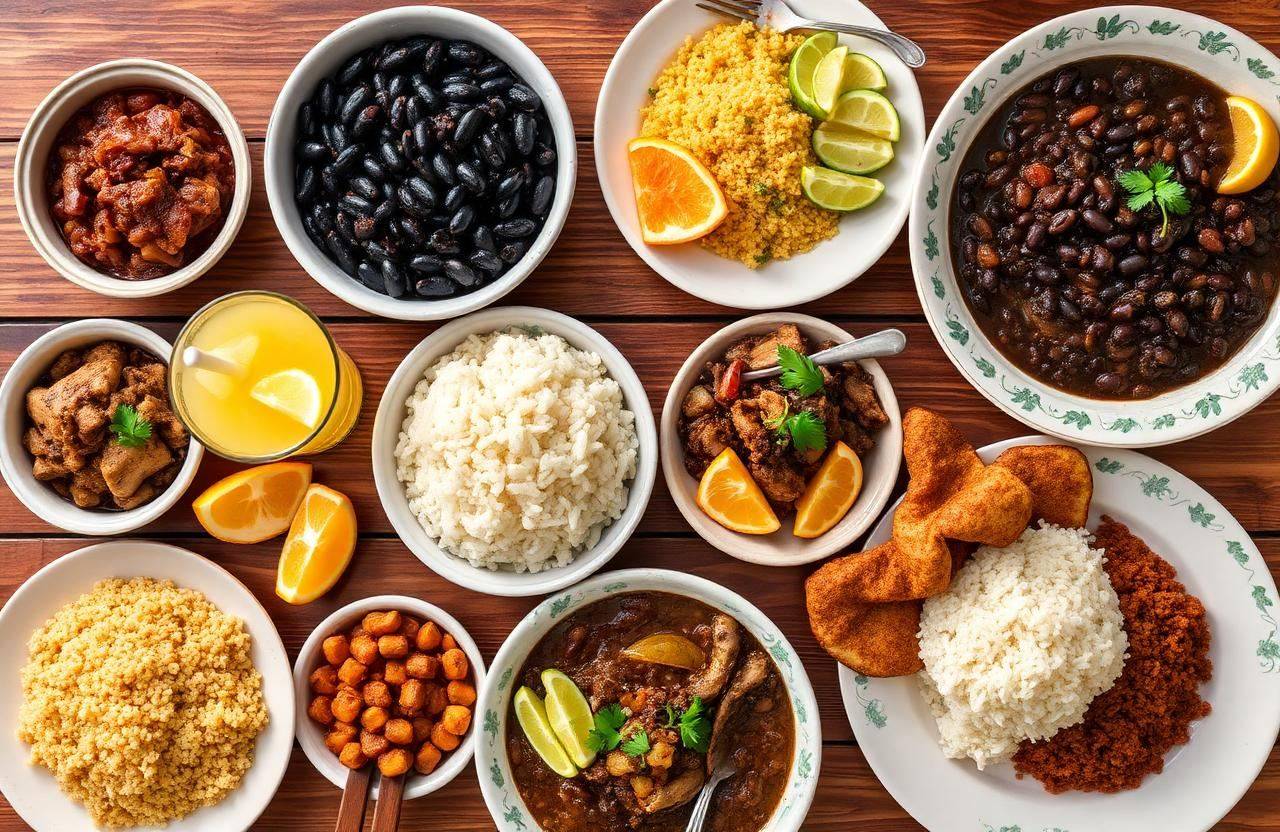
Moqueca arrives in its own clay pot with rice, pirão and farofa alongside — which is why one is a meal for two.
Quick answer
The best place to eat Bahian and Northeastern food in Rio is the Feira de São Cristóvão, a permanent covered Northeastern fair in the Zona Norte with hundreds of stalls and live forró. For moqueca without crossing the city, the Bahian restaurants in Copacabana and Centro are the answer. Order one moqueca between two — they arrive sized for sharing — and go easy on dendê the first time.
Links may earn us a commission at no extra cost to you. This supports PlanRio.
At a glance
Why Rio has it
Migration from Bahia and other Northeastern states has shaped Rio's food, music and neighbourhood life for generations.
The one place to start
Feira de São Cristóvão — a permanent covered fair that is effectively a Northeastern town inside Rio.
Bahian, in one dish
Moqueca: fish stewed in dendê palm oil, coconut milk, tomato, pepper and coriander, served with rice and farofa.
The street classic
Acarajé — black-eyed-pea fritters fried in dendê, split and filled with vatapá, caruru, shrimp and pepper.
Not the same thing
Bahian food is one Northeastern cuisine. Sertão cooking — carne de sol, baião de dois — is a different tradition.
The ingredient to know
Dendê, red palm oil. It defines Bahian cooking and it is heavy; one dendê meal a day is plenty.
Best day for the fair
Friday night into Sunday, when the forró runs and the whole place is working.
Where else to look
Copacabana and Centro for the Bahian restaurants; Tijuca and the Zona Norte for everyday Northeastern cooking.
Rio is a Northeastern city that does not advertise it
Over the second half of the twentieth century, millions of people left Brazil's Northeast — Bahia, Pernambuco, Ceará, Paraíba and the sertão behind them — for work in the Southeast. Rio took a very large share of them, and the result is a city where a substantial proportion of the population has Northeastern roots, and where the food, the music and a good deal of the vocabulary came along.
This is invisible in the standard tourist itinerary, which runs from Ipanema to Christ the Redeemer and eats feijoada. It becomes extremely visible the moment you go looking: in the forró bars, in the carne de sol on a Tijuca menu, in the dendê smell of a moqueca in Copacabana, and most concentratedly in a covered pavilion in São Cristóvão that functions as a Northeastern town inside Rio.
For a visitor, this is one of the best food opportunities in the city precisely because nobody sells it to you. It is cheaper than the Zona Sul restaurant scene, it is more distinctive than anything you will eat on the beach, and it is a genuine cultural layer rather than a themed experience.
Bahian versus Northeastern: the distinction that matters
People use 'Northeastern food' and 'Bahian food' interchangeably and they are not the same. Bahia has a coastal, African-descended cuisine built on dendê palm oil, coconut milk, dried shrimp and fresh seafood, with deep roots in Candomblé religious cooking. The sertão — the dry interior that covers much of the rest of the Northeast — has a cuisine built on preservation: salted and sun-dried meat, cheese, cassava, corn and beans.
Bahian, in practice: moqueca, the fish or prawn stew in dendê and coconut milk; vatapá, a thick bread-and-shrimp purée; caruru, with okra; bobó de camarão, prawns in a cassava cream; xinxim de galinha, chicken with dried shrimp and peanuts; acarajé on the street.
Sertão and wider Northeastern, in practice: carne de sol, salted sun-dried beef, usually served with macaxeira (cassava) and queijo coalho; baião de dois, rice and beans cooked together with cheese and often carne de sol; buchada, for the adventurous; tapioca, the cassava-starch crêpe, sweet or savoury; cuscuz nordestino, steamed corn couscous, which is a breakfast rather than a salad.
Knowing which you are ordering changes the meal. A Bahian restaurant and a Northeastern one are different propositions, and the places that do both well are usually doing one of them properly and the other as a courtesy.
Feira de São Cristóvão: the single best place to eat this food
If you do one thing on this page, do this. The Feira de São Cristóvão — officially the Centro Luiz Gonzaga de Tradições Nordestinas — is a permanent covered fairground in the north of the city with hundreds of stalls and restaurants, almost all Northeastern, plus stages, shops selling cordel literature and leather hats, and forró running into the early hours.
It is not a tourist market dressed up as a cultural experience. It is where Rio's Northeastern community goes, and the clientele reflects that. The food is cheap, the portions are enormous, and the range covers the whole region rather than a curated selection.
What to eat there: carne de sol with macaxeira, baião de dois, a tapioca from one of the dedicated stalls, queijo coalho grilled on a stick, and a caldinho — a small cup of thick bean or seafood broth — to start. Drink a caipirinha made with cachaça from one of the Northeastern distilleries, or a cold beer.
Go Friday night, Saturday or Sunday, when the fair is fully working and the forró is on. It is open at other times but it is a different, quieter place midweek. Take an Uber both ways — it is in the Zona Norte, the surrounding area is not a walking proposition at night, and the ride is short and cheap. Our full guide to the fair covers the practicalities.
Where to eat Bahian food in the Zona Sul
If you want moqueca without crossing the city, the Bahian restaurants in Copacabana and Centro are the straightforward answer. Siri Mole & Cia is the reference name — a long-running Bahian house with moquecas, bobó de camarão, carne de sol and acarajé, with a Copacabana address open daily and a weekday-only operation in Centro, and a Saturday buffet that covers caruru, vatapá and xinxim.
Order a moqueca for two and nothing else. This is the second place where portion size matters: a moqueca arrives in its own clay pot with rice, pirão (a thick fish-broth porridge) and farofa alongside, and it is a meal for two people with leftovers. Ordering one each is a classic visitor error.
A warning about dendê that no menu gives you: red palm oil is rich, distinctive and heavy, and it does not agree with everyone the first time. If you have never eaten it, order one dendê dish between two and see how you feel before building a second day around it. It is also the reason a moqueca at lunch is a better idea than a moqueca at eleven at night.
Acarajé is harder to find at the standard in Rio than it is in Salvador, where baianas sell it from street stalls in white lace. You will find good versions at the Feira de São Cristóvão and at the Bahian restaurants; what you will not find is the ubiquity. If acarajé is the thing you came for, our Rio versus Salvador comparison is worth reading before you book.
Northeastern food in the ordinary Rio week
Outside the dedicated restaurants, Northeastern cooking has quietly colonised the everyday Rio menu, and knowing the words lets you find it.
Carne de sol appears on boteco menus across the city, usually with macaxeira frita and a slab of queijo coalho. It is one of the best bar snacks in Brazil and it is on more menus than anyone notices.
Tapioca stalls — the cassava-starch crêpe cooked on a hot plate and folded around cheese, coconut or carne de sol — are a street-food fixture, and a savoury tapioca is one of the few genuinely good quick breakfasts in Rio that is not bread.
Cuscuz nordestino, steamed corn couscous, turns up at breakfast in the Zona Norte and in the per-kilo lunch places. It bears no resemblance to North African couscous and visitors ordering it expecting a salad are routinely confused.
And forró — the accordion-driven dance music of the Northeast — is a whole parallel nightlife in Rio, with its own venues and its own crowd, largely untouched by the samba circuit visitors usually find. The Feira de São Cristóvão is the easiest entry point.
How to build a day around it
The efficient version: an afternoon and evening in São Cristóvão. Go late afternoon on a Friday or Saturday, eat slowly across several stalls rather than committing to one restaurant, stay for the forró, Uber home. That is the whole experience in one trip and it costs very little.
The Zona Sul version: a long Bahian lunch in Copacabana, a walk, and nothing heavy in the evening. Dendê deserves respect, and this is the shape that works.
The deeper version, if you have a week: add Little Africa — the port-zone district around Pedra do Sal, Cais do Valongo and Praça Mauá that is the historic centre of Afro-Brazilian Rio — to make sense of where this cuisine's religious and cultural roots actually sit in the city. Our Little Africa walking guide covers it, and Monday night samba at Pedra do Sal is the natural pairing.
If the food is the reason you are travelling at all, the honest advice is that Salvador is the destination and Rio is the preview. Bahia's version is deeper, cheaper and everywhere. But Rio's is real, it is here, and it is the best-value eating in the city.
Two ways to go deeper than a restaurant
A food tour gets you past the places with English menus, and the Little Africa walk puts this cuisine in the part of Rio where its religious and cultural roots actually sit. Both pair naturally with a São Cristóvão evening.
Common mistakes tourists make
- Ordering a moqueca each. They arrive in a clay pot with rice, pirão and farofa, and one feeds two people comfortably.
- Eating two dendê meals in a day. Red palm oil is rich and heavy, and the first encounter is not the time to test your limits.
- Going to the Feira de São Cristóvão midweek. It is open, but the forró and most of the life are Friday night through Sunday.
- Walking to or from the fair at night. It is in the Zona Norte; take an Uber both ways, which is short and cheap.
- Using 'Bahian' and 'Northeastern' interchangeably. They are different cuisines with different ingredients and different histories.
- Expecting Salvador-style street acarajé in Rio. The restaurant versions are good; the ubiquity is not here.
- Ordering cuscuz expecting a salad. Brazilian cuscuz nordestino is steamed corn and it is breakfast.
- Committing to one restaurant at the fair. The right move is grazing across several stalls.
Local expert tips
- Start with a caldinho — a small cup of thick bean or seafood broth — before anything heavy. It is what everyone else is doing.
- Eat moqueca at lunch. Dendê at midnight is a decision you will reconsider.
- Ask for the pirão on the side if you are unsure about it. It is the best part for some people and the strangest for others.
- At the fair, follow the queues rather than the signage. The good stalls are obvious from the line.
- Try a savoury tapioca for breakfast at least once — it is the best quick non-bread breakfast in Rio.
- Pair the food with Little Africa and Pedra do Sal to understand where the tradition actually sits in the city.
- Look for carne de sol on ordinary boteco menus. It is one of the best bar snacks in Brazil and it is everywhere.
Frequently asked questions
Where can I eat Bahian and Northeastern food in Rio de Janeiro?+
The single best place is the Feira de São Cristóvão, a permanent covered Northeastern fair in the north of the city with hundreds of food stalls, forró and a local rather than touristic crowd. In the Zona Sul, Copacabana and Centro have the established Bahian restaurants — Siri Mole & Cia is the long-running reference. Carne de sol and tapioca also appear on ordinary boteco and street menus across the city.
What is moqueca and how is it served?+
Moqueca is fish or prawns stewed with dendê palm oil, coconut milk, tomato, onion, peppers and coriander, served in a clay pot with rice, farofa and pirão — a thick porridge made from the cooking broth. It is almost always sized for two people, so order one between you rather than one each.
What is acarajé?+
A fritter of ground black-eyed peas deep-fried in dendê palm oil, then split and filled with vatapá, caruru, dried shrimp and pepper sauce. It is Bahian street food with roots in Candomblé religious offerings. You will find good versions at the Feira de São Cristóvão and the Bahian restaurants, but not the street ubiquity it has in Salvador.
What is dendê and will I like it?+
Dendê is red palm oil, and it is the defining ingredient of Bahian cooking — rich, distinctive and heavy. It does not agree with everyone on first contact. Order one dendê dish between two people the first time, eat it at lunch rather than late at night, and see how you feel before planning a second.
Is Bahian food the same as Northeastern food?+
No. Bahian cooking is coastal and African-descended, built on dendê, coconut milk, dried shrimp and seafood. The sertão cuisine of the dry interior is built on preservation — carne de sol, cassava, corn, cheese and beans — and produces completely different dishes such as baião de dois and cuscuz nordestino. Bahian is one Northeastern cuisine among several.
Is the Feira de São Cristóvão worth visiting?+
Yes, and it is the best-value eating in Rio. It is a permanent covered fairground that functions as a Northeastern town inside the city, with hundreds of stalls, cheap enormous portions and live forró. Go Friday night, Saturday or Sunday when it is fully working, and take an Uber both ways — it is in the Zona Norte and not a walking proposition at night.
What is carne de sol?+
Salted, sun-dried beef from the Northeastern interior, usually served grilled with macaxeira (fried cassava) and queijo coalho. It is one of the best bar snacks in Brazil and appears on boteco menus right across Rio, not just in Northeastern restaurants.
What is tapioca in Brazil?+
Not the pudding. Brazilian tapioca is a crêpe made from cassava starch cooked on a hot plate until it binds, then folded around a filling — cheese, coconut and condensed milk, or carne de sol. It is a Northeastern street-food staple and one of the few good non-bread breakfasts in Rio.
Should I eat Bahian food in Rio or wait for Salvador?+
If Salvador is on the itinerary, Bahia's version is deeper, cheaper and everywhere, and acarajé in particular is a different proposition there. If Rio is the whole trip, the Bahian restaurants here are genuinely good and the Feira de São Cristóvão is an experience in its own right rather than a substitute.
Sources and image credit
Details and access can change. Use these venue, operator and public-information sources to recheck key details before visiting.
- Centro Luiz Gonzaga de Tradições Nordestinas (Feira de São Cristóvão) ↗
Official site for the fair — opening days, programme and the forró schedule.
- Riotur: where to eat in Rio de Janeiro ↗
The city tourism board's venue directory, useful for confirming a current address.
- Veja Rio restaurant listings ↗
Current Brazilian press listings for checking whether a restaurant is still trading.
Keep planning
Feira de São Cristóvão
The full guide to the Northeastern fair — when to go, what to eat and how to get there.
Brazilian food in Rio
The wider map of what to eat, region by region.
Best seafood in Rio
Where moqueca sits among the city's fish restaurants.
Little Africa walking guide
The port-zone district where Afro-Brazilian Rio's history is concentrated.
Rio vs Salvador
If the food is the reason you are travelling, this is the comparison to read.
Rio street food
Tapioca, queijo coalho and the rest of what gets sold on the pavement.