Can You Swim in Rio de Janeiro? Beach Water Quality
Written and reviewed by Lotte — Rio local, founder & editor of PlanRio · How we research · First published · Last reviewed
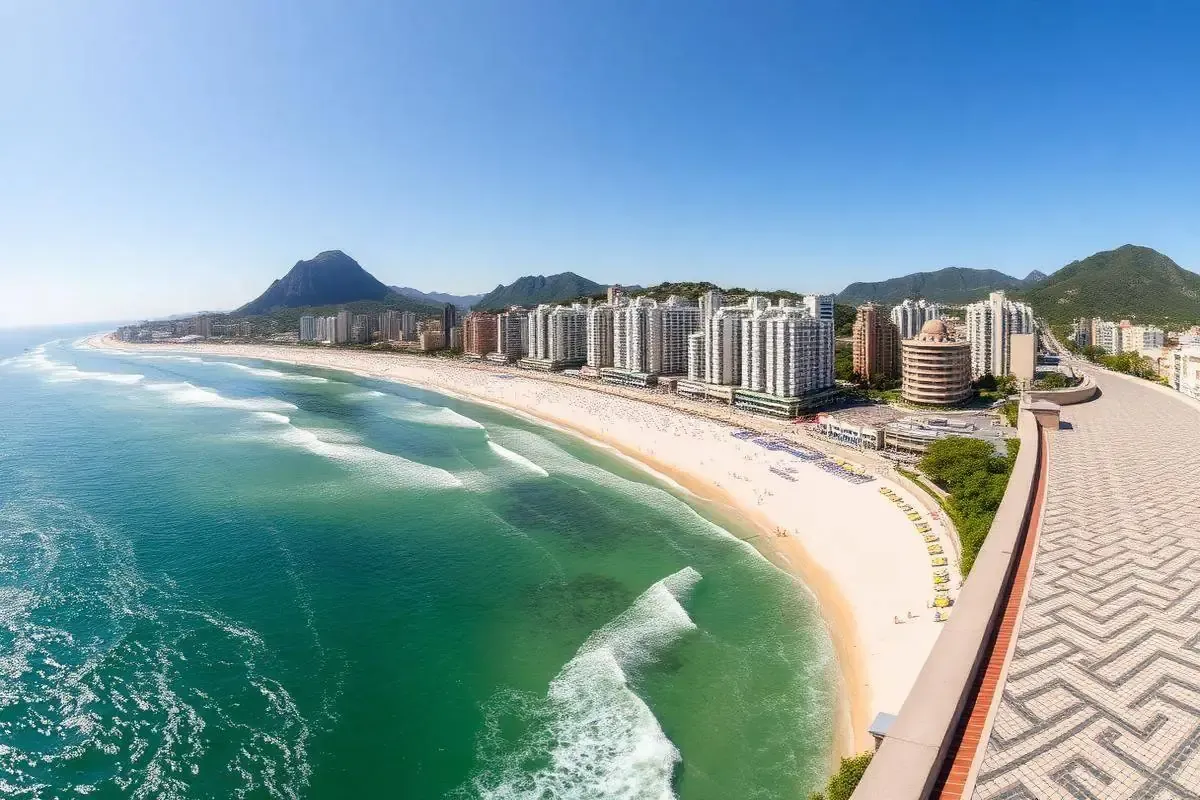
Copacabana faces the open ocean and flushes on the tide — the reason its sampling points grade better than the bay beaches two kilometres away.
Quick answer
Yes — on Rio's open Atlantic beaches. Copacabana, Leme, Arpoador, Ipanema, Leblon, Barra and the west-zone beaches are graded suitable for bathing most of the time. The Guanabara Bay beaches — Flamengo, Botafogo, Glória, Urca — are frequently unsuitable. Everywhere, wait about 24 hours after heavy rain.
Check INEA's current bathing-water bulletin for your beachAt a glance
Short answer
Yes on the open Atlantic beaches. Usually not on the Guanabara Bay beaches.
Who decides
INEA, the Rio state environment institute, sampling 291 points across 197 beaches.
The rule
CONAMA Resolution 274/2000: a beach is graded on Escherichia coli counts across five weekly samples.
The rain rule
Skip the sea for about 24 hours after heavy rain, whichever beach you are on.
Usually fine
Leme, Copacabana, Arpoador, Joatinga, Barra, Recreio, Prainha, Grumari.
Usually not
Flamengo, Botafogo, Glória, Urca — bay beaches, lovely to look at, frequently graded imprópria.
The short version: it depends which shoreline you are standing on
Rio has two coasts and visitors treat them as one. The open Atlantic side — Leme, Copacabana, Arpoador, Ipanema, Leblon, São Conrado, Barra da Tijuca, Recreio, Prainha, Grumari — faces thousands of kilometres of ocean, flushes itself twice a day on the tide, and is classified suitable for bathing most of the time. The Guanabara Bay side — Flamengo, Botafogo, Glória, Urca, and the beaches further into the bay — sits inside a semi-enclosed bay that receives the drainage of a metropolitan region of twelve million people. It does not flush. It is frequently graded unsuitable.
That is the whole answer for most trips: if your hotel is in Copacabana, Ipanema or Leblon, you can almost certainly swim, and the thing to check is the surf, not the bacteria. If you are looking at the water from Flamengo Park at sunset and thinking it looks inviting, it is a view. Cariocas sunbathe, play futevôlei and run on Flamengo beach constantly. Watch how few of them go in.
The in-between cases are the ones worth knowing about, because they are the famous beaches. Ipanema, Leblon, Vidigal and São Conrado all sit beside storm-water outlets, and they flip from suitable to unsuitable and back within days of rain. A June 2026 bulletin had Leblon and Ipanema classified imprópria on the same weekend that Copacabana, Leme, Arpoador, Barra and Grumari were cleared — so being on the right coast is necessary, not sufficient.
How INEA actually decides — and the grade that fools people
Rio state's environment institute, INEA, publishes a bathing-suitability bulletin (boletim de balneabilidade) using the criteria in CONAMA Resolution 274 of 2000. It is not a one-off reading. Each sampling point is graded on the previous five weekly samples of Escherichia coli per 100 ml of water: Excelente if at least 80% of samples came in at 200 or below, Muito boa at 400 or below, Satisfatória at 800 or below. All three count as própria — suitable.
A beach becomes imprópria — unsuitable — when two or more of those five samples exceed 800, or when the single most recent sample exceeds 2,000. That second clause is the one that matters to you, because it is how a beach that has been fine all month goes red overnight after a storm.
Here is the trap: Satisfatória is still legally suitable, and it means up to 800 E. coli per 100 ml — four times the Excelente threshold. A green light in the bulletin is a regulatory judgement, not a promise of clear water. If you have a compromised immune system, an open wound, or small children who will swallow water, treat Satisfatória as a soft no and look for a beach graded Excelente instead.

Why the Guanabara Bay beaches fail, and why that has not changed
Guanabara Bay has a narrow mouth, a large catchment and decades of under-built sanitation. Untreated or partially treated sewage from rivers and canals across the metropolitan region still reaches it, and because the bay exchanges water with the ocean slowly, what goes in stays in. The 2016 Olympic commitment to treat 80% of the bay's sewage was not met, and while the state reports genuine improvement in recent years, the beaches at Flamengo, Botafogo, Glória and Urca remain the most frequently condemned sampling points in the city.
This is not a reason to avoid those neighbourhoods. Flamengo Park is one of the best things about living in Rio, Botafogo's curve of sand with Sugarloaf behind it is the city's most photographed view, and Urca's seawall is where people drink beer at sunset. Use all of it. Just do not get in the water, do not let children paddle, and rinse off if you do end up in it.
Praia Vermelha, tucked beside Urca at the foot of Sugarloaf, is the exception that confuses everyone — it faces out of the bay mouth rather than into the bay, and is often cleared when its neighbours are not. It is also small, crowded and has its own current patterns. Check it specifically rather than assuming either way.
The beaches that flip: Leblon, Ipanema, São Conrado, Vidigal
The Canal do Jardim de Alah, which drains the Lagoa Rodrigo de Freitas into the sea, comes out exactly between Ipanema and Leblon. After heavy rain it discharges street run-off and whatever the lagoon has been holding straight onto the sand at the Leblon end. That is why the Leblon sampling point nearest the canal can be condemned while the far end of the same beach is fine, and it is why locals drift west along Leblon or east along Ipanema after a storm rather than swimming at the junction.
São Conrado and Vidigal sit below steep hillsides with their own drainage problems, and both flip more often than their Zona Sul neighbours. Barra da Tijuca is enormous and its sampling points behave differently along its length — the stretches near canal mouths are the weak links, not the beach as a whole.
The practical move at every one of these beaches is the same: walk away from the visible canal, channel or storm drain. Two hundred metres of distance changes the sample point you are effectively swimming at.
Four things that change Rio's water besides bacteria
Rain is the big one, and the rule locals use is simple: give it about 24 hours after a heavy downpour before getting in anywhere, including the ocean beaches. Storm-water systems carry street debris, and the bulletin you read this morning was sampled before the rain fell.
Ressaca — heavy swell — is the second. It churns sand and sediment, strips the beach back, and makes even clean water opaque and dangerous. The flags on the lifeguard towers are about this, not about pollution: green, yellow and red communicate sea risk, and a green flag says nothing at all about the last laboratory result. Our separate guide to rip currents, flags and lifeguard postos covers that side in detail.
The third is the ressurgência — an upwelling that pushes cold deep water into the Zona Sul beaches, usually with persistent northeasterly winds in summer. The sea at Arpoador can drop from pleasant to genuinely painful within a day. It is clean water; it is just shockingly cold, and it catches people out at the exact time of year they least expect it.
The fourth is wildlife. Caravela-portuguesa (Portuguese man o' war) wash up on Rio beaches periodically, concentrated by wind and current, and their sting is serious. If you see the blue bladders on the sand, assume there are more in the water, and ask the guarda-vidas — they will know whether today is one of those days.
How to check it yourself in two minutes
Open INEA's bathing-water page, find the beach, and then find the specific sampling point that matches the stretch of sand you will actually be on — a long beach has several and they frequently disagree. Note the grade and the date of the sample, because a Friday bulletin is already behind a Saturday storm.
Then do the two physical checks that no bulletin can do for you. Look for discoloured water, foam lines or debris near a canal or outlet, and look at whether local families are swimming or just sitting. Cariocas have a very accurate, entirely informal read on their own beach, and on a bad day you will see a crowded beach with an empty sea.
Finally, ask the lifeguard. The guarda-vidas on duty knows what the water did this morning, whether there have been stings, and where the rip is. It is the single highest-value thirty seconds of a Rio beach day, and it does not require Portuguese beyond pointing at the sea and raising your eyebrows.
If the sea is out: what we actually do instead
On a condemned-water or heavy-ressaca day, the local answer is a pool, and Rio is unusually well set up for it. Several hotels sell day passes to non-guests, which gets you a rooftop or garden pool, a lounger and usually a bar for the price of a decent lunch — the practical details are in our guide to hotel pool day passes.
The other answer is to go west. The beaches beyond Barra — Prainha, Grumari, Abricó and the Macumba stretch — sit away from the city's canals and outfalls and are the cleanest water inside the municipality, with the trade-off that they are an hour out and have strong surf. See the west-zone beaches without a car guide if you are not driving, or take an organised wild-beaches run if you would rather not work out the buses.
And if you want to swim rather than sunbathe, consider that the Lagoa Rodrigo de Freitas is not a swimming lagoon — it is for rowing, cycling and kayaking, and its water quality is a separate and worse story. Our Lagoa guide covers what the water there is actually used for.
Two honest fallbacks for a bad-water day
If the bulletin is red or the ressaca has arrived, the two things that actually rescue the day are the cleaner beaches an hour west, or a pool. Neither needs to be booked far ahead.
Links may earn us a commission at no extra cost to you. This supports PlanRio.
Common mistakes tourists make
- Reading the lifeguard tower's green flag as a water-quality clearance. The flags are about surf and currents; bacteria are a separate laboratory bulletin from INEA.
- Swimming at the Leblon end beside the Jardim de Alah canal after rain, when two hundred metres west is a different sampling point.
- Getting in at Flamengo or Botafogo because the bay looks calm and clean. Those are the most frequently condemned points in the city.
- Treating a Satisfatória grade as clean. It is legally suitable and allows up to 800 E. coli per 100 ml — four times the Excelente threshold.
- Swimming the morning after a storm because yesterday's bulletin said própria. The sample predates the rain.
- Assuming a long beach has one grade. Copacabana, Barra and Leblon each have several sampling points that regularly disagree.
- Letting small children paddle in bay water on the grounds that they are not really swimming. Swallowing a mouthful is the exposure that matters.
Local expert tips
- Check the sampling point, not the beach name — INEA grades 291 points across 197 beaches, and neighbours disagree.
- Use the local read: a packed beach with an empty sea is the most reliable same-day signal in the city.
- Ask the guarda-vidas. They know what the water did this morning, whether there have been stings, and where the rip is.
- Walk away from any visible canal, channel or storm outlet before you get in. Distance is the cheapest filter available.
- If someone in your group is immunocompromised, pregnant or recovering from a wound, hold out for an Excelente grade rather than a merely suitable one.
- Build a pool day into a rainy week on purpose — a hotel day pass turns a condemned-water afternoon into the best afternoon of the trip.
- In summer, expect the occasional ressurgência: clean, clear water that is suddenly shockingly cold. It passes in a day or two.
Frequently asked questions
Can you swim in Rio de Janeiro?+
Yes, on the open Atlantic beaches. Copacabana, Leme, Arpoador, Ipanema, Leblon, Barra da Tijuca, Recreio, Prainha and Grumari are graded suitable for bathing most of the time by INEA, the state environment institute. The Guanabara Bay beaches — Flamengo, Botafogo, Glória and Urca — are frequently graded unsuitable and are best treated as places to sit rather than swim.
Is Copacabana beach clean enough to swim in?+
Usually, yes. Copacabana's sampling points are among the more consistently cleared in the city because the beach faces the open Atlantic and flushes on the tide. The exception is after heavy rain, when street run-off reaches the sand and the grade can drop within a day. Check INEA's current bulletin for the sampling point nearest where you plan to swim, and allow roughly 24 hours after a downpour.
Can you swim at Flamengo or Botafogo beach?+
You should not. Both sit inside Guanabara Bay, which receives untreated and partially treated sewage from across the metropolitan region and exchanges water with the ocean slowly. They are among the most frequently condemned sampling points in Rio. The beaches themselves are excellent for sunbathing, sport and the Sugarloaf view — just stay out of the water.
What does imprópria mean on a Rio beach sign?+
Imprópria means the water is classified unsuitable for bathing under CONAMA Resolution 274/2000 — either two or more of the last five weekly samples exceeded 800 Escherichia coli per 100 ml, or the most recent single sample exceeded 2,000. It is a laboratory judgement about faecal contamination, not about surf. The opposite classification is própria, which has three grades: Excelente, Muito boa and Satisfatória.
How long after rain should you wait before swimming in Rio?+
About 24 hours after heavy rain, on any Rio beach including the ocean ones. Storm-water systems carry street run-off, debris and sewage overflow to the shoreline, and bacterial counts spike well above the grade published in that morning's bulletin. Beaches beside a canal mouth — the Leblon end by the Jardim de Alah canal, parts of Barra — need longer.
Do the beach flags tell you if the water is clean?+
No, and this is the most common confusion in Rio. The green, yellow and red flags on the lifeguard towers communicate sea risk — surf, currents, hazard level — and are set by the Bombeiros. Water quality is a separate laboratory process published by INEA. A green flag on a condemned beach is entirely possible, and so is the reverse.
Which Rio beach has the cleanest water?+
The far west-zone beaches: Prainha, Grumari, Abricó and the Macumba stretch sit away from the city's canals and outfalls and are consistently the cleanest water inside the municipality. The trade-offs are the hour-long journey, limited public transport and strong surf with few lifeguards at the quieter ends. Within easy reach of Zona Sul, Copacabana and Leme grade best most weeks.
Is it safe to swim at Ipanema and Leblon?+
Usually, but these two flip more than Copacabana. The Canal do Jardim de Alah discharges between them, so the sampling points nearest the canal can be condemned while the rest of the same beach is cleared — a June 2026 bulletin had both beaches classified imprópria on a weekend when Copacabana was fine. Walk away from the canal, and check the specific sampling point rather than the beach name.
Can you swim in the Lagoa Rodrigo de Freitas?+
No. The lagoon is used for rowing, stand-up paddle, kayaking, cycling and running around its edge, but it is not a swimming lagoon — it is a closed body of water with its own contamination history and periodic fish die-offs. Swim in the sea, and use the Lagoa for everything else.
What are the blue jellyfish on Rio beaches?+
Caravela-portuguesa — Portuguese man o' war. They arrive in groups when wind and current push them inshore, their sting is painful and occasionally serious, and a few washed up on the sand usually means more in the water. If you see them, ask the guarda-vidas before swimming; lifeguard posts carry vinegar and know whether it is a bad day.
Sources and image credit
Details and access can change. Use these venue, operator and public-information sources to recheck key details before visiting.
- INEA: bathing-water quality for Rio de Janeiro state beaches ↗
The official bulletin. Find the sampling point that matches the stretch of sand you will swim at.
- CONAMA Resolution 274/2000 (full text) ↗
The federal rule behind the Excelente / Muito boa / Satisfatória / Imprópria grades and the five-sample method.
- CONAMA 274 Annex: the classification table ↗
The E. coli, faecal-coliform and enterococci thresholds in one table.
- Example INEA weekend bulletin coverage, June 2026 ↗
A single weekend's snapshot showing Leblon and Ipanema condemned while Copacabana and Grumari were cleared.
- CBMERJ: lifeguards and the beach-risk flag system ↗
The flags are sea-risk signals set by the fire brigade, separate from water-quality grades.
Keep planning
Rio beach safety: rip currents and flags
The other half of the question — surf risk, the flag system and what to do in a rip.
All Rio beach guides
Pick a beach by what you actually want from the day.
Hotel pool day passes in Rio
The standard local answer to a condemned-water or heavy-ressaca day.
West-zone beaches without a car
Reaching Prainha, Grumari and Macumba — the cleanest water in the municipality.
Can you drink the tap water in Rio?
The separate drinking-water question, with the same honest answer format.