Candomble Rio de Janeiro: A Respectful Visitor's Guide
Written and reviewed by Lotte — Rio local, founder & editor of PlanRio · How we research · First published · Last reviewed
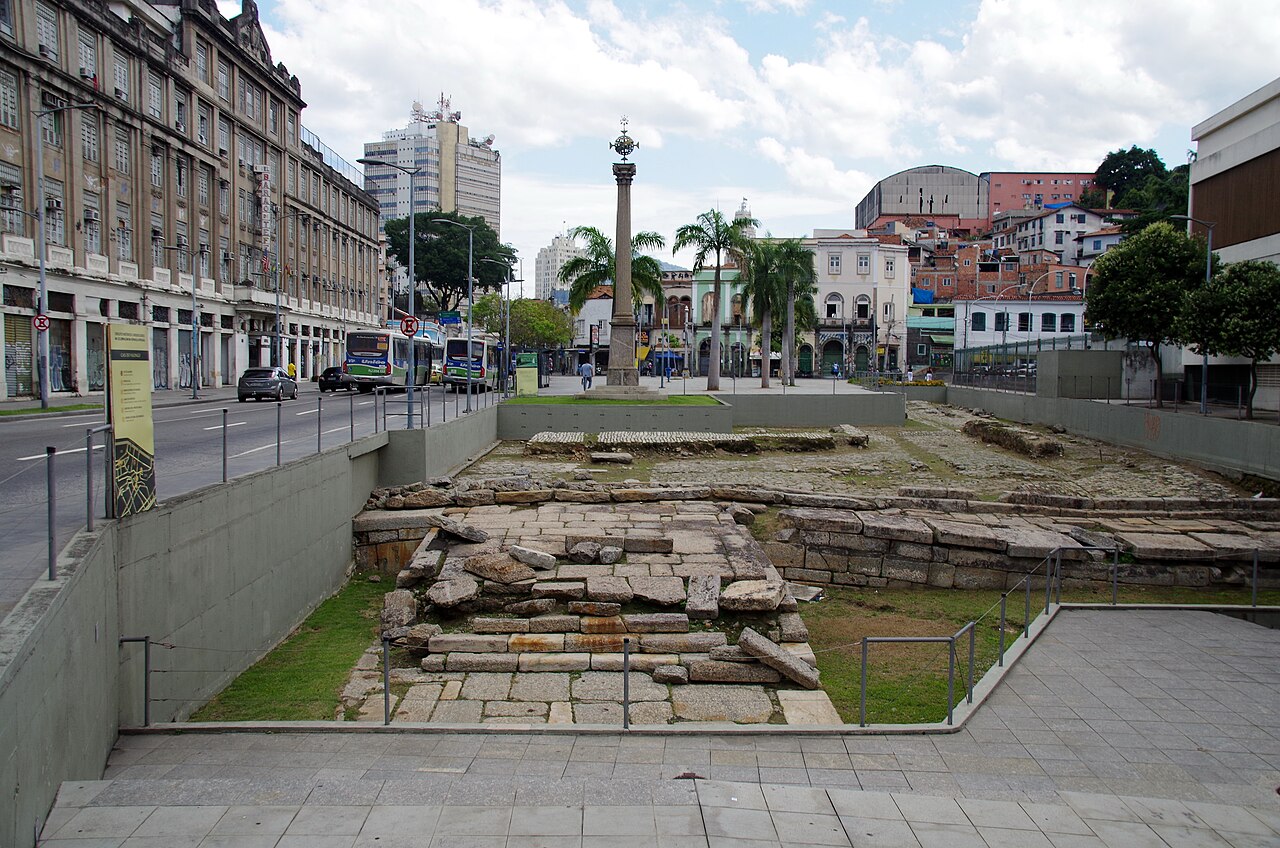
This public heritage site is not a religious ceremony or a terreiro.
Quick answer
Candomblé and Umbanda are living Afro-Brazilian religions, not interchangeable performances for visitors. In Rio, learn through public museums, heritage sites and events that explicitly welcome guests. A terreiro (religious community house) is not automatically open to tourists; ask permission, follow the host's rules and never photograph or enter a ceremony without clear consent.
At a glance
Candomblé and Umbanda
Distinct religions with diverse communities, histories and practices.
Terreiro
A religious community house; private status and visitor rules belong to its members.
Best visitor route
Public heritage information, museums and events explicitly open to visitors.
Photography
Ask first; assume sacred activity and worshippers are not for public filming.
Clothing
There is no universal white-clothing rule for visitors to every terreiro.
Iemanjá events
Public celebrations can be devotional as well as cultural; follow organisers' guidance.
Commercial ethics
Do not buy access to a private ritual or staged poverty encounter.
Good starting point
Rio's official “Rio de Fé” cultural and religious heritage guide.
Begin with the fact that these are religions, not a tourist category
Candomblé and Umbanda are living Afro-Brazilian religions, practised by communities whose traditions are not owned by a visitor, a tour operator or a city marketing campaign. They include devotion, teaching, family, music, care and community responsibility. A guide who presents them only as colourful ceremony has already reduced the subject. The right question is not “Where can I watch a ritual?” but “What public cultural resource is available, and how can I learn without interrupting worship?”
Both religions are diverse, and their names do not describe one uniform set of beliefs or rites. A particular terreiro (religious community house) follows its own lineage, leadership, calendar and rules. Those details can be sacred or private. We will explain enough vocabulary to help a visitor behave respectfully, but this page is not a substitute for practitioners' teaching and does not claim to reveal ritual knowledge that a community has not chosen to make public.
Candomblé and Umbanda are related in history, but they are not synonyms
Candomblé encompasses several traditions shaped by African diasporic histories and by generations of practice in Brazil. Its communities may be organised around different nations and lineages, and an explanation of one house cannot be assumed to represent another. The word orixá is often translated as a divinity or sacred power associated with a particular tradition, but a one-word English gloss cannot contain the relationship, theology and obligations that the term carries for practitioners.
Umbanda is also a Brazilian religion with its own histories, leaders and communities. It is not simply a watered-down Candomblé, nor a set of generic spiritual services. Both have faced prejudice and religious racism, including the long habit of outsiders labelling African-derived practices as superstition or spectacle. A respectful visitor avoids ranking traditions, asking a practitioner to prove authenticity or assuming that a public cultural summary is permission to observe a closed religious space.
What a terreiro is—and why a visitor cannot assume entry
A terreiro is a house or community centre where a religious community gathers and sustains its practice. Some spaces also have cultural, educational or community activities that welcome the public at particular times. That does not make every room, ceremony, object or gathering public. A terreiro may be a home as well as a place of worship, and its leaders decide whether visitors are welcome. A social-media post or a third-party tour listing is not automatically consent from the community.
If an organisation advertises a public visit, contact it through an official channel and ask what the programme includes, which areas are open, what clothing is expected, whether a donation is requested and what photography rules apply. Do not arrive unannounced with a camera, group or gift. If the answer is no, thank the person and choose another learning route. Sacred practice is not a product whose value depends on an outsider being allowed to watch it.
Public heritage can be a thoughtful way to learn in Rio
Rio's heritage story includes places and cultural institutions that interpret Black histories and religious diversity in public-facing ways. Riotur's “Rio de Fé” guide maps religious and cultural sites, including a sanctuary dedicated to Zé Pelintra and Maria Navalha near the Arcos da Lapa. A public listing gives you a starting point, not a guarantee that the site is open at the moment you arrive. Confirm current access and follow instructions posted by the caretakers.
The Historic and Archaeological Circuit of the Celebration of African Heritage in the Port Zone can place Afro-Brazilian history in its urban setting, and PlanRio's Little Africa and MUHCAB visitor guides offer practical context. These places are not a substitute for a religious community, but they can help visitors understand how heritage, memory and public space relate. Consider visiting with a knowledgeable local guide whose role is to explain history rather than to promise access to a private religious ceremony.
Iemanjá: understand devotion before you attend a public celebration
Iemanjá is an orixá venerated in Afro-Brazilian religious traditions and often associated in public language with the sea. Rio has celebrations and offerings connected with Iemanjá, including events around 2 February, but dates and formats vary and may be organised by different groups. For participants, such a gathering can be a devotional act and a relationship with a sacred figure, not a themed street festival. Visitors should not assume that every event has the same ritual meaning or is designed for spectators.
If a public celebration is announced, read the organiser's guidance before going. Keep access routes clear, do not touch offerings or move them for a better photograph, and avoid leaving anything in the water. Ask whether photography is allowed, especially where participants are praying. Wear clothing that respects the event's instructions rather than treating white as a costume. If you are unsure whether a procession or gathering welcomes observers, stay at a respectful distance and follow local hosts' lead.
Clothing: the white-clothes rule is not universal
White clothing is visible in some religious contexts and public observances, but it is not a universal tourist uniform or a rule that applies to every Candomblé or Umbanda community. Clothing can carry specific meaning for practitioners, and a visitor cannot infer the meaning from a photograph. If you have been invited to a public activity, ask the host whether there is a dress code and follow it exactly. If you have not been invited, changing clothes does not make a private ceremony open to you.
For a museum, heritage walk or public cultural event, dress for the venue and weather. Modest, comfortable clothing is usually a sensible baseline, but check any site-specific requirements. Remove a hat or cover your shoulders only when asked or when the host indicates it is respectful. Avoid dressing in ritual garments, beads or symbols as decoration unless a practitioner has explicitly given and explained them to you. Do not buy ceremonial items simply to look as though you belong to a tradition you have not been invited into.
Photography, recording and social media
Ask before photographing people, altars, offerings, instruments, ritual objects or a gathering. If the answer is unclear, do not take the picture. Video and live streaming can be more intrusive than a still image because they capture voices, private conversations and the sequence of a ceremony. A visitor's phone can also expose a person's religious affiliation to an audience they did not choose. That risk is especially serious when Afro-Brazilian religions face discrimination and harassment.
Do not publish an image merely because it was taken in a public street or because other visitors were filming. Consent should come from the person or organiser who has authority over the space, not from another tourist. Ask whether a photo may be shared publicly, whether names or location tags should be omitted, and whether the person would like a copy. If the answer is no, put the phone away without negotiating. Your memory of the visit is not more important than another person's privacy.
How to find a responsible cultural programme
Look for a named cultural organisation, public institution or community-led programme with a clear description and a direct contact. Ask who leads it, who benefits from the fee, whether practitioners choose what is shared and what the photography policy is. A good programme gives context, distinguishes public history from private practice and does not promise that a visitor can witness a closed ceremony. It should also explain transport and meeting arrangements without portraying a neighbourhood as a danger safari.
Be wary of listings that use words such as “authentic ritual” without naming the host community, or that promise secret access for a premium price. A practitioner may choose to teach publicly and charge for their work; that is different from an intermediary selling access without consent. If a tour calls sacred objects “exotic”, demands a photo with a worshipper or frames poverty as atmosphere, choose a different guide. Responsible tourism honours the fact that community members set the terms of engagement.
Religious racism is part of the context, not a footnote
Religions with African roots have experienced discrimination in Brazil, and the language used to describe them has often been shaped by colonial, Christian or racist assumptions. Calling a practice “black magic”, treating a sacred object as a prop or describing worshippers as primitive repeats a long history of disrespect. A visitor does not have to be an expert to avoid this. Use the names practitioners use, learn from sources created by communities and do not demand that a person defend their faith to you.
The Port Zone's Black heritage places, including Pedra do Sal and the memory of the Cais do Valongo, help explain why Black culture and public memory are central to Rio's story. PlanRio's Little Africa guide gives a visitor route through this history. Those sites are not interchangeable with a religious house, and a heritage walk should not claim that it can summarise every Afro-Brazilian tradition. Let the layers remain visible: history, religion, culture and present-day community life connect without becoming one simple tourist narrative.
Appropriate questions—and ones that ask too much
A good question asks about the public information a person has chosen to share. “Is there a visitor programme?” “May I take a photograph here?” and “What does this exhibition explain?” are practical. A question about the meaning of a public symbol can be appropriate when asked respectfully and when the person has time to answer. Begin by listening rather than testing someone with terminology from a search result.
Avoid asking a practitioner to disclose initiation, personal spiritual experience, private family information or the details of a closed ceremony. Do not ask for a free consultation about illness, fertility, relationships or misfortune. A religious leader is not a souvenir vendor, and an invitation to learn about a public event is not an invitation into someone's private life. If you are invited to ask questions, accept that some subjects remain confidential. Respecting a boundary is part of learning what a religion means to its community.
Offerings, public space and environmental care
Offerings are made within a religious context and should not be handled by visitors. Do not remove an offering, add your own item without guidance, or rearrange flowers for a photograph. Some public celebrations include activity near water, so follow organisers' environmental instructions and never leave plastic, packaging or non-biodegradable objects behind. If a community requests a donation, ask how it supports the organisation and use the official method rather than placing money in an unverified collection.
A public beach or plaza can still host a sacred practice. Keep a clear path for participants, do not stand between people and the water, and avoid loud commentary or amplified music. Do not block a neighbourhood entrance because a gathering is visually striking. If the site is crowded, move back or leave. Visitors can take part in public cultural life without copying a ritual or turning an offering into a prop. Care for the place is one of the most concrete ways to show respect.
A thoughtful half-day plan for visitors
Start with a public museum or official heritage guide in the Port Zone, where you can learn about African diasporic histories before reading a site as an isolated attraction. Visit one location at a time and allow space to read, ask questions and notice the surrounding neighbourhood. If you add a religious or cultural site, check that it is currently open to visitors and that its public programme is genuinely intended for them. Do not fill an itinerary with several sacred spaces simply because they appear close together on a map.
Pair the visit with a meal or coffee nearby and a conversation about what you learned, rather than moving immediately to a second spectacle. If the programme includes a guide, make sure the guide is authorised by the institution or community. Avoid scheduling during a service or major devotional event unless the organisers invite public attendance. Keep a backup plan because hours, restoration work and public access can change. A respectful itinerary has a clear route, but it also leaves room to stop when the right answer is “this is private.”
How to talk about Afro-Brazilian religion without flattening it
Use the names that practitioners and institutions use for their own communities, and do not treat a single interview, book or museum caption as the voice of everyone. Candomblé and Umbanda are not costumes, a style of percussion, a synonym for magic or a convenient explanation for every Brazilian custom. If you are writing a caption after a public heritage visit, describe the specific site, artwork or public programme you actually saw. Avoid claiming that you witnessed a private rite when you attended a concert, procession or museum activity with a different purpose.
Words translated as god, spirit, ancestor, priest or offering may carry different meanings across lineages and contexts. It is fine to ask a public educator how they prefer a term to be translated, but do not press a practitioner to disclose sacred knowledge or correct a casual visitor's curiosity on demand. In a public discussion, ask whether the speaker is comfortable with questions and whether the event has a language for its own traditions. The answer may be nuanced or specific to one house. Taking that context seriously is more informative than collecting a list of exotic vocabulary.
Religious racism is not merely a historical subject. A visitor can reinforce it by describing African-derived worship as superstition, treating sacred objects as props or repeating sensational claims without checking who benefits from them. If a tour includes a visit to a terreiro, ask who invited the group, what the community receives, what is off limits and whether participants can choose not to be photographed. A vague promise of an authentic ceremony is a warning sign. An ethical cultural visit has a named host, informed consent and an easy way to leave without pressure.
Common mistakes tourists make
- Treating Candomblé, Umbanda and every Afro-Brazilian religion as the same practice with different labels.
- Assuming a terreiro is open to visitors because it appears on a map or tour marketplace.
- Wearing white or ritual-looking clothing as a costume without asking the community what it means.
- Photographing worshippers, offerings or ceremonies before receiving clear permission from the right person.
- Paying a middleman for “secret access” without knowing whether the community agreed to the visit.
- Calling sacred practices exotic, primitive or superstitious, or asking practitioners to prove their beliefs.
Local expert tips
- Use the name Candomblé, Umbanda or the specific tradition a community uses for itself.
- Treat “publicly listed” and “open for visitors today” as separate facts; confirm access directly.
- Ask about clothing, photography, donations, meeting points and closed areas before you travel.
- Learn through public museums and heritage sites before seeking any community contact.
- If you attend an Iemanjá gathering, follow organisers' instructions and leave no waste at the water.
- Ask before taking or sharing a photo, and accept a no immediately without bargaining.
- Do not handle offerings, ritual objects, garments or beads unless a host explicitly invites you.
- Choose guides who identify community partners and explain what parts of the programme are public.
- Keep your questions about public history and visitor rules; leave private religious knowledge private.
- If a programme makes residents into a spectacle, leave and choose a museum or heritage walk instead.
Frequently asked questions
Can tourists visit a Candomblé terreiro in Rio?+
Some communities offer public activities, but a terreiro is not automatically a tourist site. Ask the community directly whether visitors are welcome, what the programme includes and what rules apply. Never arrive at a private ceremony unannounced.
Are Candomblé and Umbanda the same religion?+
No. They are distinct Afro-Brazilian religions with diverse histories, communities and practices. Neither name describes one uniform experience, and a visitor should use the specific tradition and terms a community uses for itself.
Do visitors have to wear white at a terreiro?+
There is no universal white-clothing rule for visitors to every Candomblé or Umbanda community. Ask the host about its specific dress expectations. Do not wear ritual clothing or symbols as a costume.
Can I take photographs during an Afro-Brazilian religious ceremony?+
Only if the organiser or person with authority over the space clearly permits it. Assume that worshippers, ceremonies, offerings and sacred objects are private until you receive explicit permission, and follow any restrictions on sharing images.
What is Iemanjá's connection to Rio?+
Iemanjá is an orixá venerated in Afro-Brazilian religious traditions and associated in public language with the sea. Rio has celebrations connected with her, including events around 2 February, but formats and organisers vary; check current public guidance.
Where can visitors learn about Afro-Brazilian religious heritage in Rio?+
Start with public institutions and heritage information such as Riotur's Rio de Fé guide, MUHCAB and the Port Zone's African heritage circuit. These resources provide context without assuming that a private religious ceremony is open to tourists.
What does terreiro mean?+
Terreiro commonly refers to a religious community house or grounds where Afro-Brazilian traditions are practised. It can also be someone's home and a private sacred space, so the word does not imply public visitor access.
Is there a tour of Candomblé rituals in Rio?+
A visitor should not buy access to a private ceremony or assume a ritual is staged for tourists. Choose an explicitly public cultural programme led or approved by the community, or learn through a museum and heritage walk.
Should visitors bring an offering to Iemanjá?+
Do not bring or leave an offering unless a participating community or event organiser gives clear guidance. Follow environmental instructions, do not handle other people's offerings and never leave packaging or waste at the beach.
How can I avoid being disrespectful when learning about Candomblé or Umbanda?+
Use each tradition's own name, ask before photographing or entering, respect closed areas, avoid stereotypes and accept a boundary without negotiation. Public heritage sources can provide context while practitioners decide what is private.
Sources and image credit
Details and access can change. Use these venue, operator and public-information sources to recheck key details before visiting.
- Riotur: Rio de Fé religious and cultural guide ↗
Official tourism overview of public religious heritage sites; confirm access directly.
- Rio City Hall: Iemanjá celebrations recognised as Carioca cultural heritage ↗
Municipal heritage context for public celebrations on Rio beaches.
- Iphan: Protection of cultural heritage ↗
Official explanation of cultural heritage protection and preservation instruments.
- Rio City Hall / MUHCAB: Territórios Negros project ↗
Public-history context for Black heritage, Pedra do Sal and Little Africa.
Keep planning
25 Best Things to Do in Rio de Janeiro (2026)
A locally ranked top 25 with honest verdicts, time needed, cost type and specific booking options for Rio's icons, beaches, nature, culture and nightlife.
Capoeira in Rio de Janeiro: Where to Watch & Take a Class (2026)
Find a beginner-friendly capoeira class or current public roda in Rio, understand the Afro-Brazilian heritage and etiquette, and confirm schedules with local groups.
Little Africa Rio Walking Guide (2026): Valongo, Pedra do Sal & a Respectful Route
Plan a Little Africa Rio walking route through Cais do Valongo, IPN, Pedra do Sal and the port's Afro-Brazilian heritage. Booking, transit and respectful-visit tips.
Rio de Janeiro for Black Travelers: A Local Visitor Guide
A grounded guide to race, safety, Afro-Brazilian heritage, neighbourhoods, hair care and nightlife for Black visitors to Rio de Janeiro.
Getting Around Rio (2026): Metro, Uber & Bus Fares
Compare Rio transport fares: R$7.90 metro, R$5 Jaé bus/BRT/VLT and a R$15 GIG express bus. Get current airport pickup advice and know when an app ride is worth it.