
Renting an Apartment in Rio for a Long Stay
Quick answer — renting an apartment in Rio for a few weeks
For a long stay, rent a furnished apartment in Botafogo for value and coworking, Ipanema or Leblon for beach life, or Copacabana one block back for the best value-with-a-beach. Budget roughly R$3,500–6,000 a month in Botafogo and up to R$12,000 in Ipanema, plus R$1,500–3,000 in living costs. Expect a short temporada contract, a deposit, a monthly condomínio fee (usually included) and payment by Pix — book the first month on a protected platform, then negotiate directly once you've seen the flat.
Past about a week in Rio, an apartment beats a hotel on almost every count — a kitchen, a washing machine, a street you start to recognise, and a nightly cost that falls the longer you stay. What nobody explains is the mechanics: which legal contract you're signing, who pays the electricity when the February air-conditioning bill lands, why a flat on the 11th floor has no water pressure, and how to hand over R$8,000 to someone you met on WhatsApp without losing it. This guide covers all of that, in the order you'll hit it.
Long-stay apartments in Rio at a glance
| Best value + remote work | Botafogo — cafés, coworking, metro |
| Best beach long-stay | Ipanema / Leblon (highest rents) |
| Deepest apartment inventory | Copacabana (one block back) |
| Typical monthly range | R$3,500 (Botafogo studio) → R$12,000 (Ipanema) |
| Contract | Locação por temporada — up to 90 days, no guarantor |
| Payment | Deposit + balance by Pix (irreversible — use protection) |
| Cheapest months to sign | May–early July, late August–October |
| Watch for | Lift, water pressure, real A/C, minimum-stay rules |
Compare apartment-style stays in Rio
A good starting point with buyer protection for a first booking: this search is filtered to apartment-style stays in Rio de Janeiro, so you can weigh monthly rates by neighbourhood before dealing with any owner directly.
Compare apartment-style stays in RioBest neighbourhoods for a 2-week to 3-month stay
1.Botafogo
Best for remote workersRio's café-and-coworking heartland — the strongest concentration of laptop-friendly cafés, coworking and good, cheap food, with metro access to the beaches in minutes. Bay views, not a swimming beach. The value-per-real long-stay pick.
2.Ipanema & Leblon
Best for beach-life long staysIf your budget allows, nowhere beats waking up two blocks from Ipanema for a month. Furnished studios and one-beds are plentiful; expect the city's highest monthly rents. Leblon is a notch quieter and pricier again.
3.Copacabana
Best value with the beach at the doorThe deepest furnished-apartment inventory in Rio and, one block back, genuinely affordable monthly rates. Older buildings dominate, so check the lift, water pressure and noise before committing to a long lease.
4.Flamengo & Laranjeiras
Best residential calmLeafy, local and central, with the Aterro do Flamengo park and quick metro links. Very little tourist infrastructure — which is exactly why long-stayers who want to live like a Carioca choose it.
Six areas long-stayers overlook
The four above cover most people. But long stays reward areas that make no sense for a five-day holiday — places with a supermarket, a Saturday market and neighbours rather than a beach kiosk. These are the ones month-long renters actually end up in.
| Area | Why long-stayers pick it | The trade-off |
|---|---|---|
| Catete & Glória | Cheapest central rents with a metro station | 1930s buildings, high ceilings, real neighbourhood life; scruffier streets after dark |
| Humaitá | Quiet Botafogo alternative | Lagoa-side, family-heavy, excellent bakeries; almost no tourists, so listings are thinner |
| Jardim Botânico & Lagoa | Green, calm, upmarket | Best air quality and running loop in the Zona Sul; buses over metro, so budget more travel time |
| Santa Teresa | Character over convenience | Studios in colonial houses; steep streets, unreliable tram-hour transport, walk down not up at night |
| Tijuca (Zona Norte) | Local prices, real Rio | Half the Zona Sul rent, metro-connected, virtually no English spoken — best for confident Portuguese learners |
| Barra da Tijuca | Space, pools, supermarkets | Two-beds for Copacabana studio money, but you need a car or long BRT rides |
If you're still choosing an area rather than a flat, our neighbourhood guide compares them for daily life, and the Rio safety pillar covers how each feels after dark.

The contract you'll actually sign: locação por temporada
Brazil's tenancy law separates ordinary residential leases from the locação por temporada — a seasonal lease built for stays of up to 90 days. Nearly every furnished monthly rental in Rio sits under it, and that is good news for a visitor: the owner can take rent up front and hold a deposit, and in exchange you are not asked for the two things a normal Brazilian lease demands — a local guarantor (fiador) or paid guarantee insurance.
A temporada contract should be one or two pages and name: both parties and their document numbers, the exact address and unit, the start and end dates, the total price and what it includes, the deposit and the conditions for its return, and who pays electricity. If an owner won't put those in writing, that isn't Brazilian informality — it's the absence of any record that you paid. Past 90 days you either renew the temporada or move to a standard residential lease, which typically runs 30 months and does require a guarantor; most long-stayers simply renew month by month.
One clause worth asking for explicitly: the vistoria, the written check-in inspection. Do it on key handover, photograph every existing mark, chip and stain, and send the photos to the owner the same day with a timestamp. It is the only thing that stands between you and a deposit dispute over a scratch that predated you by three years.
A Portuguese rental glossary that saves you money
Listings, WhatsApp messages and contracts use the same dozen words. Knowing them is the difference between reading a listing and guessing at it.
| Term | What it means for you |
|---|---|
| Locação por temporada | The short-term seasonal lease used for stays of up to 90 days — the legal format most furnished monthly rentals sit under |
| Mobiliado / semimobiliado | Fully furnished vs part-furnished (usually kitchen fittings and wardrobes but no sofa or bed) |
| Kitnet / quarto e sala | Studio vs a separate-bedroom one-bed — the two most common long-stay layouts in the Zona Sul |
| Caução | The security deposit, typically one month; on a temporada lease the law allows the owner to hold it until checkout |
| Condomínio | The monthly building fee: doorman, cleaning, lift maintenance, often water and piped gas |
| IPTU | The municipal property tax. On a short furnished let the owner normally pays it — confirm in writing |
| Fiador / seguro-fiança | A Brazilian guarantor or a paid guarantee insurance. Only demanded on 30-month residential leases, not temporada ones |
| Vistoria | The written check-in inspection listing the flat's condition. Insist on one, with photos, on the day you get the keys |
| Dependência | A tiny back room and bathroom off the kitchen — a legacy of live-in staff, now used as storage or an office |
| Frente / fundos | Street-facing vs back-facing. Fundos is darker but far quieter; frente in Copacabana means bus noise from 05:30 |
Apartment vs aparthotel vs co-living
A furnished apartment is cheapest and most independent, but you handle everything yourself. An aparthotel (serviced apartment) adds reception, cleaning and security for a premium — the simplest option if you value zero admin. Co-living trades private space for a built-in community and all-in pricing, which suits solo remote workers who'd otherwise be lonely. We compare the co-living scene separately, and the classic Airbnb vs hotel question in its own guide.
Condomínio, deposits and what to check
Before you sign a long lease
| Condomínio fees | Monthly furnished rentals usually fold the condomínio (building fee, covering porteiro, cleaning, sometimes water/gas) into the price — but confirm it's included, as it can add R$300–800/month. |
| What 'furnished' includes | A furnished (mobiliado) Rio flat should include a bed, sofa, table, hob, fridge and usually a washing machine. Confirm hot-water pressure, air-conditioning (not just fans) and whether kitchenware and linen are provided. |
| Deposits & Pix | Expect a deposit (caução) of one month or more; many owners want the balance by Pix, Brazil's instant bank transfer. Paying a stranger by Pix is irreversible — prefer a platform with buyer protection for the first booking. |
| The practical realities | Ask about the porteiro hours (24h vs daytime), lift reliability in older buildings, street noise, and whether the building allows short leases at all — some condomínios ban stays under 30 or 90 days. |
What a month actually costs (2026)
| Type | Monthly range | Notes |
|---|---|---|
| Botafogo / Flamengo studio | R$3,500–6,000 / month | Best value; metro to the beach |
| Copacabana 1-bed (one block back) | R$4,000–7,000 / month | Deep inventory, older buildings |
| Ipanema / Leblon studio–1-bed | R$6,500–12,000 / month | Rio's highest rents, best location |
| Barra da Tijuca 1–2-bed | R$4,500–9,000 / month | Space and pools; car-dependent |
| Aparthotel (serviced, any zone) | R$6,000–14,000 / month | Hotel services + kitchen; simplest |
Figures are furnished monthly rates cross-checked against current Booking, Airbnb and local listings; low season and longer leases push them down. See our Rio money guide for exchange, Pix and card advice.
And what the rent doesn't cover
Rent is the headline; the running costs are what turn a "cheap" month into an expensive one. These are realistic 2026 figures for one person in a Zona Sul one-bed.
| Cost | Per month | Local note |
|---|---|---|
| Groceries & street market (feira) | R$900–1,600 | The Saturday feira beats the supermarket on fruit, veg and fish by roughly a third |
| Bottled-gas refill (botijão P13) | R$110–150 | One cylinder lasts a solo cook 6–10 weeks; piped gas buildings bill R$40–90/month instead |
| Electricity (luz), 1-bed with A/C | R$150–450 | Runs at the top of that range December–March; the A/C is the whole variance |
| Home fibre internet | R$100–160 | Only if the flat has no plan; installation on a 12-month contract rarely suits a 3-month stay |
| Laundry (lavanderia por quilo) | R$60–200 | Around R$18–28/kg washed, dried and folded — irrelevant if the flat has a machine |
| 20L water delivery (galão) | R$30–60 | Rio tap water is treated but heavily chlorinated; almost every resident drinks filtered or delivered |
| Gym or beach-side academia | R$120–350 | Monthly plans need a CPF; some accept a passport plus a higher day rate |
| Transport (metro + app rides) | R$250–600 | A Botafogo base cuts this in half versus a Barra base |
Add it up and a solo long-stayer spends roughly R$1,700–3,400 a month on top of rent before any eating out or travel. Budget R$2,500 as a safe middle figure, and remember the February electricity spike: air-conditioning in a west-facing bedroom can triple the bill in a single month.
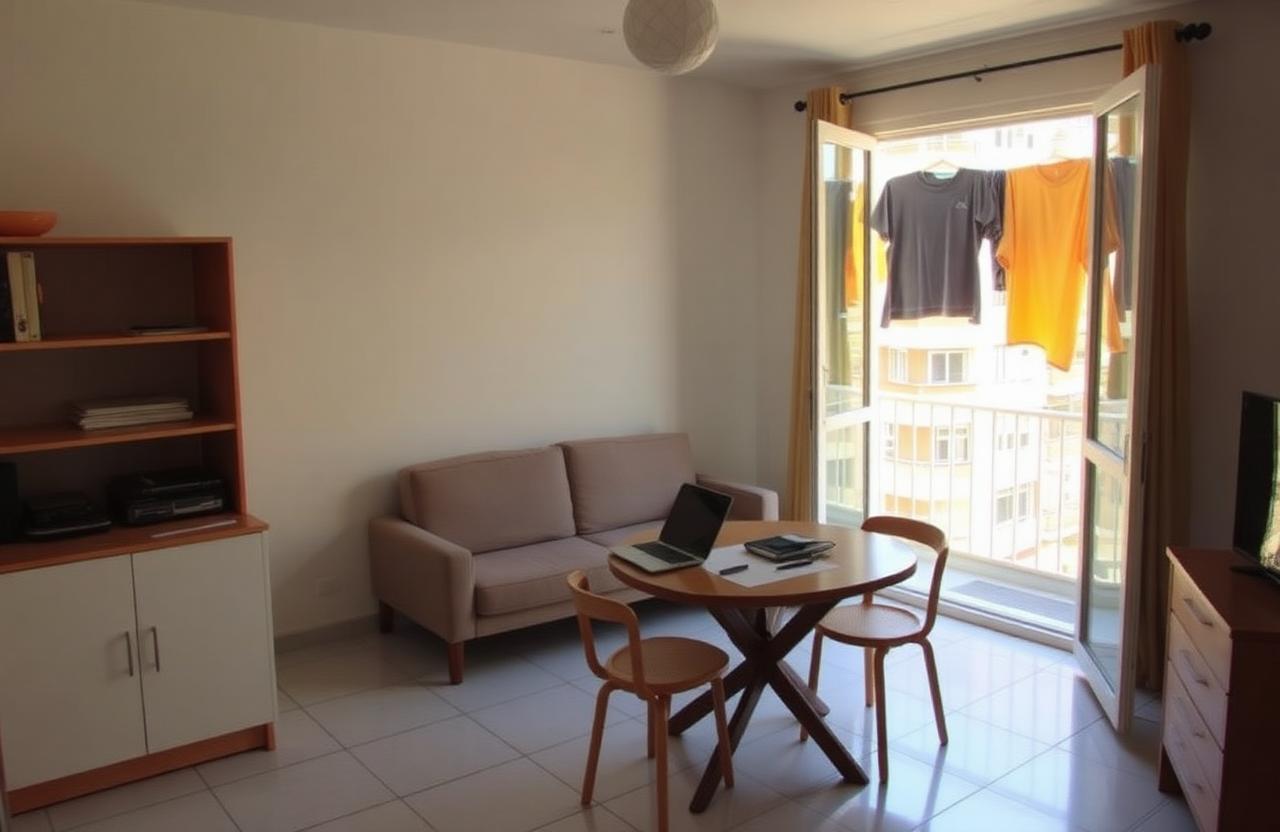
The ten-minute viewing checklist
Whether you view in person or over a video call, these are the checks that actually predict whether you'll be happy in week six. Photos hide every one of them.
- Run the shower and a tap at the same time — weak pressure on a high floor means the building has no pressuriser, and no amount of complaining will fix it in a month.
- Switch every air-conditioning unit on and listen. A rattling split unit in a bedroom is the single most common reason long-stayers move out early.
- Look at the ceiling corners of the bathroom and the wall behind the wardrobe for mofo (black damp) — Rio humidity punishes badly-ventilated flats from December to March.
- Ask which way the windows face. Sol da tarde (afternoon west sun) can add 4–6°C indoors in February; sol da manhã is the one you want.
- Stand on the balcony for two minutes at the hour. Bars, bus routes and a nearby escola de samba rehearsal hall do not show up in photos.
- Check the lift count against the floor count. One lift for 14 floors in a Copacabana building means real waits, and a full outage during maintenance week.
- Ask the porteiro (not the owner) whether the water tank has had recent interruptions and whether deliveries can be left at reception.
- Confirm there is a working washing machine or a service area with a tanque and a line — laundry costs compound fast over three months.
- Test the mobile signal inside the flat, in the room where you'd take calls. Thick 1970s concrete kills reception in some Copacabana back rooms.
- Photograph the electricity and water meters at check-in if any utility is billed to you separately.
When to book, and how to negotiate
Rio's rental calendar has a shape. December to Carnaval is the wall: owners in Copacabana and Ipanema can earn more from two weeks over New Year than from a normal month, so long lets across that window either vanish or double. May to early July and late August to October are the soft months, when the same flat sits empty and an owner will listen. If your trip must include Carnaval, treat that fortnight as a separate booking and budget for it — our Carnaval guide explains why the whole city reprices.
Negotiation in Brazil is normal and unembarrassing, but only if you offer something back. What moves the price: a longer unbroken block, flexible mid-week check-in, waiving weekly cleaning, or paying the second month up front after you've seen the flat. What doesn't: asking "what's your best price?" before you've named your dates. A message that works, in plain Portuguese:
"Boa tarde! Tenho interesse no apartamento de 10 de maio a 8 de junho, 30 diárias corridas, sem faxina semanal. Consegue fazer um valor fechado para o mês? Posso confirmar hoje."
Expect 10–20% off the nightly-equivalent rate in low season, less in December. And do the real negotiation in week three of a protected first booking — that is the only moment when you have both leverage and complete information.
How to book without getting scammed
Almost every long-stay horror story in Rio follows one of five scripts. None of them survive a protected first booking and a video call.
The cloned listing
Photos lifted from a real Booking or Airbnb listing, re-posted in a Facebook group at 30% below market. Reverse-image-search any listing found in a group before replying.
The off-platform discount
"Pay me directly by Pix and I'll drop R$500." That discount is the exact value of the protection you're giving up. Decline it for a first booking.
The absent owner
"I'm in São Paulo, my cousin will hand over the keys." Ask for a live video walk-through where they show today's date on a phone screen inside the flat.
The no-contract let
A serious owner will send a short temporada contract with names, dates, price and deposit terms. No contract means no recourse — and often no permission from the condomínio.
The deposit that grows
Deposit requested, then a "condomínio approval fee", then a "cleaning bond". Legitimate lets ask once, up front, and say what's refundable.
The rule that covers all five: your first month is bought with protection, your later months are bought with trust you've earned in person. If something does go wrong once you're here, our guide on what to do if you're robbed in Rio covers reporting and the tourist police.
Your eight-week booking timeline
Decide the neighbourhood before the flat. Shortlist two areas and price them on a protected platform to learn the real market rate for your dates.
Book one protected month, not three. A first booking with buyer protection buys you the right to leave if the building disappoints.
Apply for a CPF at a Brazilian consulate if you'll want a gym plan, a local SIM contract or a delivery-app account without friction.
Ask the owner for the vistoria template, the condomínio rules on visitors and deliveries, and the porteiro's hours in writing.
Do the vistoria with photos, register your name with the porteiro, find the nearest feira day, and only then negotiate months two and three.
Renew directly with the owner if the flat worked. This is the moment you have maximum leverage and full information — not before you arrived.
Your first week as a resident, not a guest
The move from tourist to temporary resident happens through small logistics. Introduce yourself to the porteiro and learn their shift pattern — they sign for your deliveries, hold your keys and will tell you more about the building in five minutes than the owner will in a month. Find your neighbourhood's feira day (each area has one or two mornings a week of street market); fruit, veg and fish are roughly a third cheaper and considerably better than the supermarket.
Sort water and gas early. Most residents drink filtered or delivered water — a 20-litre galão is delivered by the corner shop within the hour. If the flat cooks on a bottled botijão, find out how full it is before you plan a dinner; refills come from the same delivery number, usually pinned inside a kitchen cupboard. Then check the condomínio's rules on moving hours, the service lift and guests — some Rio buildings require the porteiro to log every visitor by name.
For everything else — supermarkets, laundry by the kilo, SIM cards, banking — the live like a local guide is the companion piece, and working remotely in Rio covers internet reliability and coworking if your flat's Wi-Fi disappoints.
Two things every long-stayer needs
A long stay is exactly where two often-skipped essentials pay off: a local data plan so you're not tethered to café Wi-Fi from day one, and proper cover for a stay long enough that something eventually goes wrong.
Stay connected from arrival
An eSIM gets you online at the airport before you've found your building's Wi-Fi password.
Get a Brazil eSIMCover a longer stay
Over weeks or months, medical and theft cover matters more, not less. Get a quote for your dates.
Get a long-stay insurance quoteTest-drive Botafogo before you commit to a month
The cheapest way to avoid a bad three months is a protected few nights in the area first. These are Botafogo stays on Booking.com — the neighbourhood most long-stayers end up choosing.
Search Botafogo stays on Booking.comLinks may earn us a commission at no extra cost to you. This supports PlanRio.
Common mistakes long-stayers make
- Paying a full deposit by Pix off-platform for a discount. Irreversible, and the classic long-stay scam. Keep the first booking on a protected platform.
- Booking three months sight-unseen. Book one, walk the streets at 22:00, then renew. You lose almost nothing and gain the right to leave.
- Ignoring the building's minimum-stay rule. Some condomínios ban leases under 30 or 90 days — confirm before you plan a month there.
- Trusting photos on water pressure, A/C and lift. Ask directly; older Copacabana buildings especially vary wildly.
- Skipping the vistoria. No dated check-in photos means any pre-existing damage becomes your deposit's problem.
- Renting on the beach when you'll work all day. Botafogo's cafés and coworking often beat a beachfront studio you barely use.
- Underestimating summer electricity. A February A/C bill can be triple January's if the flat faces the afternoon sun.
If a balcony is your main reason for considering an apartment, compare Rio hotels with private balconies too: the guide identifies room categories with outdoor space while keeping hotel services.
Keep planning
Working remotely in Rio
Wifi, coworking and the practical remote-work setup.
Co-living spaces in Rio
The community-and-all-in alternative to a private flat.
Airbnb vs hotel in Rio
Which booking format wins, and when.
Where to stay by traveller type
The full decision matrix for every kind of trip.
Brazil digital nomad visa
If your stay is heading past 90 days.
Live like a local in Rio
Markets, routines and everyday Carioca logistics.
Botafogo neighbourhood guide
The area most long-stayers end up choosing.
Money, Pix and cards in Rio
How to pay rent and bills without losing on fees.
Packing for a long Rio stay
Carry-on capsule, balcony laundry rhythm and what to buy locally.
FAQ — Rio apartments & long stays
Where should I rent an apartment in Rio for a month or more?+
For value and remote-work convenience, Botafogo is the strongest long-stay base — Rio's café and coworking heartland, with metro access to the beaches. For beach life, Ipanema and Leblon are unbeatable but carry the city's highest rents. Copacabana one block back offers the deepest furnished-apartment inventory at a fair monthly rate. Flamengo and Laranjeiras suit long-stayers wanting quiet, residential streets.
How much does it cost to rent an apartment in Rio per month?+
As a 2026 guide for a furnished studio or one-bed: roughly R$3,500–6,000 per month in Botafogo or Flamengo, R$4,000–7,000 in Copacabana one block back, and R$6,500–12,000 in Ipanema or Leblon. Serviced aparthotels run higher (R$6,000–14,000) but bundle hotel services with a kitchen. Longer leases and low season lower these figures.
What are condomínio fees in Rio?+
The condomínio is a monthly building fee covering the porteiro (doorman), cleaning, and often water and gas. On a furnished monthly rental it is usually folded into the advertised price, but always confirm — where it is separate it can add R$300–800 a month. It is a normal, unavoidable part of Brazilian apartment living, not a scam charge.
What does 'furnished' mean for a Rio apartment?+
A furnished (mobiliado) Rio flat should come with a bed, sofa, dining table, hob, fridge and, usually, a washing machine. Kitchenware, linen and towels are commonly but not always included. Before a long booking, confirm the essentials that photos hide: hot-water pressure, real air-conditioning rather than fans, and whether the building has a working lift.
Is it safe to pay a Rio landlord by Pix?+
Pix, Brazil's instant bank transfer, is how most owners want the balance and deposit paid — and it is normal and legitimate. But Pix is irreversible, so for a first booking with an owner you have never met, prefer a booking platform with buyer protection or a signed contract, and be wary of any 'landlord' pushing you off-platform for a discount before you have keys.
Do I need a long-stay visa to rent an apartment in Rio?+
Renting a short furnished apartment does not itself require a special visa — you can do it on a standard tourist entry for the length of your permitted stay. If you plan to stay longer or work legally, look at Brazil's digital nomad visa; our separate guides cover the visa and the CPF tax number you'll need for some rentals and services.
What is a locação por temporada and how long can it last?+
It is Brazil's short-term seasonal lease, the format almost every furnished monthly rental in Rio uses. It is designed for stays of up to 90 days, lets the owner take the rent up front and hold a deposit, and does not require a Brazilian guarantor. Beyond 90 days you are usually either renewing the temporada contract or moving to a standard residential lease, which does demand a guarantor or guarantee insurance and typically runs 30 months.
Do I need a CPF to rent an apartment in Rio?+
Not for a furnished temporada rental booked through a platform — a passport is enough. A CPF, Brazil's individual tax number, becomes useful once you want the things around the rental: a gym membership, a local mobile plan, a delivery-app account or a utility in your own name. You can apply for one free at a Brazilian consulate before you travel, which is far quicker than doing it after you arrive.
Which utilities will I actually pay on a long stay in Rio?+
On most furnished lets the condomínio covers water, building cleaning and often piped gas, and it is folded into your rent. Electricity is the bill that catches people out: a one-bed running air-conditioning through the February heat can hit R$450 a month against R$150 in winter. If a flat uses bottled gas, a P13 cylinder costs roughly R$110–150 and lasts a solo cook six to ten weeks.
When is the cheapest time to rent an apartment in Rio?+
May to early July and again in late August to October, when the beach demand fades and owners face empty weeks. Avoid signing for December through Carnaval: owners in Copacabana and Ipanema can charge more for two weeks over New Year than for a normal month, and many simply refuse long lets across that window. If your dates include Carnaval, book that stretch separately and expect to pay a premium.
Can I negotiate the monthly rent on a Rio apartment?+
Yes, and low-season three-month enquiries often land 10–20% below the advertised nightly-equivalent rate. What works is offering something the owner values: a longer block, mid-week check-in, no daily cleaning, or paying two months up front once you've seen the flat. What does not work is asking for a discount before you've confirmed your dates — owners field that message daily.
Is a long-stay apartment or an aparthotel better in Rio?+
An apartment wins on cost and independence, an aparthotel wins on zero admin. If you're staying one month, working, and happy to sort your own gas, laundry and cleaning, the apartment saves you meaningful money. If you're staying two to six weeks, travelling for work, or nervous about dealing with a private owner in Portuguese, the aparthotel's reception, security and included cleaning is worth the premium.