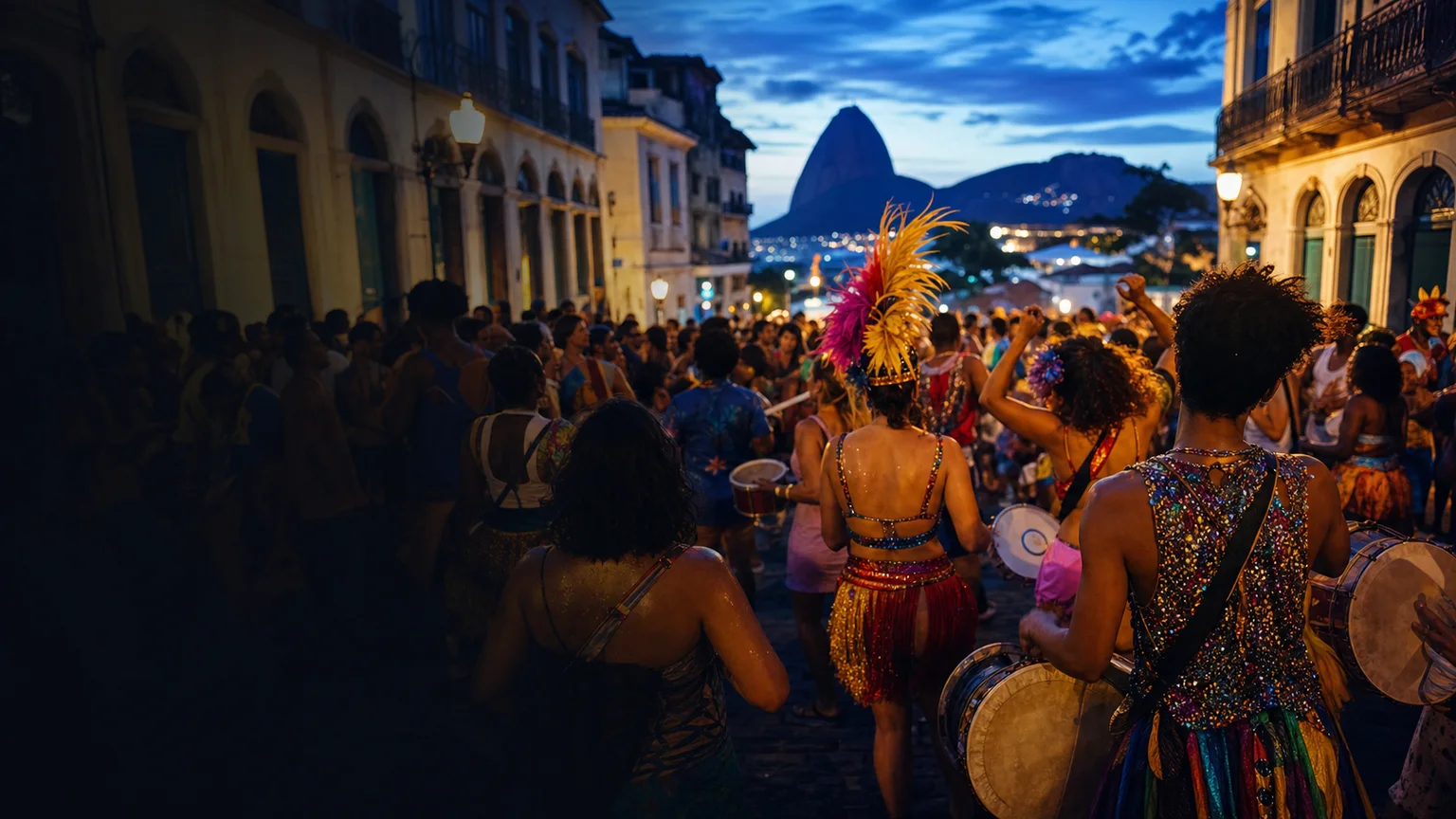
Best Samba Classes in Rio de Janeiro
Written and reviewed by Lotte — Rio local, founder & editor of PlanRio · How we research · First published
Quick answer
For most first-timers, the best samba class in Rio is a small-group beginner lesson in Ipanema or Copacabana, ideally followed by live samba or a samba-school rehearsal. You need no dance experience: wear secure flat shoes, confirm the exact venue and return transport, and choose a named instructor who explains samba's Afro-Carioca roots.
At a glance
Best for beginners
A small-group samba no pé lesson in Ipanema or Copacabana before a night out.
What you learn
Basic weight transfer, bounce, forward-and-back steps, rhythm and how to move comfortably in a roda.
What to wear
Light clothes and secure, flexible shoes; heels are optional and wrong for a first lesson.
Experience needed
None. A genuine beginner class should teach from the first beat and welcome solo travellers.
Best upgrade
Pair the lesson with live samba or a samba-school rehearsal so the movement has musical context.
Book carefully
Confirm language, studio address, class size, duration and whether nightlife transport is included.
The honest verdict: one class changes how you hear Rio
A samba class is worth doing even if you have no intention of performing. One hour of finding the pulse makes the music at Pedra do Sal, a samba-school rehearsal or a Lapa venue far less mysterious. You stop watching from the edge and understand why the feet can look fast while the upper body stays relaxed.
The best first class is friendly, technique-led and short enough to remain fun. Avoid any package that sells embarrassment as entertainment or promises Carnaval-level dancing in an hour. Samba no pé is a craft; a visitor lesson gives you vocabulary, confidence and respect for it, not mastery.
What a beginner samba class should actually teach
Expect a warm-up, the basic pulse, weight transfer and a small sequence you can repeat to different tempos. A good teacher explains that speed comes later. If everyone is chasing the music from minute five, the class has skipped the foundation that makes the steps feel light rather than frantic.
Samba no pé means samba on the foot: an individual dance used at Carnaval and informal rodas, not a fixed couples routine. Teachers may add arm styling and turns, but rhythm and balance matter more. Ask for a slower demonstration and film only when the teacher explicitly allows it.
1. Small-group lesson in Ipanema: best all-round choice
Ipanema is the easiest base for a first class: metro access, familiar streets and simple dinner options afterwards. A small group also solves the solo-traveller problem — you meet people without committing to a full nightlife tour. Choose this if you want technique in a studio and freedom to plan the rest of the evening yourself.
Check the live listing for the exact studio, teacher and duration. Rio classes sometimes move between Ipanema and Copacabana venues. That is not automatically a problem, but the meeting point should be confirmed before you leave the hotel, not while you are standing on a noisy avenue.
2. Samba class plus nightlife: best for confidence
A combined lesson and night out is useful because you apply the basics immediately while a host manages the door, music schedule and transport logic. It suits solo travellers and anyone nervous about arriving alone at a samba venue. The social bridge is the real product; the dance class is only the opening chapter.
Ask which venue is planned and whether it can change. Live music calendars move, and a responsible operator will choose the best night rather than force the same bar every day. Confirm what is included and how you return. We would not walk from Lapa to a South Zone hotel after the music ends.
3. Caipirinha workshop and samba: the playful option
This hybrid is less technical and more social. You learn the structure of a caipirinha, practise basic samba and meet a mixed group before DJs or nightlife. It is a good rainy-evening activity and a low-pressure introduction for couples or friends who would resist a formal dance class.
Skip it if serious dance instruction is your priority or if alcohol-centred activities are not comfortable for you. A combo should never pressure participants to drink, and water or a non-alcoholic alternative should be easy to request. Wear shoes you can move in on a potentially sticky bar floor.
4. Samba-school rehearsal: culture before choreography
A quadra rehearsal shows how samba works as community organisation: percussion sections, singers, dancers, families and weeks of collective preparation. You may dance, but you are primarily a guest in a working cultural institution. That makes it richer than a stage show and less predictable than a polished performance.
Go with a guide or verified transport if the quadra is outside the South Zone. Rehearsal times can shift and the strongest part of the night may start late. Dress casually, follow photography rules and buy food or drinks at the venue; spending inside the school supports the community more directly than treating it as a free spectacle.
5. Private lesson: useful for a specific goal
Private instruction makes sense if you are preparing for Carnaval, a wedding, a performance or simply feel uncomfortable learning in public. The teacher can slow the rhythm, adapt for mobility and correct weight placement. For most curious visitors, however, a group class is more fun and better value.
Before paying a premium, explain your goal and ask whether the teacher specialises in samba no pé, gafieira or another style. Samba de gafieira is a partnered ballroom form and not interchangeable with the individual steps most visitors imagine from Carnaval.
Class, show or rehearsal: which should you choose?
Choose a class to participate, a rehearsal to understand community samba, and a show for polished costumes and a predictable seated evening. If you have two nights, the strongest combination is a beginner lesson followed by a live roda or school rehearsal. A folklore show works better for families, older travellers or anyone who needs simple door-to-door logistics.
Do not judge authenticity only by how few tourists you see. A professional class designed for visitors can still be respectful, and a supposedly local venue can still be exploitative. Look for named instructors, clear inclusions and an explanation of the musical tradition.
Samba's Afro-Carioca roots matter
Rio's samba matrices — partido-alto, samba de terreiro and samba-enredo — are recognised by Brazil's heritage institute as cultural expressions rooted in Afro-Brazilian communities. A class should not reduce that history to sequins. The feet, call-and-response, percussion and roda all come from social spaces with memory and ownership.
You do not need a lecture during every step, but the teacher should be able to explain which samba you are learning and where it lives in Rio. Pairing a class with Little Africa, Pedra do Sal or a samba-school visit creates the context a studio alone cannot provide.
When a samba class is not worth it
Skip it if the listing hides the venue, treats the instructor as anonymous or makes sexualised promises about Brazilian dancers. Skip a late-night combo when you have an early Christ ticket the next morning. And skip heels for your first class: secure flat shoes protect your ankles and let you learn the rhythm properly.
Travellers with knee, ankle or balance concerns should message the teacher first. Samba can be adapted, but rapid impact and twisting may not suit everyone. A seated percussion workshop, live rehearsal or music-focused tour can offer cultural depth without asking your joints to prove anything.
Choose the samba experience that matches your confidence
Start with a beginner studio lesson, add a social combination if you want company, or visit a rehearsal for deeper community context. Verify live times and venues before booking.
Links may earn us a commission at no extra cost to you. This supports PlanRio.
Common mistakes tourists make
- Wearing flip-flops or heels to a first class instead of secure shoes that allow controlled weight transfer.
- Booking a vague nightlife combo without checking the venue, finish time and return transport.
- Expecting to master fast Carnaval footwork in one lesson and missing the basic pulse.
- Filming the whole class without asking, which distracts the teacher and may make other participants uncomfortable.
- Treating samba as costume entertainment without learning anything about its Afro-Carioca community roots.
Local expert tips
- Take the class before your planned samba night, not the morning after it; immediate practice makes the lesson stick.
- Ask the teacher to demonstrate slowly from the back as well as facing you — mirroring can confuse complete beginners.
- Choose samba no pé for Carnaval-style individual movement and gafieira only if you specifically want partner dance.
- Carry the minimum to class so you are not watching a bag instead of the teacher.
- At a quadra, buy something inside and follow the school's photography rules; you are visiting a working cultural organisation.
Frequently asked questions
Where can tourists take samba classes in Rio?+
The easiest beginner classes are in Ipanema and Copacabana, close to the metro and visitor accommodation. Some combined experiences continue to Lapa or Pedra do Sal, while samba-school rehearsals take place at quadras across the city. Confirm the exact studio and meeting point on the live listing.
Do I need dance experience for a Rio samba class?+
No. A true beginner samba no pé class starts with rhythm, weight transfer and a basic forward-and-back step. Tell the teacher if you have never danced. Small-group classes are usually more forgiving than performance-focused workshops and are comfortable for solo travellers.
What should I wear to a samba lesson?+
Wear breathable clothes and secure shoes with a flexible sole. Trainers that do not grip aggressively are fine; sandals, flip-flops and high heels are poor first-class choices. Bring water and avoid carrying valuables you will have to leave unattended while dancing.
Is samba difficult to learn?+
The basic pulse is learnable in one lesson, but looking relaxed at speed takes sustained practice. A visitor class should give you enough rhythm to join a social dance floor respectfully. Be suspicious of anyone promising mastery or Carnaval performance technique in a single hour.
Is a samba class safe for solo female travellers?+
A well-reviewed daytime studio class in Ipanema or Copacabana is a strong solo activity. For a night package, confirm the named venue, group transport and finishing arrangement. Use door-to-door ride-hailing after late events and do not walk back from Lapa to the South Zone.
Should I book a samba class or a samba show?+
Book a class if you want participation and social connection; choose a show if you prefer seated entertainment and predictable logistics. A samba-school rehearsal is best for understanding the living community tradition. With two evenings, combine a class with live music or a rehearsal.
What is the difference between samba no pé and samba de gafieira?+
Samba no pé is an individual dance associated with rodas, street Carnaval and parade dancing. Samba de gafieira is a partnered social dance with leading, following and ballroom figures. Most tourist beginner classes teach samba no pé unless the listing explicitly says gafieira.
Can children join samba classes in Rio?+
Some daytime private and family classes accept children, but age policies vary. Nightlife and caipirinha combinations may be adults-only or unsuitable because they finish late. Contact the operator before booking and ask about class pace, venue access and a non-alcoholic format.
How far ahead should I book a samba class?+
Book several days ahead for a preferred small-group time and earlier during Carnaval, Réveillon or major event weeks. Live availability matters more than a fixed rule. Reconfirm the meeting point and start time on the day because studios and night venues can change.
Keep planning
Best cultural workshops in Rio
Compare samba with cooking, coffee, fruit and creative classes.
Rio street-art guide
Murals, Little Africa and a safe self-guided route.
Samba-school rehearsals
How to visit a quadra respectfully outside Carnaval.
Lapa samba and nightlife
Venues, timing, transport and the honest local verdict.
Coffee Valley day trip
A quieter cultural day beyond the city.
GIG airport hotels
Make a late arrival or early departure simpler.