Futevôlei in Rio de Janeiro: Where to Watch, Play & Learn
Written and reviewed by Lotte — Rio local, founder & editor of PlanRio · How we research · First published · Last reviewed
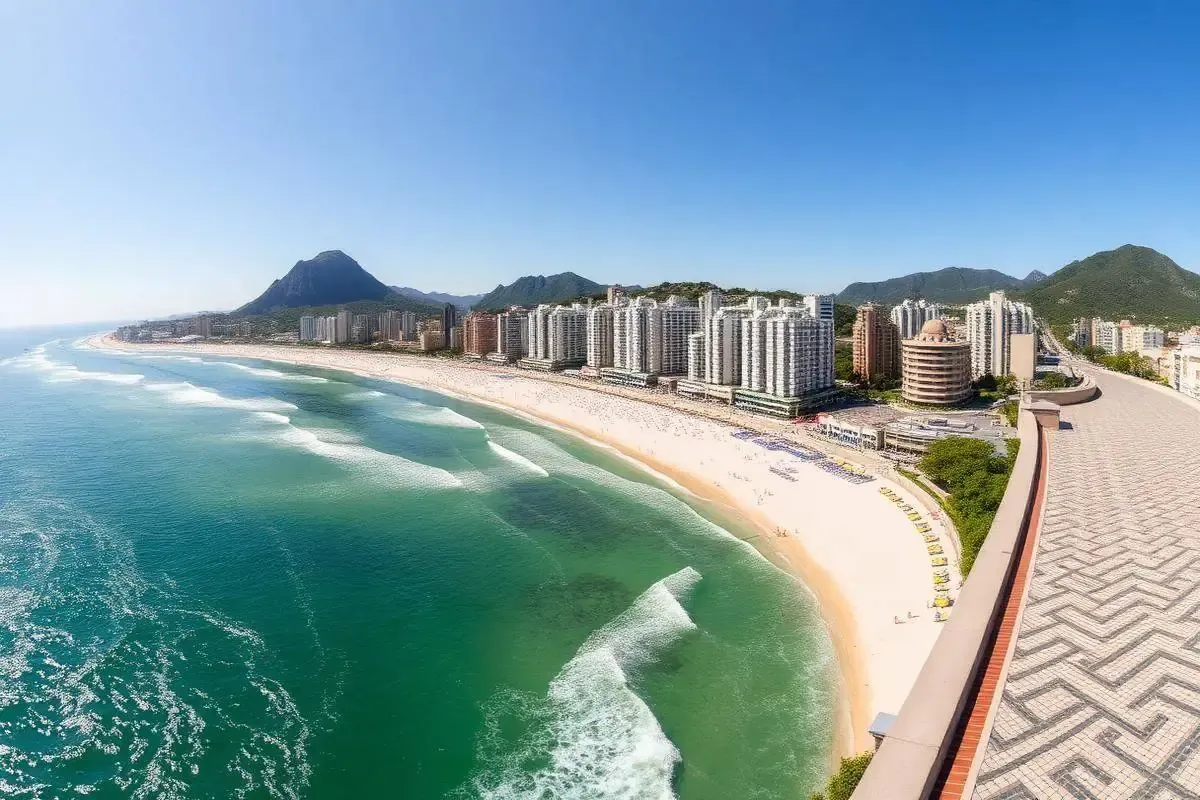
Copacabana's Posto 6 end is futevôlei's birthplace and still has some of the strongest courts in the city.
Quick answer
Futevôlei — footvolley — was invented on Copacabana in the 1960s and is played two a side over a net using everything except the hands. Watch it around Copacabana's Posto 6 and Ipanema's Posto 9 in the late afternoon. You cannot join an established game: take a beginner lesson instead, or join an altinha circle, which is the beach game that genuinely welcomes newcomers.
Links may earn us a commission at no extra cost to you. This supports PlanRio.
At a glance
What it is
Beach volleyball played with everything except the hands and arms. Invented in Rio in the 1960s.
Where it was invented
Copacabana, reportedly after a ban on beach football pushed players onto the volleyball courts.
Where to watch
Copacabana around Posto 6, Ipanema's Posto 9 and the Leblon end. Late afternoon, every day the weather allows.
Can a beginner join in?
Not an established game. Take a lesson first — that is the normal route, including for Brazilians.
The standard format
Two a side, on a sand court with a net at roughly volleyball height. Three touches, no hands.
The shot everyone films
The shark attack — a jumping shoulder spike. It is the finishing move and it takes years.
What to bring
Sunscreen, water, a hat for between games. Bare feet; nobody plays in shoes.
Related but different
Altinha is the keep-it-up circle with no net. It is the one a visitor can genuinely join.
Rio's own sport, invented on Copacabana
Futevôlei — footvolley — is the one genuinely carioca sport. The origin story, told consistently and with local pride, is that in the 1960s beach football was restricted on Copacabana, and players moved onto the volleyball courts and kept the ball off the sand using everything except their hands. From that constraint came a game that is now played across Brazil, has a professional circuit, and has been exported to beaches from Miami to Dubai.
The rules are simple enough to follow from a kiosk: two players a side, a sand court, a net at roughly beach-volleyball height, three touches to get the ball over, and no hands or arms at any point. Feet, thighs, chest, shoulders and head only.
What makes it extraordinary to watch is the standard. On the good courts at Copacabana and Ipanema in the late afternoon you are watching people who have played every day for twenty years, keeping a ball airborne with their feet at a level that looks edited. It is one of the best free spectacles in the city and it goes almost entirely unmentioned in guidebooks.
It is also a social institution rather than a sport people drive to. The courts belong to groups — the same people, the same times, the same nets — and that structure is what makes joining in more complicated than it looks.
Where to watch, and when
Copacabana around Posto 6, at the Forte end, is the historic heartland and still has some of the strongest courts in the city. Late afternoon, from roughly four o'clock until the light goes, is when the good players are out.
Ipanema's Posto 9 and the stretch towards Leblon carry the fashionable version — more courts, more spectators, and the beach's general scene around them. It is the easiest place to watch casually because the kiosks are right there and you are not committing to anything.
Leblon, at the far end towards Dois Irmãos, is quieter and more residential, and a good place to see the game without the crowd.
Barra da Tijuca has serious courts too, further from the visitor centre of gravity, and is where a lot of the competitive play happens.
Weekends are busiest and the standard is high everywhere. Weekday late afternoons are the civilised option: the same quality, fewer people, and a better chance of a conversation if you want one.
Can you just join a game? Honestly, no
This is the question every visitor has and the answer is the one nobody wants: you cannot walk up to an established futevôlei game and ask to play, in the way you might join a kickabout. These are fixed groups playing a technically demanding sport at a high level, and a beginner on the court ends the game.
That is not unfriendliness. Cariocas are generous about the beach and the courts, and if you watch for a while, ask about the game and show genuine interest, you will get a conversation. What you will not get is a turn, and asking for one puts people in an awkward position.
The route in is a lesson, and that is true for Brazilians as well as visitors. Instructors work the Copacabana and Ipanema beaches, and a one-off class covers the basics — the first touch, the thigh control, the chest trap, the shape of a rally — in a way that watching cannot. Two hours with a coach will teach you more than a month of standing at the net.
If what you actually want is to play on the sand with locals rather than to play futevôlei specifically, altinha is the answer. It is the keep-it-up circle with no net, no scoring and no winner, and it is the most welcoming game on the beach. Our pickup-football guide covers how to approach a circle, what to say, and the etiquette of all three beach games.
Taking a lesson: what it actually involves
A beginner futevôlei lesson is run on a sand court with a coach, usually at Copacabana or Ipanema, and runs somewhere between an hour and two. You will spend most of it on touches rather than rallies, because the limiting factor for everyone new is controlling a ball with the thigh and chest well enough to set up a second touch.
Expect it to be physically harder than it looks. Sand is punishing, the sun is relentless, and the movement pattern — constant small jumps and lunges from a standing start — uses muscles that running does not. An hour is a real workout and two is a lot for a first session.
What to bring: sunscreen applied before you arrive, water, a hat and a shirt for the breaks, and nothing you mind getting sandy. Everyone plays barefoot. Sunglasses are impractical once you are actually playing.
Timing matters more than for most activities. Book a late-afternoon session: the sand at two in the afternoon in February is genuinely too hot to stand on comfortably, and the heat index makes a midday lesson miserable rather than hard. Our February packing guide covers the wider summer-heat problem.
Lessons are also the easiest legitimate route into beach sociability. Coaches know the courts, the groups and the regulars, and a lesson often ends with you being introduced to people — which is the thing visitors actually want and cannot get by standing at the net.
Understanding what you are watching
The three-touch rhythm is the same as volleyball — receive, set, attack — but executed with feet, thighs and chest. A good pair will take the first touch on the thigh or chest to kill the ball's speed, set it up high with a foot or thigh, and then attack.
The attack is where the sport becomes spectacular. The shark attack — ataque de tubarão — is a jumping shoulder spike that sends the ball down almost vertically, and it is the shot every highlight reel is made of. It takes years and it is the clearest marker of a genuinely good player.
Scoring follows beach volleyball conventions: rally scoring, sets, and the serve changing on points rather than in rotation, though informal games on the beach negotiate their own rules freely. Do not expect the game in front of you to be running a formal format.
There is a professional circuit and televised competition in Brazil, and several well-known footballers play futevôlei seriously — Romário in particular is strongly associated with it. If a crowd has gathered around a court, that is usually why.
The best way to appreciate it is to try the first touch once. Controlling a dropped ball with your thigh so it goes straight up rather than sideways is far harder than it looks, and after one attempt the standard on the court in front of you reads completely differently.
Fitting it into a trip
As a spectacle: build in a late-afternoon beach walk from Ipanema's Posto 9 towards Leblon, or around Copacabana's Posto 6, between four and sunset. You will pass several courts and the standard will be high. It costs nothing and it is one of the most purely local things on offer.
As an activity: book one lesson, late afternoon, early in the trip. If you enjoy it you can take a second; if you do not, you have still had the most carioca hour available to a visitor.
As a social route: altinha, not futevôlei. Watch a circle, wait for a natural pause, ask politely, accept that the answer might be no, and be aware that the ball will come to you faster than you expect.
What not to do is plan a trip around playing it. Futevôlei rewards long familiarity, the courts belong to people who have been on them for decades, and the version available to a two-week visitor is a lesson and a lot of watching. Both are worth doing; neither is a beach-sports holiday.
The way in is a lesson, not a question at the net
A coached session on a Copacabana court is how Brazilians learn this too, and it is the only realistic route into the sport for a visitor. If the sand is not your element, Arpoador's surf lessons are the other beach skill worth an hour.
Common mistakes tourists make
- Asking to join an established court game. These are fixed groups at a high level, and the request puts people in an awkward position.
- Booking a midday lesson in summer. The sand is too hot to stand on and the heat index makes it miserable rather than hard.
- Turning up in shoes. Everyone plays barefoot; footwear is not a thing on a futevôlei court.
- Expecting rallies in the first hour. The first touch is the barrier, and until you have it there is no game.
- Confusing futevôlei with altinha. One is competitive and closed; the other is a circle that will usually let you in.
- Watching at midday. The good players come out in the late afternoon, every day.
- Treating it as a holiday sport you can take up. The standard in front of you represents decades of daily play.
- Wearing sunglasses to play. They last about one rally.
Local expert tips
- Watch for twenty minutes before you decide whether you want a lesson. The gap between how it looks and what it requires is the useful information.
- Book late afternoon. Cooler sand, better light and the hour when the courts are actually alive.
- Try controlling a dropped ball on your thigh once, anywhere. It recalibrates how you watch the game entirely.
- If a coach offers to introduce you to regulars afterwards, say yes. That is the real value of a lesson.
- Use Posto 9 in Ipanema for casual watching — kiosks, shade and courts in the same twenty metres.
- Go on a weekday if you want to talk to anyone. Weekends are crowded and nobody has time.
- Reapply sunscreen between games rather than once at the start. An hour on the sand in Rio is more sun than it feels like.
Frequently asked questions
What is futevôlei?+
Footvolley: beach volleyball played with every part of the body except the hands and arms. Two players a side, a sand court, a net at roughly beach-volleyball height, three touches to get the ball over. It was invented in Rio in the 1960s, reportedly after restrictions on beach football pushed players onto the volleyball courts.
Where can I watch futevôlei in Rio de Janeiro?+
Copacabana around Posto 6 is the historic heartland and still has some of the strongest courts. Ipanema's Posto 9 and the stretch towards Leblon are the easiest places to watch casually, with kiosks right behind the courts. Barra da Tijuca has serious competitive play further out. Late afternoon, from about four until sunset, is when the best players are out.
Can tourists play futevôlei in Rio?+
Not by joining an established game — these are fixed groups playing at a high level, and a beginner on the court ends the rally for everyone. The normal route in, for Brazilians as well as visitors, is a lesson with one of the instructors working Copacabana and Ipanema. If you want to play with locals rather than play futevôlei specifically, altinha is the welcoming option.
How hard is futevôlei for a beginner?+
Harder than it looks, and the limiting factor is the first touch. Controlling a ball with the thigh or chest so it goes straight up rather than sideways takes most people a long time, and until you can do it there are no rallies. Sand, heat and the constant small jumps also make it a genuine workout.
What is a shark attack in footvolley?+
The ataque de tubarão — a jumping shoulder spike that sends the ball down almost vertically into the opposing court. It is the sport's signature finishing shot, it takes years to learn, and it is the clearest sign that the pair you are watching are seriously good.
What is the difference between futevôlei and altinha?+
Futevôlei is a competitive two-a-side game over a net with scoring. Altinha is a circle of people keeping a ball in the air with no net, no scoring and no winner. Altinha is far more welcoming to newcomers and is the beach game a visitor can realistically join; futevôlei is not.
What should I bring to a futevôlei lesson?+
Sunscreen applied before you arrive, water, a hat and a shirt for the breaks, and nothing you mind getting sandy. Everyone plays barefoot — nobody wears shoes. Book a late-afternoon slot: midday sand in a Rio summer is genuinely too hot to stand on.
When is the best time of day to see futevôlei in Rio?+
Late afternoon, from roughly four o'clock until the light goes, every day the weather allows. Weekends are busiest with the highest standard; weekday late afternoons offer the same quality with fewer spectators and a better chance of a conversation.
Is futevôlei played anywhere else in Brazil?+
Yes — it spread from Copacabana across the whole Brazilian coast and now has a professional circuit and televised competition, as well as a following on beaches abroad. Rio remains the birthplace and the place where the everyday standard on a public beach is highest.
Keep planning
Pickup football, altinha and beach games
The etiquette of joining in — and the circle that will actually let you play.
Rio beach culture
How the beach is organised socially, from postos to kiosks to courts.
Copacabana beach guide
Where the sport was invented, posto by posto.
Ipanema beach guide
Posto 9, the courts beside it and the scene around them.
Beach workouts in Rio
The rest of what happens on the sand before the sun gets high.
Rio beach etiquette
The unwritten rules, including the ones around other people's games.