Parque da Catacumba Guide: Mirantes, Sculpture Trail & Zipline
Written and reviewed by Lotte — Rio local, founder & editor of PlanRio · How we research · First published · Last reviewed
Quick answer
Parque da Catacumba is a free-entry municipal nature and sculpture park beside Lagoa, with lower paved paths and a circular trail to the Sacopã and Urubu viewpoints. SMAC lists Tuesday–Sunday, 6:00–17:00, while Riotur still lists 8:00–17:00; check the current notice before setting out.
At a glance
Where it is
Avenida Epitácio Pessoa, 3,000, on Lagoa Rodrigo de Freitas in Rio’s South Zone
What it is
A municipal nature park of about 27 hectares, with outdoor sculpture, plazas, recreation areas and forested slopes
Main viewpoints
Mirante do Sacopã and Mirante do Urubu, reached by the park’s circular trail
Lower park
Paved paths and small plazas make a gentler visit possible; surfaces and gradients still vary
General admission
The city’s concession announcement said park access would remain free; paid adventure activities are separate
Hours to confirm
SMAC currently lists Tuesday–Sunday, 6:00–17:00; Riotur’s listing still says 8:00–17:00
Adventure operator
Lagoa Aventuras lists canopy, rappelling, zipline and climbing activities at the park
Best first visit
Walk the lower sculpture paths, then add the uphill viewpoint trail only if your group wants the climb
A compact forest-and-art stop beside Lagoa
Parque Natural Municipal da Catacumba is one of Rio’s easiest places to change the mood of a day without leaving the city. The entrance sits on Avenida Epitácio Pessoa beside Lagoa Rodrigo de Freitas; inside, the lower grounds combine landscaped paths, small plazas, outdoor sculpture and recreation space. Higher up, the park becomes denser and steeper, and a circular trail reaches two viewpoints. You can make this a short art-and-greenery break or give it more time for the trail and a separate adventure activity.
The park covers about 27 hectares, according to municipal tourism information. That is large enough to feel removed from the road but small enough to visit as one stop in a Lagoa day. It is not a giant wilderness reserve where you need a full-day expedition or remote-trail logistics. The useful planning question is how much of the park you want to do: lower paths and artworks, the uphill mirantes, or the private operator’s canopy and zipline circuit.
This guide focuses on Catacumba itself: how the lower park differs from the trail, what the two viewpoints offer, how to think about the competing posted opening times, and how an optional guided activity fits. For the wider loop, food stops and water-side plans, use our Lagoa Rodrigo de Freitas guide. The park is a distinct outing, even though it shares the lagoon’s address and scenery.
Choose your Catacumba visit before you arrive
A satisfying visit starts with one of three simple plans. The lightest plan is a slow walk through the lower grounds to see the open-air artworks and sit in a plaza. The second adds the circular trail and both mirantes, which means an uphill walk on uneven natural ground. The third is a booked adventure visit built around a paid activity such as canopy obstacles or a zipline, potentially with a guide and a trail segment. These plans overlap, but they are not interchangeable.
If a companion has limited time, mobility or appetite for climbing, agree on the plan before you arrive. The lower area can be enjoyed at a slower pace, while the viewpoint route asks for more effort and secure footing. A ticket to an activity does not mean every park path is part of that booking, and a free park entrance does not include the private operator’s equipment or guide. Read the product inclusions and the park’s latest visitor notices separately.
It is also reasonable to skip the upper trail. The sculptures and planted spaces are not merely a warm-up for the view; they are a central reason the park exists. Visitors who try to force a summit-style hike into every green space in Rio often miss the character of the place in front of them. Catacumba rewards a visit at the scale that fits your day, whether that is an hour among the art or a longer outing with the trail.
The lower grounds: outdoor sculpture, plazas and an easy pause
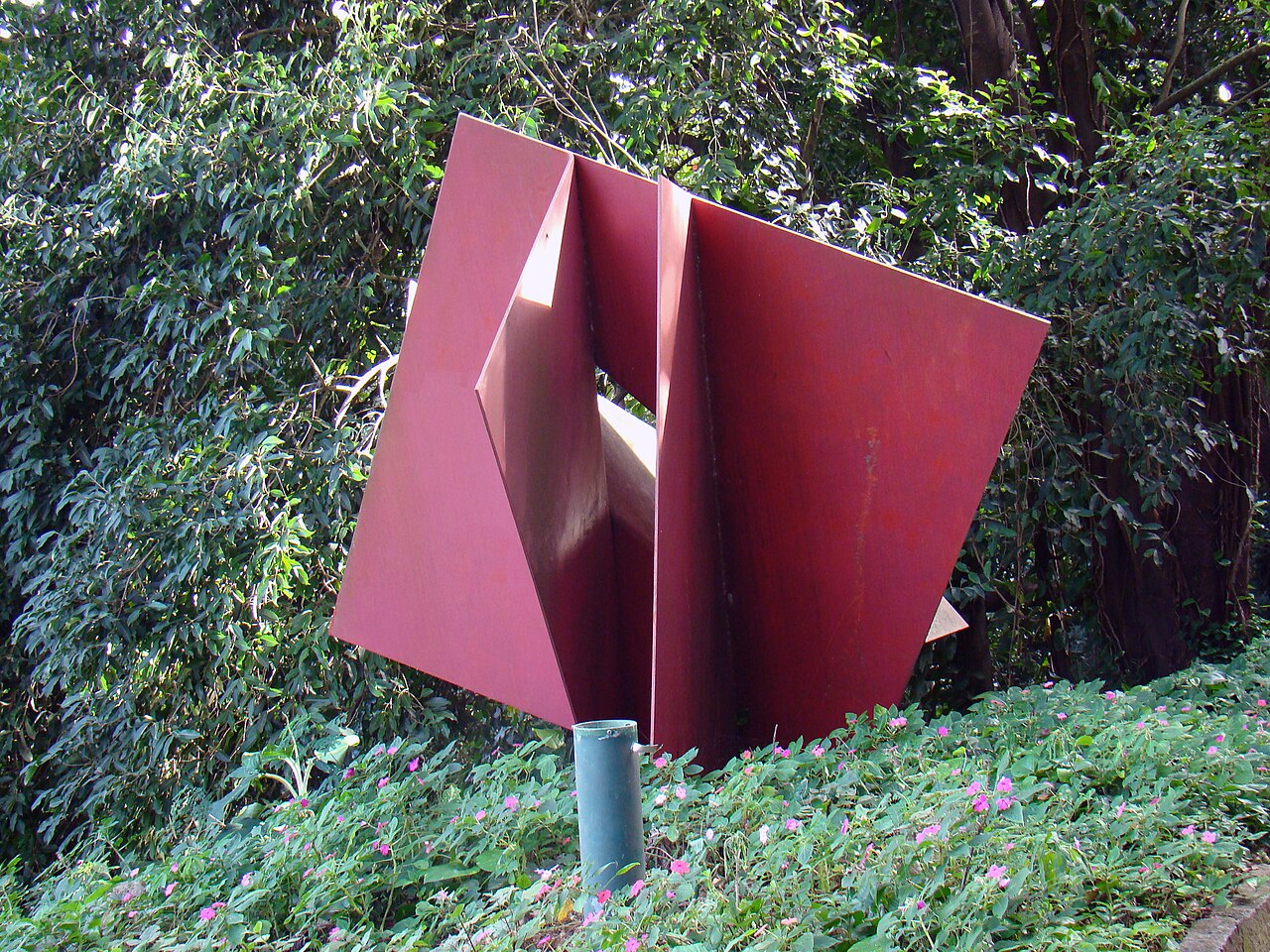
The lower park is the best starting point for most visitors. Riotur describes paved paths, small plazas and a group of outdoor sculptures, with denser forest higher on the slope. The combination feels different from a formal museum: the works sit among planting and stone, so the route between them is part of the experience. Slow down enough to look at the sculpture from more than one angle and notice how the vegetation changes the scale of each work.
The city reported the restoration of 32 sculptures when the park reopened after renovations in 2020. It also said that works received identification signs with QR codes, and that benches were positioned near the collection. That is a useful indication of the park’s cultural role, but it is a dated maintenance report rather than a promise that every label or QR code is still present today. If a plaque has changed or a work is cordoned off, respect the current setup and enjoy what is open.
Treat this as a place to look, not a sculpture playground. Do not climb, sit on, lean bicycles against or attach anything to the works. Keep children close around plinths and uneven stone, and leave space for other visitors to view a piece. A calm, observant circuit usually makes the visit more rewarding than trying to photograph every sculpture quickly. If a label names an artist or title, save it for later reading rather than turning the stop into a race through a checklist.
What the park’s landscape can and cannot tell you
Catacumba is both a nature park and a cultural landscape. Rio’s environmental agency describes the present vegetation as shaped by reforestation and restoration, while the city’s park history connects the park’s creation to a cultural and sculpture program. This is not an untouched piece of rainforest preserved outside urban life; it is a public landscape that has been intentionally replanted, managed and interpreted over time.
That distinction helps set expectations. You may hear birds and find shade within a short distance of a major avenue, but the experience is still urban: traffic remains nearby, facilities and paths are maintained by people, and access can be affected by works or closures. The environmental agency’s profile mentions plants associated with restoration, including hardy species used to recover altered ground. It is better to describe the setting as a recovering urban forest than to promise rare wildlife or a pristine wilderness encounter.
A visitor can support the park’s purpose with small choices: stay on marked paths, take rubbish out, avoid feeding animals and keep noise low. Those habits matter most on the upper route, where trampling shortcuts can widen erosion and food scraps draw wildlife toward people. The park is valuable partly because a functioning green slope and a permanent public art collection coexist next to Lagoa; treating both carefully keeps the outing enjoyable for the next group.
Mirante do Sacopã: the lagoon-facing viewpoint
Mirante do Sacopã is the park’s best-known lookout. The municipal environmental agency says the circular trail connects to this viewpoint and lists views over Lagoa Rodrigo de Freitas, Pedra da Gávea, Leblon and the Jockey Club. Riotur’s visitor description adds Jardim Botânico, Ipanema and Morro Dois Irmãos to the wider panorama. On a clear day, the lagoon gives the view its strongest shape: a compact body of water framed by neighbourhoods, hills and the South Zone’s built edge.
The viewpoint is a reason to climb, not a guarantee of a perfect photograph. Haze, cloud, recent rain and the position of the sun can flatten the skyline or hide distant landmarks. If the weather is dull, you can still enjoy the route and vegetation without treating the view as a failed visit. At the lookout, pause before taking a photo, give others room near the edge and keep children within arm’s reach. Do not step beyond barriers to improve a camera angle.
The trail to Sacopã is described differently across sources: Riotur currently describes a 600-metre route, while older park material has used other measurements and conventions. The number may refer to one segment rather than the full loop, so do not use it as a reliable round-trip distance or time budget. Follow current trail signs and ask staff about the open route. The slope and footing matter more than a single distance figure.
Mirante do Urubu: a different angle on the city
The second named lookout is Mirante do Urubu. The current SMAC profile distinguishes it from Sacopã and describes its view toward Christ the Redeemer. That makes it more than a duplicate photo stop: the two viewpoints face different visual landmarks, and seeing both gives the circular route a clearer sense of the park’s position between the lagoon and the surrounding mountains.
Do not assume the route is a flat connector between two decks. The visitor agency describes a circular trail through the upper park, and the terrain becomes more wooded and sloped above the paved lower paths. Conditions can be different after rain, and a route that looks short on a map can feel demanding in humidity. If anyone in your group is unsure about hills, turn the outing into a lower-park visit rather than committing to a loop that you may want to reverse.
At both lookouts, keep expectations flexible. The Cristo may be visible from one angle and partly obscured from another; distant landmarks can disappear in cloud even when the lagoon is clear. The best strategy is to enjoy what is visible and keep the walk itself in the plan. The viewpoints are a bonus within a small urban park, not a substitute for Rio’s major summit attractions such as Sugarloaf or Corcovado.
Trail effort, footing and route uncertainty
The uphill trail is short in the context of Rio’s major hikes, but short does not mean effortless. It climbs away from the lower park, includes uneven natural surfaces and can be humid under tree cover. The official profile describes a circular path to the two viewpoints; older documentation includes different distance values. Rather than planning from a stale number, allow time for breaks, check current trail signs and follow the route that park staff say is open.
Wear closed-toe shoes with a reliable sole. Smooth city sneakers may be uncomfortable on damp earth, stone steps or loose leaves, especially on the descent. Carry water even if you are only adding one lookout; heat and humidity can make a modest climb feel much longer. If the path is wet, there is active maintenance, or a sign closes a section, do not detour around a barrier. The lower sculpture area remains a good visit without the trail.
The route is not a substitute for a guided wilderness hike. It is an urban-park trail with visitor circulation and named viewpoints. If you want a more demanding mountain day, compare it with our guides to Rio’s hikes or the larger Pedra Branca State Park. Each has different access, scale and transport needs; do not infer that Catacumba’s short loop prepares you for a summit route.
Opening hours: why you should check twice
The current profile published by the Secretaria Municipal do Ambiente e Clima (SMAC), the city’s environmental agency, lists the park as open Tuesday through Sunday from 6:00 to 17:00. Riotur’s visitor listing gives Tuesday through Sunday from 8:00 to 17:00 and adds a seasonal extension to 18:00. These are both municipal sources, but they do not agree on the start time. PlanRio reports the discrepancy rather than pretending the schedule is settled.
Before travelling, check the park’s SMAC page and contact the park if your arrival depends on the first hour of the day, a holiday, a school group or an organised activity. Use the official address, not an old copied opening-hours snippet. A listed schedule is not the same as confirmation that every trail, facility or concession activity is operating that day; storms, maintenance and private bookings can create separate changes.
The city’s 2023 announcement of the park concession said general access would remain free. That refers to entering the public park, not to a canopy circuit, zipline, climbing wall, guide or equipment. If you are budgeting, keep those categories separate: park access, paid activity, transport and any food or drink you bring. Confirm the current terms directly with the park or operator, especially if a listing describes admission or activity fees in a way that is not obvious.
Canopy, rappelling and zipline with Lagoa Aventuras
A private operator works inside the park, so Catacumba can be more active than a quiet sculpture walk. Riotur’s current Lagoa Aventuras listing identifies activities including canopy circuits, rappelling, a zipline and a climbing wall. The operator’s base is at the park. These are separate paid experiences, not part of the general free entrance, and each may have its own age, weight, weather, schedule and equipment rules.
The GetYourGuide product supplied for this guide is titled “Zip Lining and Canopy Tree Tour in Rio de Janeiro” and is the specific Catacumba activity listing. Use the booking page to confirm the exact itinerary, pickup coverage, language, included equipment, extra fees, participant requirements and cancellation terms for your date. Those details can change. Do not assume that a product title means the activity runs every day or that the advertised price includes every park or equipment charge.
If the canopy course is the reason you are visiting, book that first and treat the sculpture walk or viewpoints as an add-on only if the schedule and your energy allow. If the art and mirantes are your priority, you can visit independently and decide on site whether an activity fits. The optional bookable tour appears below the guide; check the current inclusions and activity rules before paying.
A note on the park’s history and the people displaced
The name Catacumba is tied to the hill and to a favela that once occupied its slopes. SMAC’s history page and the city’s reopening account say that the community was removed in the early 1970s; afterward the hillside was replanted and the park was developed as a cultural landscape with an outdoor sculpture collection. The official account is brief, but this history should not be reduced to a colourful origin story for a hike or an adventure activity.
A respectful visit can hold both parts of the place at once: the public park and artworks people can experience today, and the community history behind the current landscape. There is no need to seek out ruins or treat traces of former homes as curiosities. Do not photograph people, homes or remnants in a way that turns displacement into spectacle. If the park’s interpretive material describes this history, read it as a civic story about urban policy and memory, not as an attraction designed for visitors.
The city’s environmental agency describes the reforestation and cultural purpose of the park, while its 2020 reopening report documents restoration work on the sculpture collection and updated trail signage. These sources help explain why art and nature appear together here. They are not a complete history of the former residents or the removal process; visitors who want that fuller story should consult the Arquivo Geral da Cidade and local historical research rather than infer it from a short visit.
Getting to the entrance at Avenida Epitácio Pessoa
The park address is Avenida Epitácio Pessoa, 3,000, Lagoa. Put the full address into your map app and verify that it routes to the public entrance before you leave. Catacumba is beside Lagoa Rodrigo de Freitas, but the lagoon is large; searching only for “Lagoa” can send you to the far side or a different park. The precise entrance matters if you are meeting a guide, arranging a ride or travelling with children.
A taxi or ride app offers a direct last mile from Ipanema, Copacabana, Botafogo or another South Zone base. If you use a bus, check the live route and stop closest to the park on the day; routes and traffic patterns change, and a stop on the avenue can still leave a walk along the pavement. The nearest metro station is not an at-the-gate entrance, so check the full walk or final transfer rather than planning around a station name alone.
For a booked tour, read the pickup section in the exact reservation. “Hotel pickup” may apply only to specified neighbourhoods or meeting points. Save the confirmation and the park entrance address offline, and agree on the return pickup location before the activity begins. If you are combining the park with a lagoon ride or restaurant, choose the next stop deliberately: the circular lagoon road has busy traffic and is not a pleasant shortcut across every section.
Accessibility and physical comfort
The lower park is the more realistic part of Catacumba for visitors who want a gentle outdoor stop. Riotur describes paved paths and small plazas, but that does not certify a continuous step-free route, accessible toilets, smooth surfaces or accessible seating at every point. Pavement can meet stone, slopes and older surfaces. If you use a wheelchair, cane, stroller or have limited stamina, contact the park about the exact entrance route and current path conditions before making it the day’s anchor.
The upper circular trail and viewpoints should be treated as a separate, more demanding choice. They involve an uphill natural route; there is no reason to assume that the entire trail is accessible because some lower paths are paved. Likewise, adventure activities such as canopy obstacles and zipline require their own physical participation and operator screening. Ask the operator directly about transfers, harness fitting, movement between platforms, assistance and any minimum or maximum participant requirements.
A practical way to visit with a mixed-ability group is to agree that the lower sculpture area is the shared plan, then let only those who want the climb continue to the mirantes. Arrange a meeting place and time in advance and keep a charged phone with you. If you need detailed accessibility planning across the city, our wheelchair travel guide to Rio covers accommodation, transfers and major attractions; this page only describes the park-specific limits that the available sources support.
When to go: light, heat, rain and quieter paths
Morning is often the most comfortable window for a climb because the trail is shaded but the day has not reached its strongest heat. It also gives you more flexibility if you want to add a viewpoint and still have time for lunch around Lagoa. That is a planning preference rather than an official guarantee about crowd levels; school visits, weekends, events and operator schedules can change how busy the park feels.
After rain, expect slick steps, muddy sections or temporary closures on the upper trail. A bright forecast does not mean the forest floor has dried. If the path looks unsafe or staff close it, change the plan to the lower grounds and sculptures instead of finding an unmarked alternate. Strong sun can also affect the exposed plazas and the avenue walk, so bring water and sun protection even when your main activity is in the shade.
For viewpoint photography, choose a clear day and avoid building the whole outing around a specific skyline. Rio’s haze and cloud can shift quickly. The sculpture walk is less weather-dependent than a distant panorama, while an adventure activity may have stricter weather rules because of ropes and height. Check the provider’s current weather/cancellation policy and the park’s operating notice separately; one can operate while the other is suspended.
Build a Lagoa day without overloading it
Catacumba pairs naturally with the lagoon because the entrance is on its edge, but you do not need to walk the entire Lagoa loop to make the combination work. A balanced half-day could be a slow sculpture visit, the uphill loop if the group feels good, then a meal or coffee stop near the water. If the trail is closed or the weather turns, use the lower park and keep the rest of the day flexible.
The park can also work as a reset between busier South Zone attractions. A morning among the sculpture and trees followed by a simple lunch has a different pace from stacking Christ the Redeemer, Sugarloaf and a museum into one day. Leave time for transfer delays and for the physical effort of the viewpoint trail. A short attraction can expand when you stop to read signs, rest, take photos and wait for a group member.
If your main interest is gardens and historic architecture rather than park sculpture, consider Parque Lage as a different outing. If you want extensive forest trails, use the separate Tijuca National Park guide. These places have very different transport and access patterns, so avoid treating them as adjacent stops just because all are “green Rio.”
What to bring and what to leave behind
For the lower grounds, comfortable shoes, water, sun protection and a phone are enough for most visitors. For the trail, add shoes with grip and carry water in a small bag that leaves your hands free. A light rain layer is useful in wet weather, but a heavy picnic load is not necessary if you are adding the uphill loop. Bring only what you can comfortably carry back out.
If you booked a canopy or zipline activity, follow the operator’s specific packing and clothing instructions. Closed shoes and clothing that stays secure during movement are sensible, but the provider’s current rules take priority. Do not arrive with a loose bag or accessories that could catch on equipment. Confirm whether the tour supplies a helmet, harness and any other safety gear instead of assuming that the activity price includes every item.
Leave valuables out of sight and do not bring alcohol or glass into a nature walk. Pack rubbish back out if bins are full or unavailable. The site is a public green space, not a beach kiosk zone with guaranteed purchases at every corner. If you have a medical need or an activity reservation, carry the relevant information and booking details offline; mobile signal and battery are not a plan by themselves.
Visitor etiquette and practical safety
Stay on the signed route, respect closures and keep noise at a level that lets other visitors hear the forest and one another. The viewpoints can be narrow when several people are waiting, so take a quick photo and move back to a safe standing area. Do not leave food for birds or monkeys, and do not try to touch wildlife for a picture. Human food can change animal behaviour and create conflict in an urban park.
Use the same everyday awareness you would in any busy Rio public space. Keep your phone secure, avoid displaying cash or expensive equipment unnecessarily and arrange your ride before you are tired at the end of the outing. If you are hiking, tell someone your plan and return time, go with your group and turn around if rain or trail conditions worsen. These are sensible habits, not a claim that the park is unusually dangerous.
For climbing or zipline activities, follow the instructor’s safety briefing exactly. Tell staff about relevant injuries, health conditions or uncertainty before being fitted with a harness. If the activity feels unsafe, pause and ask questions. Product reviews can help you understand what a tour includes, but they do not replace current operator instructions, equipment checks or your own comfort with heights.
Two practical ways to plan the visit
For a relaxed art visit, arrive after checking the current opening notice, enter at the Epitácio Pessoa address, and spend your first few minutes orienting yourself around the lower paths. Follow the sculpture trail at an unhurried pace, sit in a plaza if one is open, and leave the viewpoint climb for another day unless everyone wants it. This is the best plan for a hot afternoon, a short gap in the itinerary or a group with mixed mobility.
For a more active morning, arrive with water and grippy shoes, walk the lower section briefly, then ask staff whether the circular viewpoint trail is open and how the current route is marked. Continue to Sacopã and Urubu only if the weather, footing and energy all make sense. Reserve the canopy or zipline as a separate, timed activity; if it has a meeting time, schedule the viewpoint walk around the booking rather than hoping both fit.
These are planning frameworks, not official itineraries or guaranteed durations. A group that reads the sculpture labels, waits for a viewpoint or needs rest breaks will move differently from a solo visitor. Build in buffer time for transport, activity check-in and a return ride. The park is close to central South Zone neighbourhoods, but traffic can still turn a short distance into a delay.
Is Parque da Catacumba worth visiting?
Yes, if you want a low-friction nature break with more substance than a quick viewpoint photo. The art collection gives the lower park a distinctive identity, and the two mirantes add a modest but worthwhile uphill option. It is especially useful for a visitor staying around Ipanema, Copacabana or Lagoa who wants an outdoor stop that does not require a day trip. The free general entrance reported by the city makes the basic visit easy to fit into a flexible plan.
It is less compelling if your only goal is a dramatic mountain panorama, a long technical hike or an all-day rainforest experience. Catacumba is an urban park and a short outing, not a replacement for Tijuca or Pedra Branca. The views can be obscured, the trail can be affected by rain, and the lower paths can feel quiet rather than eventful if you expect a major attraction with a ticketed visitor centre.
The best reason to go is the mix: public art, replanted hillside, lagoon setting and optional paid adventure in one compact place. Go with a plan that suits your group, respect the history behind the site and verify the current schedule before crossing town. If those expectations fit, Catacumba makes a thoughtful addition to a Rio itinerary rather than another box to tick.
Optional Catacumba canopy and zipline booking
Compare the live activity details, pickup, extra fees and participant requirements before choosing a date.
Links may earn us a commission at no extra cost to you. This supports PlanRio.
Common mistakes tourists make
- Assuming the lagoon map pin is the park entrance instead of using Avenida Epitácio Pessoa, 3,000.
- Treating a lower paved path as proof that every trail or facility is step-free.
- Planning from an old trail-distance figure without asking which section it measures.
- Assuming free park entry includes the private canopy, zipline or climbing activity.
- Arriving at 6:00 based on SMAC without noticing that Riotur still lists an 8:00 opening.
- Climbing the upper trail in slick shoes or immediately after heavy rain.
- Expecting the Cristo, lagoon and distant mountains to be clearly visible in haze.
- Trying to fit a viewpoint walk around a timed activity without enough buffer.
- Treating the history of the removed Catacumba favela as a tourist spectacle.
- Leaving food scraps, stepping off the trail or climbing on the outdoor sculptures.
Local expert tips
- Check SMAC’s current park page on the morning of your visit and contact the park if the start time matters.
- Use the full entrance address in your route app; Lagoa has several access points and parks.
- Start with the lower sculpture grounds, then decide whether the slope and weather suit the group.
- Wear shoes with grip and bring water even if the route looks short on a map.
- Ask staff whether the circular trail and both lookouts are open before starting uphill.
- Keep the optional paid tour and the free public entrance as separate budget items.
- Read the current GetYourGuide inclusions and activity rules before booking the canopy tour.
- Visit for the park’s sculpture and landscape as well as the viewpoints.
- Let each person in a mixed-mobility group choose the lower paths or trail without pressure.
- Pair Catacumba with one nearby lagoon stop instead of forcing several distant attractions into the same half-day.
Frequently asked questions
Where is Parque da Catacumba in Rio?+
The public entrance is listed at Avenida Epitácio Pessoa, 3,000, in Lagoa, beside Lagoa Rodrigo de Freitas. Use the full address in your map app and confirm it routes to the park entrance.
Is Parque da Catacumba free?+
The city’s 2023 concession announcement said general access to the park would remain free. Canopy, zipline, climbing and other private activities are separate paid experiences, so confirm current terms with the operator.
What are the opening hours?+
SMAC currently lists Tuesday through Sunday, 6:00–17:00. Riotur’s visitor listing says 8:00–17:00, with a seasonal extension to 18:00. Check the SMAC notice or contact the park before your visit because the official listings differ.
How long do you need at the park?+
Allow at least an hour for a relaxed look at the lower sculpture paths. Add more time for the viewpoint trail or a booked adventure activity, and leave transport and rest-break buffer. The park does not publish one reliable duration for every visitor plan.
Can I visit both viewpoints?+
SMAC describes a circular trail with access to Mirante do Sacopã and Mirante do Urubu. Ask staff whether the full route is open, follow current signs and skip the upper trail if wet conditions or the climb do not suit your group.
How difficult is the Catacumba trail?+
It is a short urban-park trail rather than a major mountain hike, but it climbs and uses uneven natural surfaces. Wear shoes with grip, carry water and avoid relying on old distance estimates because official materials use different measurements.
Is Parque da Catacumba wheelchair accessible?+
Some lower paths are described as paved, but that does not confirm a continuous step-free route, accessible facilities or trail access. Contact the park about current surfaces and entry conditions before planning a wheelchair visit; the upper trail is steep and natural.
What activities can I book at Parque da Catacumba?+
Lagoa Aventuras lists canopy circuits, rappelling, zipline and climbing activities at the park. The specific GetYourGuide canopy and zipline tour is optional and separate from free park access. Verify date availability, pickup, fees, participant rules and inclusions on the live listing.
Is there an entrance fee for the zipline?+
The city’s statement about free access covers the public park, not the private activity. Check the current tour page and operator for the activity price, any separate equipment or park charges, and what is included for your selected date.
What can you see from Mirante do Sacopã?+
The municipal profile lists Lagoa Rodrigo de Freitas, Pedra da Gávea, Leblon and the Jockey Club. Riotur also names Jardim Botânico, Ipanema and Morro Dois Irmãos. Cloud and haze can hide distant landmarks.
Was there a community on the site before the park?+
Yes. The city’s environmental agency says a favela occupied the hillside and was removed in the early 1970s. The slope was later replanted and the park developed as a cultural landscape. Visitors should treat that displacement history with care.
What should I combine with the park?+
Pair Catacumba with a modest Lagoa outing, a meal nearby or a slow lagoon-side break. For formal gardens, choose Parque Lage; for a larger forest day, compare Tijuca National Park or Pedra Branca State Park instead of trying to fit all of them into one outing.
Sources and image credit
Conditions and access can change. Use these primary references for the latest checks before your visit.
- Parque Natural Municipal da Catacumba — SMAC ↗
Current environmental-agency profile for the park’s history, trail, viewpoints, address and published opening hours.
- Parque Natural Municipal da Catacumba — Riotur ↗
Municipal tourism listing for the lower paths, sculpture setting, viewpoints and a second published opening-time listing.
- Rio City Hall: Catacumba reopens after restoration ↗
2020 municipal report on the sculpture restoration, trail signs and the park’s displacement and reforestation history.
- Rio City Hall: Catacumba park concession ↗
The city’s 2023 announcement identifies Lagoa Aventuras as concessionaire and says general park access remains free.
- SMAC: Parques Cariocas ↗
Current environmental-agency information on the public and free access policy for municipal parks.
- Lagoa Aventuras — Riotur ↗
Municipal tourism listing for the park-based operator and its canopy, climbing, rappelling and zipline activities.
- Parque Natural Municipal da Catacumba management plan ↗
Municipal management document with trail-use and heavy-rain closure guidance; follow current signs and staff instructions.
- Wikimedia Commons: Franz Weissmann sculpture at Catacumba ↗
Hero photograph by Rodrigo Soldon, licensed CC BY 2.0; resized for this page. The link records author and license details.
Keep planning
Things to do in Rio
Build a realistic attraction day around your time, weather and neighbourhood.
Lagoa Rodrigo de Freitas
Plan the wider lagoon loop, waterfront stops and nearby neighbourhoods.
Pedra Branca State Park
Compare a much larger West Zone forest with separate trail entrances.
Parque Lage
Choose a different nature-and-culture outing beneath Corcovado.
Getting around Rio
Plan the final transfer to the park and your return across the city.