Rio de Janeiro Movie Locations: What Was Actually Filmed Here
Written and reviewed by Lotte — Rio local, founder & editor of PlanRio · How we research · First published · Last reviewed
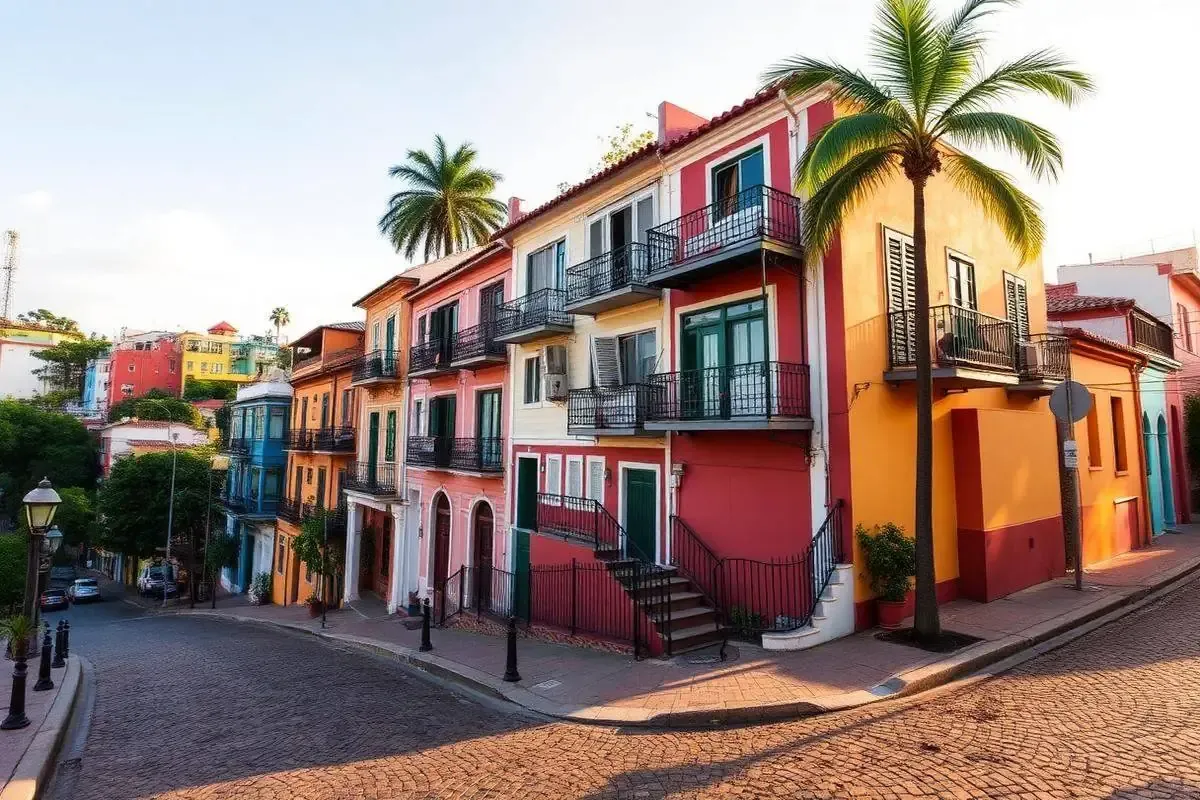
Santa Teresa, Lapa, the Tijuca forest and Rocinha were all shot for the opening of The Incredible Hulk — three of the four need no permission to visit.
Quick answer
Four films genuinely used Rio: Black Orpheus on Morro da Babilônia in Leme, Moonraker on the Sugarloaf cable car, City of God in Cidade de Deus and at Grumari, and The Incredible Hulk in Rocinha, Lapa, Tijuca and Santa Teresa. Notorious and Fast Five mostly did not.
At a glance
Genuinely filmed here
Black Orpheus (1959), Moonraker (1979), City of God (2002), The Incredible Hulk (2008).
Set here, filmed elsewhere
Notorious (1946) — the cast never left Los Angeles. Fast Five (2011) — mostly Puerto Rico.
The most visitable location
The Sugarloaf cable car, where Moonraker's fight was filmed without wires.
The one you should not visit alone
Rocinha and Morro da Babilônia. Go with a resident guide or not at all.
Best single film to watch first
Black Orpheus if you want the city; City of God if you want the country.
Free and easy
Lapa, Santa Teresa and the Arcos — three Hulk locations within one walk.
Why half the films set in Rio were never shot in Rio
Rio is one of the most filmed cities in the world and one of the least actually-filmed. The skyline is so recognisable that a second unit can bring back ten days of plates and an entire feature can be assembled on a sound stage six thousand miles away, and for decades that is exactly what happened. Knowing which is which turns a film-locations list from a souvenir into something you can stand in.
The clearest example is Hitchcock's Notorious (1946), which takes place almost entirely in Rio. The cast never set foot in Brazil: a second unit was sent to Rio and Miami to shoot exteriors and rear-projection plates, and Ingrid Bergman and Cary Grant played the whole thing in Los Angeles against a projected city. It is a beautiful film and a completely synthetic Rio.
The modern version is Fast Five (2011). Principal photography ran across Atlanta, Puerto Rico and Rio, but the great majority of the Rio-set material was shot in Puerto Rico — reportedly employing 236 technicians and more than 13,000 extras there, and filling nearly 17,000 hotel-room nights on the island. The safe-dragging finale and the carnival sequence you remember as Rio are largely San Juan. Some genuine Rio second-unit footage is in the film, but if you came looking for the streets in that chase, they are in another country.
Black Orpheus (1959): Morro da Babilônia, Leme
Marcel Camus's Orfeu Negro is the one to watch before you come. It transposes the Orpheus myth onto Carnaval and it was genuinely made here: sequences were shot on Morro da Babilônia, the hillside community above Leme at the eastern end of Copacabana, and the Carnaval footage was captured across the 1957 and 1958 festivals with the actor scenes filmed from September to December 1958.
It won the Palme d'Or and the Oscar for Best Foreign Language Film, exported bossa nova to the world through its Jobim and Bonfá soundtrack, and is also genuinely contested in Brazil — criticised for a French director's exoticising gaze on a Black carioca community. Both things are true, and knowing that makes watching it better rather than worse.
What you can visit: Leme itself, which is the calm, slightly old-fashioned end of the Copacabana strip and worth an afternoon in its own right. Morro da Babilônia has a community-run trail and a viewpoint, but it is a residential community and not a film set — treat it the way our favela explainer describes, and go with a local guide if you go at all.
Moonraker (1979): the Sugarloaf cable car, for real
The best-known action sequence ever filmed in Rio is the cable-car fight between Bond and Jaws, and it was shot on location at Sugarloaf — with the stuntmen performing on top of the cars without wires. A unit had been sent to Rio in early 1978 to capture Carnaval footage, which also appears in the film.
This is the most straightforwardly visitable location on this page, because the cable car still runs the same two stages: Praia Vermelha to Morro da Urca, then Morro da Urca to the summit. Ride it in the late afternoon and you get the film's exact geography plus the best sunset in the city.
If you want the Morro da Urca stage without paying for the cable car, the Morro da Urca trail walks up from Praia Vermelha for free and you only buy the second stage. Our Sugarloaf guide covers tickets, timing and which queue to avoid.
City of God (2002): Cidade de Deus, and Grumari
Fernando Meirelles and Kátia Lund's Cidade de Deus was shot in Rio, including in and around the Cidade de Deus housing project in the Zona Oeste that gives it its name, with a largely non-professional cast drawn from local communities. It is the most internationally consequential Brazilian film of the century and it reshaped how the world pictures this city — not always helpfully.
One location is genuinely easy to visit and almost nobody realises it: parts of the film were shot at Grumari, the wild beach at the far western end of Rio's coast. Going there is a good day out entirely independent of the film, and standing on that sand with the film in your head is a strange, useful corrective to the idea that Rio is one thing.
Cidade de Deus itself is a residential neighbourhood an hour from the Zona Sul with no visitor infrastructure and no reason to receive sightseers. Do not go and look at it. If the film is why you want to understand Rio’s communities, the honest route is our explainer and the tour comparison, not a drive past someone’s house. For Grumari, our Grumari guide has the practical detail.
The Incredible Hulk (2008): the best walkable cluster
The opening act of The Incredible Hulk is the most useful sequence on this list for a visitor, because the crew shot across four real Rio locations: Rocinha, where the film opens with a camera move up over the hillside to find Bruce Banner on a rooftop; Lapa; the Tijuca forest; and Santa Teresa.
Three of those four are easy and rewarding. Lapa and the Arcos are a walk; Santa Teresa is up the hill behind them by tram; Tijuca is a half-day in the forest. You can do the Lapa–Santa Teresa pair in an afternoon and see more of the actual film geography than any guided film tour would show you.
Rocinha is the fourth, and the rule is the same as everywhere on this page: resident guide, on foot, or not at all. Our Santa Teresa tram guide and Lapa guide cover the walkable half, and Tijuca National Park covers the forest.
The rest of the canon, briefly and honestly
Rio (2011) and Rio 2 (2014) are animated, so there is no location to visit — but the first film's production team did research in the city, and its version of Carnaval, the Lapa arches and the Tijuca canopy are recognisable enough that children who have watched it will spot things. It is also, by a distance, the most effective piece of tourism marketing Rio has ever had.
Central do Brasil (1998) opens in the vast commuter station of the same name in Centro, which you can walk through any weekday — though it is a functioning rail hub rather than a sight, and not somewhere to linger with a camera. Elite Squad (Tropa de Elite, 2007) and its sequel are Rio-shot and worth watching, with locations that are mostly not for visiting.
Flying Down to Rio (1933), which gave Astaire and Rogers their first screen pairing and invented a Rio of pure Hollywood fantasy, was made entirely in California. And The Simpsons' 2002 Rio episode was never filmed anywhere, but it did provoke a formal complaint from the city's tourist board — proof that the gap between the real city and the exported one has been a live argument for a very long time.
Building a film-location afternoon that actually works
The honest version of a Rio film tour is two half-days, not a circuit. Half-day one: Lapa and the Arcos, up to Santa Teresa by tram, which covers the Hulk cluster and the city's best-looking hillside in one line. Half-day two: Praia Vermelha, the Morro da Urca stage and the Sugarloaf summit at golden hour, which is Moonraker's exact geography and the single best thing to do in Rio regardless of cinema.
Add Grumari as a full day if you want the City of God beach and a wild-coast afternoon, and Leme as an hour whenever you are at the eastern end of Copacabana. That is every genuinely visitable location on this page, and none of it requires a specialist tour.
What it does require is watching the films first. Black Orpheus for the city it was, City of God for the country it is, Moonraker for the silliness, and the Hulk opening for the three minutes that show you Rio’s verticality better than any documentary. Then take our viewpoints guide and see how much of the frame you can recognise from the ground.
The two locations worth paying for
Moonraker's cable car is still running and still the best ticket in Rio. The Lapa–Santa Teresa line covers three Incredible Hulk locations in an afternoon. If Rocinha is on your list because of the opening shot, book a resident-guided walk rather than going alone — and check what share of the fee stays in the community.
Links may earn us a commission at no extra cost to you. This supports PlanRio.
Common mistakes tourists make
- Looking for the Fast Five chase streets in Rio. Most of that material was shot in Puerto Rico.
- Treating Notorious as a record of 1940s Rio. The cast never left Los Angeles; the city is rear projection.
- Going to look at Cidade de Deus. It is a residential neighbourhood with no visitor infrastructure and no reason to receive sightseers.
- Entering Rocinha or Morro da Babilônia independently because a film made them look like locations.
- Booking a specialist film tour. The genuinely visitable locations are spread out and mostly free.
- Expecting Central do Brasil station to be a sight. It is a working commuter hub, not a place to linger with a camera.
- Watching nothing before you arrive. The films are half the value of the locations.
Local expert tips
- Ride the Sugarloaf cable car in the late afternoon: Moonraker's exact geography plus the best sunset in the city.
- Walk Lapa to Santa Teresa by tram for three Incredible Hulk locations in one afternoon, for the price of a tram ticket.
- Watch Black Orpheus before you come and Leme becomes a different neighbourhood when you walk it.
- Pair Grumari with Prainha for a full wild-coast day — the City of God beach plus the best water in the municipality.
- Climb the Morro da Urca trail from Praia Vermelha and buy only the second cable-car stage.
- Take children who have seen the animated Rio to the Arcos and the Tijuca canopy; they will recognise both.
- If a film's location is a community rather than a street, the answer is a resident guide or nothing.
Frequently asked questions
Which famous films were actually shot in Rio de Janeiro?+
Black Orpheus (1959), on Morro da Babilônia in Leme and across the 1957 and 1958 Carnavals; Moonraker (1979), whose cable-car fight was filmed on top of the Sugarloaf cars without wires; City of God (2002), shot in and around Cidade de Deus and at Grumari beach; and The Incredible Hulk (2008), which filmed in Rocinha, Lapa, the Tijuca forest and Santa Teresa.
Was Fast Five filmed in Rio de Janeiro?+
Only partly. Principal photography covered Atlanta, Puerto Rico and Rio, but the great majority of the Rio-set material was shot in Puerto Rico — reportedly with 236 technicians, over 13,000 extras and nearly 17,000 hotel-room nights on the island. Some genuine Rio footage is in the film, but the streets in the chase sequences are largely San Juan.
Was Hitchcock's Notorious filmed in Brazil?+
No. Almost the entire film is set in Rio and the cast never left Los Angeles. A second unit was sent to Rio and Miami to shoot exteriors and background plates, which were then used for rear projection behind Cary Grant and Ingrid Bergman on a Hollywood sound stage.
Where was Black Orpheus filmed?+
On location in Rio. Sequences were shot on Morro da Babilônia, the hillside community above Leme at the eastern end of Copacabana, and the Carnaval footage was captured across the 1957 and 1958 festivals, with the actor scenes filmed between September and December 1958. It won the Palme d'Or and the Academy Award for Best Foreign Language Film.
Can I visit the City of God filming locations?+
You can visit Grumari, the wild beach at Rio's far western end where parts of the film were shot, and it is a genuinely good day out. Cidade de Deus itself is a residential neighbourhood an hour from the Zona Sul with no visitor infrastructure and no reason to receive sightseers — do not go to look at it.
Where was the James Bond cable-car fight filmed?+
At Sugarloaf, on the real cable car, with the stuntmen working on the roofs of the cars without wires. The Moonraker unit also shot Carnaval footage in Rio in early 1978. The cable car still runs the same two stages — Praia Vermelha to Morro da Urca, then up to the summit — so the location is directly visitable.
Is there a film-location tour in Rio?+
Not one we would recommend as a product, because the genuinely visitable locations are spread across the city and mostly free. Two half-days covers everything: Lapa and Santa Teresa by tram for the Incredible Hulk cluster, and Praia Vermelha to the Sugarloaf summit at golden hour for Moonraker. Add Grumari as a full day for City of God.
What should I watch before visiting Rio?+
Black Orpheus for the city as it was and for the bossa nova soundtrack that exported it; City of God for the harder, more important story and the best Brazilian film of the century; Moonraker for the Sugarloaf sequence; and the first three minutes of The Incredible Hulk, which show Rio's verticality better than most documentaries.
Was the animated film Rio made in Rio?+
No — it is animated, so there is no location to visit, though the production team researched in the city and its Carnaval, the Lapa arches and the Tijuca canopy are recognisable. It remains the most effective piece of tourism promotion the city has ever had, which is its own kind of location work.
Can I visit Rocinha because of the Hulk opening?+
Only with a resident guide, on foot, in daylight — the same rule that applies to any Rio community. The film's opening camera move over the hillside is spectacular, and Rocinha is a neighbourhood of around 72,000 people rather than a backdrop. Lapa, Santa Teresa and Tijuca, the film's other three locations, need no permission at all.
Sources and image credit
Details and access can change. Use these venue, operator and public-information sources to recheck key details before visiting.
- Black Orpheus: production and the Morro da Babilônia locations ↗
On-location filming in Rio, the 1957 and 1958 Carnaval footage, and the September–December 1958 actor shoot.
- Morro da Babilônia: the Leme community used in the film ↗
Confirms the sequences shot there and the community's location above Leme.
- Moonraker: the Sugarloaf cable-car sequence ↗
The unit sent to Rio in early 1978 for Carnaval footage and the cable-car fight filmed on location.
- Notorious (1946): the cast never travelled to Brazil ↗
The second unit sent to Rio and Miami for exteriors and rear-projection plates.
- Fast Five: filming split across Atlanta, Puerto Rico and Rio ↗
Principal photography July–October 2010; the Puerto Rico production figures are reported separately.
- The Incredible Hulk: Rocinha, Lapa, Tijuca and Santa Teresa ↗
The four Rio locations used for the opening act, including the rooftop sequence in Rocinha.
- City of God: Rio filming locations ↗
The Cidade de Deus and wider Rio locations, including Grumari beach.
Keep planning
Sugarloaf Mountain guide
Tickets, timing and the two cable-car stages Moonraker was filmed on.
The Santa Teresa tram
The line that links three of The Incredible Hulk's Rio locations.
Grumari beach
The wild western beach used in City of God, and a genuinely good day out.
Rio Film Festival
The city's own festival, if you would rather watch films than visit them.
Best viewpoints in Rio
Where to stand to recognise the frames you have been watching.